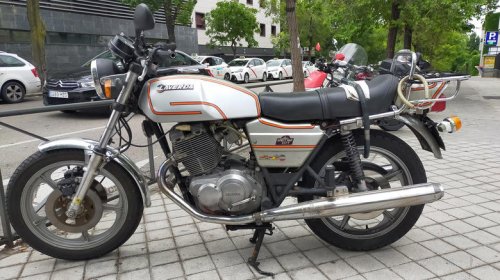
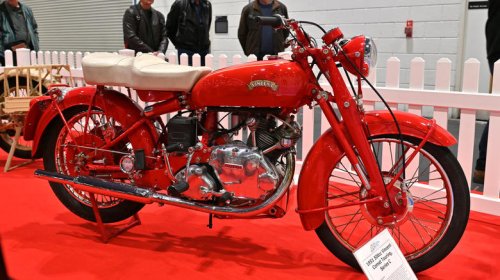
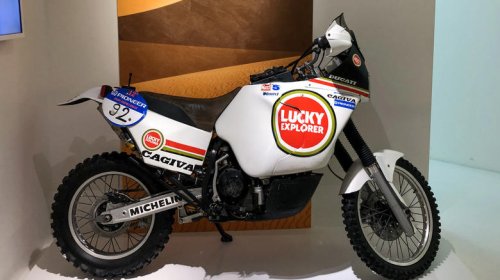
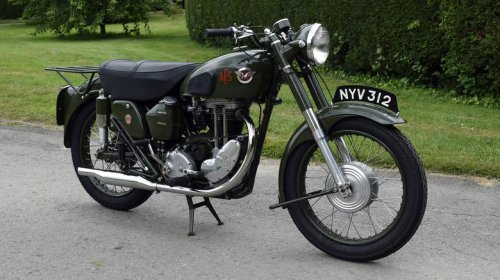
LaverdaOriginally specializing in agricultural machinery, Italian marque Laverda made the switch to producing motorcycles in the aftermath of the Second World War. The country's economy was in bad shape and workers needed cheap, reliable transportation — Laverda saw an opportunity and launched a 75cc motorcycle to cater to this emerging market. Production of these small motorcycles continued until the 1960s, when dwindling demand due to the rise of Italy's domestic automobile market meant that a change of tactics was needed.The son of Laverda's founder convinced his father to pivot toward making larger, faster bikes, with the company unveiling a new 654cc model in 1968. The change proved to be a success, and over the following decade, Laverda would continue to develop ever faster and more powerful bikes, gaining international recognition in the process.Slater Brothers, a British motorcycle importer, helped create one of the company's most famous models when they modified a 1000cc model with racing parts to create the 90 horsepower Jota. It was among the fastest motorcycles on the road at its launch in 1976, but also proved to be reliable. Unfortunately, Laverda's small sales volume meant that it lacked the development funds to keep up with larger brands, and it eventually ran out of cash altogether in 1986. The brand was relaunched in the '90s, but its motorcycles were considered largely underwhelming and it folded a few years after being resurrected. The brand is today owned by Aprilia, but remains dormant for now.BultacoOriginally a senior figure at Spanish motorcycle maker Montesa, Francesc Bultó decided to form his own motorcycle company in 1958. His decision stemmed from the fact that Montesa had decided to withdraw from competitive racing, abandoning a project Bultó had been working on as a result. Less than a year later, Bultó and a small group of engineers had developed a new model that would be sold under the Bultaco brand. It was a simple, lightweight two-stroke, designed specifically with racing in mind. It proved almost immediately successful, winning races against more powerful four-stroke machinery.News quickly spread about the upstart racing brand, and before long, Bultaco was exporting its motorcycles to a multitude of countries. Among them was the United States, where the brand's bikes became dominant in trials and off-road competitions. Like many smaller manufacturers at the time, however, Bultaco faced increasingly stiff competition from larger, more well-funded Japanese rivals. Sales began to decline significantly in the 1970s as Japanese motorcycles were launched with better reliability, and by the turn of the '80s, Bultaco had collapsed.VincentPhilip Conrad Vincent was reportedly fascinated by motorcycles from a young age, and dropped out of Cambridge University to form his own motorcycle company. With backing from his family, who had amassed a fortune as cattle ranch owners in Argentina, Vincent bought the rights to the HRD Motors name in 1928. HRD had previously been helmed by racer Howard Raymond Davies, and new bikes would take advantage of his well-known status, being produced under the Vincent-HRD name.A talented designer as well as a businessman, Vincent and his top engineer Phil Irving created both a unique suspension design and an innovative V-Twin engine. HRD-Vincent motorcycles gained a reputation as some of the fastest of their day, and as the company's status grew both domestically and internationally, the "HRD" branding was dropped.The outbreak of the Second World War saw Vincent contracted by the government to make a variety of aircraft and marine components, and after the war, the company continued to build other machines and components alongside its motorcycles. However, slumping sales and an underwhelming public reception to Vincent's Black Prince prototype in 1954 saw the company wound up the following year.Cagiva by the Castiglioni brothers in the late 1970s, Cagiva's success saw it acquire several of Italy's most notable motorcycle brands. The manufacturer originally sourced its engines from Ducati, but it completed a full buyout of the latter brand in 1985. Cagiva continued to produce bikes under both its own name and under the Ducati name, although there was some overlap between the two lineups. Over the next few years, Cagiva would also acquire Moto Morini, Husqvarna, and MV Agusta.With so many brands to invest in, Cagiva struggled to consistently make money. Nonetheless, its founders always remained keen to continue their racing endeavors, and Cagiva-branded motorcycles clinched victories both on the track and in the Dakar rally thanks to the Ducati-engined Elefant. In the early 2000s, further financial woes saw MV Agusta positioned as the primary brand of the group, with the Cagiva name temporarily retired.It was later reinstated in a limited capacity before being retired again in 2012. A change of company ownership in 2019 saw new plans drawn up for the Cagiva name to be relaunched as an electric motorcycle brand, but as of this writing, no further announcements have been made regarding the brand's future.MatchlessOne of many classic British brands that became a casualty of the onslaught of affordable Japanese motorcycles in the 1960s, Matchless (alongside its sister brand AJS) has a long history of producing quality bikes. Unlike other notable brands that forged their legacies in competition, Matchless was primarily known for its roadgoing offerings. However, in the earliest days of the company, Matchless did see some racing success, including a first- and second-place finish at the 1910 Isle of Man TT.Matchless became known for its single-cylinder motorcycles, which remained in constant production until the company's demise in the mid '60s, albeit with some significant design changes over the decades. By the time Associated Motorcycles, the parent company of Matchless, ran out of cash in 1966, its roster of brands included Norton, among several other prominent names.A buyout of the bankrupt firm saw only Norton receive significant development, with Matchless phased out shortly after the transfer of ownership. A brief revival of the marque in the '80s by the same manufacturer that made Triumph Bonnevilles under license didn't turn its fortunes around, with only a handful of bikes sold. Today, the Matchless brand name and imagery has been resurrected for a motorcycle-inspired clothing line, but despite a new concept bike being unveiled in 2014, no production plans have been confirmed.









 +45 others