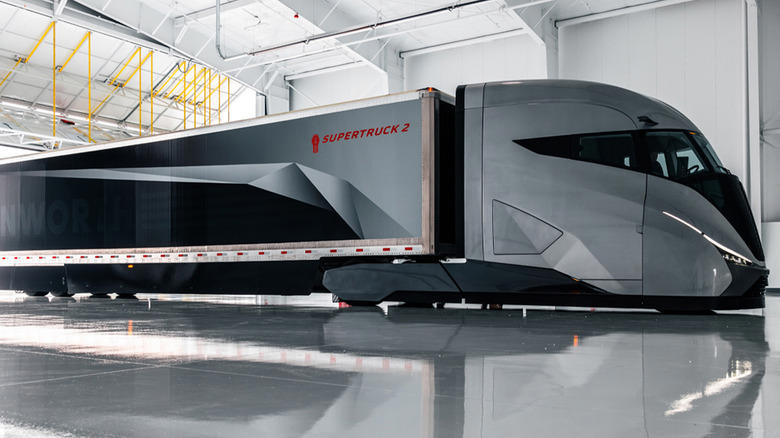
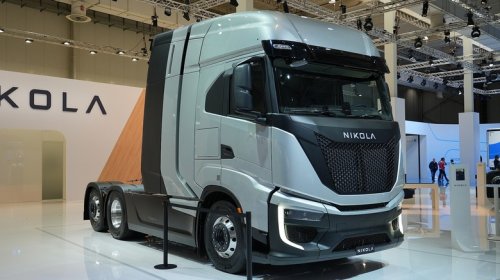
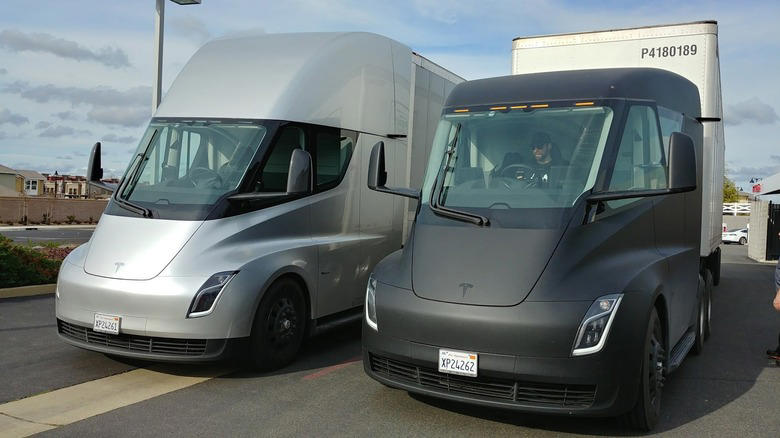
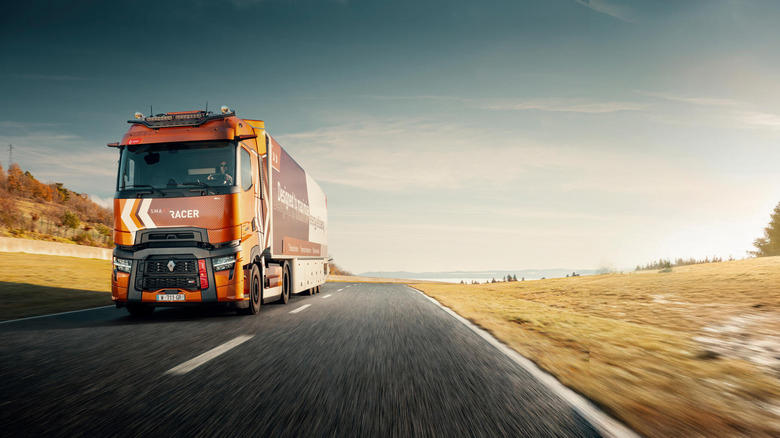
TeslaTesla Motors' products draw outsized attention, and the Tesla Semi is no exception. Commercial trucks make a good use case for electrification, since the instant-on torque of electric motors comes in handy when a vehicle is pulling a heavy load. To that end, the Tesla Semi uses the powertrain from the Tesla Model S sedan, which is a tri-motor arrangement that produces 1,020 horsepower and 1,050 lb-ft of torque in the sedan. Tesla isn't hugely forthcoming about whether the tri-motor setup produces the same power and torque figures in the Semi, but we do know that the front engine from the Model S is fitted to the Semi's rear axle, and the twin rear motors from the sedan drive the middle axle.The Semi needs to move lots of mass for long distances without stopping to recharge, so the battery pack in the Semi is a 1,000-kWh unit versus the 100-kWh battery in the Model S. In late 2022, Tesla demonstrated the Semi's ability to cover 500 miles on a single charge of this massive battery pack with the first truck it delivered to a customer. This customer was PepsiCo, which ordered 100 Semis and used the first one to deliver snacks to an event celebrating the first truck's entry into service. By late 2024, Tesla Semis had covered a combined 5 million miles and shown that this electric truck can cover up to 1,000 miles in a day with pit stops for fast recharging. The Semi is reported to be capable of being fitted with a sleeper cab for long-distance hauling, and can theoretically meet European regulations should it be exported someday.RenaultThe French automaker Renault also builds a line of commercial trucks that includes the T, C, and K lines of semi trucks. The Renault Trucks division is a major player in the international heavy goods vehicle market, with 70,000 units sold in 2023. In addition to traditional diesel-powered trucks, Renault is moving into eco-friendly technologies such as compressed natural gas, biofuels, and electric motors. Renault builds its trucks in France, although some can be shipped disassembled to partners in Africa and the Middle East for local assembly.Renault Trucks T and Trucks T High are part of its long-haul range, while the C range and the K range are construction-oriented but with available tractor-unit semi-truck models. For 2025, all three ranges offer improvements in energy efficiency, safety features, and comfort. Fuel efficiency improves by up to 3% via powertrain optimizations and aerodynamic enhancements. Other innovations include replacing traditional mirrors with camera systems on some models, which even provide infrared capability for night visibility. The T range can be ordered in the Smart Racer configuration, which uses a DE13 Turbo Compound engine and other innovations to deliver a 14% fuel reduction and lower CO2 emissions.Engines include a range of diesels, while the E-tech T electric truck offers 375 miles of range on one charge. Safety improvements across all of Renault Truck's ranges include an advanced adjustable power steering system for greater stability on the highway while still offering maneuverability in urban environments. Additional safety features include a lane-keeping system that also offers protection against objects and vehicles in the truck's blind spots. Automatic high beams respond to darkness, weather, and other vehicles on the road.



















 +49 others