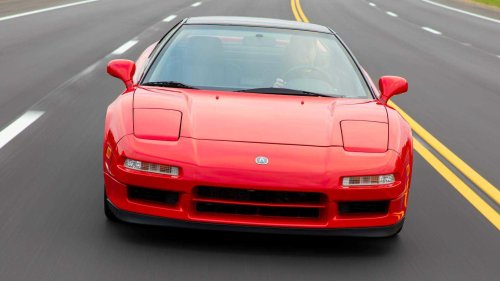
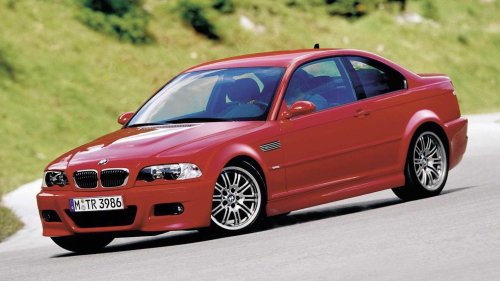
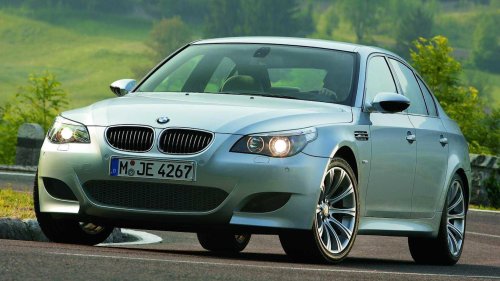
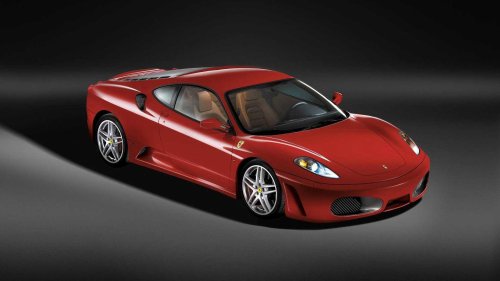
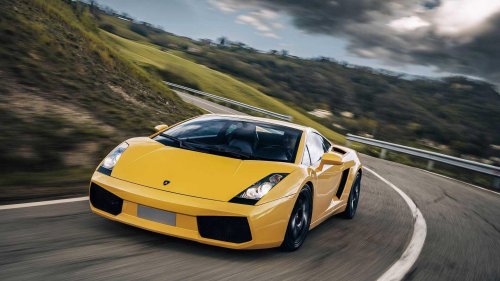
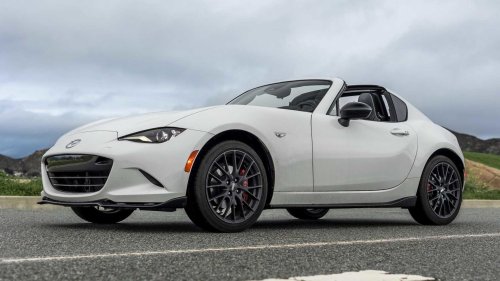
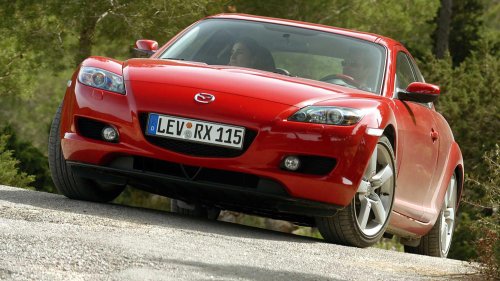
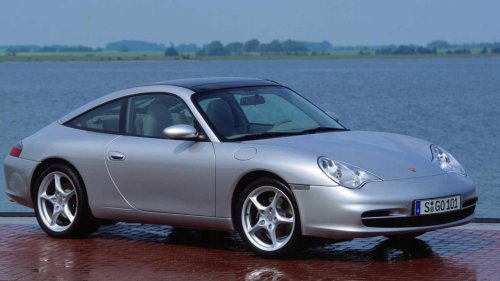
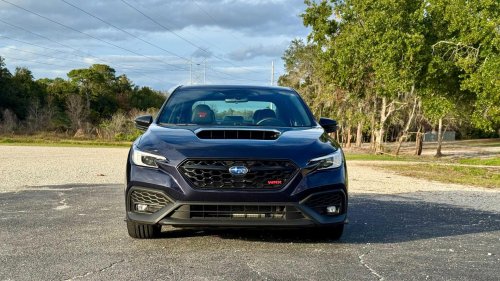
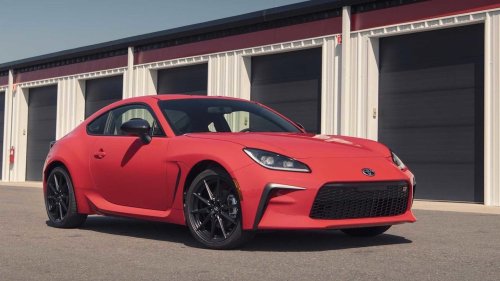


















It used to be that anyone serious about performance would always opt for a manual transmission over an automatic. A manual, in the right hands, wouldn’t just deliver quicker acceleration than an auto, it typically returned better fuel economy and gave the driver more control. Manuals were usually cheaper, too, often serving as the standard option.Modern automatics have flipped the script. Today’s self-shifting gearboxes deliver quicker acceleration, improved efficiency, and greater durability under high torque loads, and with paddle shifters and advanced software systems, they offer a level of control that would’ve seemed unlikely not long ago. That said, a few holdouts remain. You can still find modern cars where the manual is the quicker choice. We've included some of them in our round up of cars where the manual is quicker than the auto.Cars are listed in alphabetical order based on the manufacturer's name. Acura NSX 6-speed manual (5-speed earlier) or 4-speed automatic 1991 Acura NSX The original Acura NSX, or Honda NSX if you’re outside the US, has had its manual transmission immortalized by none other than Formula 1 legend Ayrton Senna and the viral video of him lapping Suzuka Circuit while heel-toeing all the way. The footage includes a camera angle that showcases his incredibly precise footwork as he works the pedals with surgical rhythm, all while sporting a somewhat questionable combo of white socks and loafers. It’s become a defining visual of the NSX’s analog purity and the skill it rewards behind the wheel.The car launched in the US for the 1991 model year, and the manual was always the transmission to get, since the automatic not only came with less horsepower but also couldn’t match a skilled driver for shift speed or engagement. The early manual was a five-speed, later upgraded to a six-speed for the 1997 model year. The automatic wasn’t left untouched either, gaining a manual shift mode via paddle controls for the 1995 model year. BMW M3 6-speed manual or 6-speed automated manual (SMG-II) 2001 BMW M3 front, three-quarterBMW experimented with an automated manual transmission during the 1990s with the SMG system in the E36 BMW M3. While it could deliver quick shifts in ideal conditions, the system was often jerky in normal driving and could feel confused unless pushed hard. BMW refined the concept for the E46 M3, which was sold in the US from the 2001 to 2006 model years with either a traditional six-speed manual or the improved SMG II automated manual.In the E46, BMW’s official acceleration figures were essentially identical for both transmissions, but in real-world driving the standard six-speed manual was still considered the quicker option, especially with a skilled driver behind the wheel. The manual also delivered smoother responses and greater predictability than the SMG II. BMW would eventually abandon the automated manual altogether, replacing it in later M3 models with a far more advanced dual-clutch transmission. BMW M5 6-speed manual or 7-speed automated manual (SMG-III) 2005 BMW M5 E60 Silver Front Angled ViewAfter its earlier experiences with its SMG transmissions in the E36 and E46 generations of the BMW M3, BMW gave the automated manual one final go in the E60 BMW M5, which was sold in the US from the 2006 to 2010 model years. For the latest design, the SMG-III, BMW didn't derive it from a conventional manual gearbox but instead designed it from the ground up as an automated manual. It was also planned to be the primary transmission offered in the E60 M5, though enough buyers in the US demanded a conventional manual, and BMW gave in and developed a three-pedal setup solely for this market.Officially, the automated manual is billed as the quicker option, particularly in optimal conditions. In real-world driving, the gap is much closer than with earlier SMG efforts, and while a highly proficient driver in a manual-equipped car can occasionally come out slightly ahead as testing has shown, the SMG generally retains the performance advantage. Either way, both transmissions deliver quicker acceleration than what the official figures suggest, which is typical for BMW, as it often understates performance. Ferrari F430 6-speed manual or 6-speed automated manual (F1) Ferrari F430 As recently as the mid-2000s, even Ferrari supercars still had manual transmissions that could outperform their automated counterparts in real-world driving. The Ferrari F430 largely marked the end of that era. Ferrari’s early automatics were automated manuals, first introduced in the late 1990s on models like the Ferrari F355 and Ferrari 360 Modena. Known as the F1 transmission, it brought racing-style paddle-shift technology to road cars but could feel abrupt and clumsy at low speeds.The F430, sold in the US from the 2005 to 2009 model years, offered an improved F1 gearbox alongside a traditional gated six-speed manual. Although Ferrari’s official 0–60 mph figures were identical for both transmissions, the manual F430 was often slightly quicker in real-world driving. Ferrari would soon replace the F1 gearbox with a dual-clutch transmission in the Ferrari 458 Italia, marking the point where manuals became the slower option and rapidly faded from the Italian marque's supercars. Lamborghini Gallardo 6-speed manual or 6-speed automated manual (E-gear) 2004-2008 Lamborghini Gallardo Front Angle ViewLamborghini began experimenting with automated manual transmissions in the early 2000s, branding the system E-gear. It debuted for the 2004 model year in both the Lamborghini Murciélago, which was already a couple of years old by then, and the Lamborghini Gallardo, which was just being launched.For its time, E-gear was a solid effort and, for most drivers, delivered quicker and more consistent acceleration than the gated six-speed manual, though both transmissions had the same official acceleration figures. While a skilled driver could still extract quicker launches and cleaner shifts with the manual, Lamborghini steadily refined E-gear through software and hardware updates, which cemented it as the quicker option in later Gallardos.The Gallardo’s end of production following the 2014 model year marked the end of both the manual gearbox and Lamborghini’s automated manual in the entry-level supercar line. Its replacement, the Lamborghini Huracán, moved exclusively to a dual-clutch transmission, eliminating the manual option entirely. Meanwhile, the flagship Lamborghini Aventador carried on with its own unique automated manual for years before finally being replaced by the Lamborghini Revuelto, which also adopted a DCT along with hybrid technology. Mazda MX-5 Miata 6-speed manual or 6-speed automatic 2026 Mazda MX-5 So far, all the cars we’ve examined have been older machines, but as mentioned in the opening, there are still a few new cars on sale today that are actually quicker with a manual transmission. One of them is the ND Mazda MX-5 Miata. Sold in the US since the 2016 model year, the current Miata is available with either a six-speed manual or a six-speed automatic, and it's the lighter and more responsive manual version that remains the quicker choice in acceleration testing.But with a car like the Miata, outright speed isn't really the point. The appeal comes from the driving experience, and for that reason, you really should buy one with the manual. Yes, it asks a little more from the driver in traffic, but when your favorite winding backroad appears ahead, the reward is immediate. The manual transforms the Miata from merely fun transportation into one of the purest driver’s cars still on sale today. Mazda RX-8 6-speed manual or 6-speed automatic (4-speed earlier) 2003 Mazda RX-8 front, three-quarterThe Mazda RX-8, like its Miata little brother, is another car where you should definitely buy the manual version only. The RX-8 was sold in the US from the 2004 to 2011 model years, initially arriving with a six-speed manual or four-speed automatic. The automatic was upgraded to a six-speed for the 2006 model year. In some markets, a five-speed manual was fitted initially.With the manual, not only do you get more power, but the greater control awarded to the driver is more suited to the car's rotary engine. The rotary is notoriously low on torque, unless turbocharged, and thus getting the most performance means keeping the engine high in its rev range. A manual is far better suited to keeping it in that narrow, high-rpm sweet spot. No, you won’t be winning drag races, but on your favorite winding road, the extra involvement pays off in a way straight-line numbers never capture. Porsche 911 Carrera 6-speed manual or 5-speed automatic 2003 Porsche 911 996 Carrera 996.2 Silver Front Angled ViewA Porsche 911 is the kind of car where you expect most buyers to choose a manual, simply because of the driving pleasure that comes with shifting for yourself. In reality, though, the vast majority of modern 911s are now sold with an automatic, specifically Porsche’s brilliant PDK dual-clutch transmission. These gearboxes shift far faster than any human could manage with a stick, but that wasn’t always the case. Back in the early 2000s, the 996-generation 911 still offered a traditional six-speed manual alongside Porsche’s Tiptronic automatic.Unlike today’s lightning-quick dual-clutch units, the Tiptronic was a conventional torque-converter automatic, and it couldn’t match the manual car for outright acceleration or driver involvement. The manual-equipped 996 Carrera felt sharper, more responsive, and ultimately quicker when pushed hard. Its successor, the 997, initially retained the Tiptronic system as well, but Porsche finally entered the modern era when the 997 received its mid-cycle refresh and debuted the now-iconic PDK dual-clutch transmission. Subaru WRX 6-speed manual or CVT 2025 Subaru WRX tS frontThe Subaru WRX, as a hardcore, rally-bred sports sedan, seems like a natural fit for a manual transmission. But an automatic has actually been part of the equation since the nameplate first arrived in the US for the 2002 model year. Over the years, Subaru continued offering both gearboxes, and the current WRX – on sale since the 2022 model year – offers a six-speed manual alongside an automatic option, in this case a CVT rather than a dual-clutch or traditional torque-converter automatic.The CVT does a reasonable job managing straight-line acceleration and keeping the turbocharged flat-four in its useful range, as the official acceleration figures show, but it dulls the experience in a way enthusiasts notice immediately. The manual remains the quicker and far more engaging option in real-world driving. Like its rally roots suggest, the WRX rewards driver involvement, and the manual preserves the sense of control and rhythm that defines the car’s appeal on a winding road. Toyota GR86/Subaru BRZ 6-speed manual or 6-speed automatic 2022 Toyota GR86 front, three-quarterA good driver’s car doesn’t have to be expensive, something the Toyota GR86 and Subaru BRZ prove every time you climb behind the wheel. The second-generation twins, sold in the US since the 2022 model year, offer either a six-speed manual or a six-speed automatic, but the manual remains the quicker option in acceleration testing thanks to its shorter gearing and more direct control over the naturally aspirated flat-four.More importantly, the manual simply suits the character of these cars better. The automatic is competent enough, but the six-speed transforms the GR86 and BRZ into the playful, balanced sports cars they were clearly designed to be. On a winding road, the extra involvement makes all the difference.Sources: Acura, BMW, Ferrari, Lamborghini, Mazda, Porsche, Subaru, Toyota