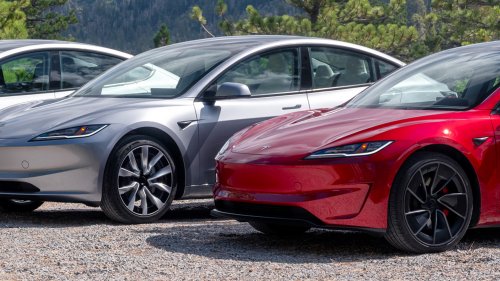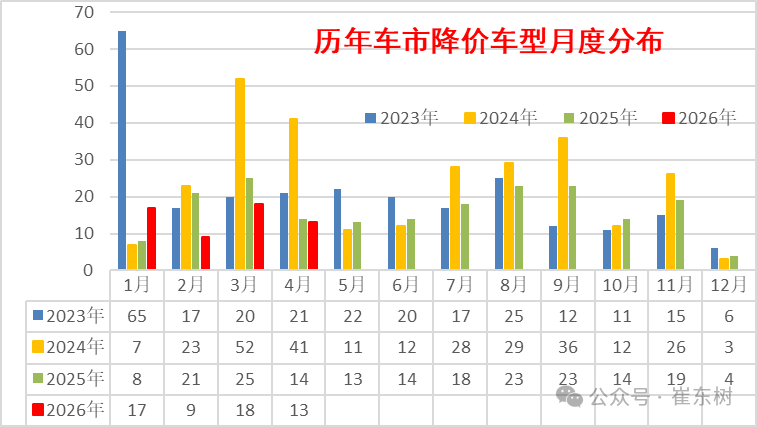



















Gasgoo Munich-On May 11, China's domestic sulfur benchmark held steady at 7,250 yuan per ton, hovering near record highs. Year to date, the price has surged nearly 80%. Looking back to the cyclical low in the second half of 2024, sulfur has skyrocketed nearly 600% in just 18 months. The benchmark briefly touched a historic high of 7,300 yuan per ton on May 6 before easing slightly. Yet, the persistence of 7,250 yuan confirms the resilience of this rally—this isn't a fleeting spike, but a new price floor taking hold in the market.Sulfur, a chemical commodity rarely on the radar of car buyers, is silently yet forcefully emerging as a "heavyweight" driving up vehicle manufacturing costs. And the ripples it creates are far from settling down.The Sulfur Surge Is Worse Than You ThinkTo grasp why sulfur is hitting the auto industry so hard, we first need to understand its identity.Sulfur is never an isolated commodity. A byproduct of oil and gas refining, it is the source of roughly 60% of the world's sulfuric acid. Its downstream reach spans sulfuric acid, phosphate fertilizers, metal processing, titanium dioxide, nylon, dyes, and even lithium-ion battery cathode materials. Acting like a central nervous node, sulfur touches the cost-sensitive nerve endings of agriculture, chemicals, metal smelting, and new energy.For the automotive sector, sulfur's influence travels along two critical paths.The first path leads to tires and rubber products. Processed into insoluble sulfur, it is an indispensable agent in tire vulcanization. During this process, sulfur molecules build a three-dimensional network between rubber chains, providing strength, elasticity, wear resistance, and aging resistance. Without it, steel cords in radial tires cannot bond strongly with rubber. Hoses cannot withstand high heat and pressure, and the performance of seals, oil seals, and shock absorbers would be severely compromised. By 2026, the global insoluble sulfur market is projected to reach $1.17 billion, driven primarily by the continued expansion of automotive tire production.The second path points to power batteries. Lithium iron phosphate (LFP) batteries dominate domestic installations, and their precursor, ferrous phosphate, relies on wet-process phosphoric acid—which consumes vast amounts of sulfuric acid. Producing one ton of wet-process phosphoric acid requires about 1.29 tons of sulfur. The transmission chain is rigid and clear: sulfur prices rise, pushing up sulfuric acid, then wet-process phosphoric acid, then ferrous phosphate, then LFP, and finally, battery costs.From tires to chassis seals, and from hoses to battery packs, it is hard to find a single core system in a car that can escape the shadow of sulfur.The crux of the problem lies in the significant structural fragility of China's sulfur supply.In 2025, China's comprehensive import dependency for sulfur hovered around 50%, with over 56% coming from the Middle East. Domestic production is highly concentrated among Sinopec, PetroChina, and Rongsheng Petrochemical, which together account for over 70% of capacity, leaving little room for growth in local output.Customs data shows sulfur imports in the first two months of 2026 totaled just 1.0353 million tons, a 35.03% drop year-on-year. As of May 12, the Strait of Hormuz has gradually resumed navigation following a late-April ceasefire, and some backlogged sulfur is being released. However, supply is recovering slower than demand, with Middle Eastern sulfur exports still running about 30% below normal levels.Deeper down, the scissors gap between supply and demand continues to widen. On the supply side, sulfur output—a refining byproduct—will gradually decline as global oil and gas consumption peaks amid the energy transition. On the demand side, the explosion of new energy vehicles has driven a surge in LFP demand. Rigid phosphate fertilizer demand remains hard to suppress, compounded by the concentrated release of nickel and cobalt hydrometallurgy capacity in Indonesia.A report by Guotou Junan Securities predicts global sulfur will face supply shortages of 300,000 tons, 5.13 million tons, and 4.05 million tons in 2025, 2026, and 2027, respectively. Prices are likely to chase historical highs.The Fires of the Middle East Have Reached the Industry's DoorstepIf the tight supply-demand balance was the breeding ground for sulfur's price rise, the deteriorating geopolitical situation in the Middle East has directly ignited that fire to the point of losing control.Since the conflict erupted in late February 2026, navigation through the Strait of Hormuz has been effectively paralyzed for nearly two months. The blockade brought not a slow contraction, but a systemic supply chain disruption. Qatar's Ras Laffan natural gas plant suffered severe damage and may not recover until the end of the year. While the UAE and Kuwait have maintained minimal shipments, the pace is agonizingly slow.Sulfur suddenly became the scarcest resource in the global spot market. Middle East FOB prices jumped from $660-680 per ton in mid-April to $735-745 by the end of the month. Brazil CFR prices soared to $900-1,090, while China's granular sulfur CFR prices surged from $794-800 to $850-900.The strained supply chain first triggered a chain reaction in the tire industry.On March 17, Flexsys, a global tire additive giant, issued a price increase letter. It announced a global hike for insoluble sulfur products: $0.60 per kilogram in Asia, with a maximum increase of 20%. The letter bluntly cited the "conflict in the Middle East causing sharp rises in raw material, energy, and freight costs." This signal means pressure from raw materials has broken through the chemical layer and hit tire manufacturing directly.The Chinese market moved quickly. Since April, nearly 80 tire companies have announced price hikes covering truck, passenger, and engineering tires, with increases mostly between 3% and 8%, and some premium products hitting 10%. In mid-April, Bridgestone raised passenger tire prices by 3% to 5%, while Michelin increased passenger and light truck tire prices by 15 to 30 yuan per tire. Continental, Yokohama, and Pirelli followed suit, creating a "resonance" of price hikes across domestic and foreign brands.It is worth noting that this round of hikes is largely "self-rescue" on the edge of loss. Data from Longzhong Information shows that gross margins for some mid-range passenger tires have turned negative. Zhongce Rubber stated bluntly in its price letter: "This adjustment is far below the rise in costs." Even after the hikes, most companies still cannot fully cover the incremental costs.For vehicle manufacturers, the cost increase from tires alone can reach several hundred yuan per car. Add in seals, hoses, and other rubber products, and the cumulative effect becomes significant.In the new energy sector, the transmission of sulfur price hikes is more subtle, yet equally profound.Sulfuric acid prices reacted first, climbing from about 917 yuan per ton in early January to 1,950-2,100 yuan on May 8—more than doubling—and directly pushing up ferrous phosphate costs. In April, ferrous phosphate prices maintained their rise, ending the month at 13,600-14,000 yuan, an 8% monthly increase. Power-grade LFP stood at 64,600-65,400 yuan on May 6, a rise of about 3,300 yuan from April to May. Leading manufacturers had already issued price notices at the end of 2025, clearly stating unified processing fee increases for all LFP products starting in 2026.A deeper contradiction lies in the "scramble" for limited supply among strategic industries. Traditional phosphate fertilizers, new energy batteries, and Indonesian nickel smelting are all competing for sulfur simultaneously, driving spot purchasing costs higher.Even more grim is that this cost storm is not a solo charge by sulfur, but a "pincer movement" of multiple raw materials. Lithium carbonate soared from 75,000 yuan to 177,500-184,000 yuan per ton, a jump of over 130%. Copper prices stood near 100,000 yuan per ton. Automotive-grade memory chips are seeing capacity severely squeezed by the global AI computing boom, with automotive DRAM prices surging. Natural rubber, synthetic rubber, and carbon black used in tires have also risen sharply, with butadiene accumulating gains of over 118%.UBS estimates that combining raw material hikes, the restoration of purchase taxes, and subsidy cuts, the cost of an ordinary mid-sized intelligent EV in 2026 will rise. The increase is expected to be between 4,000 and 7,000 yuan. With the auto industry's sales profit margin already falling to 3.2%, most automakers have no capacity left to absorb these increases by compressing profits.Lu Fang, chairman of Voyah Automobile, summed it up during the Beijing Auto Show: "If raw material prices rise further, it will eventually be passed on to the terminal. This would lead to an overall increase in car prices, a high-probability event."The Price Hikes Are Far From OverSo, when will this cost pressure triggered by sulfur reach its end?Frankly, looking at the current situation, the answer is not optimistic.First, geopolitics is a systemic variable that is hard to eliminate in the short term. Just on the 11th, reports from the U.S. suggested insiders in Washington are "more seriously considering" resuming military action against Iran as negotiations stall. Iran's latest response implies the flames of war could reignite at any moment. Digesting backlogged cargo and normalizing transport will take a long cycle, and repairs to Qatar's main gas plants are assessed to take "several years." Significantly reducing China's reliance on the Middle East—whether by diversifying import sources or boosting self-production—is not a job that can be done overnight.Second, there are no signs of contraction on the demand side. LFP output reached 443,000 tons in April, up 5.1% month-on-month, and is expected to rise to 468,000 tons in May. The continued penetration of energy vehicles and the explosive growth of the energy storage market are providing incremental demand for sulfur. Phosphate fertilizer, as a strategic material for food security, has almost inelastic rigid demand.Third, price transmission has a distinct lag. Current tire hikes mostly reflect previously locked raw material costs. Calculated against the spot benchmark of over 7,000 yuan per ton, a new round of pressure has not yet fully hit the terminal.Fourth, the auto industry's own profitability has hit its limit. From 2023 to 2025, the Chinese market endured three brutal years of price wars. The industry profit margin dropped to 4.1% in 2025 and fell further to 3.2% in the first quarter of 2026. It hit a ten-year low of 2.9% in January and February. The profit cushion has become razor-thin.Against this backdrop, since the start of 2026, more than ten new energy automakers have announced price hikes or tightened terminal incentives. Tesla adjusted the Model Y price by 14,000 to 16,000 yuan while rolling back some discounts, while NIO, ZEEKR, and others achieved effective price increases by pushing high-spec models to raise the average selling price.Yet, contrasting with the rising chorus of price hikes in public opinion, Cui Dongshu, secretary-general of the China Passenger Car Association (CPCA), points out a market reality. High-end automakers still have relatively ample profit space with gross margins generally above 20%. They face less pressure and have no urgent need to raise prices. Conversely, for mid-to-low-end automakers, where competition is intensifying and market capacity is shrinking, the likelihood of widespread price hikes is low.He argues that from a cost perspective, power battery export prices are still trending downward year-on-year. They show no sign of rising. Only domestic battery prices have edged up slightly, creating relatively limited pressure on automakers. Additionally, a large number of new models are entering the market with low-pricing strategies, further compressing the profit and pricing room of existing models.Image source: Cui DongshuCui believes that for most automakers, price hikes remain largely at the level of public discourse and are extremely difficult to implement in practice. This judgment is already being confirmed in the market. Some automakers have switched to a "more features, same price" strategy; for instance, NIO's new models include self-developed smart driving chips and lidar without a price increase.Looking further ahead, the cure for this cost storm lies in technological evolution and policy adjustments, such as suspending sulfuric acid exports and pausing phosphate fertilizer exports to reduce reliance on imported sulfur.But whether this turmoil will truly dissipate over time and be fully absorbed by the supply chain is questionable. The auto industry needs to face a conclusion: the thrust of raw material costs is forming a pincer movement. This is occurring between traditional parts like tires, seals, and hoses, and the structural pressure of the power battery system. This will further compress automakers' meager profits and eventually trigger a full-industry cost alarm through vehicle price adjustments.For consumers, the mindset that "cars only get cheaper" may need adjustment. "Car price hikes" are still unfolding, and we haven't reached the final page yet. For industry participants, in an era where energy transition, geopolitical restructuring, and demand expansion intertwine, the supply chain stability of key raw materials is becoming another hidden front of strategic competition.