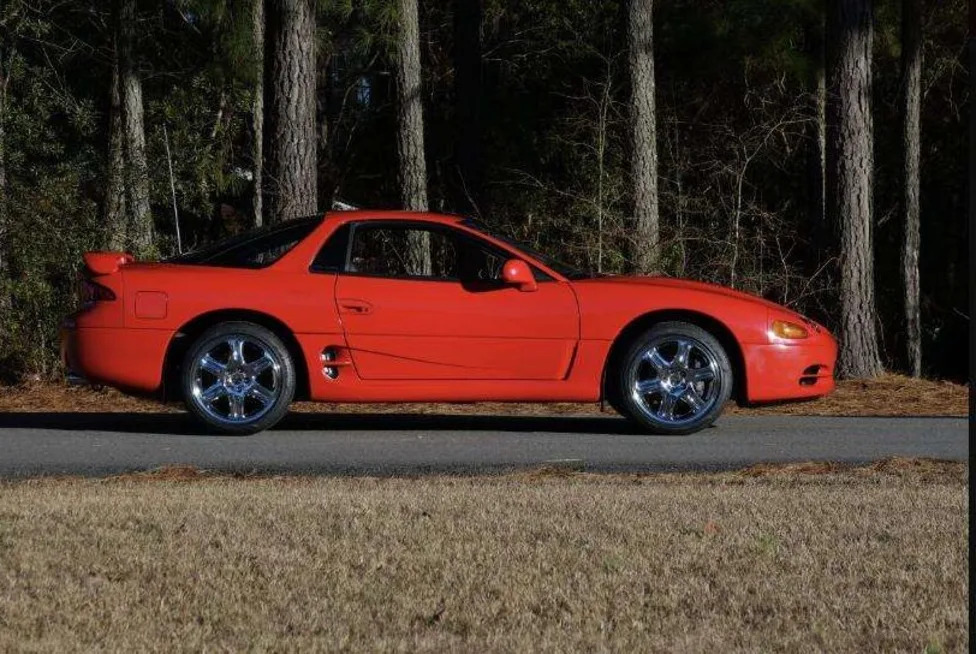
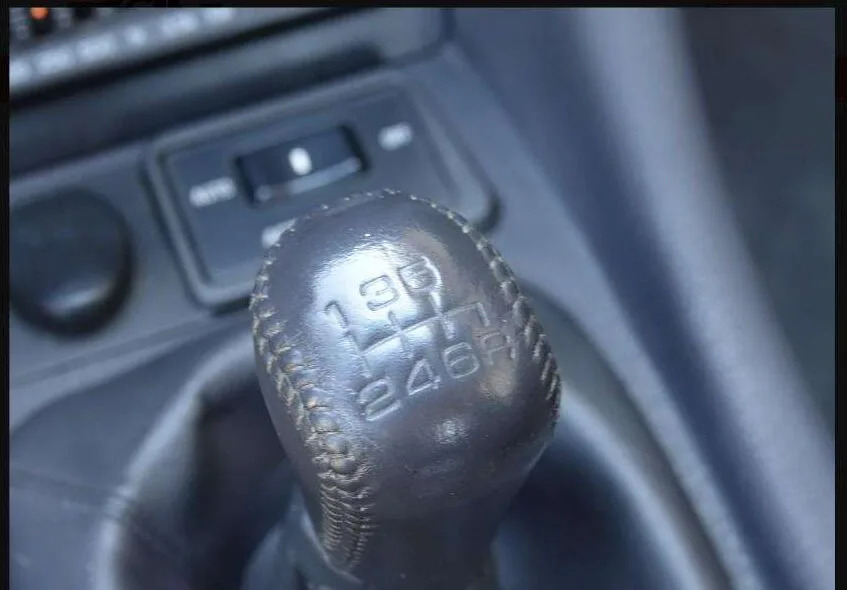
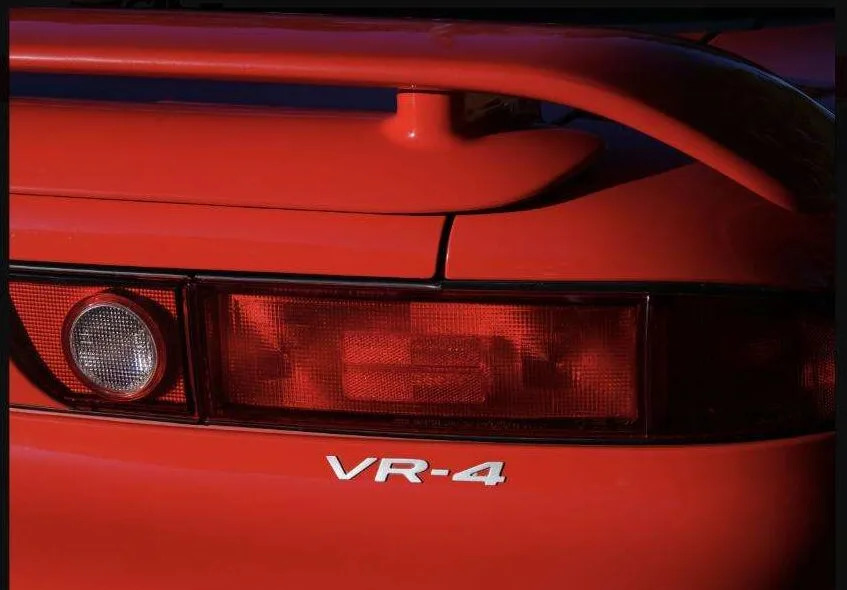



















Why the Mitsubishi 3000GT VR-4 Is Finally Getting Its Due in the Collector MarketWhen a red 1995 Mitsubishi 3000GT VR-4 crosses the block at GAA Classic Cars' Greensboro auction this month, the hammer price will tell collectors far less than the car itself. This is not really a story about what a well-preserved 3000GT brings at a regional sale. It is a story about recognition arriving three decades late, for a car that out-engineered nearly everything Japan built in the 1990s, and a fair amount of what Detroit and Stuttgart offered too.Lot FR0086 is a Series 2 car, built after Mitsubishi's 1994 mid-cycle update gave the VR-4 a six-speed Getrag manual gearbox, 18-inch wheels, and an increase to 320 horsepower from its twin-turbocharged, intercooled 3.0-liter V6. Finished in red over gray leather with a clean Carfax, it carries the full VR-4 features list: full-time all-wheel drive, four-wheel steering, an electronically controlled adaptive suspension, and Mitsubishi's Active Aero System, which deployed front and rear spoilers automatically as speed increased. Very little about that specification reads like a mainstream Mitsubishi from 1995. It reads like a technology demonstrator that happened to be sold through a dealership network.The car's name carries its own bit of history worth knowing. In Japan, Mitsubishi sold this model as the GTO, a badge resurrected from a 1970s Galant coupe that had itself borrowed the designation from the Ferrari 250 GTO. Mitsubishi's American arm declined to import that name, wary that enthusiasts would object to a Japanese coupe wearing a nameplate with that much Ferrari and Pontiac weight attached to it. It is a minor detail, but it says something about how seriously Mitsubishi's engineers took this car's ambitions, even if the marketing department lacked the nerve to say so out loud.Those ambitions were real. The VR-4 arrived in 1991 as Mitsubishi's answer to the Nissan 300ZX Turbo and the Toyota Supra Turbo, and, more provocatively, to the Acura NSX. A period comparison test from AutoWeek put a $34,423 3000GT VR-4 to 60 mph in 5.1 seconds, beating a $61,000 NSX by two-tenths of a second. That single data point is the reason the VR-4 deserves a second look today. It was never a budget alternative to Japan's flagship supercar. For a few years, it was arguably ahead of it, at roughly half the price of admission.AdvertisementAdvertisementSo why has it taken until now? Partly because the collector market for 1990s Japanese performance cars has moved in a fairly predictable order: Supra first, then Skyline GT-R, then NSX, with everything else waiting its turn. A stock, unmodified Supra Turbo already commands six-figure money, and the rarest Skyline variants have cleared seven. The VR-4, despite offering more genuine engineering ambition than either at launch, has stayed comparatively affordable, propped up mostly by enthusiasts rather than collectors. That gap is closing as the buyers themselves change. Younger collectors, who grew up with the 3000GT as a poster car rather than an auction lot, are the ones now bidding on it, and they tend to know exactly what they are looking at.Rarity alone does not explain the opportunity here, and it should not. Mitsubishi built roughly 86,000 3000GTs worldwide over the model's decade-long run, alongside about 65,000 badge-engineered Dodge Stealth siblings built on the same Nagoya line. Those figures are well documented at the model level but far less precise once broken down by VR-4 twin-turbo trim, transmission, and model year. That imprecision matters. Unlike the Supra Turbo or Skyline GT-R, where production splits and matching-numbers criteria are closely tracked by dedicated registries, the VR-4 market still runs on incomplete data. A clean Carfax is reassuring, but it is not a substitute for a documented ownership history and verification that the all-wheel-drive hardware, active aero motors, and turbochargers are original and functioning, not swapped, deleted, or quietly disconnected by a previous owner tired of maintaining them.That last point is the one serious buyers should weigh most heavily. The VR-4's complexity was its selling point in 1995 and is its greatest risk in 2026. The viscous-coupling all-wheel-drive system, four-wheel steering, and active aero actuators are all expensive to restore correctly and easy to disable quietly. A car offered without a disclosed odometer reading, as this one is, deserves a buyer willing to request full service records before the gavel falls rather than after. Originality here is not a nice-to-have. It is the difference between owning a genuine VR-4 and owning a shell of one wearing the right badges.None of this makes the 3000GT VR-4 a blue-chip collector car overnight. It means the market is finally applying the same scrutiny to it that it has long applied to its rivals, and the car is holding up under that scrutiny better than most people assumed it would. Collectors rarely pay a premium for horsepower or gadgetry alone. They pay for engineering that was genuinely ahead of its moment. By that measure, the VR-4 has been undervalued for a long time, and this auction is as reasonable a place as any to watch whether that finally starts to change.Join our Newsletter, follow our Instagram page, and follow us on Facebook.