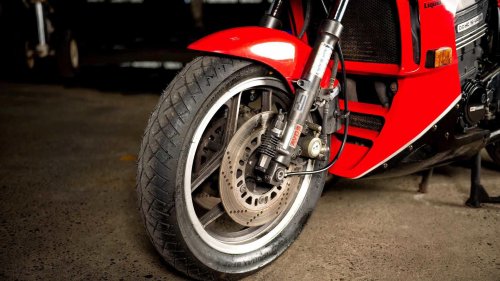
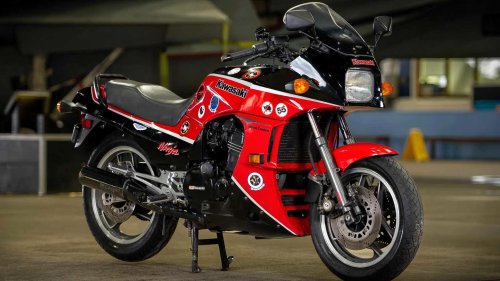
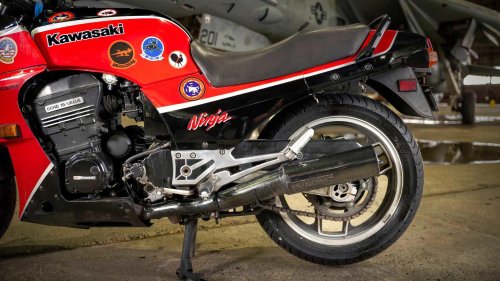
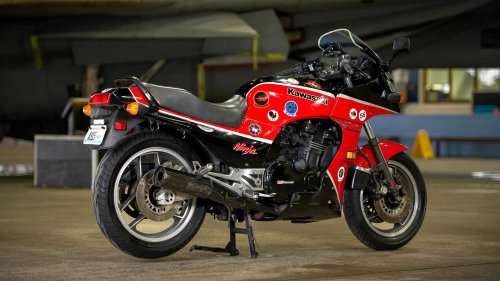
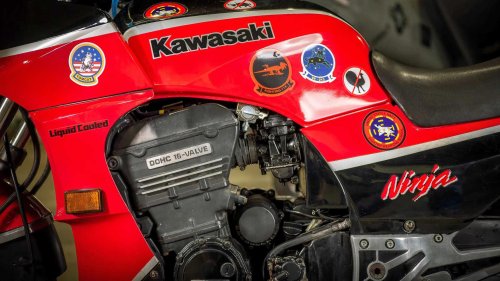
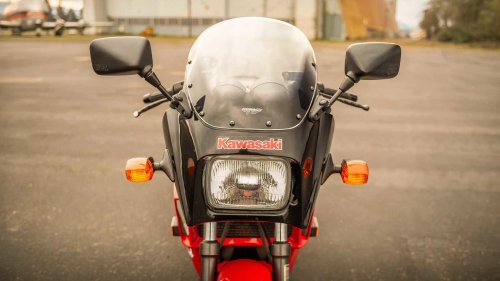
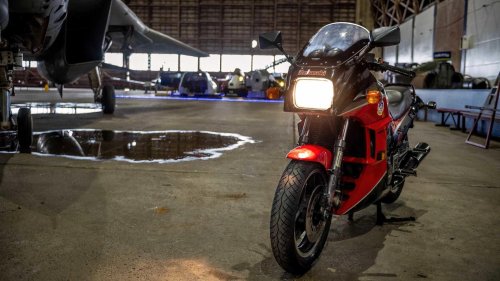
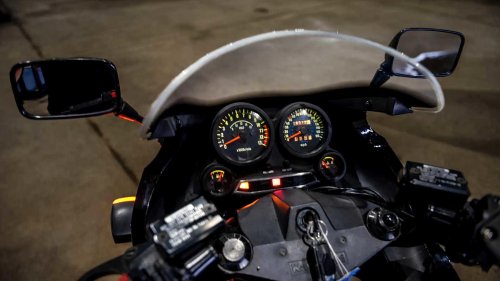











Think back to the glorious '80s. The superbike world still treated speed like a balancing act. Engines were getting stronger, but the rest of the motorcycle often struggled to keep up. A big motor could make magazine headlines, but if the chassis turned vague when the road got serious, the whole thing started to feel like a handshake agreement with bad intentions.Then one Japanese machine arrived with the unsettling feeling that it already belonged to the next decade. It had the pace riders wanted, the engineering discipline they needed, and the sort of all-in development that made many of its rivals seem half-finished. This was a whole different level of understanding how to unlock and use speed. Superbikes Were Getting Faster, But Not Necessarily Better Bring A TrailerBy the early '80s, performance motorcycles were already deep into the horsepower race. That part was going great. The awkward bit came when those same bikes had to brake hard, hold a line, or stay composed over imperfect pavement. Plenty of them were thrilling in the same way a shopping cart with fireworks would be thrilling. Memorable, definitely. Refined, not so much.That was the gap Kawasaki chose to attack. The company wanted a motorcycle with the straight-line punch of the big-bore bikes and the agility riders associated with smaller machines. That sounds obvious now, because every serious sport bike since has tried to hit that exact target. Back then, though, it was a much tougher trick. Big speed often came with big compromises, and riders were expected to treat that as part of the charm.The smart move was realizing that the engine couldn't be the whole story anymore. If a motorcycle was going to move the class forward, it had to feel coherent from front axle to taillight. That meant power, yes, but also geometry, weight distribution, suspension response, and high-speed stability. Kawasaki was one of the first to treat all of that as one problem instead of five separate departments arguing in different conference rooms. The Kawasaki GPZ900R Was Great, But Arrived A Decade Too Early Bring A TrailerWhen the GPZ900R landed in late '83 as an '84 model, it didn't sound like a rework of anything already sitting in Kawasaki showrooms. It arrived with an all-new 908cc liquid-cooled inline-four, dual overhead cams, four valves per cylinder, and a six-speed gearbox. That formula feels familiar today because the industry eventually followed it. In '84, it gave the GPZ a very modern sort of presence. It felt oddly pre-sorted, like it had skipped a few steps in the usual evolution.Its claimed output of 108 horsepower was serious business for the time, and top speed pushed into the roughly 155 mph range. That put it right at the sharp end of the era's performance spectrum, where spec sheets stopped being casual reading and started sounding like legal evidence. This was a motorcycle with enough speed to grab attention from anyone with a pulse and enough composure to keep that attention for the right reasons. Cohesive Speed Bring A TrailerMore importantly, Kawasaki did more than just drop a powerful engine into an existing platform and call it progress. The entire motorcycle was engineered around that power. That cohesiveness made it super advanced for its time. With the passage of time, it's easy to see it clearly now. The GPZ900R felt like a motorcycle that had somehow shown up from a later chapter, looked around, and politely embarrassed everyone else in the room. A Superbike Engine Designed For Speed And Control Bring A TrailerThe engine itself deserves a lot of the credit, because Kawasaki paid close attention to size, layout, and packaging. The inline-four was compact, and Kawasaki mounted it low in the frame to help improve handling and weight distribution. That's routine engineering language now, but it directly shaped how the bike behaved once the road got interesting.Kawasaki also used the engine as a stressed member in the chassis, which improved rigidity without piling on unnecessary mass. That was a very grown-up bit of thinking for a class that had often been content to solve problems with another bracket and a shrug. The design made the bike feel more integrated, more deliberate, and less like a collection of fast parts trying to occupy the same ZIP code.The GPZ900R, then, was a motorcycle that could accelerate hard without turning twitchy or vague the moment speeds climbed. Riders got strong drive, useful midrange, and the kind of top-end urgency a flagship superbike needed, but they also got a machine that stayed settled while doing it. The GPZ's engine had muscle, sure, but it also had manners.And frankly, that's the part that tends to age best. Big numbers are fun, but thoughtful engineering is what keeps a machine interesting forty years later. Anyone can build something loud. Building something fast and reliable at the same time is where it gets clever. A Chassis That Finally Matched The Power Bring A TrailerKawasaki backed up the engine with a chassis that was equally serious about the job. The GPZ900R used a steel frame paired with an aluminum swingarm and rising-rate rear suspension, giving the motorcycle the control and stability its power output demanded. At the time, it showed Kawasaki had stopped treating the chassis like stage equipment for the engine.Up front, the bike used anti-dive forks and a 16-inch front wheel on early models, both aimed at sharpening handling and improving braking stability. Some of that hardware feels very dated now, especially the anti-dive setup, which sits in motorcycle history beside digital dashboards from the 1980s and other ideas that seemed wildly futuristic for about five minutes. Still, in context, it showed Kawasaki was aggressively looking for ways to make the whole motorcycle work better under pressure. Class Act Bring A TrailerWhat mattered most was the feel on the road. The overall setup gave the GPZ the agility of a smaller sport machine despite its large engine, and that's where the bike really separated itself. Riders found a motorcycle that could turn in with confidence, stay planted at speed, and avoid the top-heavy clumsiness that often tagged along with big-bore performance bikes. It had proper composure and poise. This was the mechanical equivalent of good posture. All in, Kawasaki gave riders a fast motorcycle that felt organized and controlled, and the rest of the class had to catch up. The Motorcycle That Started The Ninja Legacy Bring A TrailerThe GPZ900R also became the first Kawasaki to wear the Ninja name, and that alone would’ve secured its place in motorcycle history. Once that badge went on to define generations of high-performance Kawasakis, the importance of the original bike grew exponentially. It became the opening sentence in a very long and very loud family story.Then Top Gun arrived in 1986 and pushed the motorcycle into a completely different kind of fame. Suddenly the GPZ900R was pop culture. It became the bike people remembered even if they didn’t know the displacement, the valve count, or which end of a carburetor did what. That sort of exposure can sometimes turn a machine into a mere prop, but the GPZ avoided that fate because it had the substance to back up the image. Advanced Engineering Bring A TrailerThe styling helped, too. The bike looked sharp, compact, and modern in a way that fit the moment perfectly. It had just enough menace to look fast while standing still, which is honestly half the battle with any performance machine. Some motorcycles wear age badly and end up looking like old gym equipment. The GPZ900R still looks purposeful, which says a lot about how right Kawasaki got the proportions.Its production longevity says even more. The motorcycle stuck around for years, including a surprisingly long run in Japan that stretched into the early 2000s. Bikes that are supposedly revolutionary often burn bright and disappear. The GPZ900R somehow managed to do the opposite. It stayed relevant long enough to prove that its original thinking was simply advanced engineering.Sources: Cycle World, Motorcycle Classics, Bennetts.