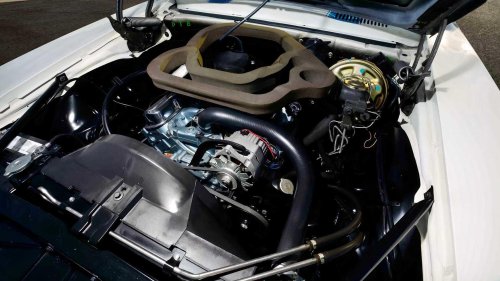
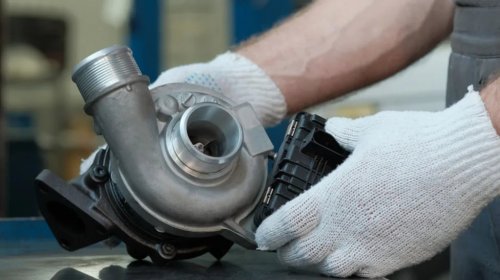
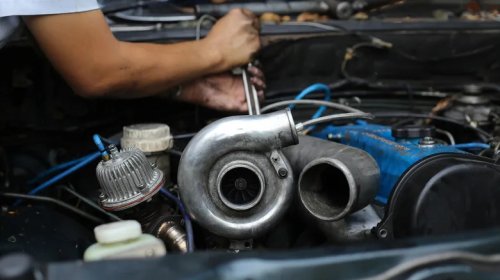
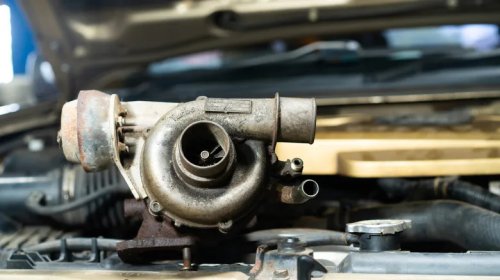
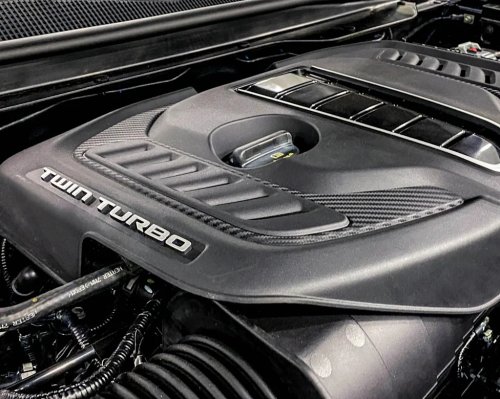
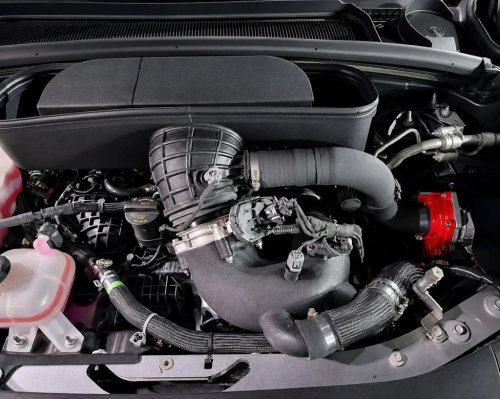
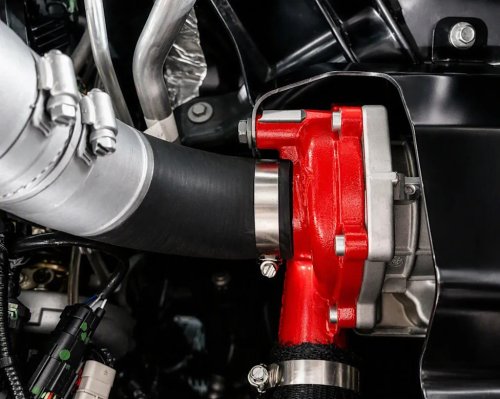
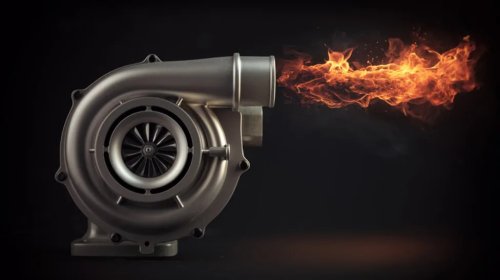
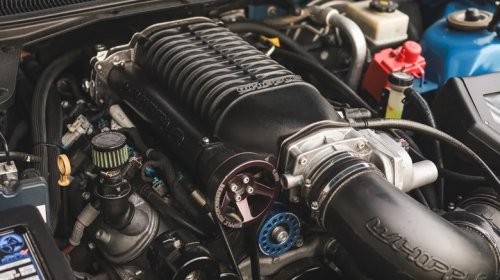
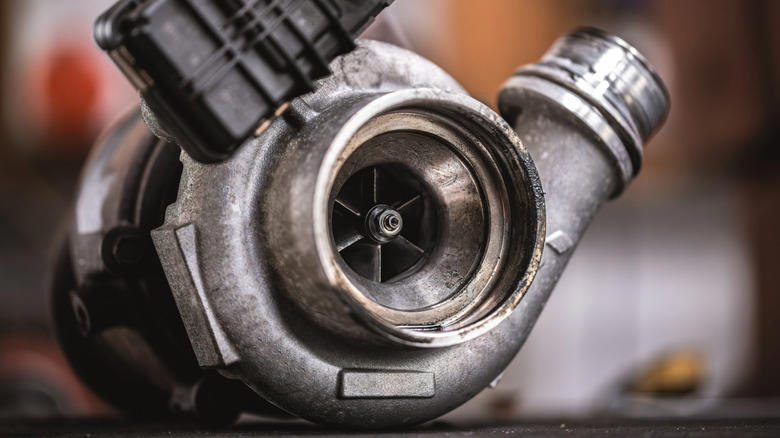
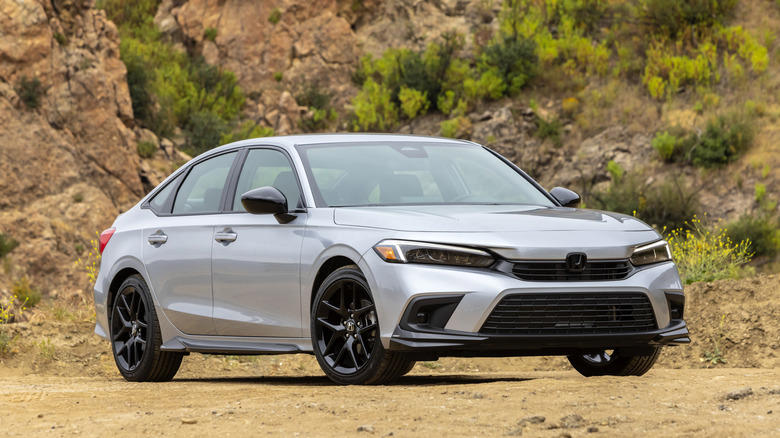
A close-up of a turbocharger.When it comes to things you slap on engines to let them make more power, turbochargers and superchargers remain two of the most popular choices that work similarly in principle, but go about their business quite differently. Both create more power by pushing more air into the engine, but a key difference in outcomes is that turbos are generally way more fuel-efficient than superchargers. After all, downsized turbo engines were the solution automakers turned to en masse when fuel economy standards tightened, not superchargers. And it all has to do with how each technology fundamentally works.The quick and dirty explanation is that turbochargers capture the engine's exhaust gases (yes, the same gases that come out of the tailpipe), using them to spin a turbine and compressor that help suck in more outside ambient air into the engine. The denser the air, the stronger the combustion, the more power the engine makes.Superchargers, meanwhile, don't really help with fuel economy, despite having the same mechanical goal of letting an engine produce more power by feeding more air into it. Instead of using exhaust fumes, superchargers do this by spinning apair of screws — or lobes or impellers, depending on type – via a pulley system attached to the engine's crankshaft. That means a supercharged engine has to pull double duty, powering both the wheels that move the car and the supercharger that stuffs more air into itself. This added load is known as parasitic loss and is what hurts fuel economy. Real-world examplesA silver 2024 Honda Civic sedan parked on some dirt.You can see this dynamic play out in the real world. Take, for instance, the 2024 model year Honda Civic, which was available with either a turbocharged 1.5-liter or a naturally aspirated 2.0-liter. Not only was the turbocharged Civic more efficient at 34 mpg combined per EPA testing versus the 2.0-liter's 33 in high trims, but it's also a good lick more powerful, making 180 horsepower over the 2.0-liter's 158.Cars that came supercharged from the factory are much rarer, but to illustrate the efficiency delta we can look at the 2009 Land Rover Range Rover Sport. It came with either a 300-horsepower, 4.4-liter naturally aspirated V8 good for 15 mpg or a 390-hp, 4.2-liter supercharged V8 rated for 14 mpg. Here, the supercharger increased power despite having less displacement to work with, but did the vehicle no favors when it came to fuel economy.Even discounting mechanical logic and empirical EPA results, the fact that superchargers are nowadays reserved for high-power, high-aggression performance cars while just about every non-hybrid econobox under the sun rocks a turbocharged four-cylinder says all you need to know about which one is more efficient. Want more like this? Join the Jalopnik newsletter to get the latest auto news sent straight to your inbox, and add us as a preferred search source on Google.


















 +39 others