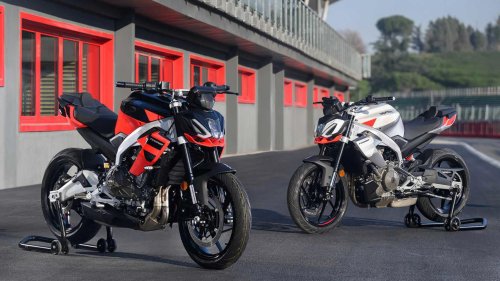
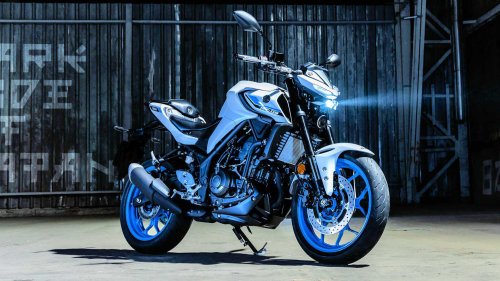
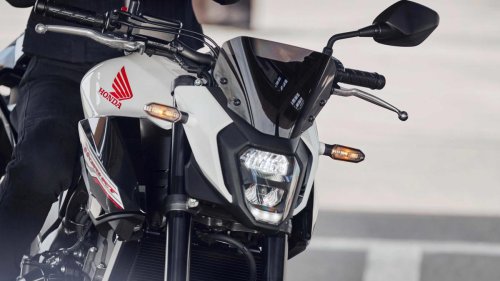
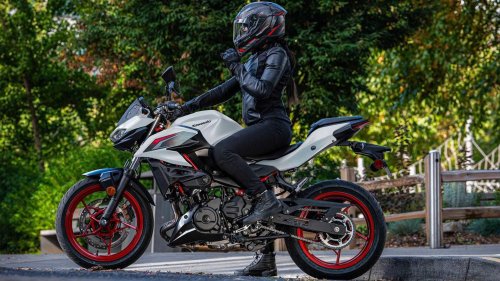
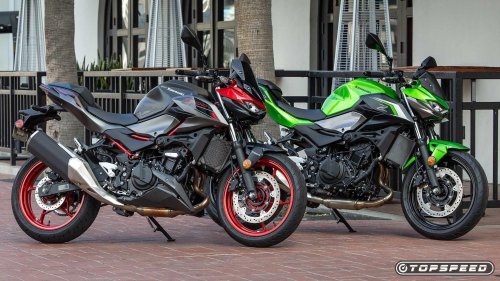
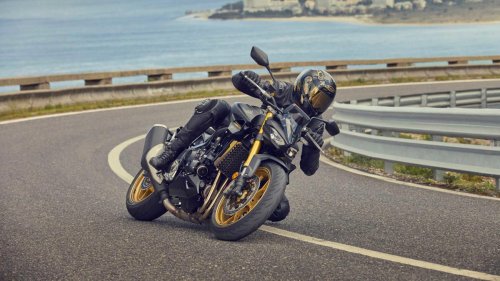
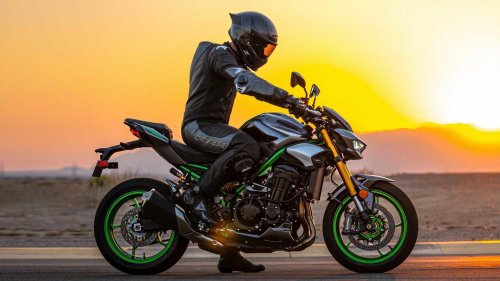
Not everyone needs a liter-class motorcycle pushing 200 horsepower. Heck, even people who own them don't "need" them. As tempting as it might be to buy into the most capable or high-end machine out there, for many riders – especially those just getting started or looking for a practical everyday machine – the lower-displacement models actually make the most sense. And if you pick the right one, you won't have to compromise on much. Efficiency, comfort, and confidence will all be part of the package, while still saving you thousands of dollars. Why The 300-500cc Segment Makes Sense ApriliaThis is something that the 300-500cc naked bike category can do well. Thus, it has grown significantly over the past decade. Manufacturers recognized that while everyone wants to step up from a smaller entry-level motorcycle, not everyone wants maximum performance. The best middleweights balance comfort, performance, and efficiency to deliver a product that works well across different scenarios. An Entry-Level Naked Bike Is A Good Starting Point YamahaThese bikes often offer enough power for most riding conditions without the intimidation factor of larger machines. They also have an upright riding position that’s good for visibility and comfort, along with a relatively low curb weight that makes low-speed maneuvering easy. This combination of manageable performance, ergonomics, and affordable pricing makes them an excellent entry point for new riders while still remaining practical and engaging for more experienced riders.HondaThey’re also a good balance between a commuting machine and something used for recreational riding. This versatility reduces the immediate need for multiple bikes (even though you can never really have one bike that does it all) without making significant compromises in either scenario. The Kawasaki Z500 is one of the models that sits squarely in that sweet spot. The Z500 Builds On Kawasaki's Middleweight Success KawasakiKawasaki has built a strong reputation in the middleweight segment over the years, with models like the Ninja 650, Z650, and Versys 650 proving popular with riders globally. The company understands what this customer base values – reliability, accessibility, and real-world usability – and the Z500 is a product of this accumulated knowledge. It nails all the basics right on the head, while being super-easy on the pocket, too. Starting Price: $5,699 Kevin Wing / TopSpeedThe 2026 Kawasaki Z500 has an MSRP of $5,699, positioning it between the Yamaha MT-03 and Honda CB500F. The base model includes ABS, an assist and slipper clutch, and LED lighting as standard equipment. The Z500 SE variant adds a color TFT display and different graphics for $6,399 – a $700 increase that brings a valuable feature, especially for riders who value smartphone connectivity. For those prioritizing basic functionality and lower costs, the base model delivers everything necessary for confident, comfortable riding. Familiar Parallel-Twin Platform Powers Multiple Models KawasakiThe Z500 uses a 451cc parallel-twin engine that appears across multiple Kawasaki models. This proven powerplant balances performance with efficiency while maintaining the Japanese marque’s reputation for reliability. The liquid-cooled, parallel-twin engine displaces 451cc and is known for its smooth and predictable power delivery across the rev range. This mill emphasizes bottom-end torque and is quite tractable, allowing you to maintain a gear higher than ideal without any sign of fuss. The bike comes with an assist and slipper clutch that should reduce lever effort while preventing rear wheel hop during aggressive downshifts. Simple Underpinnings Mean High Accessibility KawasakiComfort and confidence matter more than peak performance for most riders, especially those using motorcycles for transportation rather than solely recreational purposes. The Z500 delivers on both fronts through thoughtful ergonomics and design. Upright Ergonomics Bring Daily Comfort The riding position places riders in a natural, upright posture with slightly forward-leaning handlebars. This position provides reasonably good wind protection, considering there’s no fairing to hide behind. The footpegs aren’t very rear-set either, and the overall package works for riders of varying sizes.The handlebars are also relatively wide compared to most other bikes in the segment and provide good leverage for maneuvering without creating excessive reach. Controls fall naturally to hand, with all functions accessible without stretching or awkward wrist angles. Its seat also offers sufficient padding for rides lasting a few hours at least, but the pillion seat won’t be as comfortable over that duration. Manageable Weight And Low Seat Height KawasakiThe Z500 is built around a lightweight trellis frame, with a total curb weight of 366 pounds, making it a rather light machine in its class. This builds confidence for new riders, and with the right technique, this is a bike you should be able to get off the ground on your own, even if you do drop it. Another factor aiding its beginner-friendly nature is the 30.9-inch seat height, which puts most riders’ feet firmly on the ground without the need for tiptoeing and the associated stress. The combination of lightweight and low seat height creates an approachable package for most riders. Simple Underpinnings For Everyday Riding KawasakiThis is tied with a straightforward suspension setup with a conventional 41mm telescopic fork offering 4.7 inches of travel at the front and a Uni-Trak rear monoshock offering 5.1 inches of travel at the rear, with seven-way preload adjustability. Neither end offers compression or rebound adjustment, but the factory settings work well for riding on tarmac. It's the same story for brakes. A single 310 mm front disc with a dual-piston caliper and a 220 mm rear disc with a single-piston caliper, and ABS comes standard. The latter is a big deal, considering the Ninja 500 has ABS as an option for extra money. A Feature Set That's Plenty Enough KawasakiMost riders don’t need launch control or a six-axis IMU on a bike they ride daily. The Z500 recognizes this and strips away the technological excess that drives up costs without delivering proportional benefits for everyday riding. What remains is a focused set of features chosen for genuine usefulness.Kevin WingSo the base Z500 features a digital LCD showing essential information, including speed, gear position, fuel level, and trip data. Then, the SE variant upgrades to a color TFT display, adding smartphone connectivity through Kawasaki’s Rideology app. This connectivity enables call and message notifications, ride logging, and vehicle data tracking. The rest of the bike is pretty simple – there’s no traction control, no ride modes, and essentially no sophisticated systems that you don’t necessarily need at this level. The Z500 Has Several Rivals Honda UKIt’s worth mentioning that this isn’t a sparsely occupied segment. The Honda CB500F Hornet at $5,899 represents the Z500’s most direct rival. The Honda is also powered by a parallel-twin engine with similar displacement and gets a 5-inch TFT display, traction control, and Honda’s reputation for bulletproof reliability. But it is also significantly heavier at 48 pounds.YamahaOn the other side of the spectrum are models like the Yamaha MT-03, which, with its smaller 321cc parallel-twin, is more affordable at $4,999 but can’t match the performance on offer from the Kawasaki. The smaller displacement does mean a more manageable motorcycle, but also less highway capability and a shorter window before you start wanting more performance. On paper, the Kawasaki has notably more on offer for just $700 more.