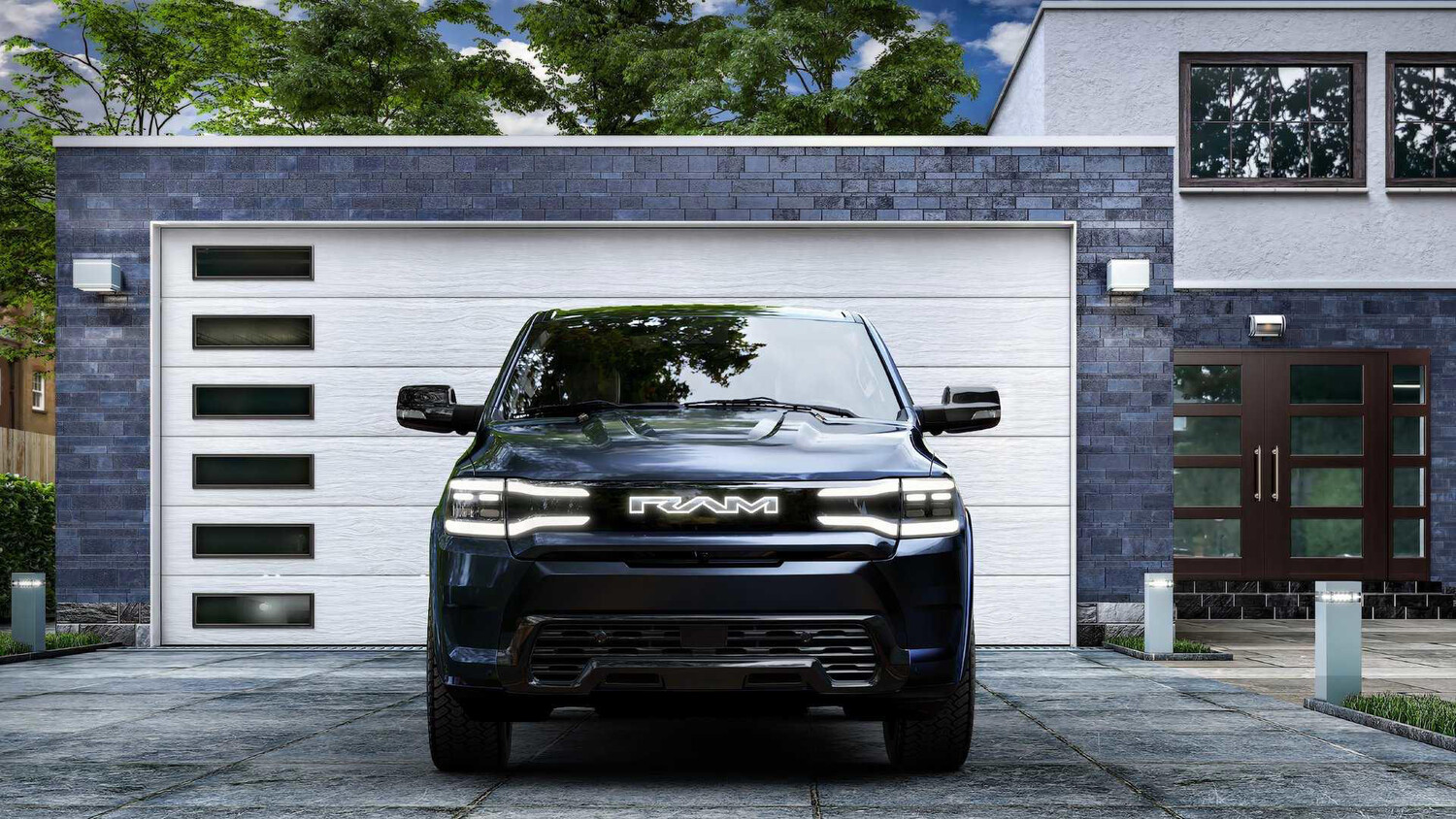
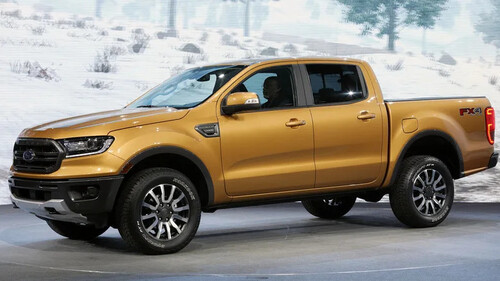
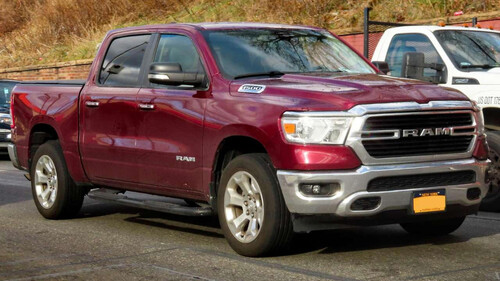
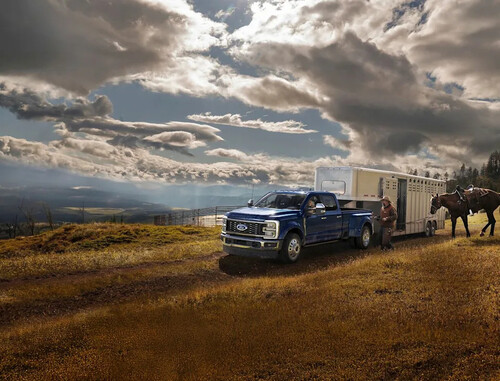
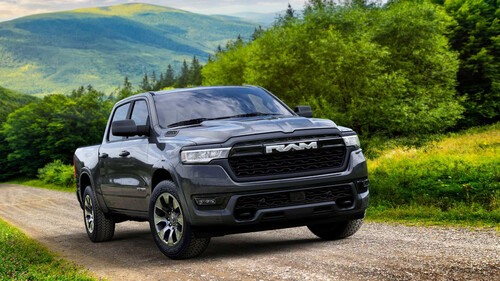
Jump LinksElectrification seems to be fundamental in all major mainstream cars nowadays, be they sedans, SUVs, or even supercars. Electricity is now working hand in hand with the internal combustion engine to deliver the best performance or efficiency all across the automotive world. However, there is still one genre of automobile that seems distant from the various modes of hybrid powertrains - pickup trucks. Plug-In hybrid trucks seem almost counter-intuitive.Trucks that were once known for carrying monumental loads never placed much importance on fuel efficiency. As a result, you could either choose between economy or load-carrying abilities, and never enjoy the best of both worlds. However, ever since the introduction of mild-hybrid and pure-hybrid powertrains, this has seen a positive change. Midsize trucks made by Toyota and Ford offer some of the best mileage ever seen from pickups, all while offering similar towing and cargo capacities to trucks of the past. The next logical step in hybridization would be plug-in hybrids. However, why are there no true PHEV trucks currently on sale in the USA? Let us take a look at what PHEV trucks are, how they actually work, and if there are any future trucks that will feature this technology. Plug-In Hybrid Trucks: A Definition FordPlug-in hybrid trucks work similarly to any version of a PHEV car. It is a stronger form of hybrid that uses both a battery with an electric motor and a fuel-powered engine. A PHEV vehicle, however, can be plugged in to charge from a DC or AC outlet and can be driven purely on electric power for a limited number of miles, after which it can switch to the engine to recharge the battery after its depletion. In theory, they provide the best of both worlds, with the ability to commute silently in an EV and rely on the ICE for long-distance driving or heavy-duty work. How Do Plug-In Hybrid Trucks Actually Work? VolvoA PHEV powertrain is more complicated than just a pure EV or a pure ICE-powered engine. It uses a parallel hybrid system - both the engine and the electric motor can drive the wheels. Power delivery depends on the conditions and is blended between both of them - i.e. for city use with an empty bed and no towing, the truck runs in full EV mode with the engine switched off. For more intensive uses such as towing and carrying heavy goods in the truck bed or covering long distances, the truck can use the ICE for more efficiency and range. A hybrid mode can decide which powertrain is the best for the use case and alternate between the two when necessary. Are PHEV Trucks Better Than Conventional Diesel And Gas Trucks? FordThe short answer is not for now. Regular pickup buyers expect high towing capacity, large payload ratings, and long driving range from trucks. They are used more as tools than other lifestyle car segments such as sedans or SUVs. Adding a PHEV system reduces every key non-negotiable for potential truck buyers. This is mostly due to the addition of a battery pack and electric motors. It increases the overall weight of the truck, complicating packaging while also reducing the payload capacity. Trucks are mostly based on ladder frame chassis, while having large beds and robust suspension setups. All of this leaves very little space for a large battery pack without major redesigns.Another negative of PHEV trucks is cost. As you are buying two different powertrains in one vehicle, the cost you pay when compared to a traditional diesel or gas truck is also severely higher. This may push PHEVs into fully EV truck territory in terms of money, with only a fraction of the typical EV truck range and benefits. Towing also negatively affects efficiency in PHEV trucks. Towing can deplete a relatively small battery of a PHEV truck quite quickly, which leaves the ICE to charge the battery as well as tow the payload, reducing economy greatly. PHEVs also usually have a smaller engine since they rely on battery packs and EV motors, and a larger block would only add more weight. This results in reduced performance in the case of full ICE driving.Traditional hybrid powertrains that do not have electric motors to drive the wheels - otherwise known as mild hybrids - have seen a massive rise in the US as a healthy compromise between power and efficiency. Trucks like the new Ford Ranger and Toyota Tundra have implemented hybrid powertrains to increase fuel economy, while also increasing torque. What PHEV Trucks Are Available To Buy, And Why Are There None In America? 2025 Ford Ranger PHEVThe only PHEV truck currently on sale is the Ford Ranger PHEV in the EU and Australia. It features a 75-kW electric motor with an 11.8-kWh battery and offers roughly 30 miles of EV-only range. It is paired with a 2.3-liter turbocharged gas engine, with the combination producing 273 hp. Breaking the norm of diminishing towing capacities, the Ranger is rated to tow 7,700 pounds, which is in line with other midsize pickup trucks. So why is it not sold in the US? There are numerous reasons. Ford has the best-selling F-150 in the US, that continues to sell strongly despite electrification, and it is technically a hybrid itself. The PHEV Ranger is built to meet stricter emissions standards in the EU, so it would require expensive importing or complicated redesigning of current production lines to be produced locally. Markets abroad also incentivize PHEVs, making the Ranger a good bargain in places such as the EU and Australia.Potential truck buyers in the US are also not particularly looking for a PHEV truck, and would much rather shop for a hybrid or a fully EV truck. Manufacturers are also looking to transition fully to EV trucks instead of investing millions in the middle ground that is PHEV trucks. In theory, PHEV technology looks to combine the positives from each side. However, in practice, it is difficult to make even one powertrain better than its ICE or EV counterpart. Could The Upcoming RAM 1500 REV Be The Answer? 2025 Ram 1500 REVHowever, RAM thinks it has solved the PHEV conundrum with its upcoming 1500 REV. It takes a different approach to PHEV technology and is looking to capitalize on a very niche market by becoming the first PHEV truck sold in the USA. RAM is anticipating customers wanting a full-size pickup truck with instant electric torque but not wanting to fully rely on charging. However, it is utilizing its electric battery and engine differently. It is mainly going to behave as a BEV truck and use its ICE as a range extender, charging the battery and giving the truck a theoretical range of 690 miles. The 1500 REV was originally called the Ramcharger and was meant to be a fully electric truck. However, RAM has now decided to cancel the fully electric truck and rebrand the PHEV truck as the REV. It is based on the STLA Frame architecture, which means the truck does not lose any bed volume because of the batteries, and instead places them underneath the cabin floor.The REV will come with dual electric motors producing 663 hp and 615 lb-ft of torque. In theory, the RAM can replenish with 400-volt DC fast charging at a maximum rate of 145 kW, and can charge up to 50 miles of EV range in 10 minutes. It comes with none of the negatives of a PHEV truck in terms of towing either, with the REV being rated to tow up to 14,000 pounds. However, only time will tell how the REV does in the pickup truck market, as it will be the first of its kind.In theory, plug-in hybrid pickup trucks can work. They provide the convenience of EV driving with the option to switch to a combustion engine when needed. If utilized in the right way, PHEV technology could bridge the gap between pure combustion trucks and fully EV trucks. However, it is extremely market relative and use case dependent. With the imminent arrival of the RAM 1500 REV this year in the USA, it could potentially compel other manufacturers to look at PHEV technology as an alternative to BEV trucks, or it could solidify the future of trucks as only full EVs.Source: Ford, RAM