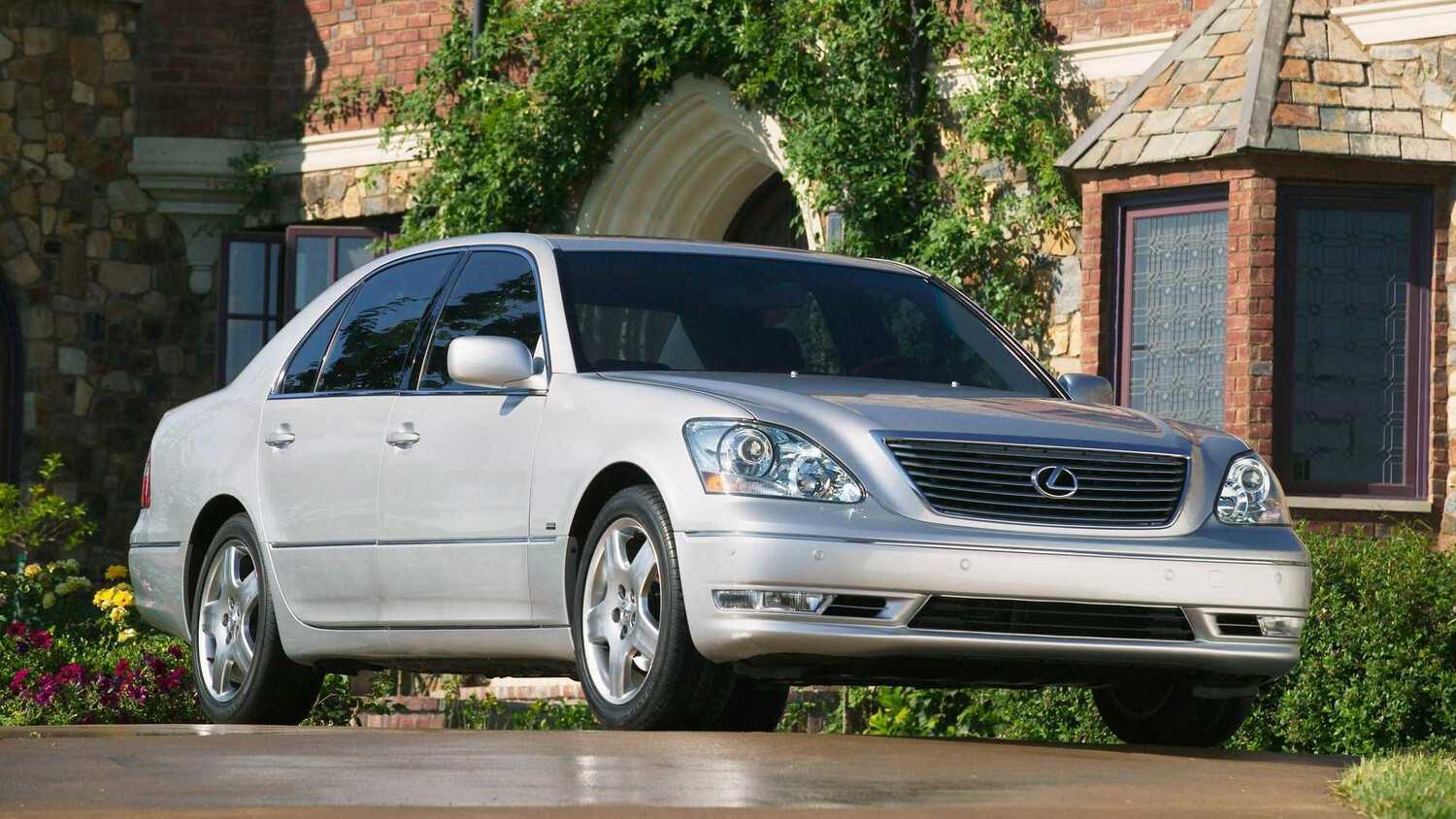
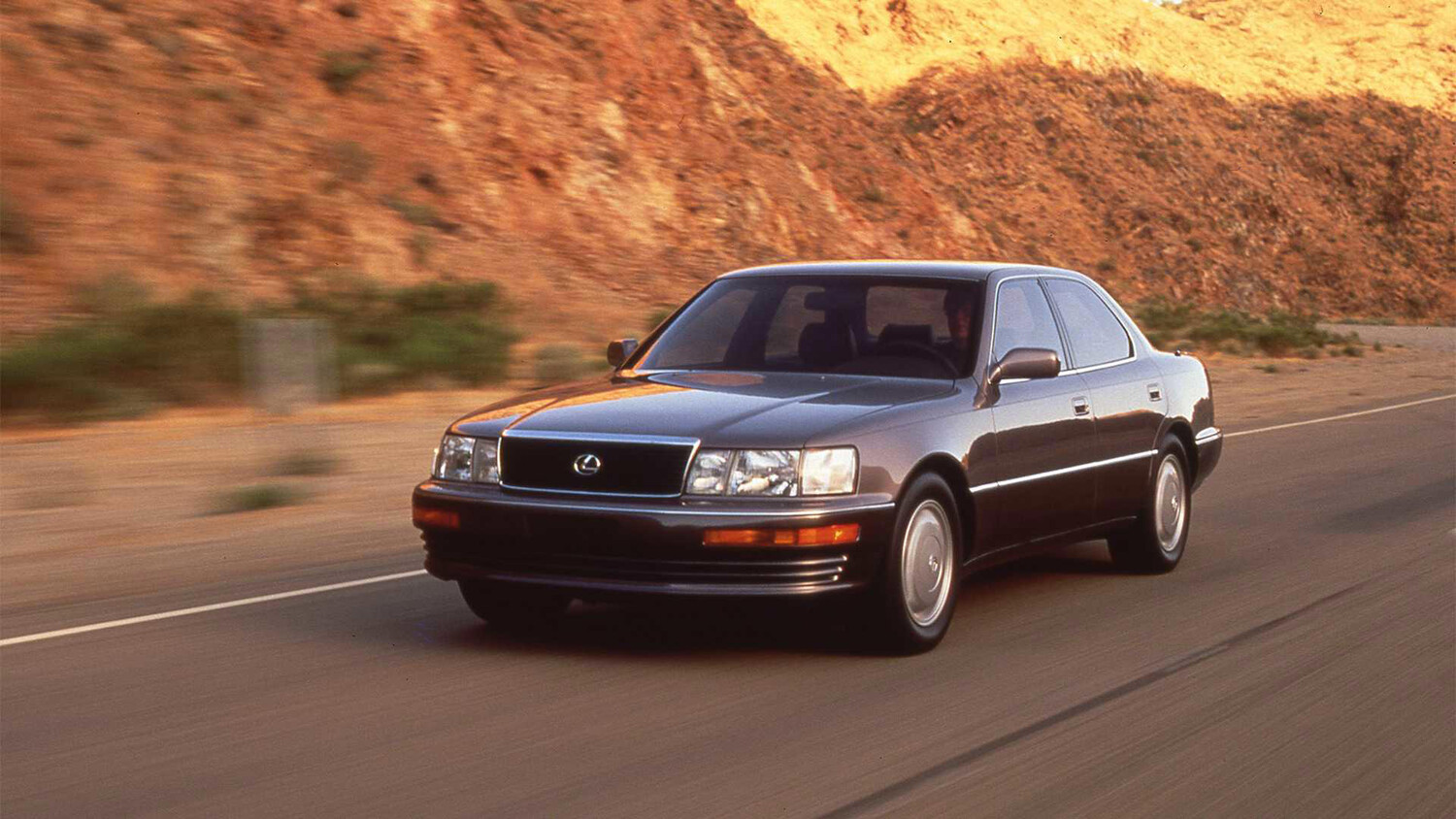
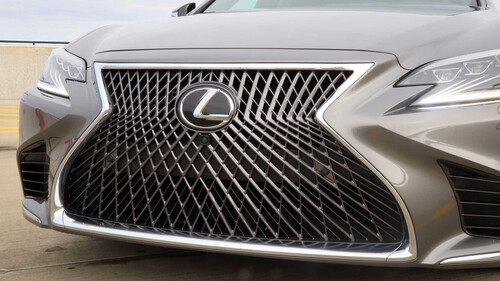
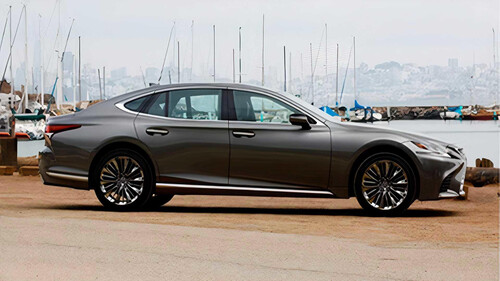
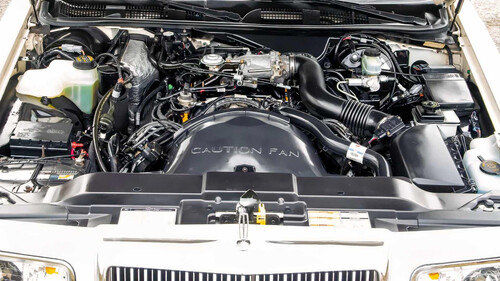
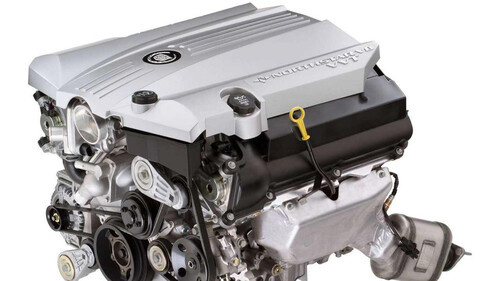
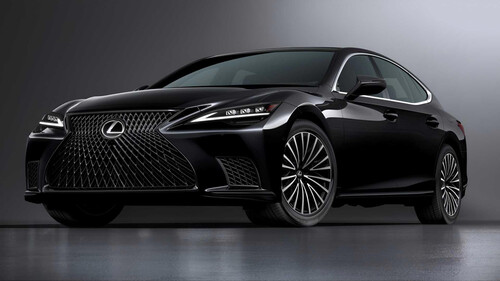
Over the past few years, '90s-era cars have started to officially enter into "classic" status. Models many of us grew up with, and that seemed so hum-drum and normal back in the day, are now keenly sought after by certain enthusiasts. Of course, this has always been the case. For example, folks who owned and sold classic muscle cars in the 1970s and 1980s sold them cheap, because they were considered old and outdated. Now look at their values, they've skyrocketed.Now it's time for the '90s cars to have their day, like the original Lexus LS. Recently, the old luxury boat has begun to garner some interest in the collector community. The oldest models are roughly 37 years old at this point, and many of them simply keep on running, thanks to near-peerless Toyota engineering prowess. Now that the classic market has taken notice of the Lexus LS, prices are just now starting to creep up, but you can still get into the LS market near the ground floor, and maybe you should. The Lexus LS Is A Legend LexusIn the early 1980s, Toyota was looking for a way to break into the US luxury market, along with other markets throughout the world. The Germans had managed to control a large portion of the foreign luxury market in the States and abroad for quite a while, and their cars were only getting more and more popular. USDM luxury cars, like the Cadillac Brougham and the Lincoln Town Car, while popular, were beginning to fall behind in terms of styling, options, and overall sales by the mid to late '80s, signaling a market ripe for change.Because of this, Toyota launched a large-scale development program called the "F1 Project" in 1983. It was commenced in secret, and was aimed at providing Toyota with a viable, desirable, and affordable luxury flagship sedan that would see success in the US luxury market and beyond. No budget or time constraint was implemented, effectively giving Toyota engineers a blank check and free will to do what they pleased, and that's exactly what Toyota's top brass wanted.Lexus The F1 Project's numbers were huge. 1,400 engineers, 60 designers, and a whopping 2,300 technicians worked on the project, along with roughly 200 support staff. 450 concept models were built between 1985 and 1987, along with over 900 engine concepts produced during this period, as well. Using the prototypical models, the F1 Project team managed to log approximately 1.7 million miles of testing, and spent over $1 billion. Keep in mind, that was in the late '80s. Adjusted for inflation, that number is around $3 billion in today's money, making it one of the most expensive single-model investments in automotive history. Production Commences The Lexus LS' final design and engine concept was chosen in mid 1987, and production was slated to start in May 1989, four months after the model's debut at the 1989 Detroit Auto Show. A key hallmark of the original Lexus LS production program was Toyota's obsession with quality, leading the brand to limit production to 50,000 units per year. In its first full model year, 1990, Lexus sold about 42,496 LS 400s in the US, exceeding initial USDM expectations of roughly 40,000 units. It's that slightly-limited production number that helps the LS 400's case as a promising collector model.Lexus It became obvious that the Lexus brand's launch was a success, and the Lexus LS 400 continued on through the 1990s. It reached its second generation in 1994, wherein it gained numerous upgrades to its interior and tech, while its exterior and powertrain remained relatively unchanged, save for a few minor tweaks. It remained in production into the year 2000, before it was replaced by the third-gen LS 430, which was not subject to any sort of production limitation like its predecessor, hindering its potential future status as a collector's item. Here's How Much It Costs Today LexusWhen the LS 400 first went on sale in 1990, Lexus was asking a base MSRP of about $35,000, around $88,500 in today's money. That $35k sticker undercut the competing BMW 7 Series and Mercedes-Benz S-Class by $14k and $20k, respectively. However, it was about $8k more than the domestic '90 Cadillac Brougham and Lincoln Town Car models. However, for folks who wanted a modern luxury car and not an old-school Caddy or Lincoln, the Lexus LS 400 seemed to be the obvious choice when value for money is considered. By the time the final LS 400 model rolled around in 2000, it demanded a $54,000 sticker, which still placed it below the Germans and above the domestic competition.Cars & Bids These days, the Lexus LS doesn't cost nearly as much as it did when new, although it still manages to hold onto a significant amount of value when compared to other full-size luxury cars from its day. According to Classic.com, a Lexus LS 400 sells for an average of $12,889, with later cars generally commanding a slight premium over earlier examples.It's worth noting at this point that truly outstanding examples can command multiples of this figure, with standout examples having sold for north of $30,000 in recent years through various online auction platforms. It's obvious the LS 400 can hold onto its value extremely well, and you have Toyota engineering to thank for that, which we'll expound upon below. The LS 430's Day Is Yet To Come Lexus When it comes to its successor, the LS 430, it stuck around for five years, from the 2001 model year to 2006. While it's no LS 400, it does still pack a great amount of reliability into its overall make-up. However, as it's still not yet considered a "classic" by the market, its used pricing does not reflect its collector value, as it simply hasn't been established in any sort of meaningful way. At least, not yet. Its Legendary Powertrain Helps Value Retention Tremendously ToyotaThe crux of the Lexus LS 400's famously-reliable reputation is owed to its 4.0-liter V8. The mill itself carries the code name "1UZ-FE", and was the first member of the Toyota UZ engine family. It was developed specifically for use in the LS 400 before being adopted by a few other Lexus and Toyota models in the years following its release. It boasts an over-square design, meaning its cylinder bores are wider than its piston stroke is long. It's regarded as an extremely smooth-running engine, despite its over-square nature.Hidden underneath its valve covers is a belt-drive, quad-cam valvetrain consisting of 32 total valves. Both its block and cylinder heads are made from aluminum, and both its crankshaft and connecting rods are made from forged steel. Its pistons are hypereutectic, meaning they're cast from a mixture of silicon and aluminum. In 1995, in time for the LS 400's second generation, the mill was updated with lighter bottom-end components, along with an increased compression ratio measuring 10.4:1. Its compression ratio was increased again to 10.5:1 in 1997, and Toyota's variable valve timing (VVT-i) was introduced to the mill. From 1998 to 2000, the 1UZ-FE was featured on Ward's 10 Best Engines list.Cars & Bids Handing the UZ power is a four-speed automatic transmission, with a five-speed auto replacing it in 1998. Rear-wheel drive is the sole drivetrain option, and its suspension is fully-independent, with an optional air ride system available on first-gen LS 400s and early second-gen models, as well. Reliability And Cost To Own LexusEnthusiasts of the marque will already know the LS 400's stupendous penchant for reliability, especially when it comes to that 1UZ-FE V8. As far as that motor is concerned, its engine block is notorious for its strength, sporting a six-bolt main and deep-skirt design, wherein the edges of the block extend down past the crankshaft centerline. Not to mention, a bulk of Toyota's $1 billion investment was into engine design, resulting in a comically over-engineered mill designed to run for over one million miles in factory-verified tests. Its power output is also modest for an engine that size, resulting in an under-stressed mill.Because of this, the LS 400 carries a rather low cost-to-own when compared to other classic luxury flagships of its day. According to RepairPal, the LS 400's average annual repair cost is just $435 per year, significantly less than the average for a full-size sedan, which sits at $551 per year. While spare parts probably won't be as inexpensive as, say, a domestic Cadillac's, they are likely to be slightly cheaper than those found in older BMW 7 Series' and S-Classes.Lexus However, there are a couple of common issues with the LS 400, despite its esteemed reliability. The most common, again according to RepairPal, is a noisy front suspension in high-mile examples. In addition, it's worth looking out for power steering pump issues and leaks, along with a shuddering transmission, as these can crop up, as well. It Looks Like Now's The Time LexusThe Lexus LS 400 offers a unique opportunity for collectors, and even regular folks who just like to drive older luxury cars. In short, you can have your cake and eat it too, because it's shown itself to be extremely reliable, even at present, meaning you can own an older collector-type car and drive it every day. Try doing that with some 1960s muscle car. It's not easy, and you'll often find yourself underneath it getting rust in your eyes and grease on your shirt.As interest continues to grow in '90s cars as collector's items, the Lexus LS 400 will, likely, see a surge in value over the next half decade and beyond.