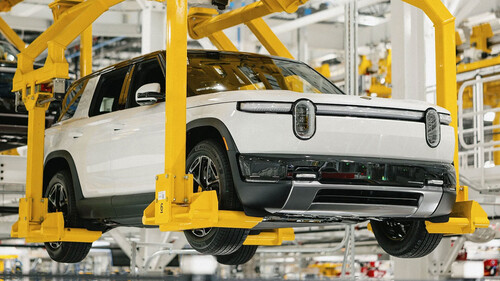
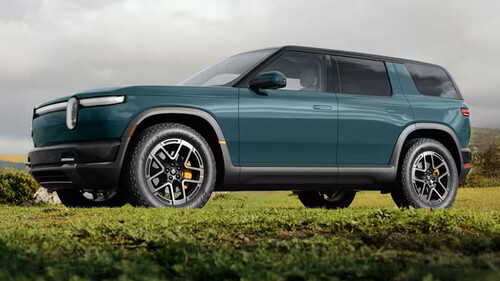
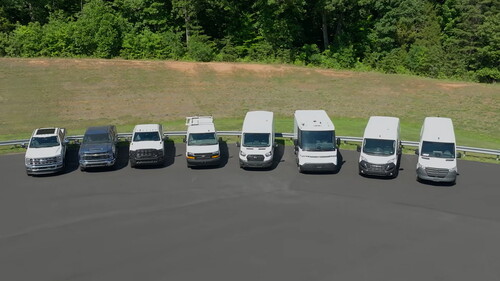
Despite the sharp U-turn in federal electrification policy, the signs of an EV revival continue to grow. Ford, for example, just reminded everyone that its affordable electric pickup truck is are still on track for production in 2027, featuring a cost-cutting EV battery. The US startup Anthro Energy is also steamrolling ahead with the first soup-to-nuts battery electrolyte factory in the US, too. The latest development involves the Nevada-based startup Dragonfly Energy, which is developing an Asian-style, innovation-centered battery production model. Making Batteries Better Dragonfly has been making regular appearances on the CleanTechnica radar of late, including a podcast interview with CEO Dr. Denis Phares that explains the company’s dry electrode battery manufacturing system. The dry electrode process is compatible with various chemistries commonly used in the EV battery field, including lithium-ion among others. It cuts out toxic solvents like like N-methyl pyrrolidone (NMP) and per- and polyfluoroalky substances (PFAS), which saves money all along the way. Eliminating the cost of solvent recovery and saving time on drying steps are two big factors, alongside a 9% savings on waste management, water, and carbon emissions. Overall, the process saves about 25% on energy consumption and 5% on production costs. On the performance end, the new manufacturing process enhances uniformity and durability, resulting in energy density, safety, and cycle life improvements. A Little Goes A Long Way In the latest development, Dragonfly Energy is celebrating a modest but impactful new award of $527,000 from the Nevada Tech Hub, alingside a $432,000 investment internally. “The funding will support a two-part initiative focused on expanding Dragonfly Energy’s in-house cell prototyping and testing capabilities,” the company explains. “The project includes the acquisition of specialized equipment to produce cylindrical lithium battery cell prototypes, along with advanced validation systems to evaluate performance, qualify new materials and suppliers, and support next-generation product development.” Dr. Phares adds that the investment will support the company’s plan for in-housing the battery prototyping process all through the design, build, and validation, resulting in an acceleration towards real-world applications. “This non-dilutive funding continues to be highly beneficial to our long-term growth strategy,” Phares emphasizes. Building Batteries The Asian Way, With Data If all goes according to plan, the end result is a faster, more competitive domestic battery operation that reflects the efficiencies achieved by manufacturers in Asia. “With expanded prototyping and testing infrastructure, the Company is further integrating its battery pack expertise with cell development, creating a more efficient feedback loop between lab research, manufacturing, and field performance,” Dragonfly explains. “This level of vertical integration, particularly the combination of deployed field data, pack design, and in-house cell prototyping, is rare outside of large-scale manufacturers in Asia,” they add. In a press statement describing the new round of funding, Dragonfly also drew attention to its data collection and analysis systems, integrated across high performance applications including the recreational vehicle field as well as trucking and industrial uses. “This data-driven development process supports the advancement of the Company’s patented dry electrode battery manufacturing platform, a more efficient and scalable alternative to conventional methods,” Dragonfly notes. “The initiative also contributes to Nevada’s growing battery innovation ecosystem, supporting collaboration across industry, supply chain partners, and academic institutions.” So, Where’s That EV Battery Of The Future? Dragonfly has been focusing on the vehicle electrification movement in applications outside of EV batteries. In the trucking field, for example, the company offers a suite of electric power systems that eliminate or reduce idling by subbing in electric power systems for onboard equipment. “Our Battle Born All-Electric APU (Auxiliary Power Unit), Battle Born DualFlow Power Pack, and Liftgate Power System are the most advanced and reliable fully-electric solutions on the market,” Dragonfly explains. “These customized units are tailored to meet the demands of the trucking industry and feature a state-of-the-art lithium battery system that provides an efficient, long-lasting, maintenance-free, and cost-effective way to power hotel loads and liftgate operations, all without running a truck’s engine,” the company adds. Similar Dragonfly systems can also be applied to reduce gasoline and diesel consumption by work trucks and emergency vehicles, among other use cases. In the EV battery field, Dragonfly is highlights its work on lithium-iron-phosphate (LiFePO4) and nickel-manganese-cobalt (NMC) chemistries. “LiFePO4 excels in safety and extended lifespan, making it ideal for everyday driving and maximized battery life. NMC offers exceptional energy density, allowing for extended driving range and catering to high-performance applications,” the company explains. “By understanding specific driving needs and priorities, Dragonfly Energy can design the optimal EV battery cell for power requirements.” The EV Battery Of The Future Is Taking Shape In Nevada As a partner in the Nevada Tech Hub, Dragonfly is also expected to make a broader impact on the EV battery field. The Tech Hub is organized through the College of Business in the University of Nevada, Reno “Nevada Tech Hub is focused on building a complete “Lithium Loop” – a closed-loop lithium economy that includes extraction, processing, battery manufacturing, and recycling,” Nevada Tech Hub says of itself, with the aim of leading the world in critical minerals and electric vehicle materials. The startup Lyten is another Tech Hub member. The company is developing a lithium-sulfur EV battery, and it received a $400,000 award from the Tech Hub aimed at prepping its proprietary Lithium Processing System for the pilot-scale phase. “The proposed system uses ion-selective membranes to extract lithium from brines into a high-purity lithium carbonate equivalent without acids, bases, or waste streams, resulting in high lithium recovery with comparatively low energy usage,” the Tech Hub notes. Lyten has been working on a lithium-sulfer EV battery with Stellantis for the past several years. As of last year the automaker was also pursuing Li-S battery chemistry with another US startup, Zeta Energy. Another Tech Hub awardee of note is the battery recycling startup Redwood Materials, which received $440,890 in funding to help kickstart lithium battery recycling in Nevada. “A collaboration with Washoe County, the project includes the deployment of 20 lithium battery-specific smart bins and a public education campaign to encourage responsible battery disposal, reduce landfill contamination, and lower the risk of battery-related fires in homes and businesses,” Tech Hub explains. Last month, Redwood announced a new EV battery hookup with the US automaker Rivian. The two firms will partner on a 10-megawatt energy storage system for Rivian’s existing factory in Normal, Illinois, deploying second-life EV batteries from Rivian vehicles. Last week Rivian also announced the next steps towards completion of its new EV factory in Georgia. White House bluster aside, the vehicle electrification movement is here to stay. Photo: The EV battery ecosystem continues to expand in the US, regardless of the sharp U-turn in federal energy policy (cropped, courtesy of Dragonfly Energy).