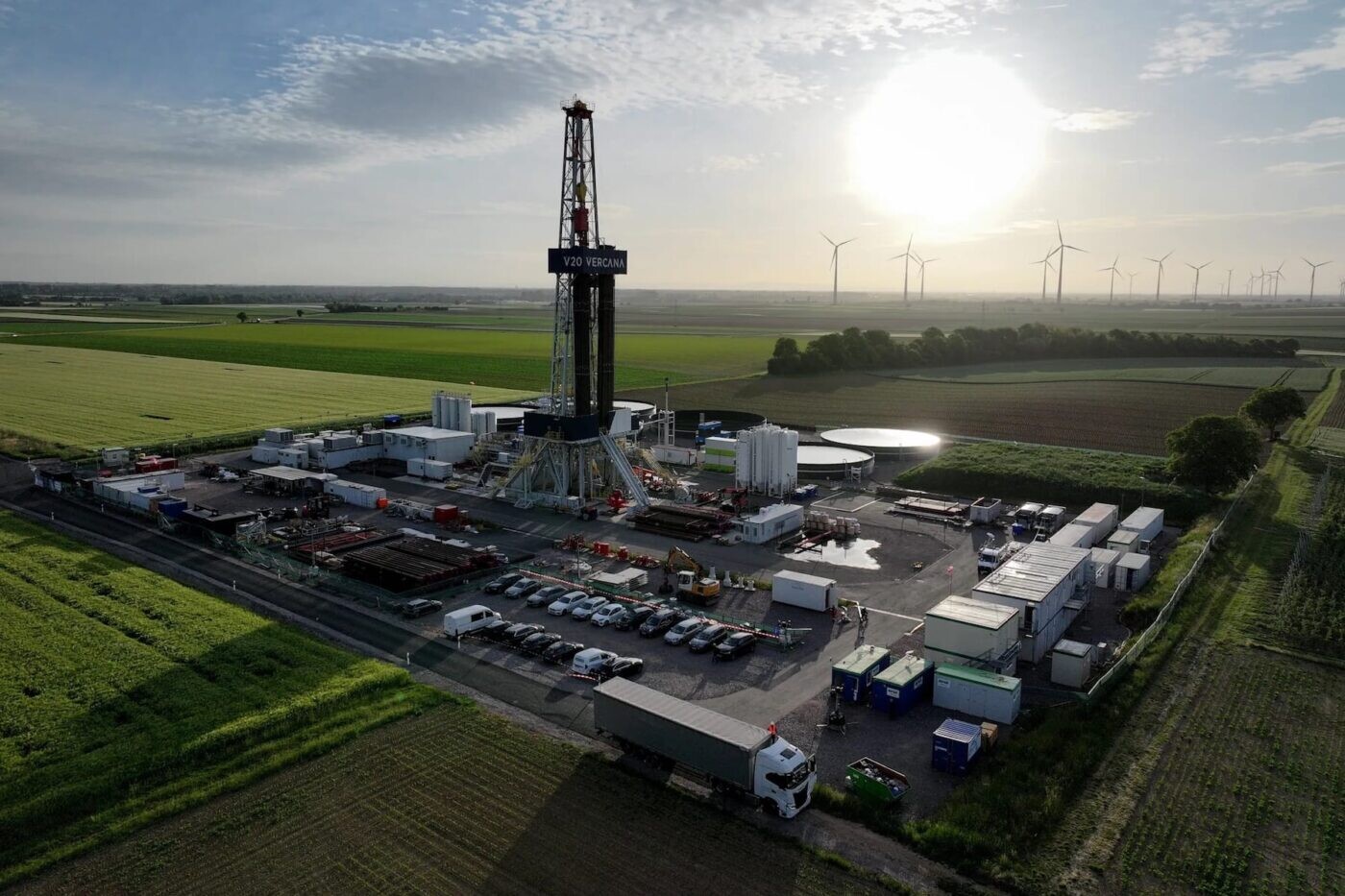
Image: Vulcan EnergySiemens and Vulcan Energy have signed a framework agreement for the Lionheart project, which aims to combine lithium extraction with renewable energy generation in the Upper Rhine Valley. Under the deal, Siemens Financial Services will join a consortium of strategic investors, including Hochtief and Demea Sustainable Investment, as a minority investor. Additionally, both parties have signed a letter of intent stating that Siemens will be Vulcan Energy’s preferred supplier of automation and digitalisation technology until 2035. An accompanying statement also notes: “Vulcan’s preference for Siemens will extend beyond Lionheart to include future phases of development.”What is the background? Vulcan is a German-Australian company seeking to extract lithium from geothermal brine as part of its Lionheart project, thereby establishing a local source of sustainable lithium in Europe. Vulcan’s combined geothermal and lithium resource is the largest in Europe, with its licence areas focused on the Upper Rhine Valley in Germany. In February 2023, Vulcan published the results of a definitive feasibility study for the first phase of its lithium project, which confirmed plans to produce 24,000 tonnes of lithium hydroxide monohydrate (LHM) annually. This production target remains unchanged and is set to be realised with a recently finalised financing package totalling €2.2 billion euros. According to Vulcan, this volume should be sufficient to produce ‘ca. 500,000 electric vehicle batteries per annum’.The battery-grade LHM is produced through a multi-stage process from lithium chloride, with extraction taking place in Landau and processing in Frankfurt-Höchst. Vulcan already operates pilot plants at both locations, which will now serve as 1:50 scale models for the construction of the full-scale commercial facilities. The company secured building permits for both major facilities in September 2025 and November 2025. Shortly afterwards, the Ministry of Economic Affairs confirmed that ‘construction is underway’, with Vulcan aiming to start commercial production two and a half years after the commencement of work – i.e., in 2028.The buyers of lithium from the first project phase are already confirmed. Supply contracts are in place with Umicore, LG Energy Solution, Stellantis, and Glencore. LG Energy Solution is set to receive 31,000 tonnes of LHM over six years. Umicore has secured 23,000 tonnes over the same period, while Stellantis is guaranteed 128,000 tonnes of LHM over ten years. Glencore, in turn, will receive between 36,000 and 44,000 tonnes over eight years.So far, so good. Vulcan has now announced a close partnership with Siemens. The agreement focuses on two key technology areas: “It will provide comprehensive automation and digitalization capabilities by delivering end-to-end project solutions from the Siemens Xcelerator portfolio – including advanced instrumentation, distributed control systems, digital twin technology, industrial network, IT security and analytics that will enable integrated operations from resource extraction to final production. The agreement will also provide smart infrastructure solutions from across Siemens’ buildings portfolio,” Siemens stated.As mentioned earlier, Siemens will also contribute to the project’s financing. Following the completion of the transaction, the conglomerate’s financial services division will become an active investor. Furthermore, with the support of Siemens Financial Services, an additional financing agreement has been reached with the Danish Export and Investment Fund (EIFO). Specific amounts were not disclosed in the latest announcements. However, when the total financing deal of €2.2 billion euros was announced in December, Vulcan Energy cited a €133-million-euro investment “from a consortium of strategic investors, including Siemens, Demeter, and Hochtief, to acquire a 15% preferred equity stake in the project company VER GEO LIO GmbH (the project company for Vulcan’s Phase One),” as stated in the original announcement.Roland Busch, CEO of Siemens AG, emphasised: “As both a strategic investor and a key technology partner, we are helping Vulcan Energy establish Europe’s first major sustainable source of lithium. With our technology – from advanced automation and digitalization to smart building solutions – we help to ramp-up production faster. This is essential to create a local lithium supply for our energy transition and a more competitive, resilient and sustainable European industry. It is a powerful example of strengthening growth and competitiveness in line with the Made for Germany initiative.”“The agreement reflects the growing strength of our partnership with Siemens and reinforces our confidence in delivering the objectives of Vulcan’s Lionheart Project. This partnership is an important step in unlocking future opportunities for growth, as we progress toward our goal of decarbonizing Europe’s battery supply chain,” added Cris Moreno, Managing Director and CEO of Vulcan.press.siemens.com, api.investi.com.au (PDF)