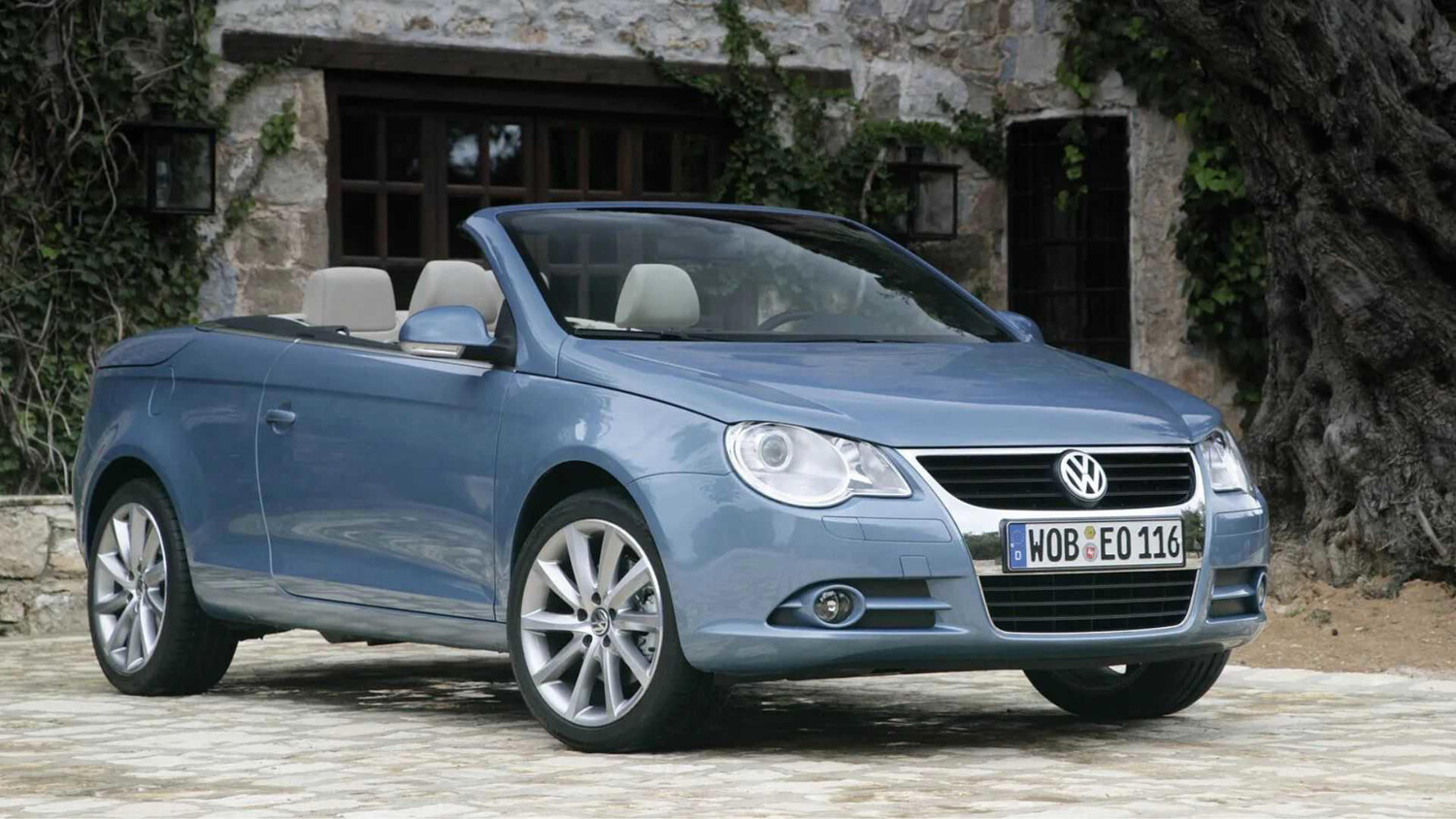
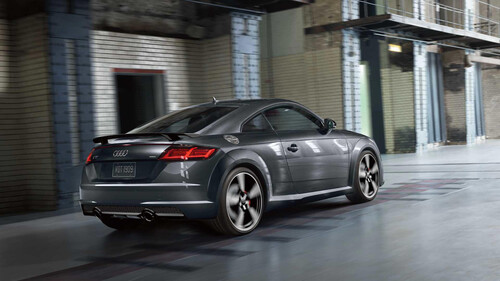
Jump LinksThe EcoRacer's Efficiency Was Assisted By Its Lack Of WeightVW's Latest Sports Car Once Again Relied On Diesel PowerThe Audi TT Was Also A ProblemEvery automaker needs to try and find a special niche with every car it offers for public consumption, as otherwise they'll likely be destined to follow in the wheeltracks of manufacturers who got there first. For the Volkswagen-Audi Group in the 2000s, this came in the shape of embracing diesel power. The German automotive giant poured huge resources into developing its range of TDI engines, which offered excellent fuel efficiency beyond all else.Wanting to prove it was cool and could offer thrilling performance like a petrol engine could, VAG took it racing in series like the World Touring Car Championship and races like the 24 Hours of Le Mans. It even built performance hatches like the Škoda Fabia RS, while VW at one point looked at offering a Miata rival. Ultimately, it elected not to pursue its ideas.This piece examines the story of the Volkswagen EcoRacer and BlueSport concept cars, which were imagined to take on the Mazda Miata. Neither ever made it to production, and were destined to forever remain as concepts. The EcoRacer Concept Turned Up In 2005 Volkswagen The first of these vehicles was called the EcoRacer, which took the shape of a two-door sports car that could double up as a coupe and a convertible thanks to its removable hardtop roof. Unveiled at the Tokyo Motor Show in October 2005, this was not its only party piece. The roof section was shaped like that of a hatchback, including the trunk lid. This meant that when the roof was on, it looked more like a traditional hatchback or shooting brake than a coupe. This would have made it more practical than rival two-seater sports cars.Another way it stood out against other two-seaters was its engine, a turbocharged 1.5-liter diesel four-pot powerplant that produced 135 hp. It wasn't the most powerful unit in the world, but it could at least help the vehicle, which was fully functional despite being a concept, to an average fuel consumption figure of 70 MPG. The EcoRacer's Efficiency Was Assisted By Its Lack Of Weight Volkswagen To ensure the EcoRacer would be ultra-efficient, as well as light on its feet, VW's engineers focused on keeping as much weight off as possible. Its bodywork was crafted from carbon fiber, while its advanced double-wishbone front suspension was made from aluminum. All in all, the EcoRacer tipped the scales at just 1,873 pounds, which meant it could sprint to 60 mph in only 6.3 seconds, despite its lack of outright grunt. The EcoRacer turned out to be a useful research and development tool, but VW never elected to put it into production. The BlueSport Was An Appealing Follow-Up Volkswagen VW played around with the idea of an MX-5-rivaling roadster again a few years later, with its BlueSport concept first being unveiled at the 2009 North American International Auto Show in Detroit. Unlike its EcoRacer predecessor, the BlueSport was designed as a more traditional soft-top two-seater sports car, with the finished article being presented in silver with a tan-coloured soft-top roof arrangement. Like the EcoRacer, the BlueSport Concept was fully functional, and was even lent to the media to sample for themselves. Ultimately, VW made it clear upon the BlueSport's reveal that it was never meant to reach production, and it stuck to its word. VW's Latest Sports Car Once Again Relied On Diesel Power Volkswagen To ensure it stood out from rivals like the Miata, the BlueSport was again equipped with one of VW's trusty TDI engines, this time a turbocharged 2.0-liter inline-four unit. The enlarged engine produced more power than the previous EcoRacer, with 177 hp being transmitted to the rear wheels via a six-speed DSG transmission. It boasted a spirited 0-60 mph effort of 6.6 seconds, all the while being able to manage just shy of 55 MPG on a run, courtesy of its efficient diesel powerplant. The BlueSport was a striking-looking thing, though VW's decision not to chase a production version was likely the right one, for a couple of key reasons. Diesel Performance Cars Rarely Work As Well As Petrol Rivals Skoda While they're efficient, diesel units don't tend to lend themselves well to being effective performance engines. A big part of this is due to their non-linear power and torque curve, as all the grunt is presented in a narrow powerband, which ensures you have to constantly be in the right gear at the right time, or else you'll barely move. They also sound like river boats, which does little to get a driver's pulse quickening. Diesels certainly have their place in the automotive universe, but bearing in mind a two-seater sports car is meant to be thrilling and responsive, a diesel engine simply doesn't fit the brief as effectively as a gas one.Their fuel efficiency is a welcome bonus, but then who buys an already impractical sports car worrying about how good it is on fuel? It's the experience that matters, and a diesel engine inherently muddies the potion compared to a petrol unit. The Audi TT Was Also A Problem Motors.com Another thorn in the side of VW's concepts was its sister brand's sports car, the Audi TT. Should the EcoRacer or BlueSport have reached production, they likely would have snatched away some sales, which isn't great for the bottom line, given how much extra development budget would have to go into developing two different models to fight for an already-limited sports car sales pool. Plus, the TT was already available with a TDI engine under the hood. It wasn't exactly a stunning sales success either, so the chances of VW's offering turning this around were slim. VW Eventually Offered A Two-Seater Diesel Drop-Top, But It Wasn't Very Sporty Volkswagen Despite passing up the opportunity to bring a two-seater sports car to market, VW found the idea of offering a two-door drop-top a little too tempting to turn its nose up at. In 2006, the Eos was released to the public. The Eos twinned a sleek coupe-like body with a folding hard-top roof, while there was enough seating inside for four people. The model was available with a range of four-pot engines, as well as VW's characterful VR6 powerplant. Despite the choice to include the 250-hp VR6 in the range, the Eos was geared purely towards being a comfortable and stylish cruiser.As a result, it was also offered with a 2.0-liter TDI unit for the entirety of its production run, which lasted for a decade until 2016. The diesel Eos produced a little under 140 hp, with the car taking north of ten seconds to reach 60 mph thanks to the efforts of either a six-speed manual or six-speed DSG gearbox, both of which sent the engine's power to the front wheels. The diesel engine was a much better fit in the Eos, given its main job was to look good while cruising around at low speeds. Just because you look good, doesn't mean you can't save a bit of cash on fuel while doing so.Sources: Volkswagen.