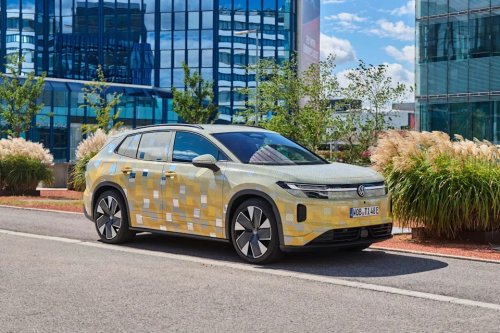
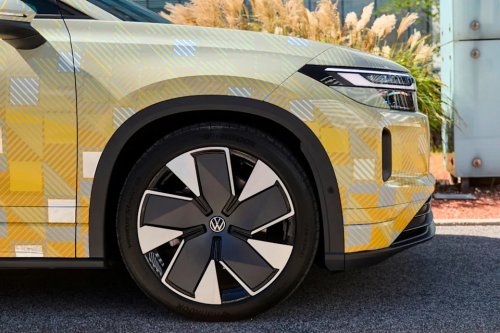
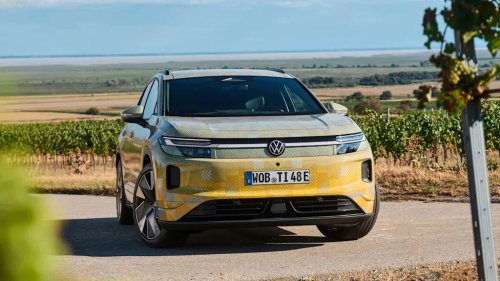
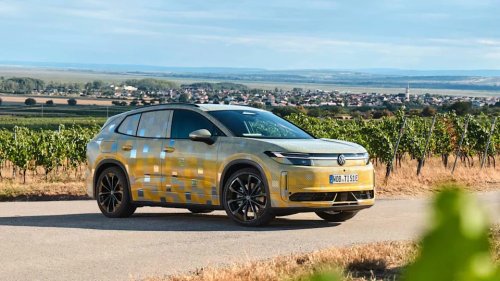
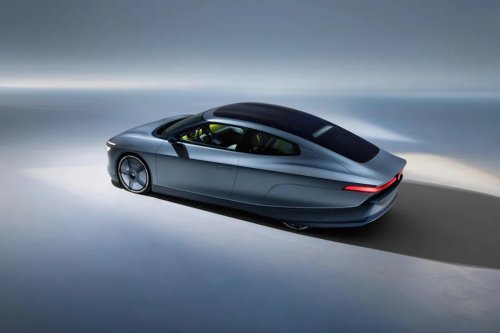
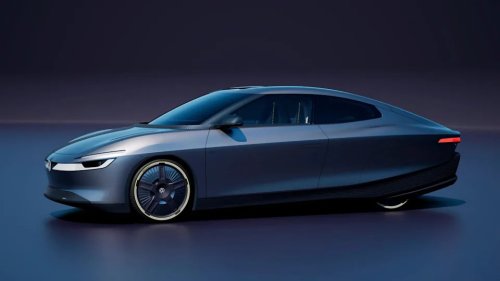
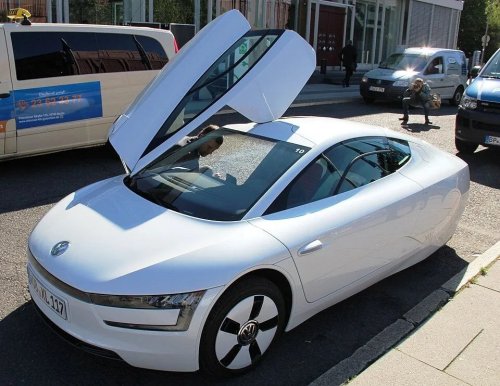
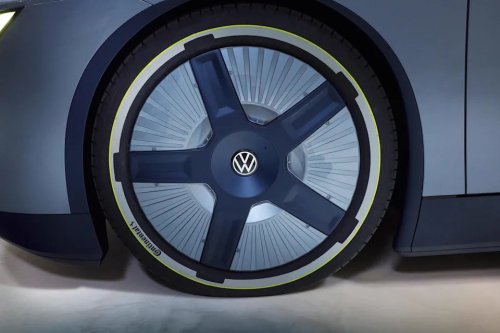
Volkswagen Builds Its Most Efficient Electric Vehicle EverAutoweekNatalie NeffMon, September 14, 2026 at 7:47 PM UTCAdd us on GoogleVW Builds Its Most Efficient Electric Vehicle EverVolkswagenVolkswagen has built what it says is the world's most efficient near-production electric vehicle, using mostly production-ready components, as an exercise to demonstrate how much range can be gained simply through aerodynamic refinement rather than adding a larger battery.Called the Mission Efficiency, the four-seat concept debuted this week but already earned three efficiency records as certified by Germany's Record Institute (RID). The VW concept claims a drag coefficient of just 0.158, the lowest supposedly achieved by a "road-approved" car.The automaker also says under ideal conditions, the concept uses just 9.59 miles per kWh, or 10.43 kWh/100 miles; that translates to a 323 MPGe (miles per gallon equivalent). Under ideal conditions VW says it returned 9.02 miles per kWh (11.09 kWh/100 miles, or 304 MPGe) during a 794-mile real-world drive from Wolfsburg, Germany, to Vienna. The latter figure excludes charging losses; including them, consumption rose to 8.28 miles per kWh (2.09 kWh/100 miles, or 279 MPGe).VolkswagenThe trip required just one charging stop. Using a 54.9-kWh battery—slightly larger than the 52-kWh pack planned for production MEB+ models—the prototype completed the drive with an indicated 164 kilometers (102 miles) of remaining range.AdvertisementAdvertisementUnlike many efficiency concepts, Volkswagen says the Mission Efficiency relies largely on production technology. Its front-wheel-drive powertrain, including a 99-kW (133-hp) electric motor, is shared with the upcoming ID. Polo and ID. Cross, both based on the company's next-generation MEB+ architecture. Thomas Schäfer, CEO of the Volkswagen brand, said the project was intended to show what can be achieved using "technology for the masses" rather than exotic components.The biggest contributor to the car's efficiency is its shape.Measuring 188 inches (4,775 mm) long, the Mission Efficiency uses a low, teardrop profile with a fully enclosed underbody, active cooling flaps, flush door handles, and partially covered rear wheels. Volkswagen says its 0.158 Cd and a relatively small frontal area combine to allow the car to use more than 30 percent less energy than a standard ID. Polo at highway speeds. At 87 mph (140 km/h), it uses about the same amount of energy the ID. Polo requires at 62 mph (100 km/h).A Volkswagen XL1 in 2015.Wikimedia Commons/Rudolf SimonChief designer Andreas Mindt said the concept's proportions also recall the Volkswagen XL1, the limited-production diesel-electric plug-in introduced in 2013 that held the title of world's most fuel-efficient production car. While the XL1 prioritized economy through lightweight construction and a tiny cabin, the Mission Efficiency sports four seats—even if the rears are more suited for children—and 17 cubic feet of cargo space. The structure combines an aluminum frame with carbon-fiber- and aramid-reinforced composite components.AdvertisementAdvertisementVolkswagen also worked to minimize the Mission Efficient's losses by working with tire maker Continental, which developed the concept's tires to have about 25 percent lower rolling resistance than Europe's highest tire-efficiency rating. Patented wheel deflectors reduce turbulence inside the wheels, while an electromechanical rear braking system cuts friction losses and improves regenerative braking.VolkswagenA 370-watt solar array is built into the roof and rear deck to help power the onboard electrical accessories and, depending on weather conditions, can add as much as 19 miles (30 kilometers) of driving range per day. Inside, VW swapped out a traditional infotainment system with a "bring your own device" concept that allows a smartphone or tablet to serve as the primary display while a portable Bluetooth speaker handles audio.Unfortunately, the Mission Efficiency isn't headed for production, either in Europe or North America. Instead, it will function as a kind of rolling laboratory for technologies Volkswagen says could migrate into future MEB+ vehicles.



















 +35 others








![Volkswagen, Volkswagen ID.4, Volkswagen ID.5, Volkswagen's best-seller is going electric in 2027 to replace the ID.4 and ID.5 [Images]](https://cdn.topcarnews.net/thumb/id/aHR0cHM6Ly9pMC53cC5jb20vZWxlY3Ry-ZWsuY28vd3AtY29udGVudC91cGxvYWRz-L3NpdGVzLzMvMjAyNi8wOS9Wb2xrc3dh-Z2VuLUlELVRpZ3Vhbi1JRC00LmpwZWc_-dz0xNTAwJmFtcDtxdWFsaXR5PTgyJmFt-cDtzdHJpcD1hbGwmYW1wO3NzbD0x/aed2aa2870791850c8e69c5fc3a0ed85.jpeg?t=20261005&post_id=66267)
![Volkswagen, Volkswagen ID.4, Volkswagen ID.5, Volkswagen's best-seller is going electric in 2027 to replace the ID.4 and ID.5 [Images]](https://cdn.topcarnews.net/thumb/id/aHR0cHM6Ly9lbGVjdHJlay5jby93cC1j-b250ZW50L3VwbG9hZHMvc2l0ZXMvMy8y-MDI2LzA5L1ZvbGtzd2FnZW4tSUQtVGln-dWFuLUlELTQtZnJvbnQtcXVhcnRlci5q-cGc_c3RyaXA9aW5mbyZhbXA7dz0xMDI0/97fb00cd3919b8d0dc36440715039e6e.jpg?t=20261005&post_id=66267)
![Volkswagen, Volkswagen ID.4, Volkswagen ID.5, Volkswagen's best-seller is going electric in 2027 to replace the ID.4 and ID.5 [Images]](https://cdn.topcarnews.net/thumb/id/aHR0cHM6Ly9lbGVjdHJlay5jby93cC1j-b250ZW50L3VwbG9hZHMvc2l0ZXMvMy8y-MDI2LzA5L1ZvbGtzd2FnZW4tSUQtVGln-dWFuLUlELTQtc2lkZS5qcGc_c3RyaXA9-aW5mbyZhbXA7dz0xMDI0/ed240b20e8275f3af4b904f46ebb5fb3.jpg?t=20261005&post_id=66267)
![Volkswagen, Volkswagen ID.4, Volkswagen ID.5, Volkswagen's best-seller is going electric in 2027 to replace the ID.4 and ID.5 [Images]](https://cdn.topcarnews.net/thumb/id/aHR0cHM6Ly9lbGVjdHJlay5jby93cC1j-b250ZW50L3VwbG9hZHMvc2l0ZXMvMy8y-MDI2LzA5L1ZvbGtzd2FnZW4tSUQtVGln-dWFuLUlELTQtcmVhci1xdWFydGVyLmpw-Zz9zdHJpcD1pbmZvJmFtcDt3PTEwMjQ/436c7979cf5b947053f7f0bf39ff94bc.jpg?t=20261005&post_id=66267)
![Volkswagen, Volkswagen ID.4, Volkswagen ID.5, Volkswagen's best-seller is going electric in 2027 to replace the ID.4 and ID.5 [Images]](https://cdn.topcarnews.net/thumb/id/aHR0cHM6Ly9lbGVjdHJlay5jby93cC1j-b250ZW50L3VwbG9hZHMvc2l0ZXMvMy8y-MDI2LzA5L1ZvbGtzd2FnZW4tSUQtVGln-dWFuLUlELTQtZnJvbnQuanBnP3N0cmlw-PWluZm8mYW1wO3c9MTAyNA/ec2e4ca027ccbfb42942abe523f3acf7.jpg?t=20261005&post_id=66267)
![Volkswagen, Volkswagen ID.4, Volkswagen ID.5, Volkswagen's best-seller is going electric in 2027 to replace the ID.4 and ID.5 [Images]](https://cdn.topcarnews.net/thumb/id/aHR0cHM6Ly9lbGVjdHJlay5jby93cC1j-b250ZW50L3VwbG9hZHMvc2l0ZXMvMy8y-MDI2LzA5L1ZvbGtzd2FnZW4tSUQtVGln-dWFuLUlELTQtcmVhci5qcGc_c3RyaXA9-aW5mbyZhbXA7dz0xMDI0/668525889dc433b0fd0e166fd5bd8366.jpg?t=20261005&post_id=66267)