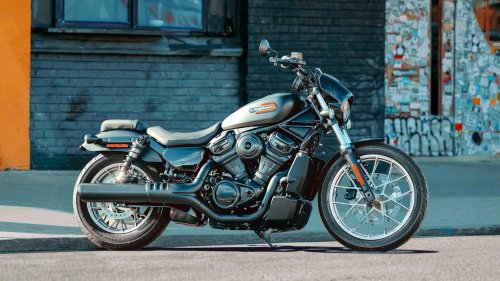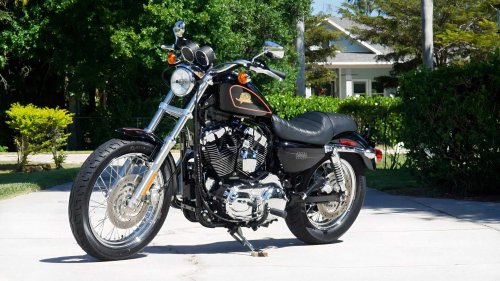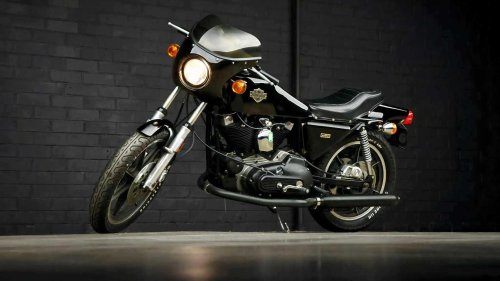
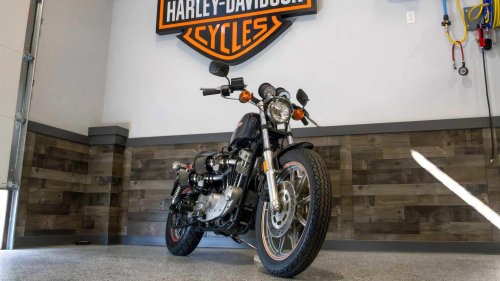
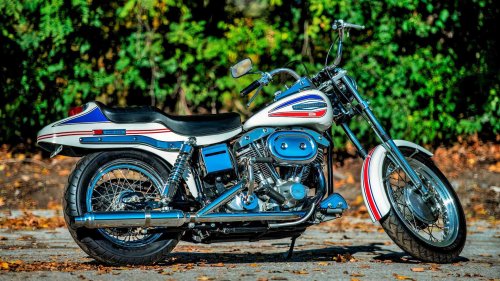
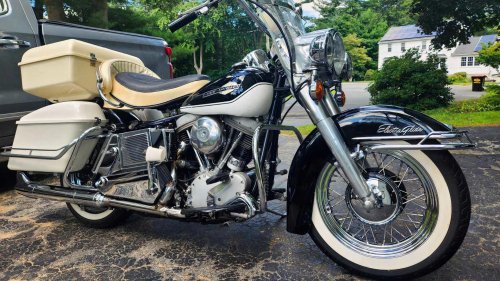
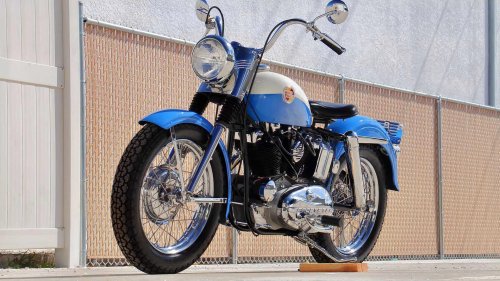
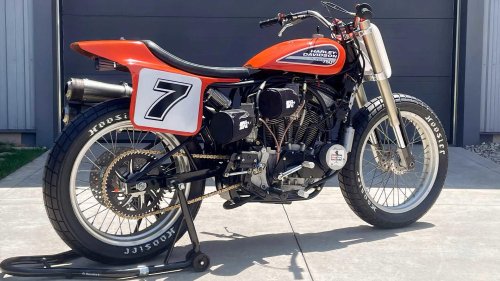
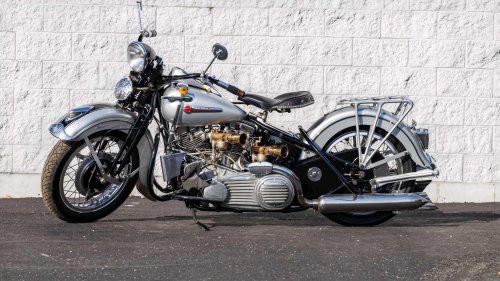
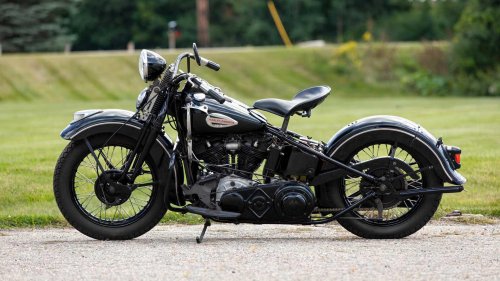
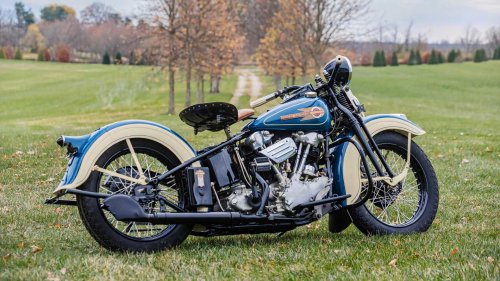
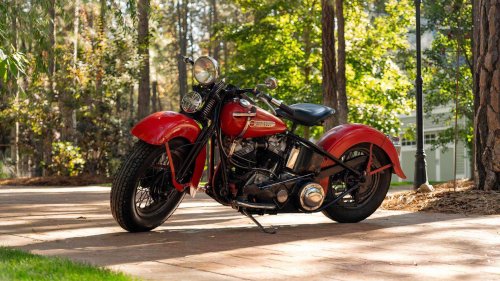

















There used to be a time when vintage Harley-Davidson prices used to feel predictable. Panheads, Knuckleheads, old Sportsters, and oddball factory specials had their tribes, their swap-meet wisdom, and their own dusty corner of the market. Then the auction results started getting serious, and suddenly, the bikes that old hands had been sneakily hunting looked more like rolling blue-chip collectibles with oil stains.The trick is knowing which ones matter. Not every old Harley is a gold mine, and not every shiny restoration deserves a heroic check. But certain pre-1985 machines carry the right mix of historical weight, mechanical character, rarity, and rider credibility. 1977 Harley-Davidson XLCR Café Racer Up To $25,300 Bring A TrailerThe XLCR was Harley-Davidson having a strange, slightly rebellious thought in public. Instead of building another broad-shouldered cruiser for riders who liked chrome, highway bars, and luggage large enough to smuggle a week’s groceries, it went after the cafe-racer crowd with a blacked-out Sportster-based machine that looked like it had been designed after three coffees and a bad mood (that's a compliment). The low solo seat, small fairing, smoked screen, rear-set controls, and 4.0-gallon tank gave it a stance no other Harley of the period could fake.It wasn’t a runaway success when new, which is probably why collectors care now. Roughly 3,000 were built from 1977 to 1979, and every one had the same all-black attitude. The XLCR’s 998cc Ironhead V-twin wasn’t going to scare the Japanese superbikes of the day, but no one cares about that. Its appeal is tied to how far outside Harley’s comfort zone it sat. 1983 Harley-Davidson XR1000 Sportster Up To $27,500 Bring A TrailerThe XR1000 is what happens when a Sportster starts hanging around the flat-track paddock and comes home with louder pipes, hotter heads, and an attitude problem. It was based on the Sportster family, but the real magic came from its XR750-style cylinder heads, twin 36mm Dell’Orto carburetors, and high-mounted exhausts that made it look more serious than the standard street machinery sitting beside it. Harley had race credibility baked into the XR name, and this bike borrowed enough of that flavor to make regular Sportsters seem a little too polite.It was never built in huge numbers, with about 1,000 leaving the factory in 1983 and roughly 750 more following in 1984. That’s low enough to matter, especially because the XR1000 appeals to two groups at once: Harley collectors and riders who care about American performance hardware with genuine back-road bite. It’s not as famous as the XR750, but it’s far easier to imagine on a Sunday morning ride. Also, those pipes are basically a built-in warning label. 1971 Harley-Davidson FX Super Glide Up To $29,700 MecumThe 1971 FX Super Glide is one of those bikes that looks obvious only with hindsight. Harley riders were already building customs by mixing parts, trimming weight, changing bars, and giving big twins a leaner profile. Harley looked at that whole garage-built movement and decided to sell the idea from the factory. The result was the FX Super Glide, a machine that paired big-twin muscle with Sportster-influenced proportions and a fiberglass boat-tail rear section that still looks like it was approved during a very confident meeting.That boat-tail styling split opinions then, and it still does now. You could chase the Super Glide because it's universally pretty, but collectors chase it because it started something. The FX line became central to Harley’s identity, and the first-year Super Glide sits at the head of that family tree wearing patriotic paint and a slightly ridiculous backside. In vintage Harley terms, weird can be very expensive when it also happens to be important. 1965 Harley-Davidson FLH Electra Glide Up To $30,800 Bring A TrailerThe 1965 FLH Electra Glide is important because it marks a turning point in Harley’s big touring story. This was the year electric start arrived on the big-twin FLH, giving riders a push-button option instead of making every departure feel like a small physical exam. It also brought a 12-volt electrical system, which helped move Harley’s heavyweight touring bikes into a more modern phase without losing the long, relaxed, authoritative character that made the FL line so beloved.There’s also a neat collector wrinkle here: 1965 was the final year for the Panhead engine before the Shovelhead era took over. That makes the bike a bridge between two worlds, with old-school Panhead charm on one side and genuine touring convenience on the other. The FLH Electra Glide isn’t flashy in the way an XLCR or XR1000 is, but it’s the kind of Harley that explains why big American touring bikes became a culture of their own. It's less 'look at me' and more 'I'll be three states away by dinner.' 1957 Harley-Davidson XL Sportster Up To $33,000 MecumThe first-year Sportster is one of the safest bets on this list from a historical standpoint. Harley introduced the XL in 1957, and it gave the company a lighter, quicker, more youthful V-twin at a time when performance mattered more than ever. The formula brought an 883cc overhead-valve Ironhead engine into a more compact package, and it set the template for a nameplate that would run for generations. That kind of lineage counts for a lot when collectors start ranking significance.What makes the 1957 XL so appealing is that it still feels like a rider’s Harley rather than a museum prop. It has the birth-year value, the mechanical simplicity, and the raw edge of an early performance twin. Later Sportsters became more common, more familiar, and easier to find, but the original has the 'there it is' factor. Say 'first-year Sportster' and watch the Harley people suddenly get very interested in their shoes, because they don’t want to look too eager. 1980 Harley-Davidson XR750 Up To $45,000 Bring A TrailerThe XR750 is the race-bred bruiser in this group, and it deserves the respect. Introduced for flat-track competition, the XR750 became one of the most recognizable American racing motorcycles ever built. It wasn’t a comfort machine, a cruiser, or a weekend coffee runner unless your local coffee shop happened to have a dirt oval out back. It was built to go sideways, make noise, and win.That racing connection is why collectors keep paying attention. A 1980 XR750 carries the later development aura of a machine that had already become a legend by then. It’s more specialized than most Harleys on this list, but specialization can sharpen value when the story is strong enough, and the XR750 has that story in bulk. It’s one of those bikes that makes even non-racing people nod carefully, mostly because they can tell it’s important and also because it looks like it might bite. 1948 Harley-Davidson FL Panhead Up To $57,000 MecumThe 1948 FL Panhead is a cornerstone bike. It arrived with Harley’s new Panhead engine, replacing the Knucklehead and bringing aluminum cylinder heads and hydraulic valve lifters into the picture. The name came from those distinctive rocker covers, which looked enough like cooking pans that Harley riders did what Harley riders always do and made the nickname stick forever. Branding departments spend millions trying to create that sort of thing, but riders just looked at the engine and handled it before lunch.The first-year appeal is massive here. The 1,208cc FL gave Harley’s postwar big twin a smoother, more modern foundation, and collectors know the difference between a regular old Panhead and the first chapter of the story. That’s why a strong 1948 FL can pull serious money without needing some wild custom angle. 1940 Harley-Davidson EL Knucklehead Up To $62,700 MecumThe 1940 EL Knucklehead sits in a sweet spot for collectors who want prewar character without chasing only the first-year 1936 bikes. The EL used Harley’s 999cc overhead-valve V-twin, and by 1940 the Knucklehead had already moved past some of its earliest teething trouble. That gives this bike a useful mix of old-world looks and slightly more mature engineering.Values show that buyers understand the difference. A 1940 EL isn’t usually the absolute top of the Knucklehead ladder, but it’s very much inside the serious-money zone, especially when originality and restoration quality line up. It has the silhouette, the exposed mechanical drama, and the prewar timing collectors love. Park one next to a modern bagger and it looks like the bagger’s great-grandfather who still refuses to use a smartphone and is probably right about most things. 1936 Harley-Davidson EL Knucklehead Up To $181,500 MecumThe 1936 EL Knucklehead is the big one because it represents the start of Harley’s production overhead-valve big-twin era. Before the nickname became legend, this was simply Harley’s new performance flagship, a 61-cubic-inch V-twin that pushed the company into a more advanced mechanical future. The rocker boxes gave it the Knucklehead name, but the importance runs deeper than appearance. This was the engine family that helped define Harley’s identity for the next decade and shaped everything that followed.First-year examples bring out the serious collectors because there are only so many clean origin-story motorcycles to go around. The 1936 EL has the right look, the right engineering leap, and the right place in the timeline. It also has the kind of value that turns casual browsing into a very quiet room. 1947 Harley-Davidson FL Knucklehead Up To $192,500 MecumThe 1947 FL Knucklehead closes this list because it combines end-of-era appeal with big-displacement desirability. The FL used the 74ci version of the Knucklehead engine, giving it more presence than the smaller EL, and 1947 was the final year before the Panhead took over. That makes it a natural collector target: last-year status, big motor, classic profile, and deep Harley mythology all in one very expensive package.It’s also the kind of bike that explains why vintage Harley collecting can get so intense. The 1947 FL is valuable because it sits at the closing chapter of one of Harley’s most important engine eras. The best examples feel like the end of an argument the factory had been perfecting since 1936. After that came the Panhead and a new world, but the final big Knuckle still has the old thunder. Apparently, thunder now accepts wire transfers.