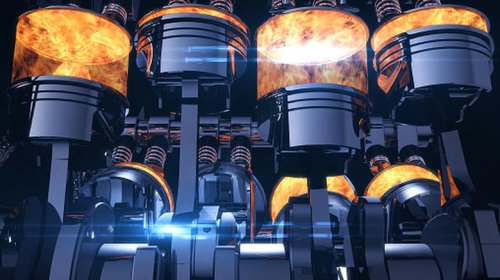
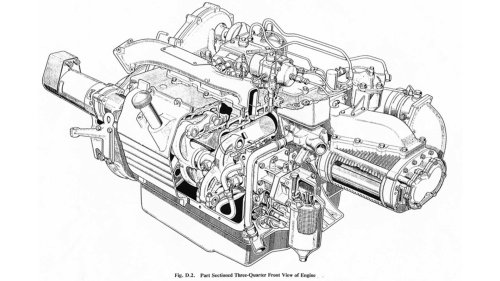
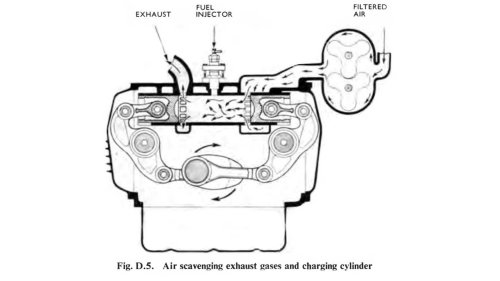
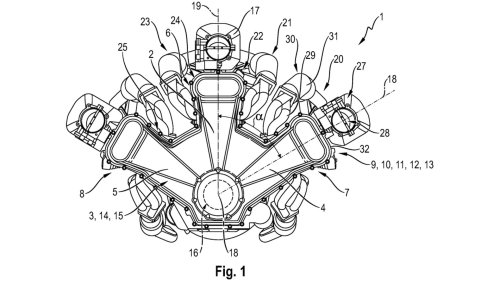
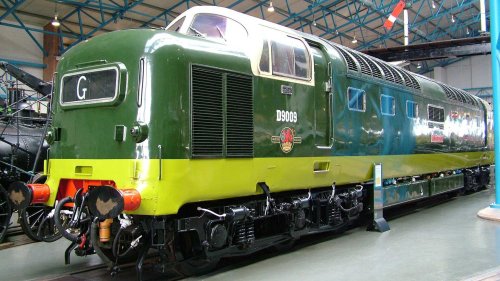
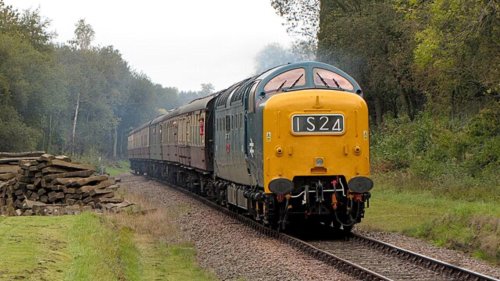
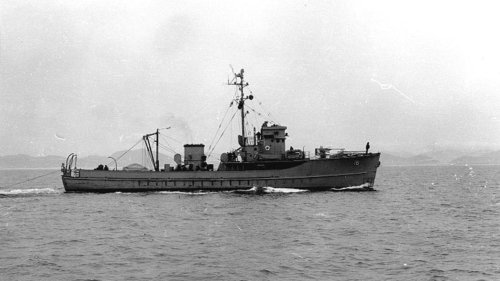
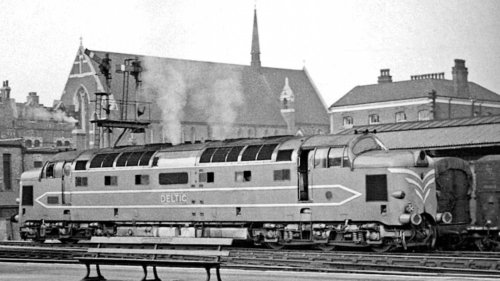
At no point will I make any mention, inference, or mildly suggest the cliché of engine-swapping this honker into your jalopy. With that out of the way, let me hit you with the spec sheet from the engine that was designed by engineers obsessed with triangles. And no, it’s not the Wankel rotary engine. The Napier Deltic is a diesel engine that employs 18 opposing cylinders, 36 pistons, and 88.3 liters to make over 1,000 horsepower happen. Legend says, at one point, an engine was turbocharged and tested up to 5,500 horsepower, but nary would it make such power for any of its use cases. Close your mouth, you’ll catch flies.The glory days of building wild combustion engines for marine, rail, and aircraft applications might be over, but before these behemoths were replaced by traditional engine configurations or gas-turbine engines, pushing the boundaries of simple mechanics was just another day’s work. D. Napier & Son was one of those companies that built engines for automobiles, boats, and aircraft before being purchased by English Electric in 1942. The company’s ingenuity continued to thrive under new ownership, which gave birth to the gnarliest engines ever made by the company. The Deltic is a “Junker” in Name Only Wikimedia Commons: National Railway MuseumThe design Napier used for a diesel engine with opposing cylinders to create a combustion chamber came from the German firm Junkers. Remember, that “J” should be pronounced like a “Y”. The Junkers Jumo series of aircraft engines used this design in an inline formation, and after Napier licensed the design of Junker’s engine in 1933, it got to work building its own, which it dubbed the Culverin. A year later, the British Air Ministry contracted Napier to build a handful of high-horsepower Culverins, but no aircraft manufacturers took interest. The Second World War also paused any plans for the new design and Napier was purchased by English Electric in the early 1940s. Once the war ended, the military resumed its search for a faster engine, which Napier had the answer for and named it the Deltic.The design of the Deltic resembles Dodge’s old Fratzog logo, or one of those triangular boomerangs that’ll chop your thumb off if you grab it the wrong way. In order to explain the design of this engine, it’s better to slice it up into sixths. In just one section of the engine, you’re dealing with three cylinder banks, three combustion chambers, and six pistons. The combustion happens between the pistons, discarding the need for a cylinder head which saves weight and space. All three chambers trap a combined 14.7 liters of displacement (that’s twice as big as the largest production V8 in a modern vehicle). There’s a crankshaft at each corner of the triangle, connecting all the slices and moving the power out to an electric generator or prop shaft depending on how the engine is being used. In Service Of A Grateful Nation British Rail Class 55 Most Brits encountered Deltic engines if they took the 6:25 from London King’s Cross to Edinburgh. A fleet of diesel-electric locomotives replaced steam engines in the late 1950s and early 1960s, with two types of engines going into service for British Railways. A small “Baby Deltic”, as it was aptly named, debuted in 1959 with nine cylinder banks but proved to be less successful than the full-size versions which arrived in 1961. The Class 55 locomotives were the first diesel-electric trains in Britain to reach service speeds of 100 MPH. Each locomotive used a pair of Deltic engines, producing a combined 3,300 horsepower and a tractive effort of 50,000 lbs. (Unlike automobiles, locomotives are rated at how much they can pull, rather than the rotational force (torque) at the crankshaft of the diesel engine or electric motor.)These engines weren’t just for land use, however, and were tucked into a few dozen ships for the Royal Navy. Before Deltic engines were used to shuttle people from station to station, they propelled mine countermeasure and sweeper vessels, as well as fast attack and patrol boats after WWII. These powerhouses quickly became infamous in terms of reliability after their service intervals were up. When something went awry, units were typically replaced rather than repaired because of the delicate nature of the engines. Deltics revved twice as high as other engines performing similar duties, requiring the manufacturer to service them at the factory after they were yanked from boats and locomotives. What Killed These Giants? uss-gull-ams-16-in-1951The last Deltic-powered locomotive was decommissioned by British Rail in 1981 to make room for the 95 InterCity 125 locomotives which were in development when the Class 55 engines first hit the rails. Inversely, the last of the marine-use Deltic engine was retired sometime between 2012–2018 from Ton-class minesweepers. Repairing—er, replacing and diagnosing—engines was a hassle, mainly because English Electric was purchased by General Electric in the late 1960s, and finally ending up with Siemens in 2003 after a joint-venture with Alstom. The point is, keeping these engines running when replacing them was no longer an option wasn’t easy.Both British Rail and the Royal Navy set up their own repair shops after contracts expired, but once newer engines came along that performed better than the Deltics, they were quickly made irrelevant for railway use. However, the aluminum construction of the triangular monstrosity gave it a low magnetic signature and the lack of excessive vibration made it perfect for mine countermeasure vessels. Replacing the diesel engines in boats and trains were engines from Caterpillar and Paxman Valenta respectively. While not as powerful, these engines are easier to maintain and were produced at a far wider scale than Deltic engines. It’s Still Chief Among the Diesel Punk Generation Wikimedia Commons: Ben BrooksbankBefore most aircraft used turbine engines, when Cadillac was putting V12s in its limousines, and Packard had twin-six and straight-eight engines, combustion was king and there was no replacement for displacement. Efficiency? What’s that? Large engines were found everywhere to power cars, planes, trains, and even submarines. Most of these applications don’t even require internal combustion powertrains anymore, but when they did, they still couldn’t hold a candle to the wild design that made the Deltic the most memorable of them all.The opposed-piston engine dates back to the early 1900s in Russia. This design was used by Junkers to make its Jumo engine, which Napier used to build the Culverin for aircraft purposes. At a time when radial engines were being used in aircraft, an inline engine meant more weight, a lower power-to-weight ratio, and took up more space on the aircraft. In Navy ships that need to move faster than cargo vessels, engines with lots of cylinders are employed to grant speed by way of lightness and overall horsepower. Cargo ships don’t need to move nearly as fast, so an engine like the Deltic doesn’t need to be used. Instead, most got scaled-up V8, V12, V16, and even V18 engines with large amounts of displacement.The largest combustion engine ever produced shares a few qualities with the Deltic. The Wärtsilä-Sulzer RTA96-C is also a two-stroke diesel engine, but that’s about where the similarities end. That engine weighs 2,300 tons and produces over 100,000 horsepower and 608,000 lb-ft. of torque. That’s beyond impressive, but forget for a moment this engine is the size of a house and understand it’s just an inline-eight and an inline-four glued together and sprinkled with Miracle Grow. In order to make the list of crazy engines for CarBuzz, things have to be pretty weird and not just massive. The RTA96-C is turbocharged, just like a Honda Civic Si, and it’s a diesel like any Ford Power Stroke engine. But an opposed-piston two-stroke supercharged diesel in the shape of a triangle with 36 pistons, 18 cylinders, and three crankshafts? Now that’s something you’re not going to see every day.



















 +41 others