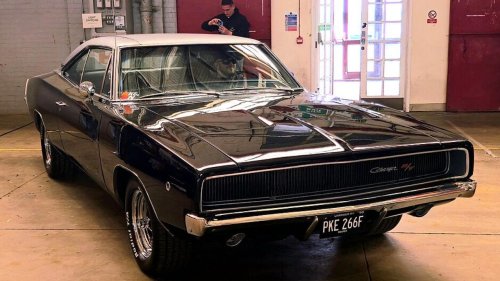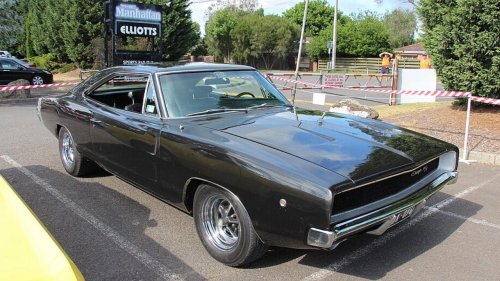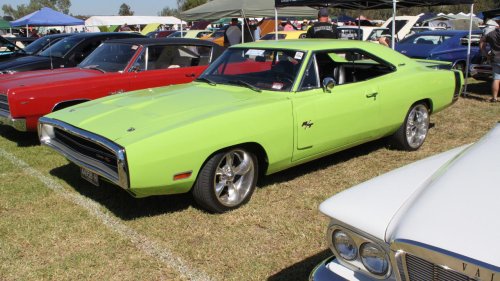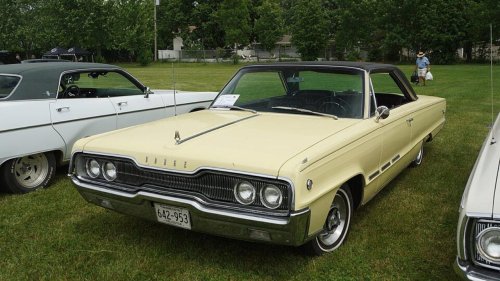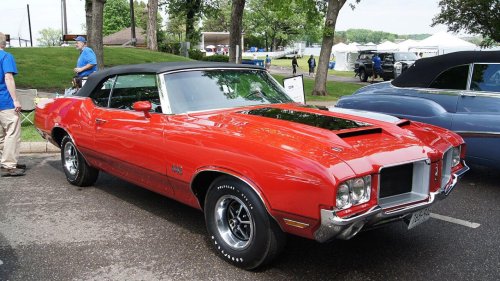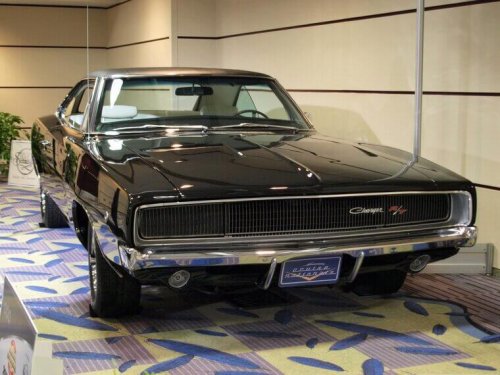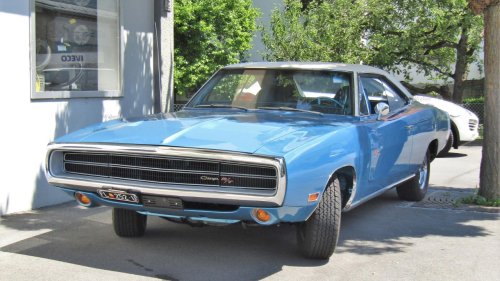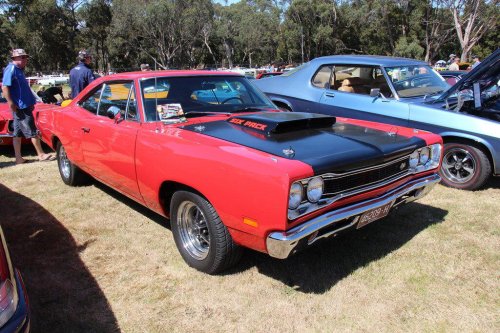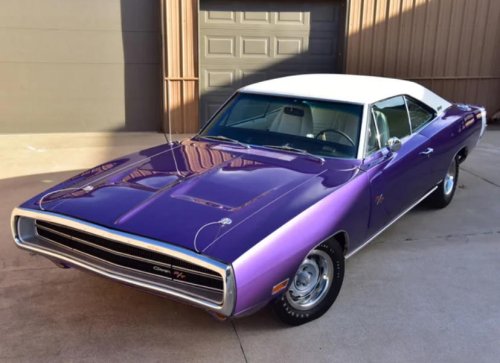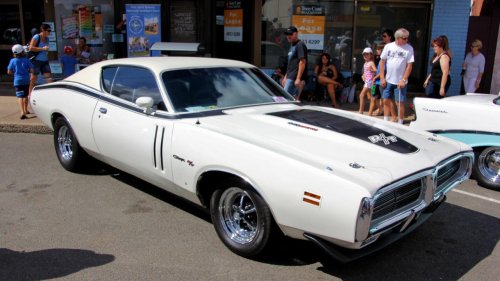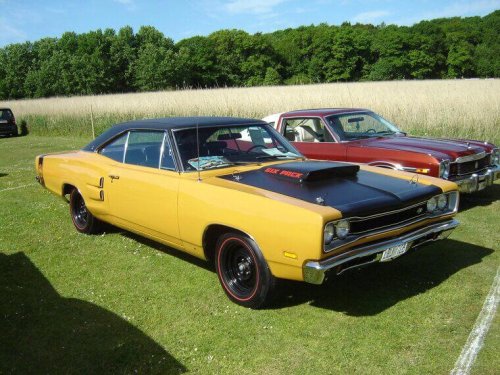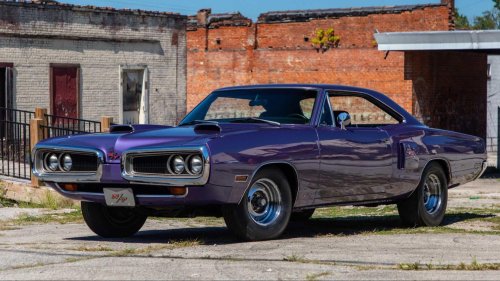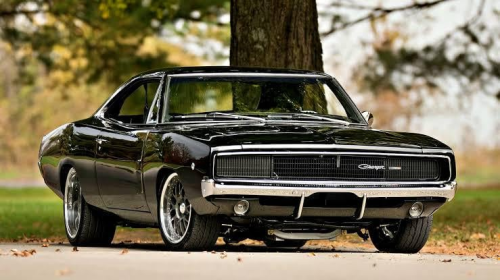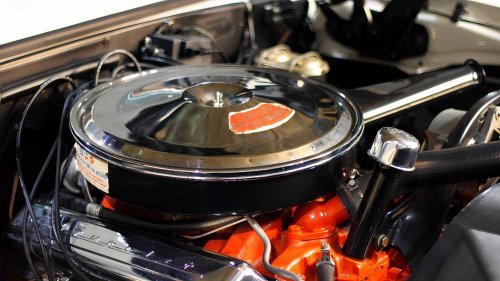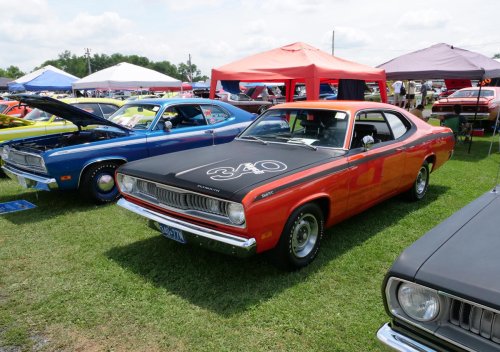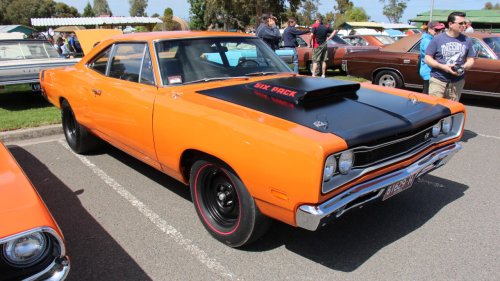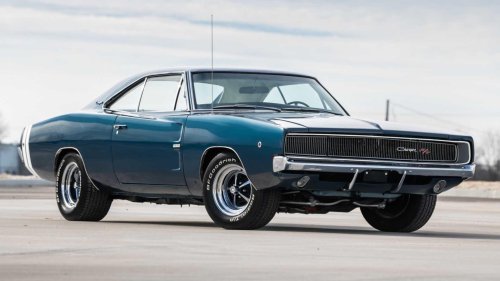
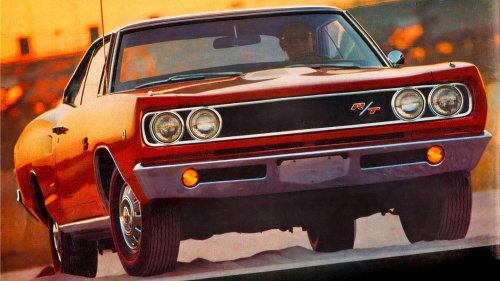
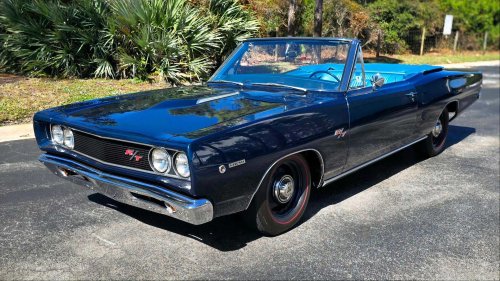
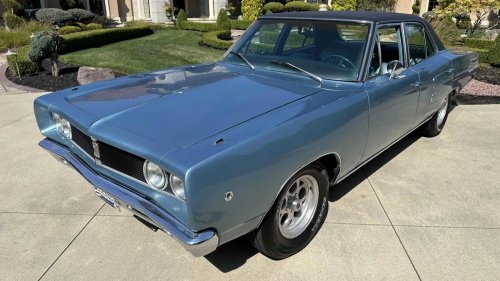
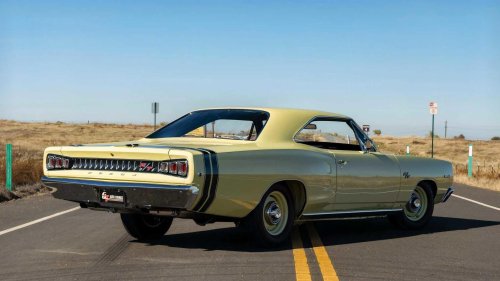
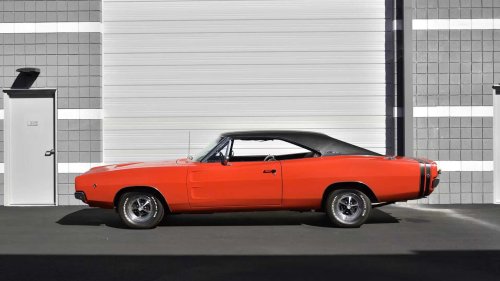
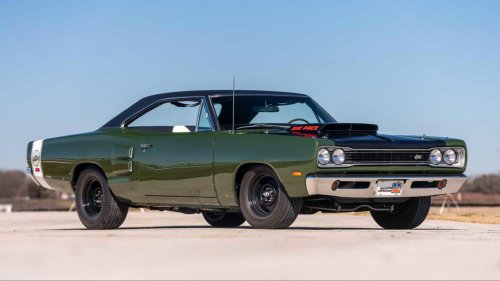



















Talk about the Golden Era of the muscle car, and the same suspects always pop up. The muscle car heroes from the '60s and early '70s are the Dodge Chargers and Challengers of this world, the Ford Mustang (OK, originally a pony car), the pioneering Pontiac GTO, and a few other worthy models. But while these were the jocks of the gym, there were a few outsiders that could outperform them and, more importantly to some, outlive them. It's just that a lot of people didn't notice. One model even outran a Charger but remains more affordable on the used market, many with power plants that are praised for the rock-solid reliability. Could this be the ultimate muscle car cheat code? The Charger Was The Poster Child for Dodge Muscle In The '60s Mecum Think muscle cars, and it's hard not to think about a Dodge Charger. The second-generation Charger, in particular, fast became one of the most famous Dodges of all time. Whether it was the iconic Coke bottle profile, or the 200 mph antics of the Daytona iteration, the Charger of 1968 to 1970 could do no wrong. Just like the movie stars of the time, the chiseled looks were breathtakingly handsome, and the 426 Hemi option was enough to shut down any barroom debate.The Dukes of Hazzard from 1979 sealed the legendary status of the second Charger. With orange paint and an O1 on the door, it would be seen airborne more often than the tires would be in contact with the dirt of Hazzard County, Georgia. But what if we told you that you can get a version of the Charger that is cheaper and just as fast, just with a different name on the back? The 68 to 70 Dodge Coronet Was The Thinking Man's Charger Dodge Or to put it another way, the Charger was the racier, attention-grabbing version of the Coronet. The Charger was based on the B-Body platform and shared a chassis with the mid-sized Coronet, but it was only available as a two-door coupe with a wide, aggressive stance.The Coronet, on the other hand, had a lot of duties to perform. The Coronet, which had a major redesign in 1968 (just like the Charger), could be ordered as a sedan and wagon, as well as a two-door coupe and convertible. In other words, the Coronet had a lot in common with the Charger, but that stylish drop-top also shared the same name with your neighbor's family load-lugger next door, robbing it of a bit of its cool factor. The Coronet Had A Wide Range Of Engine Options Mecum Being an every ma model, the Coronet had to cater to every conceivable buyer. This meant that there was a vast range of powertrains available in the dealership. Anyone wanting frugality could choose a 145-horsepower Slant-Six, with the next step-up being two small-block V8s at 273 and 318 cubic inches. But the Coronet range didn't end there. Buyers could also tick boxes for 383 big-blocks, coming in 290-hp two-barrel and 330-hp four-barrel flavors.For something even tastier, Dodge offered a 375-hp 440, and the top of the tree was a 425-hp 426 Hemi. Finally, Dodge offered a budget-minded Super Bee option. This came fitted with a 335-hp Magnum version of the 383, using heads from the 440 Magnum. In 1969, Dodge added the 440 Six-Pack, which utilized three two-barrel Holley carbs and pushed out 390 hp. The Coronet Is A Reliable Muscle Car Choice Bring A TrailerAll Coronets of this era are robust and simple to work on, making them easy-to-live with classics. The Mopar 318 V8 is not called "Ole Reliable" for nothing, becoming one of Chrysler's hardest working engines, famous for its longevity and excellent durability. The story of the 318 as we know it started in 1964, with the motor arriving in the Light A or LA platform. The 273, 318, 340, and 360 are all LA engines, and they are renowned for their reliability. The blocks feature thick main webs, wide bearing surfaces, stout connecting rods, some early versions had forged cranks, and water jackets kept them cool in virtually any condition.A thread at RamForumz details high-mileage 318-powered trucks, with the original poster saying their truck was at 264,000 miles at the time of posting, with dozens more in the same range. Another forum user mentions his 318 hits, 312,000 miles and "never seen any kind of tear down or rebuild."The Slant Sixes may not have been powerhouses but what they lack in punch, they make up for in reliability. Hemmings writes, "With a deep-skirt block and tall-short pistons, the Slant Six proved very reliable, with regular reports of engines cresting hundreds of thousands of miles, even as the rest of the car may have rotted around it." The later Magnum engines were simply updated versions of the early LA engines, so have the same reliability baked in. The Coronet Has Stayed Cheap Far Too Long Bring a Trailer Prices Of 1968 and 1969 Coronets In 2026 What is astonishing about the Coronet is just how many different configurations there are to choose from on the used market. For the 1968 model year, Hagerty's Valuation Tools lists no less than 15 different combinations, with prices starting at less than $8K and going up to six figures. For anyone on a budget, a 1968 Dodge Coronet Deluxe coupe with a 225 six-pot and 145 hp will cost just $7,800 in good condition.If you want eight cylinders and the wind in your hair, then a 1968 Dodge Coronet 500 convertible, fitted with a 230-hp 318 V8, will cost just $17,600, that's a lot of style for not a lot of money. At the top end of the scale, the Coronet Super Bee from that year will set you back $66,700 and comes fitted with a 426 Hemi. Finally, a 425-hp Hemi Coronet R/T convertible demands the biggest bucks, coming in at $101,000. How The Coronet Compares To A Charger Mecum This is where it gets interesting. Of course, the Charger is an icon, but if you can do without the name, then the Coronet offers much of the same for a lot less. Some collectors will even like the Coronet's less obvious charms, too. The cheapest 1968 Dodge Charger is a 230-hp 318 coupe that costs $30,800. The same powerplant in a Coronet 500 coupe will cost half the price at $14,400.A Hemi-powered Charger R/T with a Hemi will cost more than the same mill in a Coronet, costing $87,400 compared to $80,400 for a hardtop Coronet R/T. Of course, the Coronet Super Bee undercuts both considerably.The final point is the legendary A12 440 Six-Pack cars. This was Mopar's meanest street engine and the A12 Cars were some of the most badass cars to come out of Detroit at the time. Interestingly, in 1969, the Coronet featured this engine, not the Charger the latter would have to wait until 1970. What Makes The A12 440 Special — And What To Pay Mecum The Six-Pack 440 just worked better on the street. The Hemi was essentially a race engine stuck in a street car, but the Coronet Super Bees with the A12 six-pack option combined brutal acceleration with mild manners. The engine featured an Edelbrock aluminum intake manifold and a Holley Six-Barrel carburetor setup, pushing out 390 hp and 490 lb-ft of torque.While the power was down slightly against the Hemi, the torque figure was exactly the same. With Ronnie Sox behind the wheel of the A12 Road Runner, this car's twin, a 12-second quarter-mile was achieved with this equipment. They are also one of the forgotten muscle car bargains. Try $55,800 for a good condition example of a six-barrel A12 and compare that to the $139,000 needed for a 1969 Hemi Charger 500. For that saving, it's hard not to be won over by the charms of the Coronet.Sources: Hagerty.com; Hemmings.com, RamForumz