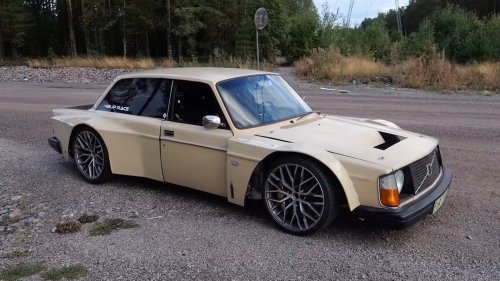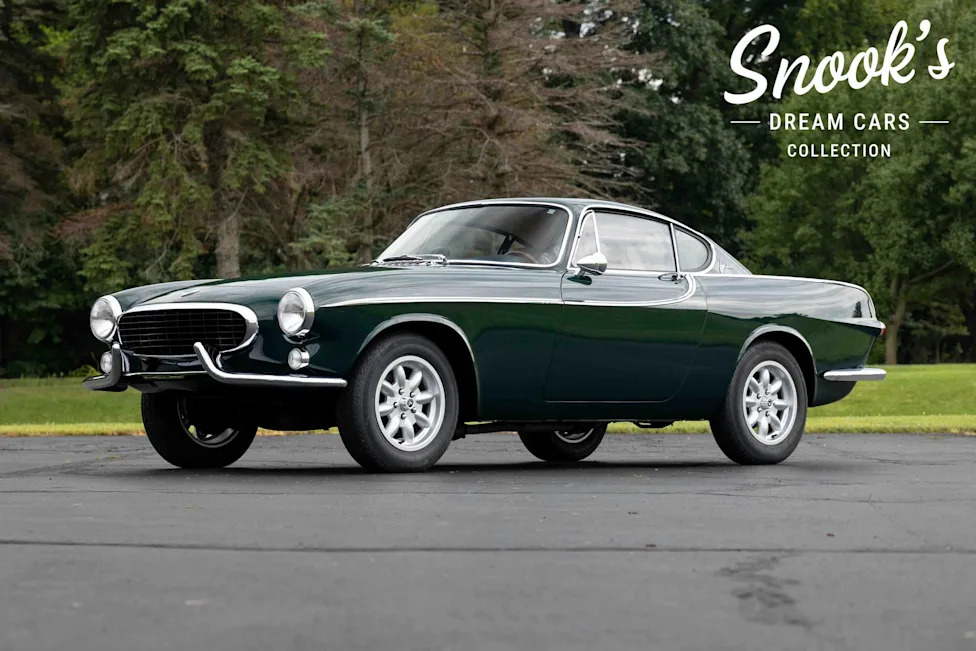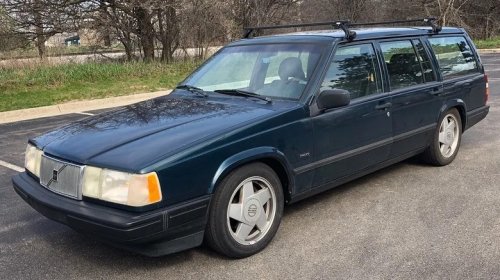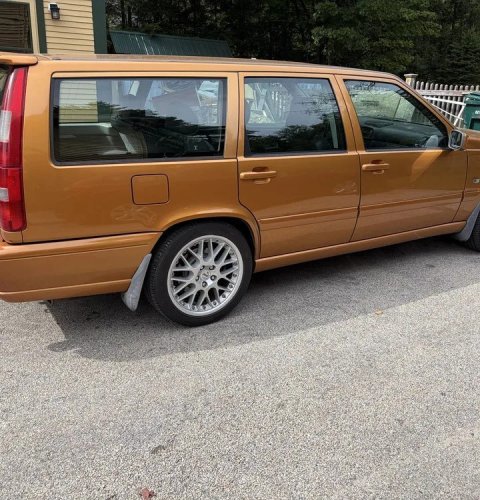


















There’s a certain kind of confidence that comes from sliding behind the wheel of a Volvo. There is this sense that no matter how foul the weather, how pitted the asphalt, or how long the odometer’s already ticked, a Volvo will get you home without breaking a sweat. Sweden may be famous for ABBA and flat-pack furniture, but Volvo has become a synonym for reliability and durability. Volvos quietly rack up mile after mile, shrugging off abuse that would sideline less reliable cars.But even within this Nordic pantheon of long-lifers, one model stands head and shoulders above the rest. It's an unassuming workhorse that has become the benchmark for reliability. It wears boxy armor, packs an engine block forged for eternity, and has single-handedly rewritten the definition of “high mileage.” The best part? It's still dirt cheap. The Most Reliable Volvo Ever Built Is The 240 LS3-Powered 1982 Volvo 242 DL 5-SpeedSpend five minutes around a 240, and you'll understand why Volvo loyalists still call it "The Brick." From 1974 until 1993, this squared‑off Swede soldiered on with a single, unwavering mission: outlive everything else on the road. Volvo started with the already‑sturdy 140 shell, then cranked up the safety and durability knobs through reinforced crumple zones, galvanized steel where lesser makers pinched pennies, and bumpers stout enough to moonlight as battering rams.Under that boxy bonnet lived the stuff of endurance‑racing folklore: Volvo's red‑block four‑cylinders. Early cars carried the push‑rod B20, but the legend truly gelled with the overhead‑cam B21, B23, and ultimately the B230. These 2.1-2.3 liter mills were non‑interference, iron‑block affairs with forged crankshafts, oversized main bearings, and oil pumps fit for a commercial diesel. Keep fresh 10W‑30 coursing through their veins, and they'll shrug off more than 300,000 miles without breaking a sweat. Volvo 240 Specs (Sources: Hagerty, Hemmings) The drivetrain philosophy matched the engine's belt‑and‑braces ethos. Manual or AW70 automatic gearboxes were famously understressed, and the solid Dana rear axle earned a cult following among rally crews for its ability to soak up Scandinavian potholes that would rattle lesser cars to scrap.The Volvo 240's reliability also stems from the simplicity that you can wrench on in the dark. It's K‑Jetronic and later LH‑Jetronic fuel injection that kept the mixture right without burying owners in sensors. In addition, roomy engine bays made weekend timing‑belt swaps a driveway affair. Parts interchangeability across two decades of 200‑series production means spares are still a phone call away.Let's add it all up: Overbuilt engines, a bulletproof driveline, a rust‑resistant body, and a design that invites DIY maintenance create the perfect million‑mile machine that's as happy lumbering through a blizzard as it is doing the school run at 35 mph. In the reliability hall of fame, the Volvo 240 isn't just on the list. It's carved into the foundation. Million‑Mile Legends: 240s That Blew Past The Odometer A Bulletproof Swedish Tank Whether you fancy a four-door 244 sedan, a two-door 242 coupe, or the cavernous 245 wagon, every 240 wears the same red-block badge of honor. They share a 104-inch wheelbase, rear-drive layout, and the kind of overbuilt Swedish hardware that laughs at rust and rough roads. The coupe bowed out after 1984, but the sedan and wagon carried the torch to 1993. However, regardless of body style, all three styles feed the same high-mileage folklore that's expected from the most reliable vehicle in Volvo's lineup. Several Versions Of The Volvo 240 Have Racked Up Over A Million Miles One prime example of the 240's high mileage scorecard is the Finnish Freight Hero. This 1979 245 GL racked up 1.63 million miles in its time as a fleet vehicle for the Finnish logistics company SE Makinen. This brick spent its life hauling parcels across Lapland's freeze-thaw moonscape before Volvo awarded it a High-Mileage medallion. While its engine had to be replaced three times, first at 400,000 miles, then after another 620,000 miles, and finally after a further 466,000 miles, this 240's gearbox survived 1.24 million miles before being refurbished.Another excellent example of the 240's stunning reliability is a 1979 245 GL that recently racked up 1.24 million miles or 2,000,000 kilometers. Per Volvo Cars, a couple from rural New South Wales, Russell and Gwen Den, bought this wagon new to juggle their flower business and seven kids. Now, 46 years later, the couple just rolled past 1.24 million miles with their reliable Volvo 240. The vehicle still has its original gearbox and body panels, which the Dens credit to religious 10,000 km oil intervals, a steady diet of OEM filters, and refusing to rev a cold engine. Volvo Australia celebrated the Volvo 240 with a fresh badge and a set of Michelin tires for the Dens to commemorate the milestone.While there are countless examples of the Volvo 240's reliability and longevity, the last one we will highlight today is a 1987 240 DL Sedan. Per Hemmings, this sedan from the 240 Series was driven for nearly four decades by Selden Cooper. When asked why he decided to keep the Volvo for so long, Cooper shrugs, saying, "It never gave me a reason to quit." In September 2012, Lehman Volvo certified the car's one-millionth mile during its 200th oil change. The original long-block still hums, fed by 3,000-mile oil swaps and a new timing belt every other Thanksgiving. Cooper's badge of honor now hangs in the dealership lobby; the car still commutes I-83 daily, proving the sedan can play the million-mile game just as well as its wagon cousins.Three body styles, three continents, and nearly four million collective miles. Different lives, same unkillable DNA. These stories simply serve as proof that when Volvo over-engineered the 240, they accidentally built eternity on wheels. The Volvo 240 Is Ridiculously Affordable Today Market Price 2025: Volvo 200 Series (Source: Classic.com) Volvo built the 240 in truly industrial quantities. In total, there were about 2.86 million 200-series cars manufactured between 1974 and 1993, of which well over 2.6 million were 240-badged sedans, wagons, and the short-run 242 coupe. That massive run, coupled with the car's ironclad reputation, means survivor examples still surface in barn finds and classifieds three decades after the last one rolled out of Torslanda.When new, the 240 was never exactly cheap. A base 1976 242 GL carried a $6,845 sticker, a hefty outlay against contemporaries like the Volkswagen Rabbit or Ford Pinto, but buyers were paying for forged-steel guts and Volvo's safety cachet. Per Hagerty, Turbo and GT trims nudged the window sticker past $15,000 in the early '80s, and by the final model year, Volvo leaned into the car's cult status: a 1993 240 Classic sedan listed for roughly $22,200, while the last-run wagon pushed $22,820. At the time, this was some serious money, especially when Honda's brand-new Accord LX came in several thousand dollars lighter.Those original MSRPs set the tone for today's market. Condition now trumps trim, but rarity still matters. The clean 242 coupes and low-mile Turbo wagons command premiums, while well-used sedans can remain surprisingly attainable. Just take a look at this blue 1993 Volvo 240. This sedan sports a 2.3L I4 (B230) engine, an automatic transmission, and rear-wheel drive (RWD). With just 41,244 miles on the odometer and priced at $24,500, this 200-series Volvo is a steal.However, if you're looking for something even more affordable, there's definitely a Volvo 240 out there that will fit the bill. Just take a look at this silver 1988 Volvo 240 DL Sedan. This 244 variant sports a 2.3L I4 (B230) engine, an automatic transmission, and rear-wheel drive (RWD). While it's racked up 174,500 miles on the odometer, this means you can get your hands on it for only $7,990. Snagging a brick with that pedigree and legendary longevity for under eight grand? That’s a deal any Volvo die-hard can appreciate. Other High‑Mileage Volvo Machines Built For Unflinching Reliability The 240 may be the people’s champion, but it’s hardly the lone Volvo with more stamps in its logbook than most aircraft. Step outside the 200-series, and you’ll find brick-built 740 and 940 sedans quietly cresting the million-mile mark on Midwestern commutes, diesel-drinking 240/740 wagons still trundling Scandinavian mail routes, and first-gen XC90s chalking up six-figure family-vacation odysseys without shedding a drivetrain mount. Longevity is woven into the brand’s DNA. It's simple red-block fours in earlier cars, the near-bulletproof white-block five-cylinders of the ’90s, and even today’s modular fours all trace their lineage back to a single Swedish obsession around building engines that outlast the sheet-metal wrapped around them.But the undisputed mileage monarch wears a sleek coupe body, not a box. Irv Gordon’s 1966 Volvo P1800S, a snow-white GT he bought new for $4,150, logged daily 125-mile commutes from Long Island to Manhattan, cross-country jaunts “just for coffee,” and countless Volvo fan gatherings. By 1998, he’d already snagged a Guinness World Record at 1.69 million miles; in 2013, he rolled through 3 million miles, and at the time of his passing in 2018, the odometer read 3.2 million miles, a distance equal to thirteen trips to the moon and back. Two engine rebuilds, strict 3,000-mile oil changes, and a single trusted mechanic kept the inline-four humming; Volvo rewarded him with multiple new cars, but Gordon always slid back into the P1800’s low bucket seat.So while the 240 headlines every “indestructible” list, it’s part of a much broader Volvo fraternity where seven-digit odometers are badges of honor, and where a 1960s sports coupe still holds the crown for the most miles ever driven by a single owner in any passenger car.