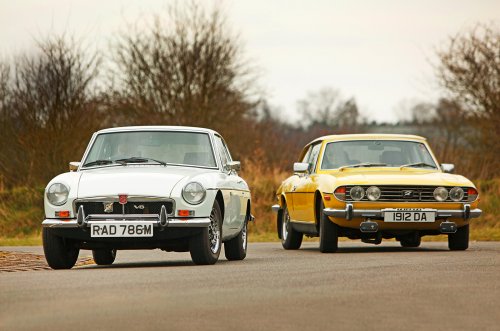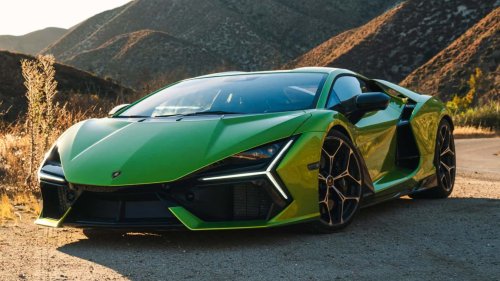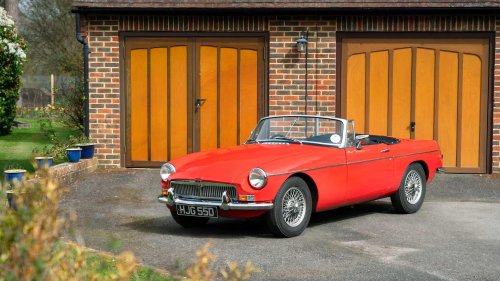
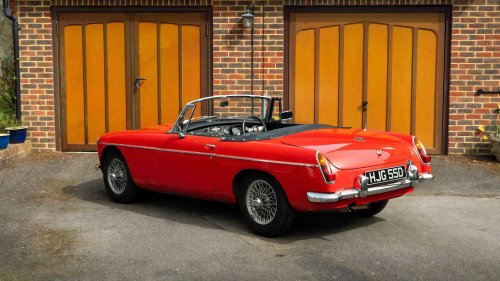
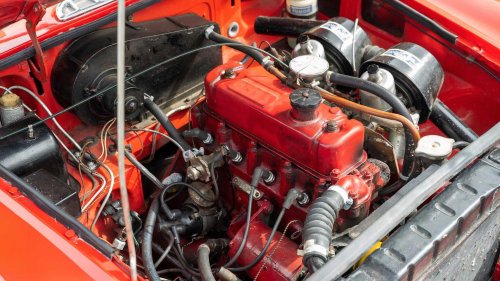
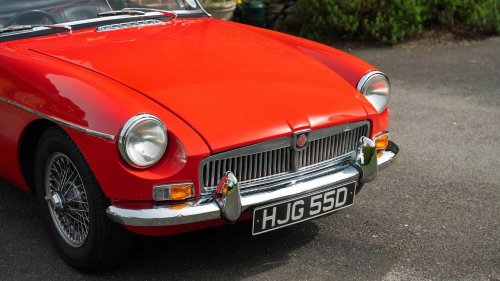
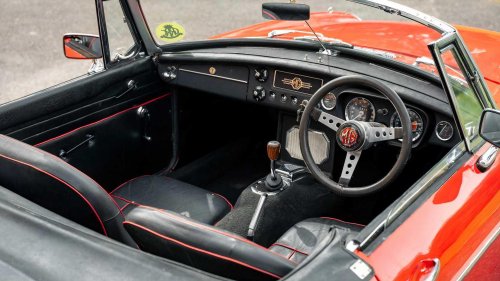
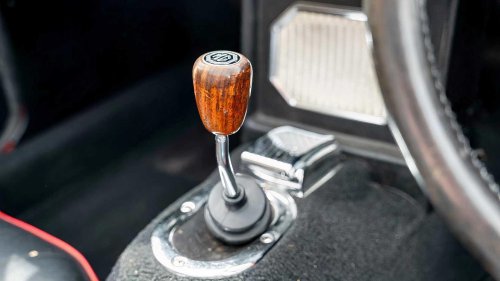



















Jump LinksYou can’t really fault modern sports cars for what their manufacturers have been able to achieve. They’re objectively brilliant, accelerating harder than ever before, stopping with infinite precision, and cornering so fast that G-force numbers should be a favorite metric. But with all that excellence comes a lot more isolation as you inevitably feel somewhat removed from the excitement. After all, these cars are heavier and more complicated, and in many respects, performance is now abstract.You can’t really take them by the scruff of their necks over real roads, but instead, you may need to venture onto closed circuits to see what they’re all about. And this is why purists still love much older sports cars, because they do their thing entirely within the envelope of normal driving. And among them, the MG MGB is probably one of the best examples to show you how less grip, less power, and far fewer systems can give you the enjoyment you crave. Why The MGB Delivers More Real-World Fun Than A Modern Sports Car Collecting CarsIn the days when engineers dreamed up the MGB, they weren’t really concerned about lap times and didn’t have to engage in any marketing theatrics. There were no selectable drive modes either, and you didn’t have to wait for any turbochargers to spool up before you could get down the road. Instead, the MGB communicated with you from the moment that it started moving. The steering effort would build naturally, while the throttle response would be immediate. You’d also get some honest reaction from the chassis without any software-related inputs to filter or added artificial weight sensing here and there.The MGB was able to give you all that it had at speeds that still made sense on public roads. By contrast, it's often tough to take a modern sports car to its limit these days, as engineers often tune them to perform perfectly around a track with immense grip, enormous braking capacity, and silly levels of acceleration. You’re almost certainly going to be anti-social if you try to really sample the performance of a modern-day sports car, while the MGB, by contrast, works in the opposite direction. If you want to see what it can do, you’re going to have to work for it, and a spirited drive down a twisty back road requires you to manage momentum rather than trying to tame a beast. An MGB only has modest power output, but it’s relatively lightweight, so you can certainly generate some thrills during your weekend adventure.Collecting Cars Modern cars struggle to replicate that type of engagement, as there are so many systems and software responses in the background. You simply don’t get to balance steering, throttle, and road surface feedback in the same way as you would with an MGB and the old guy feels alive not because it’s fast, but because it’s very responsive. So, when it comes to pure driving experience, the MGB is still competitive, even if today’s cars can outperform it on paper many times over. British Engineers Prioritized Balance Instead Of Outright Performance Collecting Cars MG introduced its MGB in the early 1960s as a pragmatic rather than ambitious project. It was looking for a modern replacement for its MGA that it could try and sell around the world, but it needed to ensure that this car was efficient and easy to maintain. So instead of looking for outright performance, designers turned their focus to balance, durability, and usability. To do this, they started out with a monocoque body structure for rigidity as they felt that this would be far simpler than the traditional body on frame layout. The suspension of the MG also reflected simplicity with independent front systems giving predictable steering behavior and a robust rear live axle for ease of service. You wouldn’t get any assisted steering in those days, and the brakes were simply sufficient rather than being over the top. The end result was a car that was honest, consistent, and transparent, under almost every circumstance.Under the hood, MG fitted its 1.8-liter B-series engine which delivered modest amounts of torque and was also quite robust. You’d get predictable linear power delivery so you could use full throttle without holding your breath. And due to these design choices, MG was able to sell its new car with very little in the way of revisions over nearly two decades of production. Its core engineering and purpose aligned right from the outset and the company could keep pace with shifting regulations, without worrying too much about sharply scaling performance benchmarks, or finicky marketing demands. The MGB Stayed Cheap, Fixable, And Mechanically Honest Collecting Cars In the 1960s, car owners seemed to have a broader understanding of their vehicles than they do today, and MG designed its MGB so that owners could maintain them without too much drama. These designers ensured that the engine bay was open and accessible, with easy reach to most mechanical systems. They didn’t need to seal anything behind proprietary modules or software and, as a result, the car is very inexpensive to maintain relative to modern sports cars now. You can still get parts due to those decades of production volume and there’s an enthusiastic global network of supporters for any advice. If you do need to make any repairs, these are generally mechanical rather than electronic, so your costs will be predictable, and this is certainly not a car that calls for special diagnostic equipment or any support from the factory to remain a usable proposition.With the MGB, mechanical honesty defines your driving experience. What you get out is roughly proportional to what you put in, in terms of driver inputs, and any changes in behavior are instantly apparent rather than sudden. MG didn’t try and add systems to compensate for driver error, so the car behaves exactly as its hardware allows. By contrast, most modern-day sports cars have an array of complicated systems trying to manage distribution, power, and safety at all times. Yes, these systems can help certain drivers avoid disasters, but they inevitably add distance between the driver and the actual behavior of the car. Modern Sports Cars Lost Engagement For A Reason Collecting Cars Today’s manufacturers are under pressure to comply with various emission standards, stringent safety regulations, and average consumer expectations. This means that these companies must design their cars to protect occupants in increasingly severe crash scenarios, while also meeting strict environmental requirements. Most casual drivers want comfort and convenience first and performance second, and so they may be quite happy with artificial driver aids. And each of these requirements adds complexity, cost, and weight, while diluting the driver experience.When cars get heavier, steering assistance is inevitable and as engines become more efficient and powerful, they’ll increasingly need their electronic management along the way. Stability systems have become a fact of life rather than being optional aids, so the driver is less of an active participant and more of a manager, keeping track of all those interfaces rather than worrying about dynamics. What The Market Still Gets Wrong About The MGB Collecting Cars Younger drivers brought up on the menu of the modern sports car may dismiss the MGB as being slow, fragile, or outdated. Certainly, some of these criticisms may be fair and if you want to buy one today, you’ve got to take a close look at its frame to identify any structural corrosion. But the market may nevertheless be missing the point. This was never a car meant to impress through numbers but something that you could repair easily, drive frequently, and enjoy without ceremony. The car’s very simplicity gave it an advantage in making long-term ownership far less stressful than that of much newer machines.Used examples of the MGB are quite accessible based on auction data, at somewhere between $8,000 and $18,000 on average, so this car could offer you a heady combination of low buy in, high engagement, and manageable ownership. Sure, you’re never going to compete with a modern-day sports car because of grip, speed, or technology, but that was never on the menu. Instead, you’ll get a refreshing level of involvement, from a car that will ask more of you at real world speeds and expect you to give more back in return. And that level of honesty classifies the MGB as a genuine driver’s car in an era where performance is now increasingly abstract.