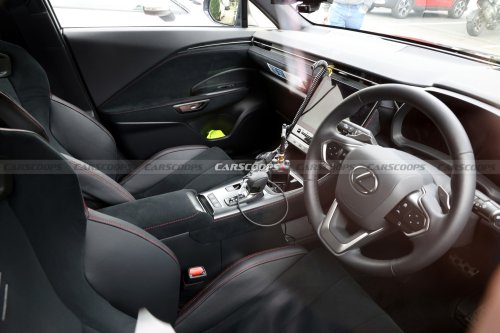
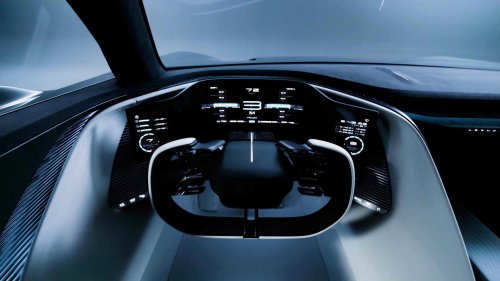
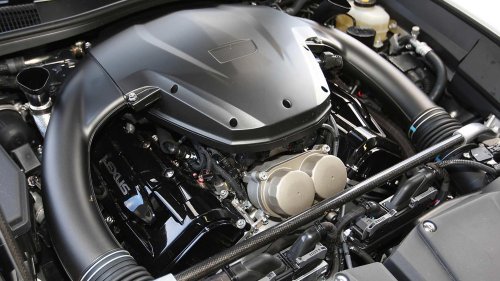
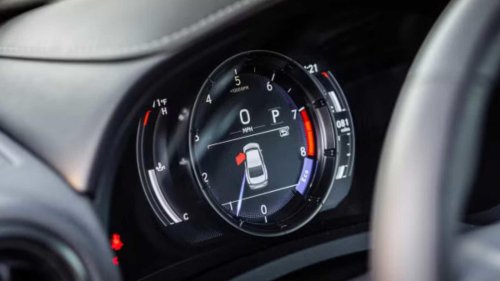
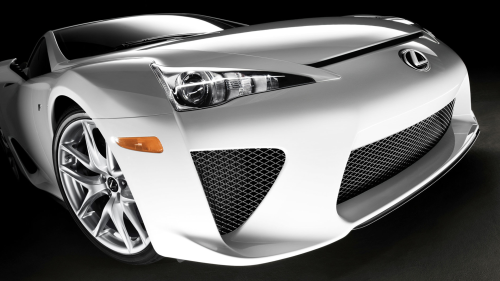
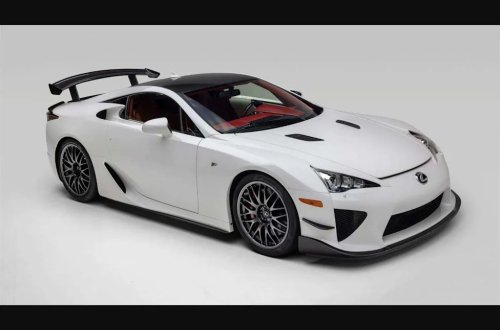
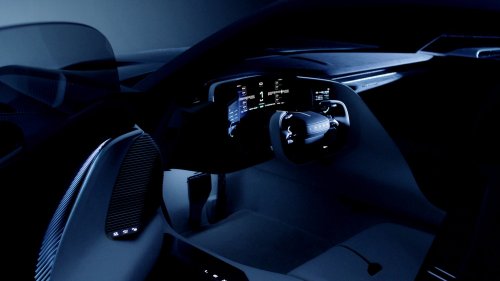
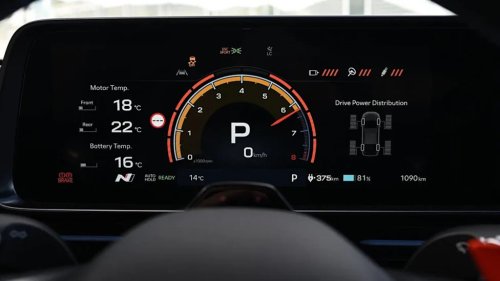
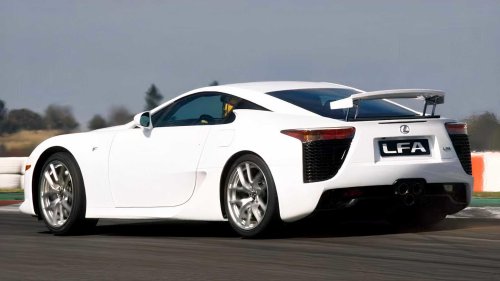
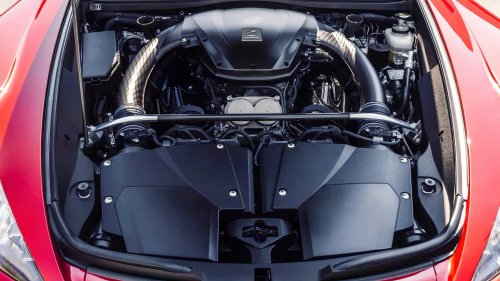
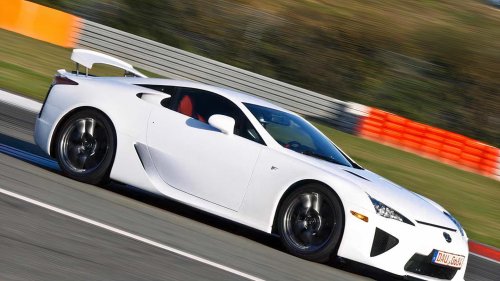
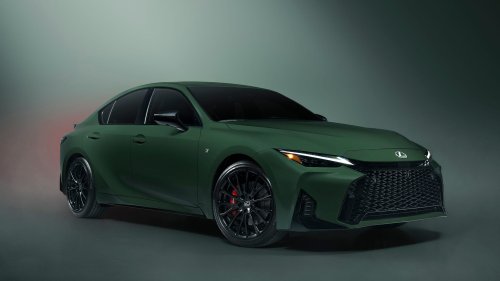
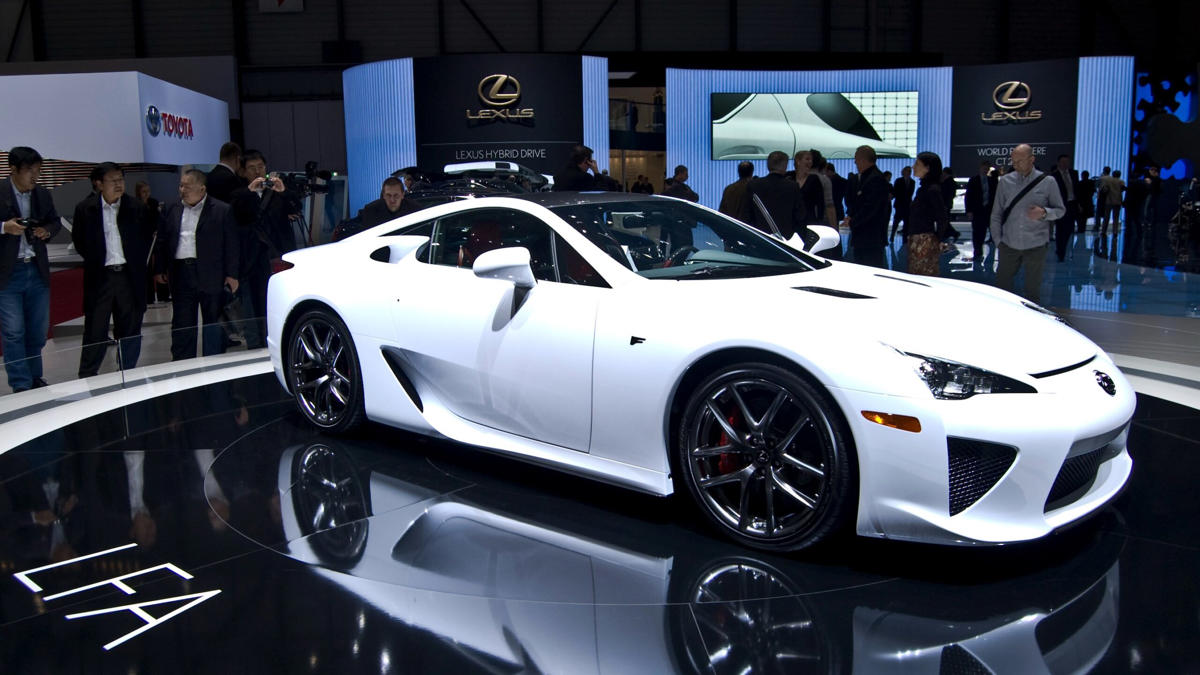
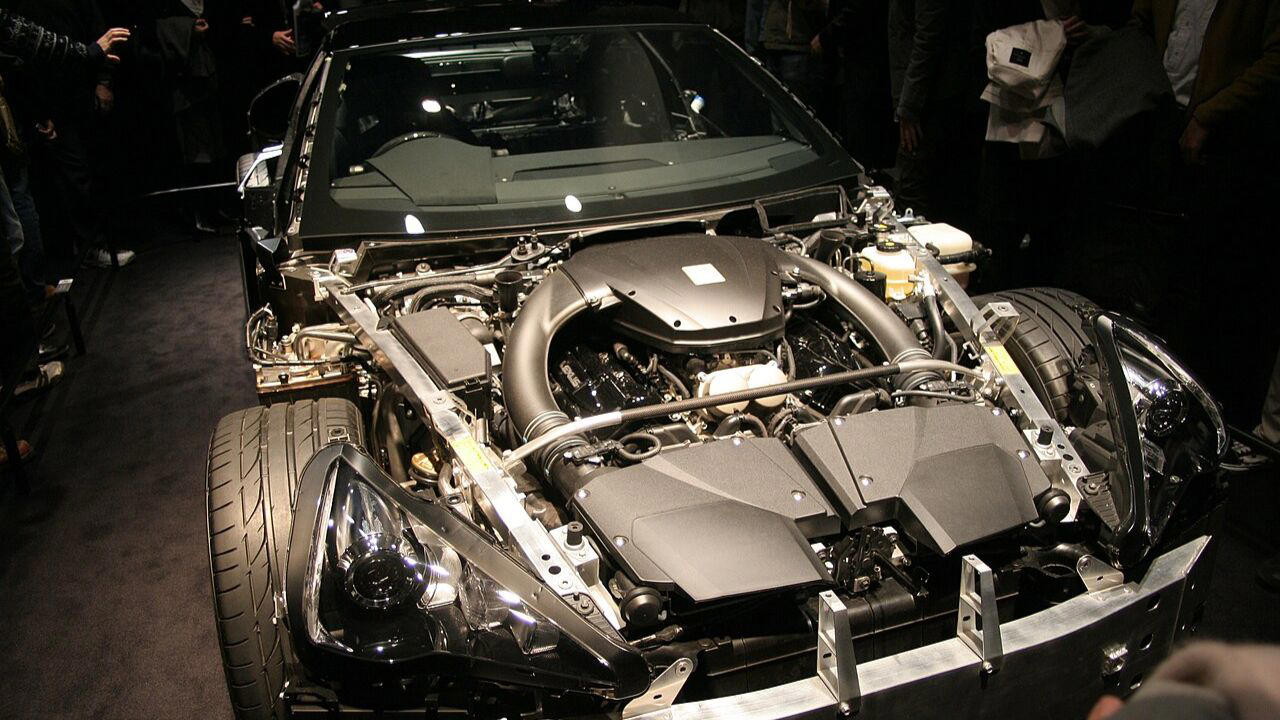
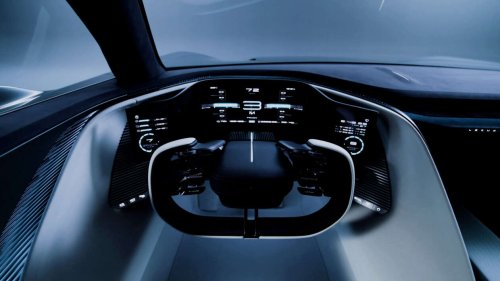
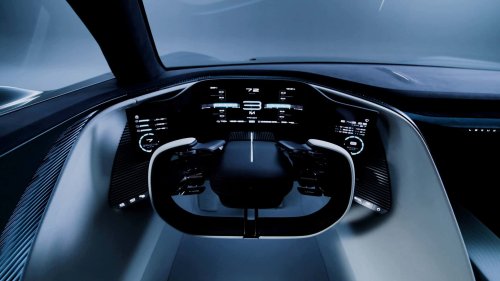
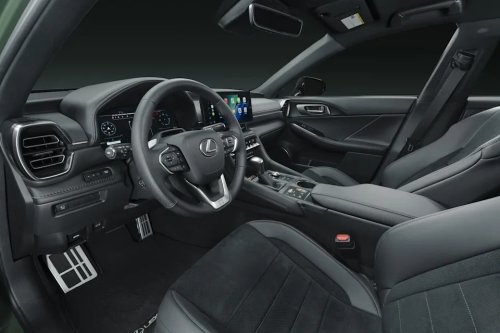
Legend has it that the Lexus LFA was so sharp, fast, and exotic that its engine overwhelmed any standard analog tachometer, forcing its manufacturer to switch to a digital display instead. And that line perfectly suits an impressive performance car that features carbon fiber everywhere, has a big price tag, and only came out in very limited numbers.But the famous tachometer story is not quite as straightforward as it may seem, and the actual answer may not be as dramatic in the real world. Certainly, the LFA's digital thin-film-transistor display with its LCD needle is an interesting feature, but its inclusion may meet a different objective. The LFA's Tachometer Became Part Of The Car's Theater LexusBy the late 2000s, Lexus was a brand best known for delivering refinement, durability, and polished luxury. People didn't really associate it with emotional performance per se, but Lexus aimed to set that story right with its impressive LFA. This wasn't just a faster grand tourer or a high-output version of an existing coupe, but a halo car instead. It carried the company's "F" performance identity and illustrated that the company was perfectly capable of building something genuinely exotic from a clean sheet of paper.Of course, the interior would also need to meet the brief and the car's dashboard became more than simply a place to display speed or rpm. Lexus wanted to link the dashboard experience to the might of the engine, so it included a compact grid-patterned instrument panel with an LCD and color TFT technology, plus a motor-driven movable ring in the middle.The tachometer was rendered with an LCD needle instead of a conventional physical pointer and when you pushed the engine to 9,000 rpm, the display area would turn bright red to prompt an upshift. It also had selectable yellow or green zones.Many thought that this approach was quite theatrical for Lexus, but it suited the company's emotion-led presentation perfectly. That digital tachometer could help translate the V10's speed and sound into a visual event, every time the driver got to the top of the rev range. The V10 Was Fast Enough To Make The Claim Believable Lexus The LFA's engine was so dramatic that it could well have made the tachometer story seem plausible. After all, you had a 4.8-liter naturally aspirated 1LR-GUE V10 engine, co-developed with Yamaha, producing 552 horsepower at 8,700 rpm and 354 pound feet of torque at 6,800 rpm. And an engine that could get to 60 mph in 3.6 seconds with a theoretical 202 mph max, if the cops were looking the other way. The engine also had individual throttle bodies, dual VVT-i,12-hole fuel injectors, low-friction internals, equal-length exhaust manifolds, and a dry sump lubrication system.While this wasn't a torque-heavy V8 in the conventional sense, it could respond instantly and keep pulling all the way to the top of the dial. The engine was compact and lightweight, and according to Lexus, about the size of a conventional V8 with the weight of a conventional V6.Elsewhere, Lexus carefully engineered the vehicle to deal with that performance. The LFA had a carbon-fiber reinforced plastic structure to house the occupants, rear transaxle packaging, carbon ceramic brakes, and a front mid-engine layout. And all this suggested that the LFA was more of a focused supercar than a luxury coupe that just happened to have plenty of power, so Lexus gave it a price tag of around $375,000. The Tachometer Story Is Partly True But Usually Overstated Lexus In practical terms, the LFA's digital tachometer could solve a real readability and response problem, but it's a bit of a stretch to say that no analog rev counter could keep up with that engine performance. After all, other high-rev and performance cars have been able to use analog tachometers successfully, such as the Ferrari 458 Italia. This car produced 562 hp at 9,000 rpm but still used a traditional central tachometer as part of its driver display. And while the Porsche Carrera GT didn't rev as highly as the LFA, it still produced 603 hp at 8,000 rpm while presenting itself as more of an analog sports car along the way.The digital tachometer was probably the better solution for Lexus as it would remain legible during rapid speed changes, maintain its clarity and integrate shift prompts. A mechanical needle wouldn't have been able to deliver the same combination of speed, flexibility, and theater as it wouldn't have had those warning colors, digital speed indicators, as well as the vehicle data, and programmable display. And this suggests that the digital rev counter wasn't so much a necessary workaround but rather, a design solution. The Cluster Predicted Where Lexus Performance Design Might Go Next Ian Wright/CarBuzz/Valnet When the Lexus LFA disappeared, the instrument panel did not dissolve with it, as the company would later use this idea as a visual signature device within its Performance and F Sport models. For example, the third generation IS F Sport had a driver's meter design similar to the LFA, including the moving central ring. Later Lexus performance models would also use central tachometer displays that changed based on driver mode.Lexus started to treat the LFA's tachometer as part of its growing performance identity, and in a way, this feature showed just how much the company had matured in performance terms. After all, many German performance brands use mechanical seriousness as part of their brand character, and Ferrari tends to lean into its drama, but with the LFA, Lexus had its own way of making precision itself feel theatrical.Turning away from the digital tachometer, the LFA certainly deserves a strong place in supercar history. The car itself was mightily impressive, using advanced carbon fiber manufacturing, a meticulously tuned naturally aspirated engine, and an electronically controlled single-clutch automated gearbox. And it appeared at a time when other manufacturers were already moving toward dual-clutch transmissions and turbocharging when they were designing their supercars.But Lexus decided to do its own thing by crafting a very different and potent package before adding those extra theatrical touches on top. The Myth Survives Because It Says Something True About The LFA Lexus It's cool to think that an analog needle couldn't keep up with the brute force of an LFA engine, but the real story is equally interesting. After all, Lexus had created one of the last great naturally aspirated supercars, with an engine that was clearly obsessed with the top end of the rev range. And this meant that the LCD needle, the color-changing display, the 9,000-rpm warning, and that hard-edged V10 soundtrack all combined to make those rpms the actual center of the story, rather than just numbers.Today, the LFA is a prized collectible and not just an expensive Lexus curiosity. Average sales seem to hover around $950k, although the best Nürburgring package cars may sit at almost $1.9 million. And while the tachometer story may contribute to its collectibility to some degree, it’s certainly one of the details that makes the car look very identifiable from the driver's seat. Other supercars may have more power or be able to set faster lap times around a given circuit, but few of them have an instrument cluster that tells such an interesting story about the engine below.When it comes to the Lexus LFA digital tachometer story, it really didn't involve any magic. After all, other high-revving cars could prove that analog tachometers can cope with brutally high-revving engines, so that tends to put that myth to bed.But the LFA’s display was far more than just marketing theater. Instead, Lexus designed a tachometer that could match the speed, drama, and precision of the car’s V10 while giving a driver functions that a conventional gauge couldn't. And in doing so, it created a feature that could address engineering, usability, and emotional problems all at the same time.




















 +35 others















































![The Lexus LFA electric supercar debuts with a fake V-8 roar [Video]](https://cdn.topcarnews.net/thumb/id/aHR0cHM6Ly9pMC53cC5jb20vZWxlY3Ry-ZWsuY28vd3AtY29udGVudC91cGxvYWRz-L3NpdGVzLzMvMjAyNi8wNy9MZXh1cy1M-RkEtRVYtc3VwZXJjYXItZGVidXQuanBl-Zz93PTE1MDAmYW1wO3F1YWxpdHk9ODIm-YW1wO3N0cmlwPWFsbCZhbXA7c3NsPTE/99abf3bea06e2854bc77646d0e7a8ee1.jpeg?t=20260926&post_id=45002)