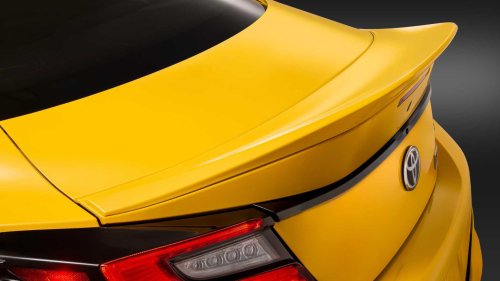
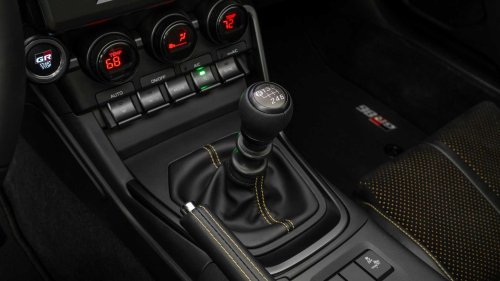
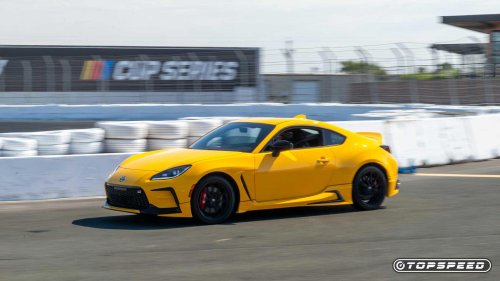
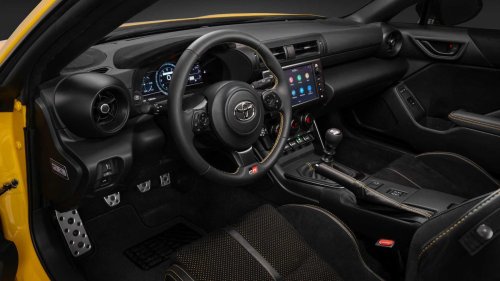
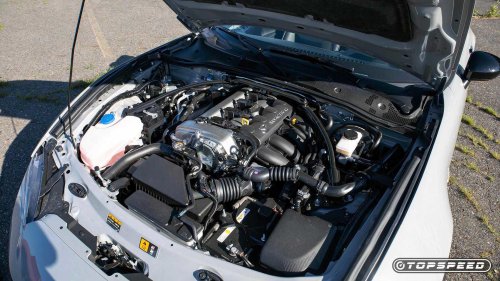
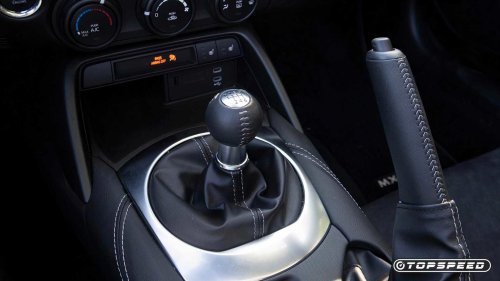
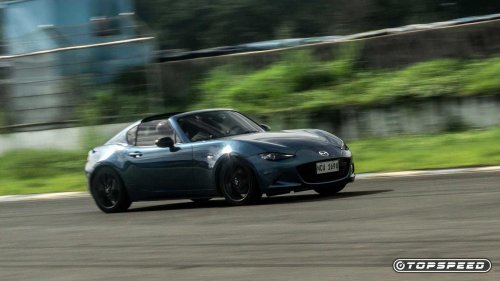
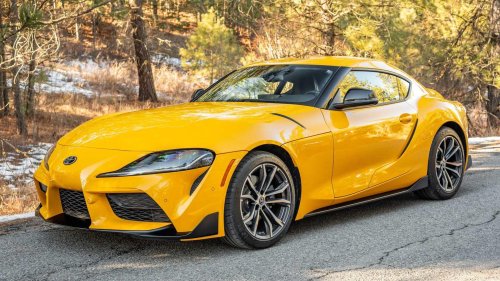
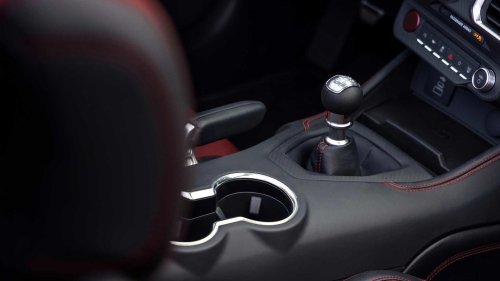
Affordable sports cars are slowly becoming a rarity, as the driver-enthusiast market continues to shrink, especially in the U.S. For the most part, new car buyers are showing an increasing demand for practicality and versatility because this is a more sensible option for one-car owners. Having a second car just for occasional leisure driving is becoming increasingly rare, primarily because of the additional costs involved.Japanese manufacturers are some of the very few brands that continually show a strong dedication to the affordable driver's car. As of 2026, there are just a handful of compact manual sports coupes that cost less than $35,000. These are typically low-output naturally aspirated rear-wheel-drive manual subcompact sports coupes. Despite their cheaper status, they benefit from motorsport-derived technology aimed at driving enthusiasts. Affordable Sports Cars Are A Dying Breed Toyota The decline of mass-market sports cars in the U.S. is a multi-faceted phenomenon driven by shifting consumer needs, economic pressures, and rapid advancements in vehicle capability. As modern vehicles across all segments have become increasingly powerful and capable of delivering respectable acceleration and handling, the unique performance proposition that once defined entry-level sports cars has been diluted. Simultaneously, the market has pivoted heavily toward high-riding, versatile utility vehicles that offer the space and comfort consumers now prioritize for their daily lives.Compounding this shift is the rising barrier to entry. Production costs, safety compliance, and advanced technology have surged, directly affecting the pricing of traditional sports cars. This direction has now pushed them out of reach for younger or budget-conscious buyers who can no longer justify them as a second or third vehicle. Ultimately, as the industry favors high-volume, multipurpose platforms, the focused, manual-centric, and less practical nature of the traditional sports car has been relegated to a niche status, making it increasingly difficult for these vehicles to survive in a market that demands total utility from every dollar spent. How The Japanese Get Affordable Sports Cars Right Toyota The Japanese sports car industry is defined by a distinct synthesis of meticulous craftsmanship and a profound commitment to driver-centric engineering. At the heart of this philosophy is the belief that a vehicle should be an extension of the driver. This leads to a focus on intuitive ergonomics, lightweight construction, and balanced chassis dynamics that prioritize tactile feedback over raw, unrefined power. By emphasizing aerodynamic efficiency and precision manufacturing, Japanese brands have consistently sought to create cars that are inherently predictable and responsive. This approach ensures that performance remains accessible and usable, blending technical complexity with a functional simplicity that respects the intimate connection between the driver and the machine.This dedication to continuous improvement and refined mechanical integrity has fostered a deeply loyal, niche following that treats these vehicles as more than mere transportation. Japanese sports cars are essentially canvases for personal expression and long-term mechanical refinement. For many enthusiasts, the appeal lies in the ability to bridge the gap between high-performance capability and daily reliability, a balance that has allowed these cars to transcend their initial market segments and gain near-mythological status. The Toyota GR86 Remains A Performance Bargain Amee Reehal | TopSpeed Pricing for the 2026 Toyota GR86 starts at $31,400. Key appointments include a suite of standard comfort and convenience features that make it usable as a daily driver while staying true to its sports-car focus. Inside, Toyota fits an eight-inch touchscreen infotainment system with wired Apple CarPlay and Android Auto, AM AND FM stereo, and a six-speaker audio setup, which delivers basic entertainment and smartphone integration without needing extra options.Toyota Comfort comes from supportive sport front seats and keyless ignition that gets you moving quickly, while dual-zone automatic climate control keeps the cabin temperature steady for driver and passenger. Fold-down rear seats add a measure of practicality for gear or luggage when needed. Toyota also includes remote keyless power door locks and one-touch power windows as standard, so essential convenience features don’t cost extra, and heated mirrors help in cold or wet conditions.Amee Reehal | TopSpeedThe instrument panel features a multifunction trip computer and a digital gauge cluster with selectable modes that present vital information and let you tailor readouts to everyday cruising or more spirited driving. Connectivity comes via two USB ports for charging and media, Bluetooth hands-free capability, and Siri Eyes Free or Google voice control through your phone, with Toyota’s Smart Key System with push-button start.ToyotaThe $34,000 Premium model is essentially a comfort package, adding heating and electrical adjustments for the front seats, ultrasuede upholstery, illuminated dual sun visors, aluminum sports pedals, and an eight-speaker audio system. Upgrading to the flagship Yuzu Edition for $36,365 adds a few unique exterior and interior trim details, making the model feel a bit more unique and special. A Simple But Effective Boxer ToyotaThe heart of the Toyota GR86 experience is the naturally aspirated 2.4-liter flat-four engine, built in conjunction with Subaru. This produces 228 horsepower at 7,000 RPM and 184 pound-feet at 3,700 RPM to the rear wheels via your choice of a six-speed manual or automatic transmission. The result is a 6.1-second 0-to-60 MPH acceleration time and a 140 MPH top speed limit. Subaru designs the FA24D to balance power and longevity via an all-aluminum block and cylinder head to cut mass and improve warm-up times. Engineers fit dual overhead cams with four valves per cylinder, and Toyota's D-4S combines direct and port injection to control combustion and resist knock.Compression sits at a fairly high 12.5:1, while an oil cooler stabilizes oil temperatures under load. The FA24D features a semi-closed deck block and robust internal components to withstand higher stresses than older boxer engines. Subaru keeps the engine low and compact with a shallow oil pan and short intake to preserve a low center of gravity and reduce chassis loads. The Brilliance Is All In The Suspension Amee Reehal | TopSpeed The 2026 Toyota GR86 also benefits from a specialized track-tuned suspension consisting of independent MacPherson struts up front and a double-wishbone setup at the rear. Gazoo Racing supplies this configuration via upgraded stabilizer bars measuring 0.7 inches at the front and 0.55 inches at the rear. The limited Yuzu Edition, which comes standard with the Performance Package, replaces the standard shocks with high-pressure nitrogen-charged and oil-filled SACHS dampers and upgrades the braking system to Brembo four-piston front and two-piston rear calipers. These clamp down on significantly larger rotors, measuring 12.8 inches at the front and 12.4 inches at the rear.Across the standard trims, the base GR86 features 11.6-inch front and 11.4-inch rear ventilated discs. tires vary by grade, with the base trim featuring 17-inch alloy wheels wrapped in Michelin Primacy HP tires, while the Premium and Yuzu Edition move up to 18-inch matte-black alloys with stickier Michelin Pilot Sport 4 tires. The GR86 Is A Niche Fan Favorite Amee Reehal | TopSpeed The GR86 is a polarizing product, primarily because of its low power output, but one area where it receives consistent praise is for its driver engagement. J.D. Power gives the model a 79/100 consumer-verified overall score, including 79/100 for quality and reliability, 71/100 for the driving experience, 90/100 for resale, and 76/100 for the dealership experience.Edmunds Consumer Reviews highlights some favorability from existing owners, with a 4.3/5 overall score from 20 reviews. Key strengths include the model's handling and steering feel, visual presence, and the overall driving experience, but it gets some criticism for its compact cabin spacing, lackluster dashboard, and meager sound system.iSeeCars gives the model a 9.5/10 retained value score, indicating that you will only lose $7,463 or 24.9 percent of its value after five years and 60,000 miles, which is considerably lower than the rest of the sports car market. The Added Benefit Of Efficiency TopSpeed | Michael Frank According to the EPA, the 2026 Toyota GR86 with the automatic transmission returns 21/30/24 MPG on the city/highway/combined cycle, resulting in it covering 317 miles from its 13.2-gallon tank. Expect to spend $3,750 more on fuel over five years compared to the average new vehicle in the U.S., $2,900 on fuel every year, and $4.80 to drive 25 miles.Opting for the manual transmission worsens consumption to 20/26/22 MPG and range to 290 miles. Fuel spending increases to $5,000 more over five years, $3,150 on fuel every year, and $5.24 to drive 25 miles. A full tank of gas will set you back by around $61.