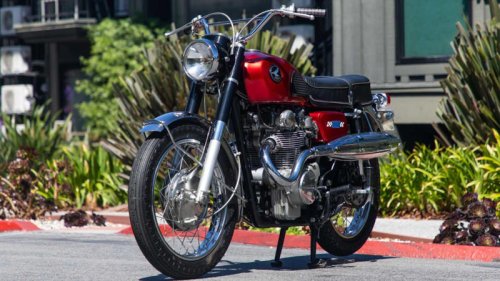
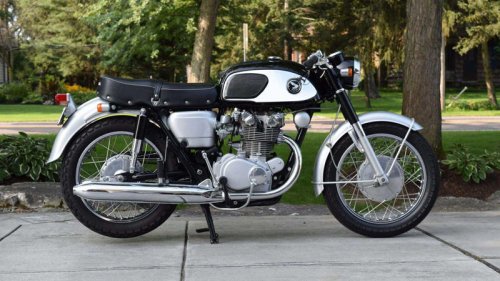
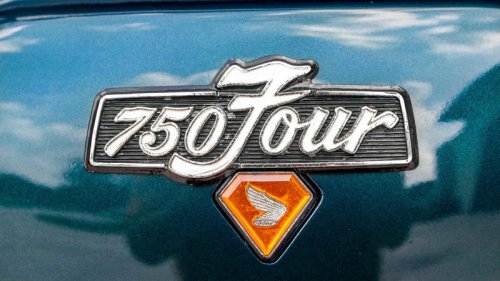
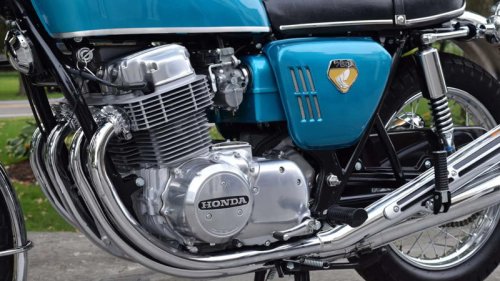
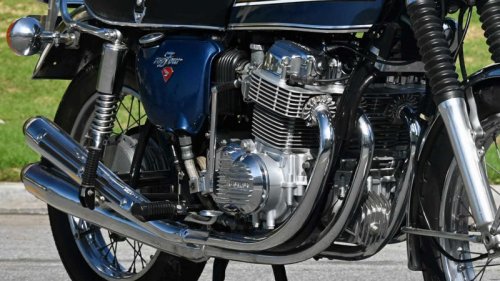
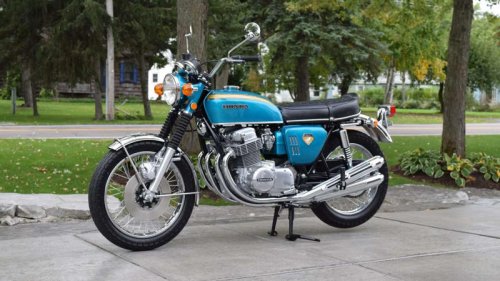
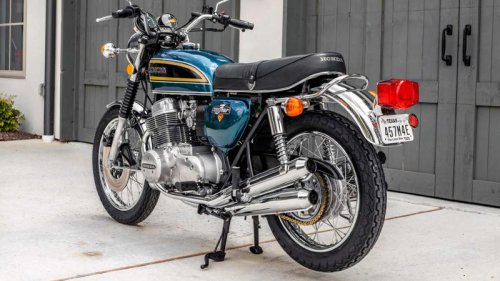
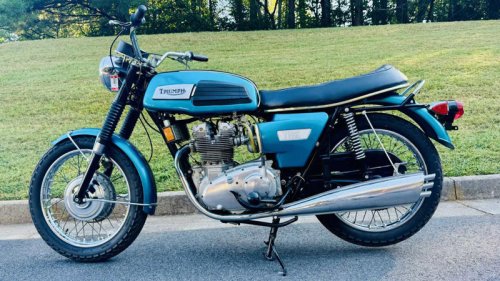
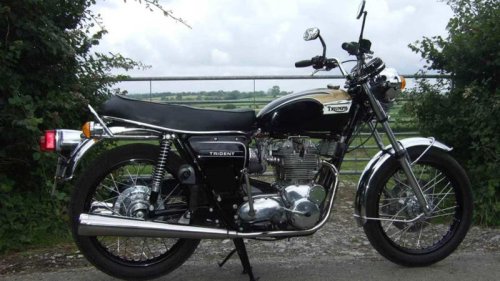
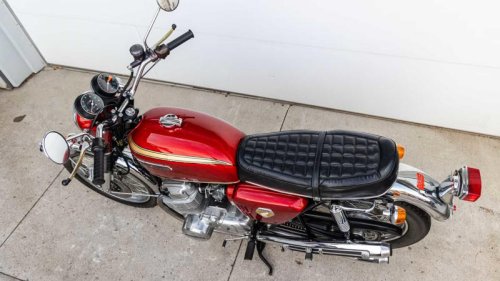
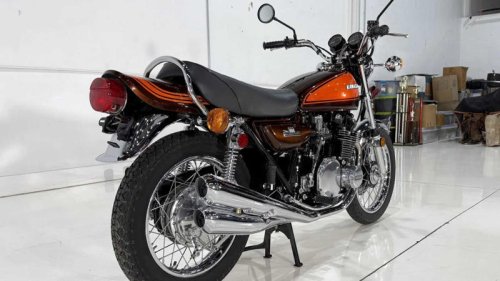


















The end of the 1960s and the first half of the 1970s changed the motorcycle world for good. That stretch gave riders some of the most important performance bikes ever built. Speed stopped being a niche thrill for brave eccentrics with oily gloves and very forgiving spouses. It became the main event. A big motorcycle could no longer rely on charm, noise, and a few good stories at the diner. Riders wanted power, but they also wanted smoothness, control, and a machine that did not feel like it was shedding bolts out of spite.A few famous models would soon reshape what riders expected from performance, and each one pushed the market harder. But before those bikes made their noise, one Honda engine lit the fuse. It arrived at the exact moment the industry needed a reset, and it brought more than extra cylinders and a bigger number on the spec sheet. It changed the idea of what a fast motorcycle could be. Before The Legend, Honda Had A Problem To Solve Mecum Honda entered the late 1960s as a giant in motorcycle sales, but it had a hole in the lineup big enough to ride a Harley through. The company sold huge numbers of smaller bikes, yet it had no large-displacement sport model for developed markets. That hurt most in America, where demand for big engines stayed strong, and Honda’s sales had started to slip after 1966. The CB450 helped, but it did not become the flagship Honda needed. For a company that loved engineering trophies, that was a very public itch it could not scratch.Yoshiro Harada and the Honda team learned something useful when they looked at the U.S. market more closely. American riders wanted easy torque, lazy passing power, and a machine that felt relaxed on the open road. A 450 could be clever, but clever does not always win in a showroom. Sometimes the customer just points at the bigger number and says, “That one.” Engineers hate when marketing does that, but they hate losing more.Then Honda heard that Triumph was developing a 750cc triple. That rumor sharpened the whole project in a hurry. Harada fixed the new bike at 750cc and aimed for 67 horsepower, a figure Honda noted would even edge the output of Harley-Davidson’s 1,300cc unit at the time. All In The Name Of The American Market Mecum Honda’s American dealers handed the firm a very specific wish list. They wanted a 750cc four-cylinder engine, four carburetors, four mufflers, a 120+ mph top speed, and a quarter-mile sprint in about 13–14 seconds. American buyers demanded size, speed, and sophistication in one package. Not another half-step between the commuter world and the heavyweight class.Honda responded in February 1968 and began full-scale design work. The team wanted a motorcycle with the kind of punch American riders liked, but it also prioritized comfort and real road manners. That sounds normal now, but back then, it was ambitious. Existing tires and drive chains were not strong enough for the performance target, so, Honda had to develop those parts, too.One lesser-known detail says a lot about the project’s seriousness. When production ramped up, American Honda sent two engineers to Saitama to check roughly 300 items from the user’s point of view. The manufacturer also used idle power-equipment facilities to keep investment down while it figured out how to build a true big bike at volume. The company was trying to build a world-class motorcycle that ordinary riders could actually buy, own, and ride hard. The 736cc SOHC Transverse Inline-Four That Changed Motorcycle Engineering Bring a TrailerThe heart of the CB750 was a 736cc air-cooled, single-overhead-cam, two-valve-per-cylinder inline-four mounted across the frame. It made about 67 horsepower at 8,000 rpm, around 44 lb-ft of torque at 7,000 rpm, and sent that output through a five-speed gearbox. Honda paired it with four carburetors, four mufflers, and a hydraulic front disc brake. Period targets and tests put the bike near 124 mph, with a quarter-mile time of 12.4 seconds. That was serious speed for a road bike in '69, and it arrived with far better manners than the headline numbers suggested.The engine took hardware that still felt exotic and made it look almost normal. Honda was not the first company in history to think of an inline-four, but it was the first to mass-produce a modern, affordable large-displacement version with this mix of performance, road use, and reliability. That is why the CB750 is so important. This thing emerged from the same world as Grand Prix machinery, only it had a license plate.Mecum The Japanese company also made a smart call by choosing a single overhead cam instead of chasing a double-cam design. The engine retained a mild tune, with tractability as a major goal, and Honda valued the smaller, more compact SOHC head. The whole point was to build an engine that felt broad, usable, and durable.The testing behind that calm behavior deserves more attention than it usually gets. Honda ran pistons for 200 hours at 70 percent power and then 20 hours at full throttle during development. Early prototypes showed scuffing and heat issues. So engineers changed piston thickness and taper until the problem went away. That kind of work explains why the engine transformed engineering, not just marketing. What Made The Layout So Special Mecum The layout looked dramatic, but its real magic came from packaging and cooling. The power plant sat sideways in the frame, with a clear visual spread that advertised all four cylinders at once. The engine block is split into left and right pairs with a gap for the cam drive, while generous finning and large air passages helped cooling. Many riders and engineers still worried that a road-going air-cooled four might cook itself in the middle cylinders, but Honda proved otherwise. Even the inside cylinders stayed under control in high-speed testing.The layout also changed how a big motorcycle felt from the saddle. The goal was for high-speed stability, low vibration, lower rider fatigue, and easy operation based on human-engineering principles. Honda succeeded with those missions. The bike could cruise, sprint, commute, and tour without acting like four different machines bolted together by committee.Most importantly, the layout became a template instead of a one-hit wonder. Honda built the engine for mass production after learning new crankshaft machining, rethinking production flow, and eventually switching from sand-molded crankcases to die-cast parts as demand exploded. Why The CB750 Was Such A Shock To The Market Mecum The number that blew minds came before most riders had even twisted the throttle: $1,495. Now, read that number again. Honda announced the U.S. retail price at its Las Vegas dealer meeting, and large bikes in America at the time were selling for roughly $2,800 to $4,000. Around 2,000 dealers reportedly burst into applause when they heard the figure, and they had every reason to. Honda had just shown them a motorcycle with race-flavored engineering and everyday usability at a price that made established big bikes look like they wandered into the wrong dealership.The price shock hit even harder because demand landed all at once. Honda’s first forecast called for 1,500 units a year, but demand turned that into a monthly number, and then even that proved too low. So, production jumped again. At first, the line could build only a handful of engines per day. Partly because Honda had never mass-produced an integrated crankshaft and metal-bearing four-cylinder like this before. The team even visited automobile manufacturers to learn the right machining and line layout.Bring A Trailer Cheap alone does not create a legend, though. The CB750 also shocked the market because its price and its content did not match in the old way. Honda used modern production thinking, borrowed idle facilities, and kept refining the line until output caught up. The result was a bike that made prestige look vulnerable. Riders no longer had to pay a premium for character and then forgive the flaws that came with it. The new Honda showed up with performance, polish, and a receipt that felt almost rude. Somewhere, a British accountant probably reached for antacids. What The CB750 Offered That Rivals Didn't Mecum Rivals at the time still had strengths. The Triumph Trident, for example, was fast, distinctive, and smoother than the old big twins. Its straight-line performance was hard to fault. However, weak low-end torque, some awkwardness in city traffic, careful downshifts, and handling that felt cumbersome at lower speeds were definitely not what riders were looking for. The Honda attacked from a different angle. Its tune made it easy to manage at all speeds, and testers found it comfortable and remarkably capable in its class.The braking gap may have mattered even more. Period tests said the brakes of the Triumph were not up to the job of stopping a 500-pound projectile at the speeds it could reach. Honda, meanwhile, gave the CB750 a hydraulic front disc that testers called reasonably fade-free for a 120-plus-mph motorcycle, with a broad and controllable feel.Triumph Motorcycles Then came the ownership side, which enthusiasts sometimes downplay right up until they have to live with the machine. Honda fitted an electrical system strong enough to support turn signals, instrument lights, a horn, and an electric starter for four cylinders. It gave the engine easy tappet access through rocker box caps, automatic chain oiling through the drive sprocket, and big upright gauges that stayed readable even in a crouch. There was also a simple two-way kill switch designed so that a panicked rider could not fumble it. All of this sounded brilliant to anyone who actually rode at night, in traffic, or every day.All those details added up to perceived modernity, which in 1969 was half the battle. The Triumph cost more than $1,700 in period testing and still drew criticism for flimsy electrical lead attachments and brake performance. The Honda cost less, looked more advanced, and backed it up with real engineering. Bikes That Were Impacted By The CB750 Mecum It’s safe to say the CB750 changed the way the world looked at road sport motorcycles. Other manufacturers soon followed with their own 750-class machines, creating a new market. That point often gets lost because the CB750 itself gets so much of the spotlight, but the real proof of its importance sits in what came next. Competitors reacted, stretched it, copied parts, and tried to outgun the formula. The CB750 did what every great enthusiast machine does. It forced everyone else to explain themselves.Kawasaki’s Z1 was the loudest answer. The company officially unveiled the 903cc, DOHC, four-stroke inline-four in 1972, calling it Japan’s largest motorcycle of the day and its first four-stroke engine with a unique state-of-the-art mechanism. A 1974 Cycle World test noted that a transverse four was no longer unusual by then, and that line basically says everything. Honda had normalized the architecture for the industry. Kawasaki answered by turning the volume up until the neighborhood windows rattled.Bring a Trailer Suzuki took a slightly different path with the 1976 GS750. It was the company’s first large-displacement four-stroke motorcycle, built for the booming 750cc class, with a 748cc DOHC inline-four making 68 horsepower. In plain English, Suzuki entered the house that Honda had just built and rearranged the furniture. The GS750 refined the UJM formula with Suzuki’s own ideas and became a key reason Honda later had to defend market share against the GS series. The class had matured, the easy win was over.Then there was the Benelli 750 Sei, which showed just how influential Honda’s engineering grammar had become outside Japan. When Alejandro De Tomaso unveiled the Sei in 1972, he declared war on the Japanese makers. Many believed Benelli had taken a contemporary Honda four and added two cylinders, mainly due to the shared design themes plus the same bore and stroke as Honda’s CB500.