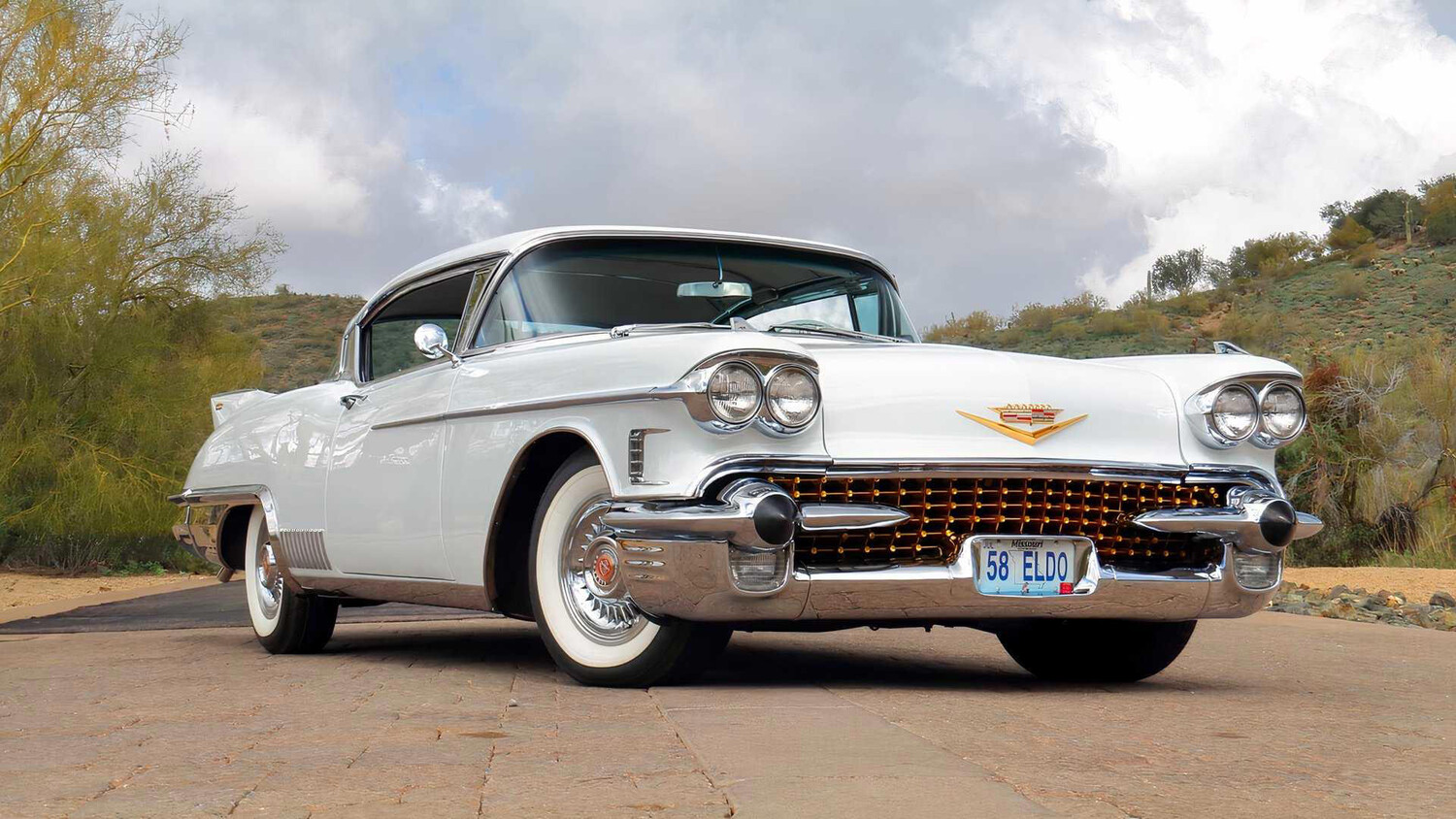
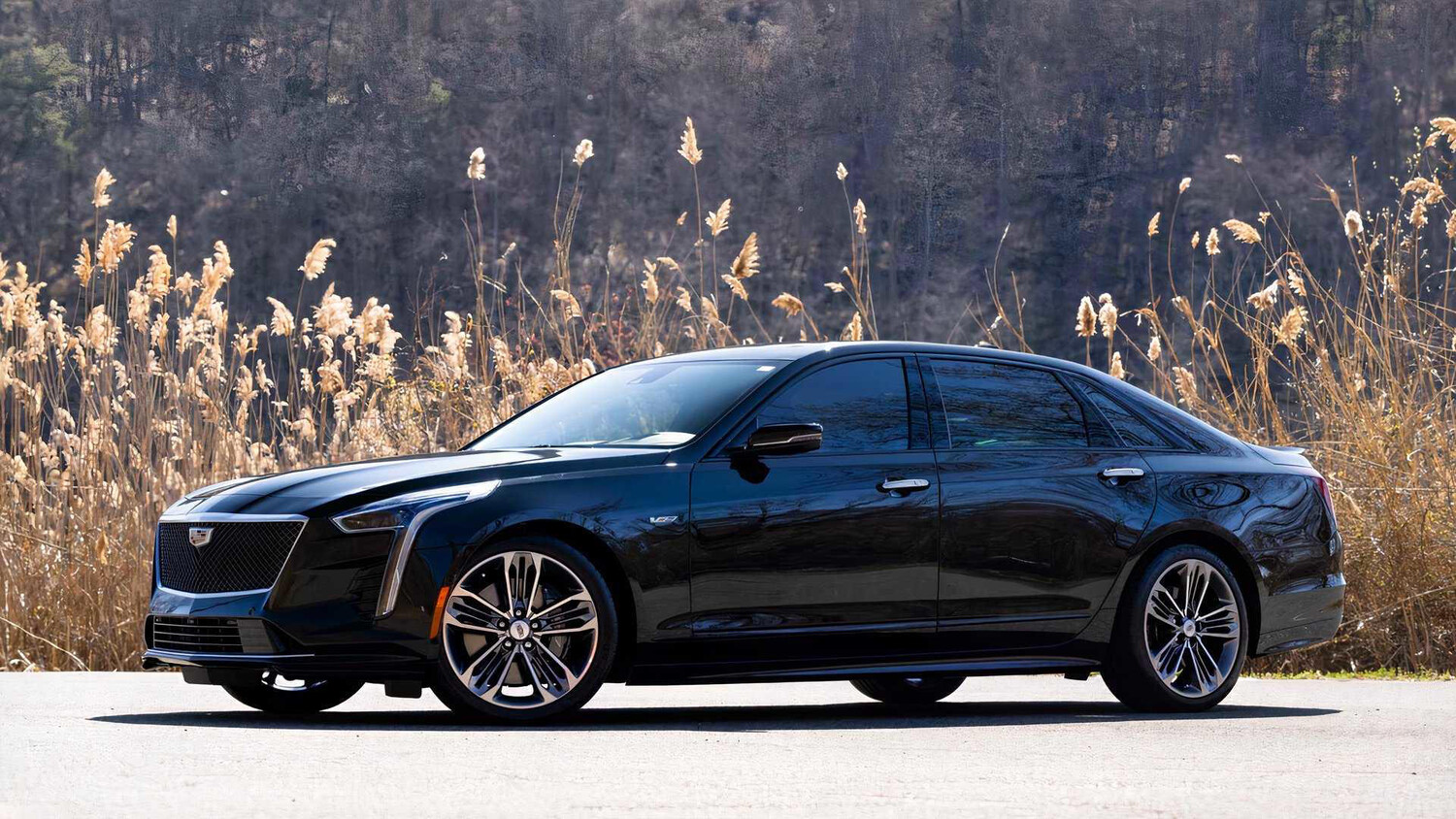
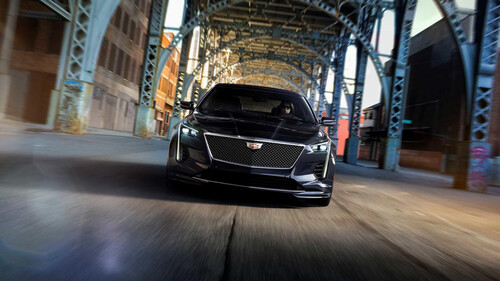
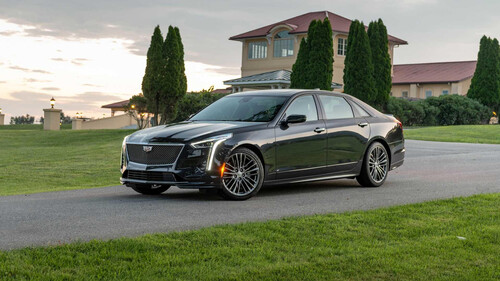
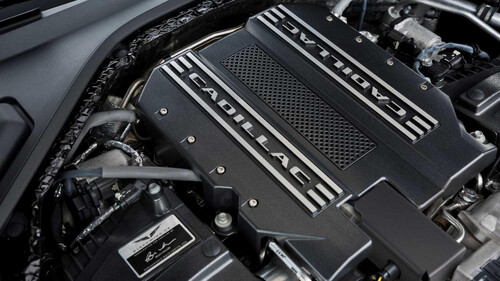
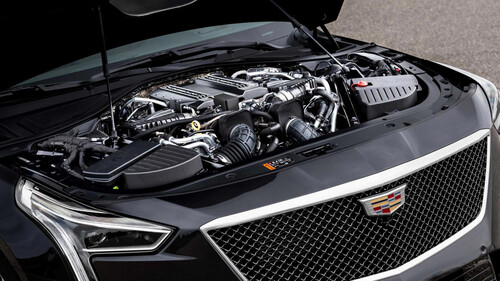
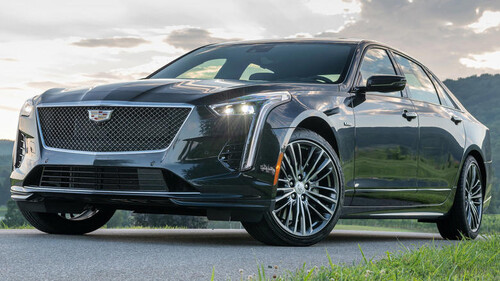
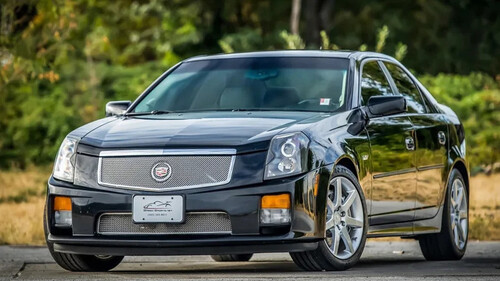
V-8 engines are now mostly associated with high-performance muscle cars and rugged full-size trucks, but they actually got their start in the luxury segment. In 1905, Rolls-Royce produced three cars equipped with a 3.5-liter V-8, which was the first example of a V-pattern eight-cylinder road-going vehicle. A couple of years later, the 1907 Hewitt Touring Car was the first American car with a V-8, but it too was produced in very small numbers. In 1914, the Cadillac L-head V-8 sold over 13,000 units, becoming the first mass-produced road-going V-8 engine in history, and marked the beginning of the luxury brand's journey of automotive innovation.Performance tech has come a long way in the past 100+ years and there's no better guide than tracking the history of the Cadillac V-8. From the very beginning, Cadillac has been an upscale nameplate, known for making big, flashy cars that were genuine status symbols. There was absolutely nothing luxurious about a fancy ride that barely moved off the line and so, by necessity, Cadillac had to provide sufficient power, which drove their advancements in performance. While the Cadillac V-8 isn't the entire textbook, its history occupies several important chapters of American ingenuity, which helped pave the way for modern super-performance. Cadillac L-Head Luxury V-8 Mecum Introduced for the 1915 model year, the Cadillac L-head V-8 engine was a marvel of technology of the day. The 90-degree set-up provided a much smoother operation than the inline engines it replaced, and was actually cheaper to produce. Named for its L-shaped combustion chambers, the L-head V-8 had the valves in the engine block beside the cylinders, not in the heads. It was also one of the first engines with an electric starter motor, which was an absolute game changer. Initially, the L-head had 314 cubic inches of displacement and produced 70 horsepower, but grew to 353ci, with upwards of 90 ponies.Mecum A 1915 Ford Model T was equipped with a 20-horsepower four-cylinder with a top speed of around 40 MPH. An L-head 314-equipped 1915 Cadillac Series 51 was over three times more powerful than the Model T and could reach speeds of up to 65 MPH. There are no road tests available for either vehicle so we can't compare quarter-mile ETs, but it's reasonable to assume that the Cadillac had superior acceleration over the Ford. The Series 51 was the first American vehicle that didn't feel like it was stuck in molasses off the line, and that's thanks to the innovative Cadillac L-head V-8. Monobloc Tank Engine U.S. Army Cadillac was able to cut the cost of their V-8 even further with the 1936 322ci Monobloc engine in which the block and crankcase were cast as a single unit. On the civilian side of things, the Monobloc was good for 125 horsepower, which catapulted the Cadillac Series 60 ahead of every other car on the road. More importantly, the 332 Monobloc helped the United States win WWII as the driving force behind the M5 Stuart and the M24 Chaffee light tanks. The tanks actually had twin Cadillac Monobloc engines that, in tandem, produced 220 horsepower and allowed the Allies to roll right over the Nazi opposition. OHV Cadillac V-8 Mecum In 1949, Cadillac got an assist from Buick, who designed an overhead valve V-8, which the luxury automaker adopted into it's 331ci V-8. By 1955, the engine was bored out to 365 cubic inches, which produced an unheard of at the time 285 horsepower. This engine got even more awesome with the 3x2 barrel carb "TriPower" version for the 1955-1958 Cadillac Eldorado. In '58, the Eldorado 365 blasted out 335 horsepower, which put it on the same level as the 392 FirePower-equipped Chrysler 300 Letter Series cars, which were the fastest of the entire decade. Modernization Of The Cadillac V-8 Mecum For 1963, Cadillac updated the tooling for their redesigned 390 V-8, which was more efficient and significantly lighter than the previous version. Maintaining the same 325 horsepower, the new 390 had shorter connecting rods, was shorter and thinner, utilizing a cored-out crankshaft for additional strength and weight-reduction. The next year, the Cadillac V-8 was bored and stroked-out to 429 cubic engines, upping the power to 340 ponies and 480 pound-feet of torque.Mecum The 1963 Cadillac Eldorado was one of the finest luxury automobiles America ever produced, but it was also a massive land yacht that would have been a major disappointment if not for the 390 V-8. While it would never be confused with a factory drag car, the '63 Eldorado had respectable acceleration times, hitting 0-60 in 9.0 seconds and running a quarter-mile in the 17s. Again, this wasn't a street machine, but rather a posh status symbol, and the added kick under the hood gave it just the right amount of power. New 472 Series V-8 for '68 Mecum For 1968, the Cadillac V-8 was completely redesigned to be simpler and easier to maintain with 10 percent less parts and 25 percent fewer gasket joints. It also grew to 472ci, delivering 375 horsepower and an Earth-shattering 525 pound-feet of torque. This added power got the 1968 Cadillac Deville down to a 15-second car with a 7.8-second 0-60 time and 128 MPH top speed. It still wasn't a muscle car, but that kind of acceleration in a full-size luxury car was not only impressive but made it a blast to drive. The Mighty Cadillac 500 V-8 Monster Block Mecum Cadillac stroked out the 472 in 1970, getting a whopping 500 cubic inches out of the big-block, creating the highest displacement V-8 for a passenger vehicle to ever exist. Initially rated at 400 horsepower and 550 pound-feet of torque, the mighty Cadillac 500 would go on a yearly detuning adventure that saw it drop to just 190 ponies by 1976. In 1970, however, it was at full power and got the gunboat Eldorado moving from 0-60 in 8.8 seconds and down a quarter-mile in 16.3 seconds. Into The '80s With The Metric System Bring a Trailer Heading into the 1980's, the metric system took over American engines, so cubic inches were out, and liters became the standard. For Cadillac, there were many more changes, including shrinking the displacement of its V-8 to meet the Corporate Average Fuel Economy (CAFE) requirements, so the 472 was debored to 368 cubic inches and known as the 6.0-liter. Also, beginning in 1980, Cadillac V-8s featured throttle-body fuel injection which was called the Digital Fuel Injection system and adopted by most other GM divisions.Bring a Trailer The 6.0-liter V-8 was only rated at 145 horsepower and 270 pound-feet of torque, but Cadillac's luxury cars had been shrinking in size, so there was no noticeable drop in performance. That being said, the 1980 Cadillac Seville Elegante was never accused of being a barn burner, with a nearly 13-second 0-60 time and a quarter-mile crawl that nearly took 20 seconds. Back in the classic muscle car era, a 13-second car was something to brag about, but Cadillac's 0-60 acceleration was a thing of shame. The Failed V8-6-4 Experiment Mecum Things got even gloomier for the Cadillac V-8 with the introduction of the V8-6-4 "Modulated Displacement" cylinder deactivation system. The idea was solid in that the car would shut off two or four cylinders in low-load situations like hitting cruising speed on the highway, and then return to the full eight cylinders when acceleration was needed. This is kind of like the modern Active Fuel Management or Displacement on Demand systems, the only difference being that the tech just wasn't there in the early 1980s. The V8-6-4 system simply didn't work as advertised, and most owners had it deactivated at the dealer, which was as simple as disconnecting a wire from the transmission's 3rd-gear switch. First of the Northstar Mecum Cadillac came roaring back in the early 1990s with the Northstar V-8, which was the most technologically advanced engine at the time. More than just an engine, Northstar was a system that included traction control, adaptive suspension, and antilock brakes. The 4.6-liter Northstar was a naturally-aspirated DOHC four-valve-per-cylinder computer-modulated V-8 capable of producing up to 300 horsepower. That was nothing, though, as the 4.4-liter supercharged V-8, introduced in 2006, cranked out a neck-snapping 469 horsepower and 439 pound-feet of torque, making the STS-V a legitimate 13-second full-size ride. The 2009 CTS-V would top that with a 556-horsepower supercharged 6.2-liter, but that was a GM LS9 and not a proper Cadillac V-8. Blackwing Twin-Turbo Swan Song Mecum Current top-end Cadillacs like the CT5-V Blackwing and Escalade-V are equipped with the totally insane LT4 6.2-liter supercharged V-8, that generates 668-682 horsepower, but that's also a GM engine. It's a V-8 in a Cadillac, but not a Cadillac V-8. The last V-8 that Cadillac could call its own was the Blackwing V8, produced from 2018-2020 and exclusively for the CT6-V. The 4.2-liter twin-turbocharged V-8 was an aluminum block cleansheet engine design, all of which were hand-built. The intercooled turbochargers were mounted between the cylinder banks in a "Hot-V" configuration, and the twin-scroll design added performance with better efficiency and quicker response.Mecum Cadillac limited the 2019 CT6-V, which was equipped with the Blackwing V8, to just 275 units, which promptly sold out in seconds. Realizing they clearly underestimated the demand, Cadillac built some more known as the CT6 4.2 Platinum, with a slightly less powerful version of the Blackwing V8, which also sold out quickly. The CT6-V produced an astounding 550 horsepower and 640 pound-feet of torque that Car and Driver tested to a 3.8-second 0-60 time and a blistering 12.2-second quarter-mile ET. The version in the CT6 4.2 Platinum produced 50 fewer ponies, but was still one hell of a quick full-size sedan. Sadly, the CT6-V was discontinued after 2020, and with that, possibly the last Cadillac V-8 ever made was gone as well.Sources: Cadillac, GM