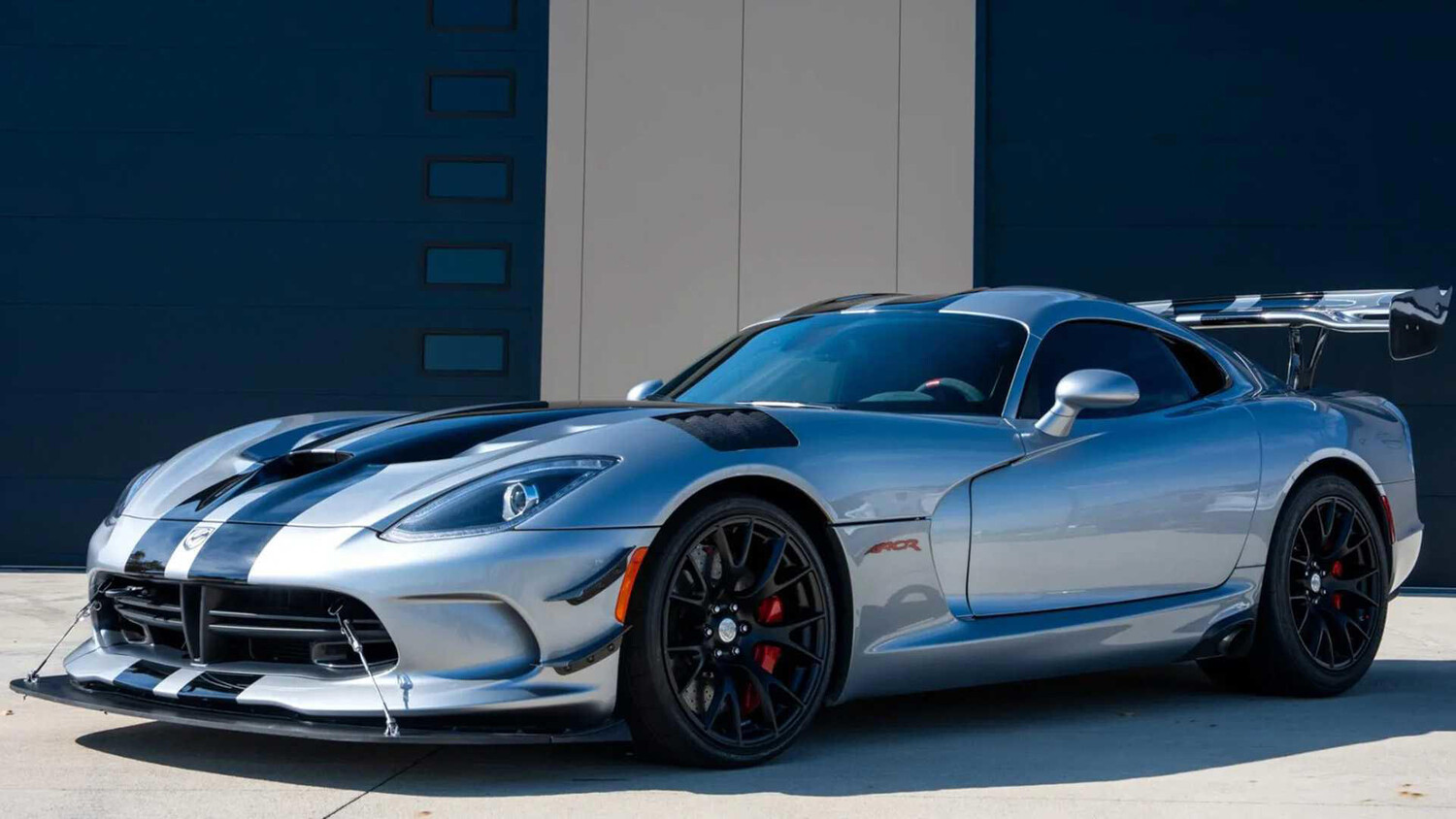
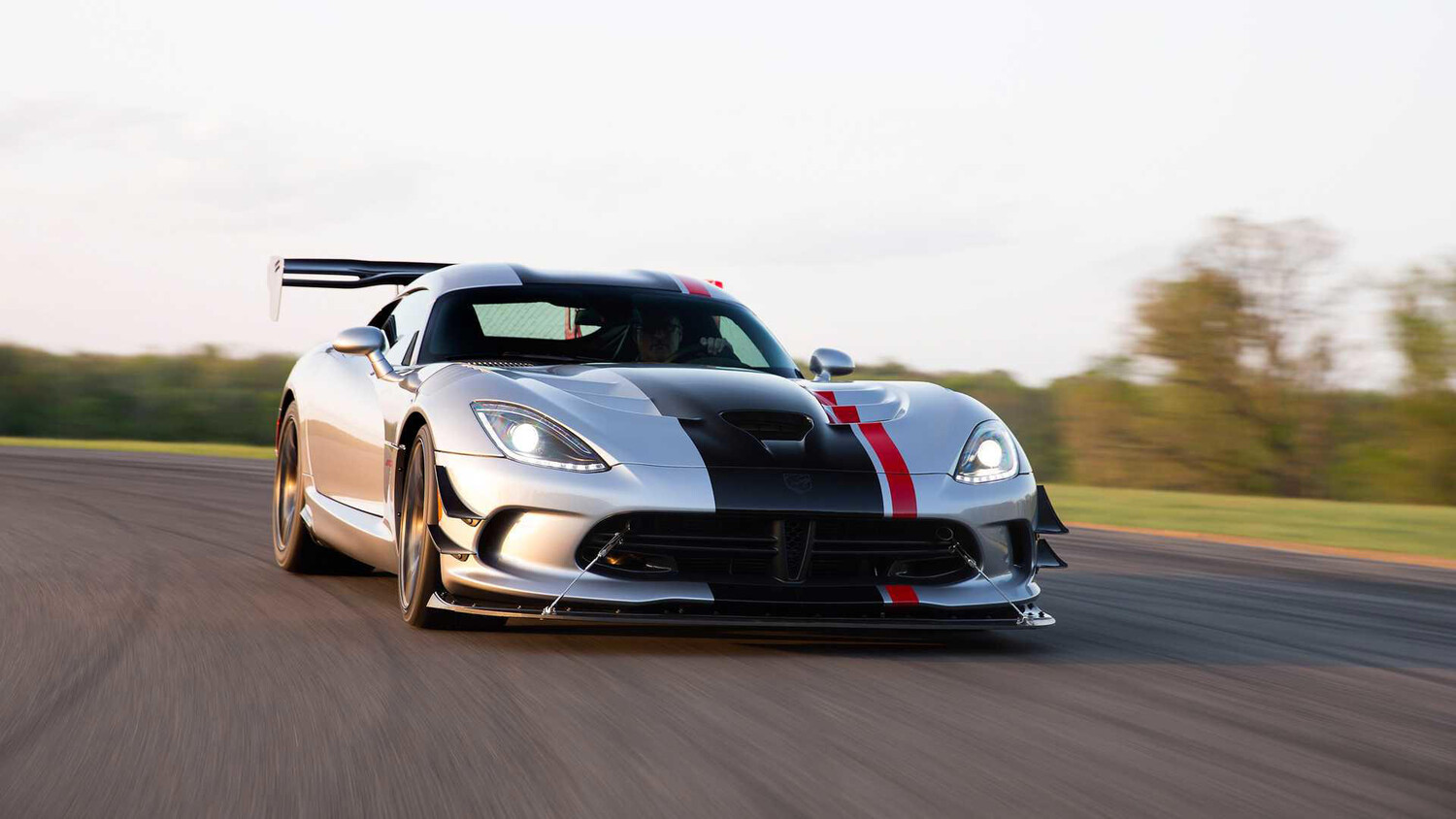
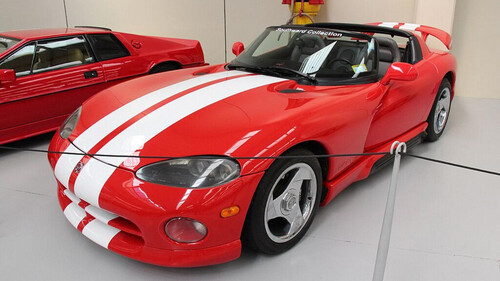
When you think about the biggest engines ever in a car, your mind probably jumps to a hulking V12 in an exotic supercar – or a brute-force truck engine built to haul tons. Rarely do you imagine a factory-built American muscle car, sold to the public, packing a displacement so massive it defies expectation. Yet that’s exactly what happened.It was a limited-series vehicle, offered through dealerships and backed fully by the factory – not a custom build or a showcase exercise. Customers ordered it, paid for it, and took delivery knowing exactly what it was designed to do.The biggest engine ever plonked under the hood of an American car did not come from a concept studio or a tuning shop. It came straight from a manufacturer willing to build something extremely specific. To understand how that happened, it helps to look closely at the car that set the high-water mark. The 2023 Chevrolet COPO Camaro Has The Biggest Engine Ever In An American Car MecumThe title for the biggest engine ever plonked under the hood of an American car belongs to the 2023 Chevrolet COPO Camaro. This was a factory-built vehicle sold through dealerships as a limited-series production model, not a prototype or a post-sale conversion.At its core sat the ZZ632 632-cubic-inch big block V8, equivalent to 10.35 liters, rated at 1,004 hp in factory configuration. That figure alone places it beyond anything ever installed in a complete American car sold to the public. It is also Chevrolet's largest, most powerful crate engine ever, but the COPO Camaro remains the only car to receive it fully assembled under a factory hood.The 632-cubic-inch V8 used in the COPO Camaro is a Gen IV tall-deck big-block engineered without compromise. It produces 1,004 hp at 6,600 rpm and 876 lb-ft at 5,600 rpm, with a 7,000-rpm redline set by valvetrain stability. The internally balanced rotating assembly centers on a forged 4340 steel crankshaft, forged steel H-beam connecting rods, and forged 2618-aluminum pistons, all housed in a cast-iron Bowtie block with four-bolt main caps.Mecum Auctions Bore and stroke measure 4.600 x 4.750 inches, yielding 10.4 liters of displacement and a 12.0:1 compression ratio. Airflow comes from RS-X aluminum spread-port heads with 70cc chambers, titanium valves, and nearly 0.780-inch valve lift, actuated by a billet steel hydraulic roller cam and shaft-mounted 1.8:1 roller rockers. Fuel and spark rely on 86-lb/hr injectors and a 58x crank-triggered, coil-near-plug ignition, fed by a high-rise single-plane intake with a 4500-style throttle body. An 8-quart steel oil pan supports the system, designed to handle repeated full-load drag-strip use on 93-octane fuel or higher. Limited Production Of The COPO Camaro 632 Mecum Production of the COPO Camaro with the ZZ632 632-cubic-inch Big Block V8 was capped at 69 units, reinforcing its status as a defined production run rather than a one-off program. Each car was assembled under the Chevrolet Performance umbrella, documented, and delivered as a finished vehicle. The engine was factory-installed, certified for competition use, and shipped without alteration or substitution after delivery.No road-legal American car has ever approached this size, and no previous Camaro offered anything close. Earlier COPO Camaros from the late 1960s concealed high-output engines inside otherwise normal production shells. What “COPO” Means in Modern Chevrolet History via Mecum In modern use, COPO refers to Chevrolet’s controlled production order program for dedicated competition vehicles. Unlike the original COPO cars, which existed to bypass internal ordering restrictions, today’s COPO program exists openly as a manufacturer-supported racing platform.Chevrolet continues the COPO program to support sanctioned drag racing with factory-engineered solutions. The focus is repeatability, compliance, and consistency, not versatility or broad appeal. Why The Chevrolet COPO Camaro Was Sold New But Could Never Be Driven On The Street Mecum The Chevrolet COPO Camaro was sold new through dealerships, but it was engineered exclusively for organized drag racing from the outset. Its configuration followed competition requirements rather than federal road regulations, which explains its unusual specification compared to any street Camaro.Each COPO Camaro left the factory without a VIN intended for road registration and without an odometer. Instrumentation centered on competition use, including a 10,000-rpm tachometer. Power flowed through an ATI three-speed automatic transmission, selected for durability and repeatability in quarter-mile runs rather than adaptability.Dealer delivery followed a structured process where buyers applied through Chevrolet’s COPO allocation system, completed the purchase through an authorized dealer, and received the car as a turnkey competition vehicle. Dealer involvement handled sales and documentation, but they were not road-legal muscle cars.Mecum The car’s status also highlights a broader classification issue. A production vehicle does not require street registration to qualify as factory-built. The COPO Camaro was produced in fixed numbers, built to consistent specifications, and supported directly by the manufacturer. Its design brief simply never included public-road operation. Chevrolet built the car around drag racing requirements, from drivetrain selection to instrumentation, creating a production vehicle defined entirely by its single purpose. How NHRA Rules Shape the COPO Camaro NHRA regulations dictate engine configuration, transmission type, safety equipment, and vehicle classification. The COPO Camaro adheres to those rules precisely, which explains its narrow focus and uncompromising layout. The 8.4-Liter V10-Powered Dodge Viper Became The Largest Road-Legal Alternative Via: Bring A TrailerWhen the conversation shifts from absolute size to street-legal production cars, the reference point changes to the Dodge Viper. Between 2008 and 2010, the fourth-generation Viper carried an 8.4-liter naturally aspirated V10, making it the largest-displacement engine ever fitted to a road-legal American performance car.The Viper’s engine story began in the early 1990s with an 8.0-liter V10 developed for the original RT/10. That motor emphasized torque and simplicity over refinement, setting the template for the car’s identity. As the Viper and its naturally aspirated V10 evolved through subsequent generations, displacement steadily increased, reaching 8.3 liters in the third generation before expanding again for the fourth-generation update.Via: Bring A Trailer For the jump in displacement to 8.4 liters, Dodge revised the block, heads, and valvetrain while maintaining a naturally aspirated layout. The result was a production engine rated at 640 hp that met emissions requirements and durability standards for public-road use. Unlike the COPO Camaro, the Viper was designed to operate across a wide range of conditions, from daily driving to track use, without sacrificing legality.That's why the Viper has the biggest engine ever sold in American cars. It represents the upper boundary of displacement within a fully homologated production vehicle. The COPO Camaro exceeds it decisively, but only by abandoning the constraints that govern road cars. Dodge Viper Gen 4 / Gen5: Used Market Values StellantisUsed-market values of 8.4-liter V10-powered Dodge Vipers have high demand from collectors and enthusiasts. Fourth-generation Vipers from 2008 to 2010 trade around $97,511, while fifth-generation cars produced between 2013 and 2017 average $180,673. The Gen 4 and Gen 5 Vipers with the largest V10 engine carry a higher market value compared to the standard Vipers, which trade for $83,799 according to classic.com. The COPO Camaro occupies a separate collector niche, defined less by usability and more by factory-backed competition focus.Find [[default_name]] and more cars for sale on our MarketplaceShop Now 6-Gen Chevrolet Camaro COPO: Market Value Of A One-Trick Machine Mecum The COPO Camaro's value reflects exactly what the car is and what it was never meant to be. Recent public sales show sixth-generation examples, with the 10.35-liter (632 cubic-inch) ZZ632 big block V8 sold for $147,000 on Bring a Trailer, a figure driven by rarity, factory backing, and clarity of purpose. With production capped at 69 units, supply stays permanently fixed, and demand comes from a narrow but committed audience. Generally, 6th-gen COPO Camaros with smaller engines hold an average used value of $116,509.That audience tends to overlap with serious drag racers, collectors of factory competition cars, and buyers who already understand the constraints. The Chevrolet COPO Camaro offers no practical versatility. It does not support casual use, mixed driving, or spontaneous ownership. Storage typically involves climate control, periodic inspection, and maintenance schedules aligned with race use rather than mileage. Transport requires a trailer, and usage centers on sanctioned events or private collections.Compared with other collector-grade muscle cars for drag racing, the COPO Camaro stands out for its factory-installed engine and documentation. Many race cars achieve similar performance, but few arrive fully assembled backed by the manufacturer. That distinction anchors its long-term appeal, even as liquidity remains limited compared to road cars.The COPO Camaro succeeds precisely because it avoids compromise. It was built to do one job, and ownership follows the same logic. Buyers do not acquire it expecting flexibility or convenience. They acquire it because it represents the outer edge of factory-backed American engine size, delivered without dilution. Cadillac Eldorado And The Largest V8 In A Production Car Via: Bring a Trailer For historical context, the early-1970s Cadillac Eldorado used an 8.2-liter V8, the largest displacement V8 engine ever fitted to a road-legal production car. That engine prioritized smoothness and torque over performance and sits outside the COPO Camaro’s intent. The Eldorado in 1970-1972 had an engine with a larger displacement V8 than most supercars.Sources: Chevrolet, Dodge, Cadillac, Classic, Bring a Trailer