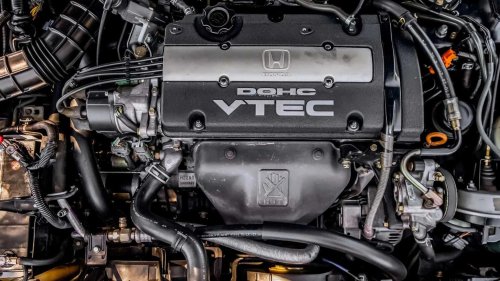
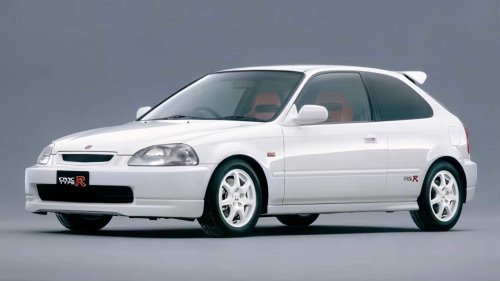
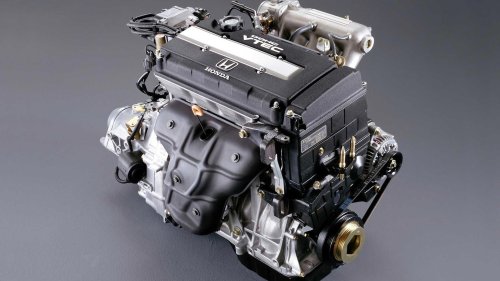
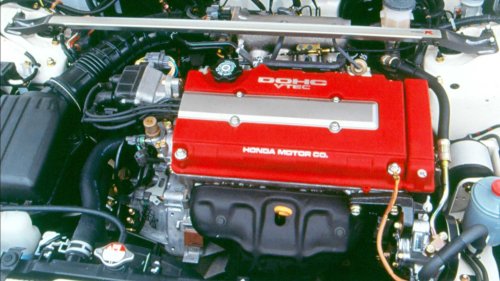
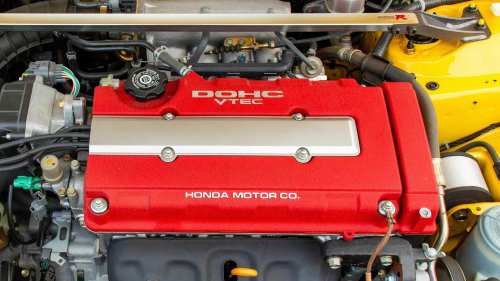
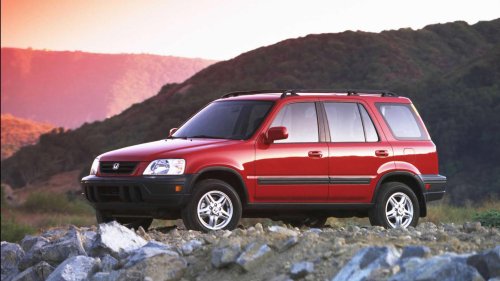
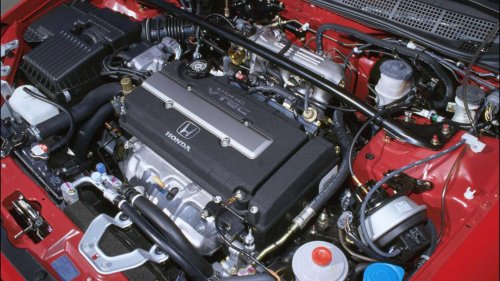
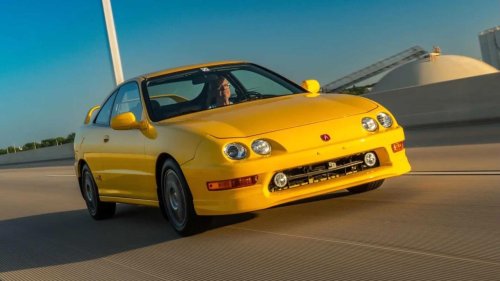
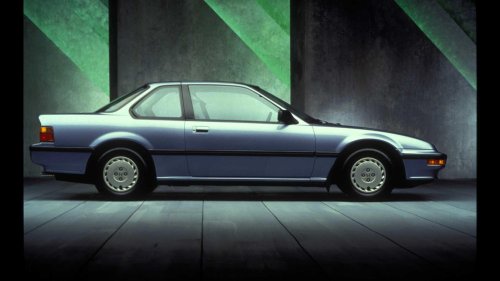



















Honda makes amazing engines. From efficient engines used in standard passenger cars to some of the most memorable race cars in motorsport, like the last V10 engine used by Ayrton Senna, Honda has consistently produced revered power plants.One of Honda's most popular and revered engines it has ever produced is the K-Series, which has powered some of the world's most beloved and respected performance cars. However, there was another engine that was arguably greater and more important: Honda's B-Series engine. The Genesis Of VTEC Bring A Trailer "Did you hear it kick in?" asked every Honda fanboy in the 2000s. VTEC was, and still is, a focal point of Honda's performance cars equipped with the K-Series engine, and while it was cemented in the minds of the masses within tuner car culture, it began with the B-Series line, specifically the Honda B16A. In the late 1980s, Honda pursued greater power from its engines without sacrificing performance.At the time, to extract more power from an engine, manufacturers had to increase engine speed, which improved acceleration and power output but reduced fuel efficiency. The other option was turbocharging, but at the time, it introduced turbocharger lag that could be detrimental to the driving experience. Honda opted to go with the first option and increase the engine speed.Honda"Find a new technology to lead the next generation of Honda engines."At the time, Honda had proven it could produce an engine capable of 100 PS per liter in a 1.6-liter displacement by drawing on knowledge gained from fielding a Honda Civic with a ZC engine in the Japanese Touring Car Championship between 1986 and 1993.To say that the B16A was important would be an understatement. When Honda unveiled it in the engine bay of the Acura Integra XSi in 1989, it rewrote the standards for efficiency and performance potential not only for small engines but also for compact cars, which were about to become significantly easier to extract more performance from in subsequent years. What Made The B-Series Great? Honda There are three main reasons why the Honda B-Series engine was great: VTEC, reliability, and tuning potential.For the most part, the Honda B-Series engine, again – specifically the B16A – was good because of VTEC, which became the centerpiece of Honda's engine technology in the years that followed. Before its debut, high-revving four-cylinder engines typically lacked power in the lower rpm range and thrived at higher rpm, and tuning an engine to produce more low-end torque would come at the cost of high-end power.The B16A engine benefited from the implementation of VTEC because it made Honda's four-cylinder engine more adept at producing power at low and high rpm. Not only did this improve the appeal of Honda's four-cylinder engine, but the fact that it offered 100 PS per liter also helped solidify the B16A engine in the minds of the masses. Reliability HondaBeyond refining the standards of performance and introducing a revolutionary piece of technology that only two manufacturers at the time could produce, the B-Series engine became known for its reliability, ranking second in Honda's engine family lineup only to the K-Series. That reliability stemmed from a robust engine design, the product of "laborious" testing. During its development, the engine's internals were not only made as light as possible, but also capable of accommodating greater forces.That necessitated components such as cast-iron cylinder liners, camshafts made from a high-chromium steel alloy, and valves made from a lightweight, heat-resistant material. The cylinder head, engine block, and everything in between were built and optimized for high rpm and high power, making it the perfect option for tuners. Although popular in tuner culture, Honda's B-Series engine was and still can be a stalwart. Tuning Potential Acura The Honda B-Series engine was offered in droves worldwide. The B-Series engine powered affordable compact cars, making it even more abundant among the enthusiast and tuner community. As a result of the B-Series engine's affordability and impressive reliability, it quickly became a go-to for tuners. Its appeal was only increased when the B-Series engine became famous for its high potential for tuning, which was made possible by its strong internals that could withstand significant abuse.Honda introduced a handful of variations of the B-Series engine, with the original B16A, B16B, and B18C being the most responsive to eking out greater performance. With the B16, expect a ceiling of 250–300 hp, whereas the B18 had a higher ceiling of 300–350 hp with significant alterations. However, because of the B-Series's overall reliability, a large aftermarket support industry developed, enabling more than 400 hp. Powering Everything From Hatchbacks To SUVs Honda Honda would keep the B-Series engine family alive for just over a decade before the larger, objectively better K-Series engine family debuted. Still, while not lasting as long as its successor, the Honda B-Series engine family made its way into a large portion of Honda's catalog during the 1980s and 1990s. The first instance of the B-Series engine in America was in the 1990 Acura Integra and Honda Prelude. Throughout its production and various iterations, the B Series engine family served as a cornerstone powerplant in Honda's catalog worldwide. See below.Reportedly, over the course of its production, more than 15 million examples of the B-Series engines were produced. Although the B-Series engine family became a popular option among tuners, it served as a stalwart for a handful of Honda's relatively conservative and mainstream models. The B20 exclusively powered the first-generation Honda CR-V, delivering commendable fuel economy and long-lasting reliability, and is remembered as one of the most reliable generations of the Honda CR-V.Honda As far as mainstream applications are concerned, the B-Series powered more than just the first-generation Honda CR-V. More conservative iterations of the B-Series engine, such as the B16A, were used for lesser versions of the Honda Civic. Although it was a stalwart in Honda's mainstream lineup, the Honda B-Series engine family's legacy is inseparable from the performance cars it powered. And Some Of The Most Iconic Performance Cars Bring a Trailer Throughout the 1990s, the B-Series engine family powered several of Honda's most iconic performance models. Debuting in the Integra, it should come as no surprise that a B-Series engine was also used in the Integra Type R, sharing the same engine block with the Honda Civic EK9 Type R.In the Honda Civic lineup, the B-Series engine powered the most athletic versions of the sixth-generation Honda Civic, including the Honda Civic Type R, which employed the B16B engine that produced 25 hp more than the B16A. The B-Series engine also powered non-Type R versions of the EK9 Civic, such as the Civic SiR and the Honda Civic Del Sol SiR.Honda The B-Series engine family had a considerable presence in the early Honda Prelude, exclusively powering the third-generation Honda Prelude, with a handful of variations powering different iterations. For example, the B21A engine powered the SI and SR trim levels of the third-generation Prelude, while the B20A powered the lowest-ranking trim levels in the third-generation Prelude lineup.