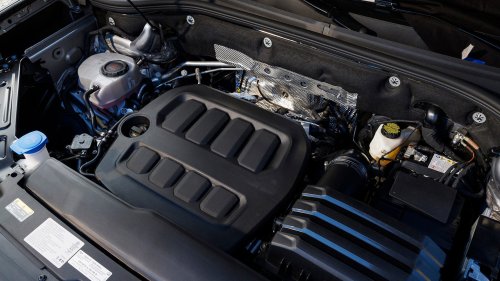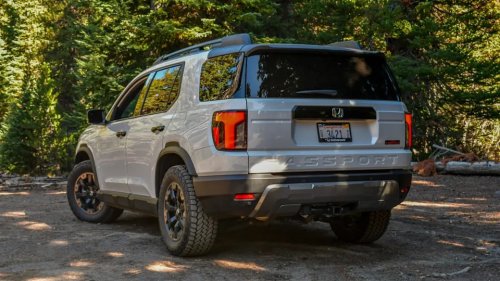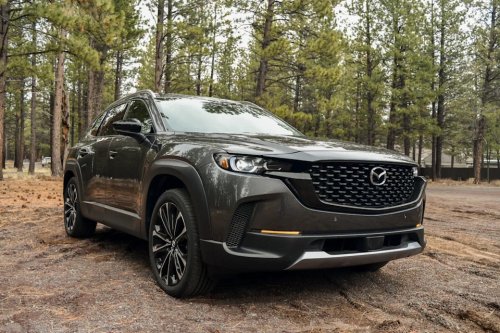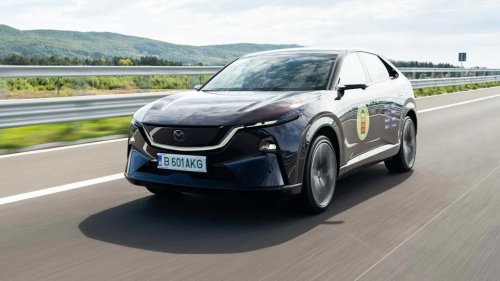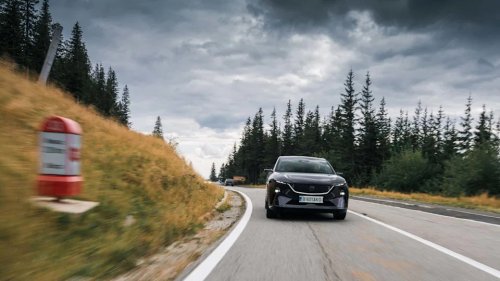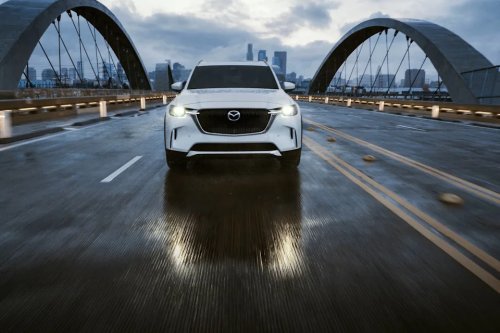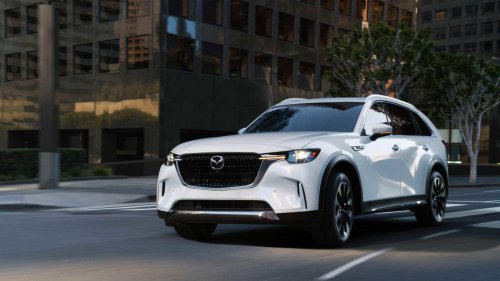
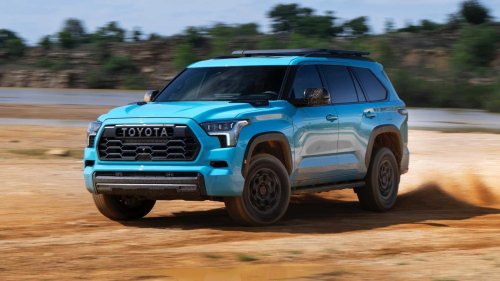
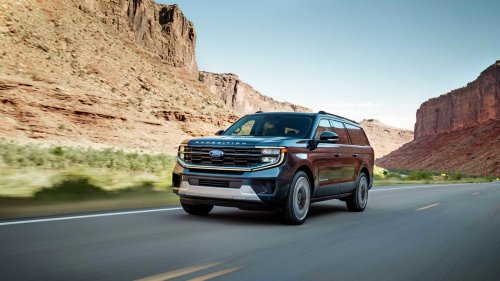
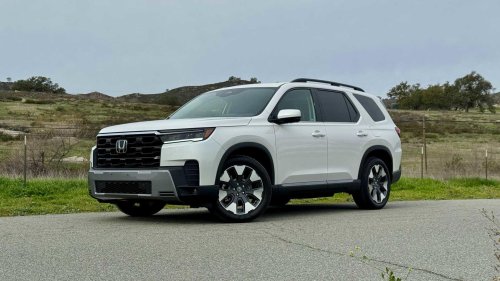
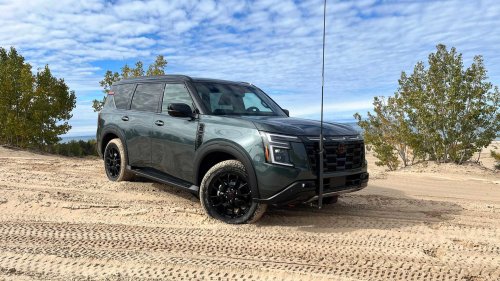
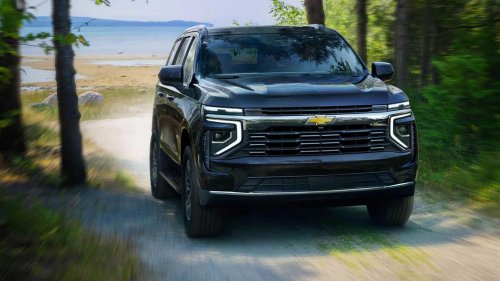
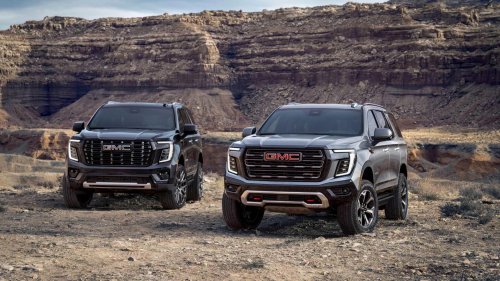
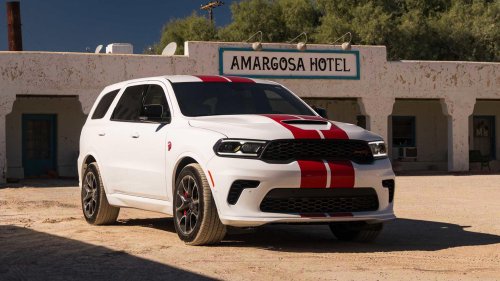
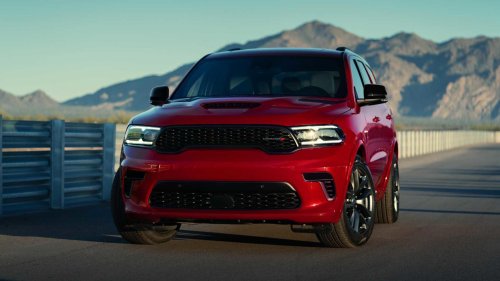
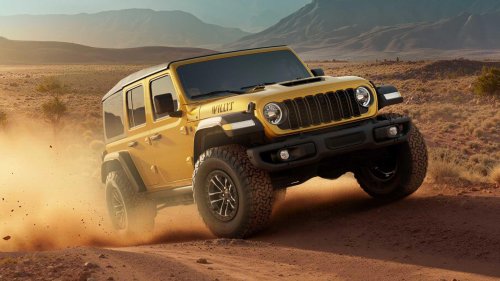


















It wasn’t that long ago that a vehicle’s engine size was a good indication of its performance. Larger engines generally meant more power and torque, making displacement one of the simplest ways to gauge a vehicle's performance. As automakers and consumers began prioritizing efficiency, however, engine sizes steadily shrank, while turbocharging and electrification ensured performance didn’t fall as displacement decreased.While many luxury vehicles still offer large engines, such as the Bugatti Tourbillon with an 8.4-liter V16, they are becoming increasingly rare among mainstream brands, including in those brands’ SUVs. To see what remains, we’ve compiled a list of the 10 SUVs from mainstream brands with the biggest engines. Perhaps unsurprisingly, only half of them still run a V8, a proportion that is likely to shrink even further in the years ahead.Vehicles are arranged in ascending order by engine displacement, and horsepower and torque figures indicate the maximum available performance. Each entry needed to be available in the US for the 2026 model year to be eligible. Mazda CX-70/CX-90 Turbocharged 3.3-Liter Inline-Six 2026-Mazda-CX-90-Exterior (3)The Mazda CX‑90, launched for the 2024 model year, anchors Mazda’s SUV lineup with driver-focused dynamics rarely found in three-row SUVs. And while Mazda has made no secret of wanting to keep internal-combustion engines in its lineup as long as possible, it doesn’t overdo it with fuel-thirsty power. Its largest engines come from a family of turbocharged inline‑six units. In the United States, the CX‑90 and its two-row Mazda CX‑70 sibling use the gasoline inline‑six as standard, with the engine mounted longitudinally and paired with a 48‑volt mild-hybrid system to help efficiency without sacrificing smooth, strong performance. Toyota Sequoia Twin-Turbocharged 3.4-Liter V6 Hybrid 2026 Toyota Sequoia TRD Pro WaveMaker Blue Exterior 2-1The Toyota Sequoia has offered a V8 pretty much all of its life. It wasn’t until the arrival of the current third‑generation model for 2023 that the big SUV finally downsized, moving to a standard 3.4‑liter V6. To make up for the smaller displacement, Toyota added twin turbochargers and a hybrid system, which resulted in more horsepower and torque than the 5.7‑liter V8 it replaced. Branded i‑Force Max, the new powertrain also features the Lexus LX and is rumored to be headed for the Toyota Land Cruiser. Ford Expedition/Expedition Max Twin-Turbocharged 3.5-Liter V6 2025 Ford Expedition Max Platinum UltimateThe Ford Expedition is one of the oldest entries here, with its current generation dating back to the 2018 model year, followed by updates in 2022 and again for 2025. Unlike earlier versions, it hasn’t offered a V8 for more than a decade, even as its F-150 sibling continues to keep that option alive.Instead, every current Expedition relies on a twin-turbocharged 3.5-liter V6 from Ford’s EcoBoost family. Don’t mistake fewer cylinders for less capability. However, this boosted six, which comes with 400 horsepower as standard and 440 hp in higher trims, still delivers stout performance and enables the big SUV to tow up to 9,600 pounds with confidence. Honda Pilot 3.5-Liter V6 2026 Honda Pilot heroThe Honda Pilot entered its fourth generation for the 2023 model year, continuing a long-standing formula. Like every Pilot before it, it’s powered exclusively by a 3.5-liter V6. Once considered modest among three-row rivals, that displacement now ranks among the largest in the segment as others downsize.Output remains on the low side, and front-wheel drive is still standard – an unusual setup in a class dominated by rear- and all-wheel drive. Still, the V6 delivers its power with a smooth, refined character and carries a well-earned reputation for long-term durability. The engines are known to crest 200,000 miles without breaking a sweat. Nissan Armada Twin-Turbocharged 3.5-Liter V6 2025 Nissan Armada Pro-4X front three-quarterThe Nissan Armada may have downsized from its longtime 5.6-liter V8 with the 2025 redesign, but the SUV still boasts one of the biggest engines in the non-luxury SUV segment. The standard powerplant is now a 3.5-liter V6, paired with a twin-turbo system that delivers performance easily eclipsing the old V8 while improving fuel economy. Despite the smaller displacement, towing capacity remains the same at 8,500 pounds. The engine is shared with the Infiniti QX80, the Armada's upmarket sibling, and features a design derived from the V6 used in the Nissan GT-R. Chevrolet Tahoe/Suburban 6.2-Liter V8 2025 - 2026 Chevrolet Tahoe 5th Gen (GMT1YC) Facelift (42)The Chevrolet Tahoe and its stretched Chevrolet Suburban sibling are among the few non-luxury SUVs still offering a full-bore 6.2-liter V8. Both arrived in their current forms for the 2021 model year and were refreshed for 2025. The V8 powering them, code-named L87, is part of GM’s Gen 5 small-block family, whose first application was the C7 Corvette.While potent, the L87 has recently been involved in widespread recalls related to engine failures. Looking ahead, GM is preparing a Gen 6 small-block V8 lineup set to debut with its 2027 full-size SUVs and pickups, with rumors suggesting at least one version could grow to 6.6 liters, promising even more torque and horsepower. GMC Yukon/Yukon XL 6.2-Liter V8 2025 GMC Yukon XLThe GMC Yukon and its GMC Yukon XL sibling share bones with the Tahoe and Suburban but bring a slightly more upscale feel and serious capability to the non‑luxury SUV table. Like their Chevy cousins, these models offered the L87 V8 since the 2021 redesign and were refreshed for 2025. The engine is an alternative to the smaller 5.3‑liter V8 and 3.0‑liter Duramax diesel inline-six. Despite being the most powerful, its towing capacity of 8,200 pounds is slightly lower than the 8,400 pounds the 5.3‑liter V8 can muster. Dodge Durango SRT Hellcat Supercharged 6.2-Liter V8 2026 Dodge Durango SRT Hellcat Front 3/4 ViewThe Dodge Durango is the oldest SUV on this list, arriving in its current generation for the 2011 model year. V8s have always been a staple, and the latest Durango offers no fewer than three to choose from. That lineup includes the famous supercharged 6.2-liter V8 known as the Hellcat, but as you'll see further down this list, it’s not even the biggest engine the Durango can wear. Incredibly, Dodge, along with the rest of the Stellantis portfolio, had been preparing to phase out V8s entirely. Thanks to a mix of new leadership and shifting regulations, these engines are making a spirited comeback. Dodge Durango R/T 6.4-Liter V8 2021 Dodge Durango RT Tow N Go (4)When it comes to the biggest engine available in the Dodge Durango, the honor goes to the 6.4-liter V8 Hemi, or 392 if you prefer cubic inches. The engine first appeared in the Durango for the 2018 model year, in the original Durango SRT, and lingered in lesser trims after the SRT adopted the Hellcat. The 6.4-liter mill was dropped from the Durango lineup for 2025 as part of Stellantis’ push away from V8s, but it’s returning for 2026 as the heart of the Durango R/T. Order books are set to open soon, with a starting price below $50,000. Jeep Wrangler 392 6.4-Liter V8 2026 Jeep Wrangler Willys 392 Front ViewThe Jeep Wrangler didn’t get a factory V8 until the 2021 model year, and when it finally happened, Jeep skipped subtlety. Instead of a small-displacement option, it dropped in the parent company Stellantis' biggest engine, the 6.4-liter Hemi, which debuted in the Jeep Wrangler Rubicon 392. Prices for that range-topper have since ballooned past six figures, but the addition of the Wrangler Willys 392 for 2026 lowers the barrier to entry. The formula is gloriously excessive, with big power, serious off-road chops, and unapologetic character. The trade-off is fuel economy that’s downright brutal, making this V8 Wrangler as costly to run as it is entertaining.Sources: Chevrolet, Dodge, Ford, GMC, Honda, Jeep, Mazda, Nissan, Toyota