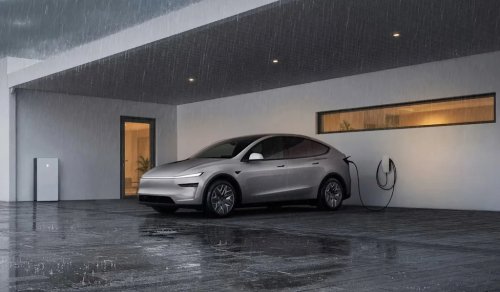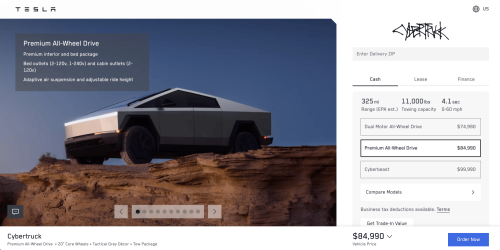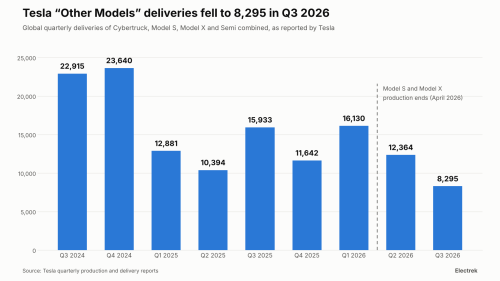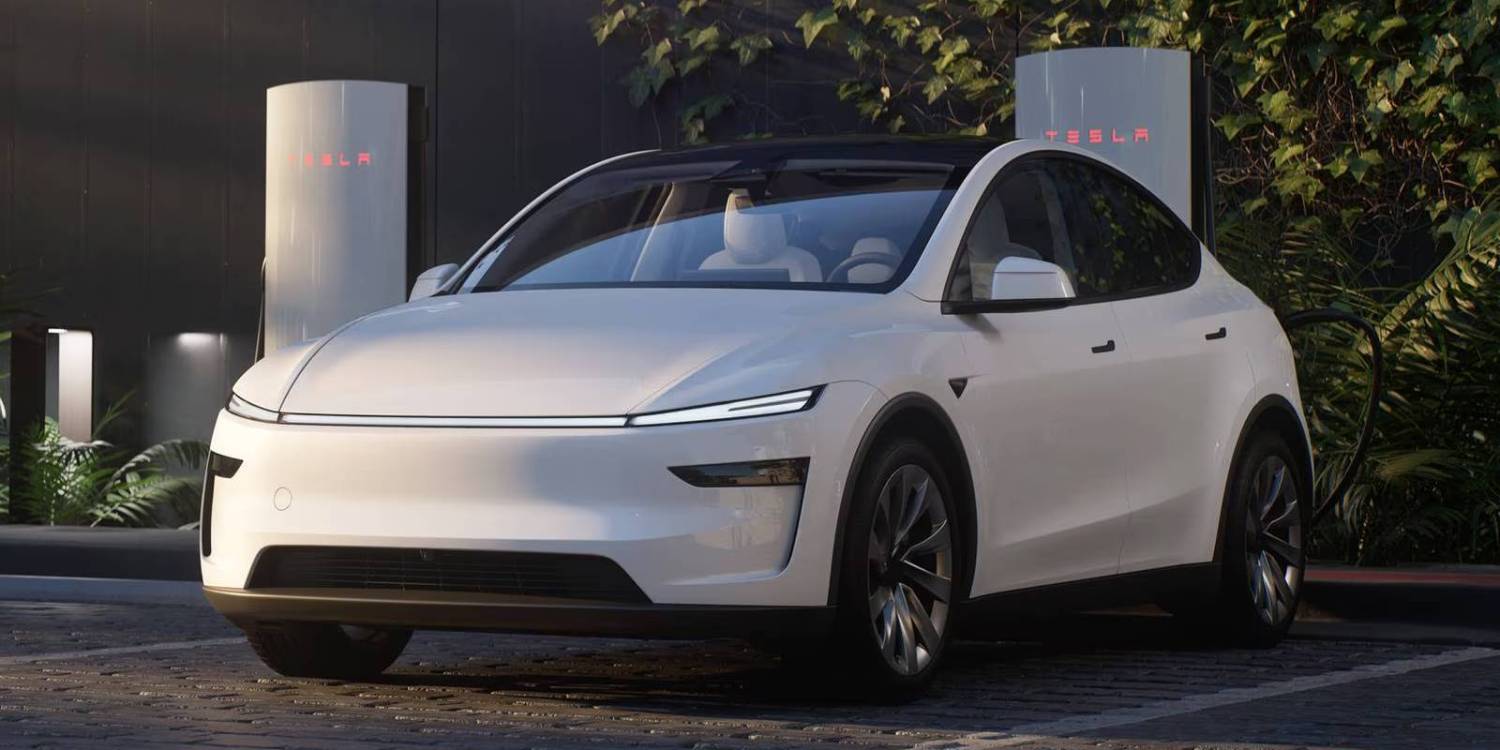


















Five years after Tesla (TSLA) unveiled its 4680 battery cell at Battery Day with promises of 5x the energy, 6x the power, and 16% more range, the data tells a very different story. Tesla’s homemade cells consistently deliver worse energy density, worse charging performance, and less range than the supplier cells they are meant to replace. The problem is getting harder to ignore now that Tesla is quietly swapping supplier batteries for its own 4680 cells in European Model Y vehicles — and owners are noticing the downgrade. What Tesla promised vs. what Tesla delivered At Battery Day in September 2020, CEO Elon Musk presented the 4680 cell as a revolutionary leap. The larger format (46mm diameter vs. 21mm for the 2170 cells) combined with a “tabless” electrode design was supposed to hold 5x the energy of existing cells and deliver 6x the power. Tesla said the cells would improve range by 16% at the pack level, cut costs in half, and enable a $25,000 electric car. The centerpiece technology was the dry battery electrode (DBE) process, acquired from Maxwell Technologies, which Tesla said would dramatically simplify manufacturing. At the 2025 shareholder meeting, Musk himself admitted the dry electrode process was a mistake, saying it turned out to be “way harder” than expected. Advertisement - scroll for more content Here is what the actual data shows after five years of production: Energy density: Tesla’s 4680 cells produced at Giga Austin have a nominal energy density of 244 Wh/kg. The Panasonic 2170 cells they are meant to replace sit at 269 Wh/kg. That’s 13% worse, not better. Tesla claimed higher density in the latest version, but they haven’t been tested yet. Battery capacity: The new 4680-based “8L” pack going into European Model Y vehicles carries approximately 79 kWh gross (74 kWh usable). The LG 5M pack it replaces in the exact same trim — the Model Y Premium Long Range RWD — had 82-84 kWh. That’s roughly 3-5 kWh less energy in the same car. Range: The direct consequence is a WLTP range drop from 661 km to 609 km on the European Model Y Premium Long Range RWD. That’s a 52 km reduction — an 8% downgrade on the same vehicle with the same aerodynamics and the same motors. The only variable is Tesla swapping an LG battery for its own 4680 pack. Weight savings: Tesla’s original pitch for the 4680 structural pack was significant weight reduction. Munro’s teardown found a difference of just 20 pounds between the 4680 Model Y and the 2170 Model Y. European certification data for the 8L pack shows a mass of 447 kg. The charging curve is the worst part The most damaging data point for the 4680 program is DC fast charging performance. At Battery Day, Tesla claimed the tabless design would allow the 4680 to charge “almost as fast” as smaller cells. Real-world data shows the opposite. The first-generation 4680 Model Y (2023) had what owners and reviewers universally described as a terrible charging curve. Heat buildup caused charging power to drop below 100 kW after reaching just 35% state of charge. The 10-80% charging time exceeded 40 minutes — dramatically worse than the 2170-equipped Model Y Long Range, which completes the same charge in roughly 27-30 minutes. Out of Spec ran a 15-minute charging test from 10% SOC and found the 4680 Model Y only added 39% charge (10% to 49%) in that window. The smaller LFP pack, with only 62 kWh of capacity, added more energy in the same timeframe — 29 kWh vs. 27 kWh for the 4680. The cheaper battery with cheaper chemistry outcharged Tesla’s flagship cell. Now the 4680 is back in the European Model Y as the “8L” pack, and early charging curve data is not encouraging. Out of Spec Roaming recently published a detailed analysis of the European 8L pack’s charging performance, noting that at 31% SOC, charging power was already dropping from 155 kW. They described the charging curve as “so bad” and ranked the 4680 pack as the worst battery option currently available in the European Model Y lineup — behind even the LG 5M pack, which he already considers below average. Tesla claims the 2026 Model Y can sustain up to 250 kW on V4 Superchargers, but no independent test has confirmed an improved charging curve for the 8L pack specifically. The supply chain tells the story If the 4680 program were succeeding, you would expect to see Tesla’s supply chain expanding. The opposite is happening. South Korean battery material supplier L&F disclosed that its $2.9 billion cathode materials contract with Tesla — specifically for 4680 cell production — has been written down to just $7,386. That’s a 99.9% reduction. L&F cited a “change in supply quantity,” but the implications are clear: Tesla’s 4680 demand collapsed because the Cybertruck, the primary 4680 vehicle, is selling at a run rate of roughly 20,000-25,000 units annually against a factory capacity of 250,000. Tesla originally set 4680 production goals of 100 GWh by 2023 and 3,000 GWh by 2030. It is 2026 and the cells are going into a single trim of the Model Y in Europe, some US configurations, which Tesla is not elaborating on, and the Cybertruck, which is a commercial failure. It’s not exactly the mass-market revolution that was promised. The European backlash The 4680’s arrival in Europe is generating significant pushback from consumers. Tesla quietly replaced the LG 5M battery with the 4680 “8L” pack in the Model Y Premium Long Range RWD without clearly communicating the change to customers who had already placed orders. European EV communities, particularly in France and Norway, are reporting order cancellations. Owners who ordered based on the 661 km WLTP rating are receiving cars with 609 km — a material difference for highway and winter driving, where real-world range can drop 20-40% below WLTP figures. French EV forums and social media are seeing owners describe the battery swap as a downgrade they didn’t sign up for. 🚨 SCANDALE TESLA MODEL Y : ANNULATIONS EN MASSE ! 😱❌🔋🇪🇺 Beaucoup de clients lâchent leur commande en Europe à cause de la⚡️ NOUVELLE batterie 4680 (pack 8L) !• Autonomie en chute libre (-10% WLTP → ~603 km seulement) 📉• En réel (autoroute, hiver) : une… pic.twitter.com/hbRh3KrvEk— Yoann en VE (@Yoann_en_VE) May 6, 2026 The frustration is compounded by Tesla’s refusal to disclose which trims and configurations receive 4680 cells. Buyers cannot determine what battery they are getting before delivery. Tesla does not list battery type on the configurator or in vehicle specifications. Electrek’s Take I think this raises the question: can Tesla really manufacture competitive battery cells? Five years and billions of dollars into the 4680 program, the cells deliver less energy density than Panasonic’s 2170 cells, charge slower than LG’s, and charge slower than even the cheapest LFP chemistry from CATL. Musk said the core manufacturing technology was a mistake. A flagship supply contract collapsed by 99.9%. And now European customers are getting a measurable downgrade — less range, worse charging — because Tesla is swapping proven supplier cells for its own evidently inferior product. This is rough. Tesla built an incredible lead in electric vehicles by using third-party cells and focusing its core tech on battery packs and power electronics. Now, it is losing that lead by trying to make its own battery cells, and it’s not working. Tesla’s 4680 cells are at least partly responsible for the Cybertruck not selling. The truck’s range and price are both way higher than originally announced, which has turned off many buyers. A few years later, the latest version of the cells is now not performing much better in the Model Y. The cost might be its only advantage, but I doubt it’s competitive with the top Chinese manufacturers. Ultimately, I think the biggest problem from a buyer’s perspective is the fact that buyers don’t even know what they are buying. Tesla is not being clear about which vehicles these new cells are going into, and it is even changing cells in existing orders. This can feel like a bait-and-switch for people. Stay up to date with the latest content by subscribing to Electrek on Google News. You’re reading Electrek— experts who break news about Tesla, electric vehicles, and green energy, day after day. Be sure to check out our homepage for all the latest news, and follow Electrek on Twitter, Facebook, and LinkedIn to stay in the loop. Don’t know where to start? Check out our YouTube channel for the latest reviews.