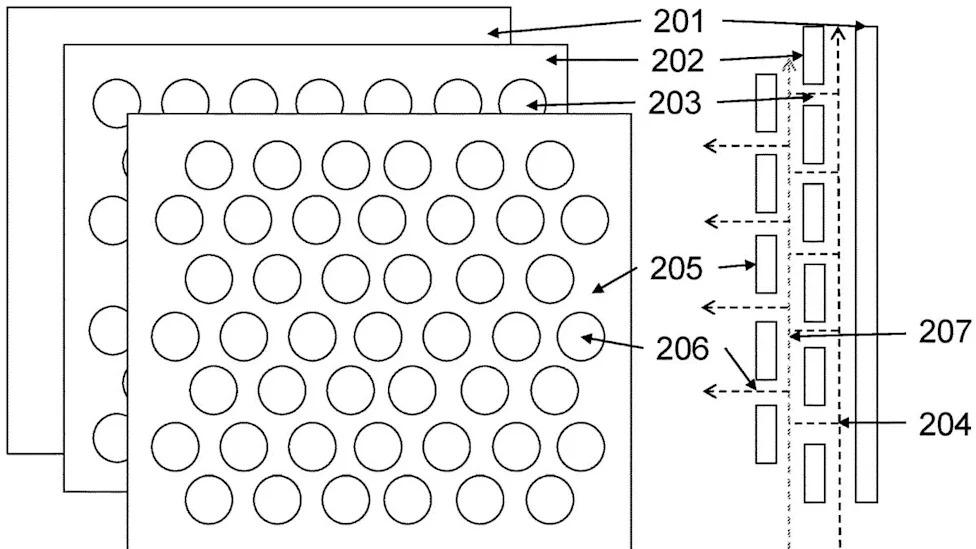
There's no greater first-world problem than walking out to the hundred-plus-degree hot car interior at the height of summer. Sitting there, sweating into your car's sticky, hot seats is a uniquely unpleasant experience. Automakers have some solutions already: ventilated seats help remove some of that sticky unpleasantness, and remote start ensures your car will cool itself off, provided you're close enough to start it with the key fob. New patents from Tesla show the brand is working on other ways to circumvent the summer heat.USPTOPatents filed with the United States Patent and Trademark Office show the brand is working on a number of solutions for cooling unoccupied cars. In essence, Tesla looks to turn the car's glass roof into a part of its climate control system. The patent is for a system that works to diffuse cool air over occupants' heads. The cool air will settle out of the roof while hot air escapes up into it, sort of like the attic fan in your house.Tesla also owns a separate patent for another HVAC system, which would pull hot air out of the cabin. The suction unit, installed into the car's climate control system, creates negative pressure that can be applied to specific vents in the car near pockets of hot air, for example, near the window. Tesla says the vacuum system would be more efficient than simply pumping in cold air via the car's A/C system. Tesla's filings for this patent show that the system could result in a 7.4% reduction in power consumption. When the entire car is run off a battery, that's a solid improvement. Moreover, the brand is looking at having the system activate based on a temperature sensor, keeping your car cool even when you aren't present. Of course, these are just patents and pieces of technology that Tesla may or may not use in the future. For now, it provides a little peace of mind that hot, sweaty car interiors may soon be a thing of the past.This story was originally published by Men's Journal on May 28, 2026, where it first appeared in the News section. Add Men's Journal as a Preferred Source by clicking here.



















 +29 others