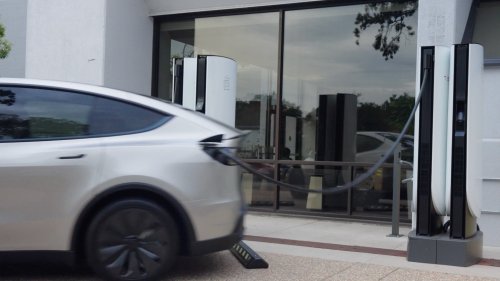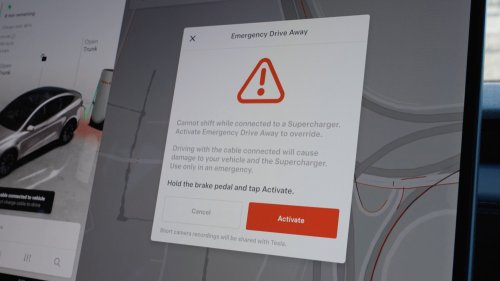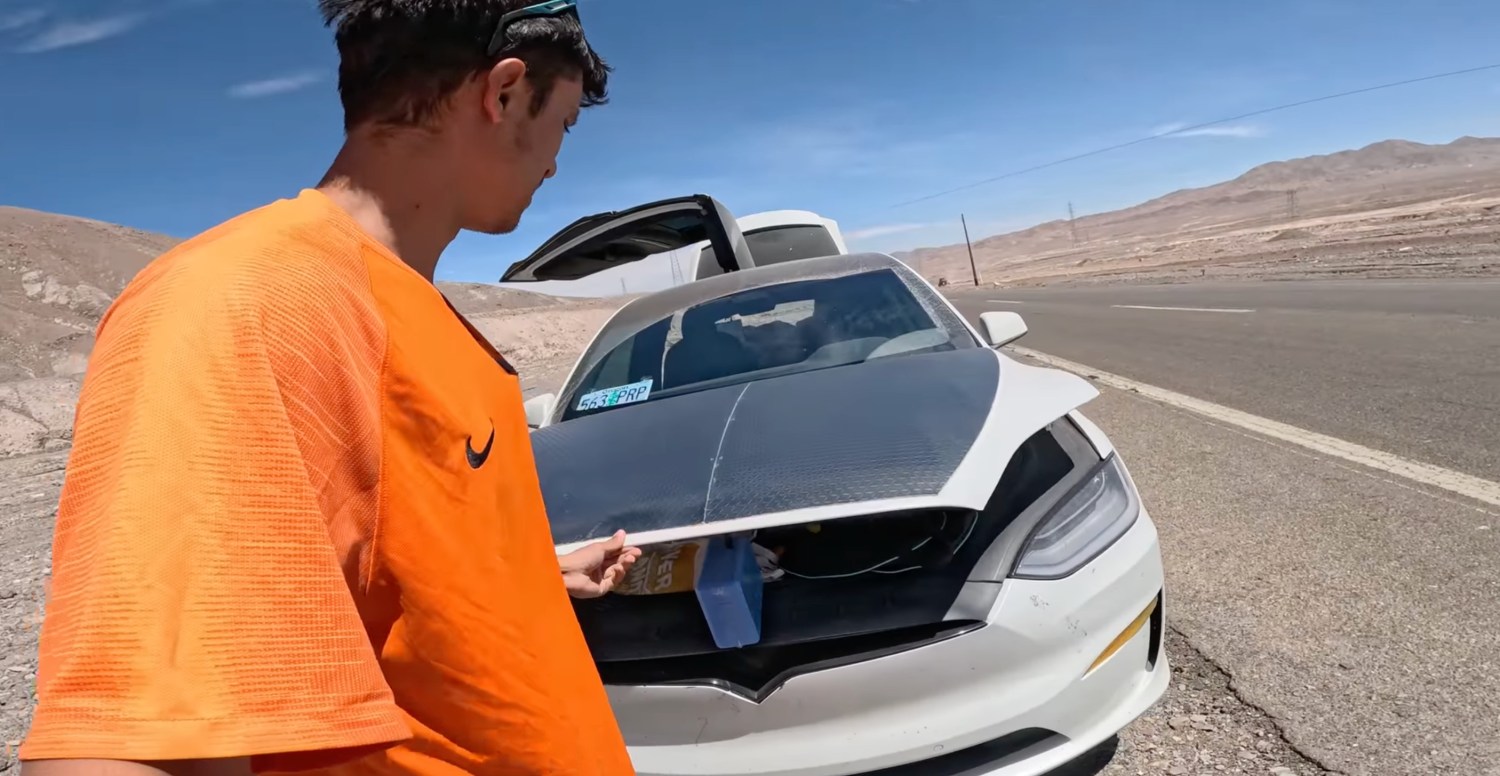


















Screenshot A YouTuber driving a Tesla Model X the entire length of the Americas ran out of battery in Chile’s Atacama Desert — the driest place on Earth — and had to deploy emergency solar panels on the side of the highway to survive. The whole ordeal, captured on video, is a fascinating look at both the promise and the very real challenges of long-distance EV travel in regions where charging infrastructure remains sparse. Overlanding the Americas in a Tesla Model X Sandro van Kuijck, an Oregon-based creator who runs the YouTube channel EverydaySandro, has spent the past three years driving his Tesla Model X — nicknamed “Beluga” — from the northern terminus of the Pan-American Highway in Tuktoyuktuk, Canada, toward the southern tip in Ushuaia, Argentina. Chile marked country number 14 on his solo expedition. Beluga is no ordinary Model X. Van Kuijck converted the electric SUV into a full-time overlanding rig with a custom slide-out kitchen, induction cooktop, running water, a refrigerator, and a sleeping setup — all while keeping the exterior mostly stock aside from all-terrain tires. Crucially, he installed a custom 287-watt solar array on the hood, feeding a 2 kWh EcoFlow Delta 2 “house battery” that powers his living amenities and, in emergencies, can trickle charge the main battery pack. Advertisement - scroll for more content That emergency feature got its first real-world test in the Atacama. 37 km of range, 42 km to the charger The trouble started south of Calama in northern Chile. Van Kuijck had charged to 95% at a Copec fast charger — Chile’s largest EV charging network, which now operates over 90 fast-charging stations nationwide — but underestimated how much energy the climb to 3,000 meters of elevation and relentless desert headwinds would consume. When his Tesla’s range readout dropped to 37 km with the nearest charger still 42 km away, he pulled over on the shoulder of the Pan-American Highway and deployed his solar panels. The results were humbling but real. At 180–200 watts of solar input, Beluga gained roughly 1–2 km of range per hour. Let’s be clear: a single 287-watt solar panel on the hood of an SUV is not going to give you meaningful range in any reasonable timeframe. But it gave him something — and that something is more than what any gas car could offer in the same situation. If you run out of gas in the middle of the Atacama Desert, you can’t summon fuel from the sky. With an EV and a solar panel, you can at least trickle in enough energy to keep the car alive and potentially limp to the next stop. In this case, the solar kept the high-voltage battery from fully shutting down while Van Kuijck figured out his next move. He called five different tow truck companies; none would drive the 30 km out to his location. His EcoFlow house battery eventually drained completely as well, leaving him at 0% state of charge. That’s when a road construction crew working nearby offered to let him plug into their industrial generator. “These guys are the MVPs of this trip,” Van Kuijck said in the video, as the generator fed Beluga a trickle of 6 amps — just enough to keep the high-voltage battery from fully shutting down. Friends he’d met on the road eventually arranged a tow truck, which brought him the 30 km to Calama and a Copec fast charger for $135. Once plugged in, the Tesla pulled 36–40 kW — modest by Supercharger standards, but enough to get him back on the road within two hours. A microcosm of EV infrastructure challenges in South America The incident highlights a reality that EV drivers exploring South America still face: while Tesla launched its Supercharger network in Chile in late 2024 — the company’s first entry into South America — coverage remains concentrated around Santiago and major corridors. In early 2026, Tesla and Copec announced a partnership to deploy additional Supercharger stations across Chile’s main service stations, with each location featuring four charging points at up to 250 kW. But for now, long stretches of the Pan-American Highway through the Atacama remain charging deserts. Copec’s own network has grown rapidly, but the gap between urban charging coverage and the vast distances of Chile’s northern desert remains significant. Van Kuijck’s experience also exposed a practical issue beyond charger availability: his Tesla’s navigation still thought he was in Mexico and couldn’t locate Chilean chargers, leaving him without route-planning assistance in unfamiliar territory. The challenge isn’t unique to Tesla. Across South America, EV infrastructure is expanding but remains heavily concentrated in capital cities and wealthy urban areas. Chile has set a target to allow only new sales of electric vehicles starting in 2035, but the infrastructure to support long-distance electric travel across the country’s vast geography is still years behind that ambition. Electrek’s Take Here’s what I find genuinely cool about this story: it’s something that could only happen with an electric car. When you run out of gas in the desert, you’re completely stuck. There’s no hacking your way out of it. You need someone to physically bring you fuel. But with an EV, even a small solar panel on the hood gives you a lifeline. You can literally pull energy from the sun and put it into your car. That’s wild if you think about it. Now, let’s be realistic, a single 287-watt panel is not a serious charging solution for a bigger EV such as a Model X. It gave Van Kuijck 1–2 km of range per hour, which is almost nothing in practical terms, but if he had a couple of deployable solar panels to add to his Eco Flow, he could have potentially been able to get out of the whole situation just on solar. You’re not going to solar-charge your way across the Atacama. But it kept his high-voltage battery alive long enough for him to find help, and that’s the point. It’s an emergency backup, not a replacement for infrastructure — and in that role, it worked exactly as intended. Stay up to date with the latest content by subscribing to Electrek on Google News. You’re reading Electrek— experts who break news about Tesla, electric vehicles, and green energy, day after day. Be sure to check out our homepage for all the latest news, and follow Electrek on Twitter, Facebook, and LinkedIn to stay in the loop. Don’t know where to start? Check out our YouTube channel for the latest reviews.