





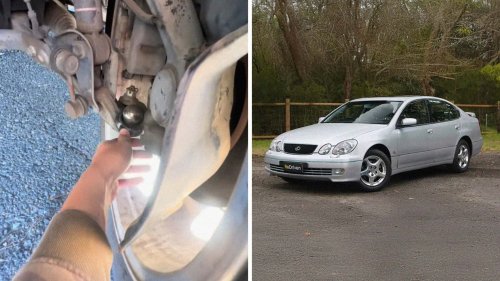



















Every DIY dreamer has been there: You find an old Lexus online for next to nothing, throw in a new battery, and hope for the best. But one TikToker’s $600 gamble on a GS300 ended in a violent snap of metal that became a roadside repair job. The TikTok by Chino (@sk.cino) shows the bargain Lexus GS 300 stranded in the middle of the road, its front wheel on the driver’s side turned to the left at an unnatural angle. It seems that a check of the suspension system on the 1998 car would’ve been a smart move. “So if your car is making noise while you [expletive] turn, listen to your car and check it, 'cause my ball joint just ripped the [expletive] off in the middle of the road,” the driver says in a clip that’s been viewed more than 95,000 times. The video says the car had been sitting idle for three years. According to preceding clips about the purchase, it said that it sat for a year with a dead battery. “Take care of your car bc I for sure didn’t,” he writes. Chino’s story is a cautionary tale for anyone reviving or buying a car that’s been sitting for any length of time to make sure time hasn’t done too much damage. Why Sitting Kills Cars A car that sits for months or years quietly deteriorates while collecting dust. Fluids break down, seals dry out, and corrosion starts in places you can’t see. Rubber bushings harden and crack, tires develop flat spots, and lubricants drain away from key suspension and steering components. OWNERSHIP STORIES Viral stories from across the web Our team of experts tracks what owners are saying about car-shopping, repairs, the daily driving experience and more on social media. According to AAA, even a few months of disuse can cause fluids to absorb moisture, leading to internal corrosion or seized parts. Mechanics and insurance providers note that when a car sits idle, it ages faster than when it’s driven, because fluids and gaskets rely on movement to stay conditioned. That’s exactly what likely happened to Chino’s Lexus. The GS 300’s front ball joint, a spherical pivot connecting the control arm to the steering knuckle, relies on grease and protective boots to function smoothly. When those sit still for years, the grease dries up and the boot can crack. The result: metal-on-metal wear that can suddenly fail, collapsing the suspension. For buyers of older cars, the simplest safeguard is a pre-purchase inspection. It’s the best investment you can make before buying a used car, especially one that’s been parked for an extended period. A typical inspection, which costs about $150–$250 at an independent shop, includes checks of suspension components, brakes, fluids, and steering joints. A mechanic can spot cracked bushings, worn tires, rust, or leaks that you’d likely miss in a driveway test. Every older model has its known failure points, and the Lexus GS300 is no exception. People who post on Lexus Owners Club have long reported premature wear on front lower ball joints and control arms. For Hondas of the same era, it’s engine mounts or timing belts. On BMWs, it’s the cooling system and front suspension bushings. Before buying any used car, do a five-minute search for your prospective model plus “common problems.” You’ll likely find forum threads, recall notices, or CarComplaints.com reports detailing weak points. For an added check, run the VIN through the National Highway Traffic Safety Administration’s recall database. Even cars with spotless titles can have unresolved safety recalls, sometimes for steering, suspension, or airbag components that could save you from a nasty surprise later. A quick online search before meeting a seller can also reveal potential red flags, such as recurring transmission failures or parts that are no longer available. Gallery: Lexus GS 300h arrives in Frankfurt How to Wake Up a Sleeping Car Safely If you’ve just bought a car that’s been sitting, treat the first start like a medical exam, not a victory lap. Experts recommend starting with fluids like oil, coolant, brake fluid, and power steering fluid, all of which should be drained and replaced before driving. Check the tires for dry rot or sidewall cracking, and replace them if they’re more than six years old. Inspect suspension and steering parts for cracked rubber boots or rusted joints. If you hear creaks or clunks during the first short drive, stop and inspect the area before continuing. Those sounds are often the only warning you’ll get before a joint fails. Finally, don’t overlook the brakes. Moisture in brake fluid can corrode calipers and cause a sudden loss of pressure after prolonged storage. A fresh flush can prevent a costly or dangerous failure. Chino took his mishap in stride, later joking that it was “not the best $600 spent.” His experience serves as a reminder of a larger truth about inexpensive, older cars: the purchase price is merely the cover charge. The real cost is in catching up on deferred maintenance. For enthusiasts chasing a bargain or a project, the takeaway is simple. A $200 inspection, a weekend of fluid changes, and a close listen for creaks and groans can turn a risky roadside rescue into a reliable daily driver. The Lexus GS 300 remains one of the most durable sedans of its era. As Chino said, “Take care of your car, boys.” Motor1 contacted Chino via TikTok direct message and comment. We’ll be sure to update this if he responds. We want your opinion! What would you like to see on Motor1.com? Take our 3 minute survey. - The Motor1.com Team