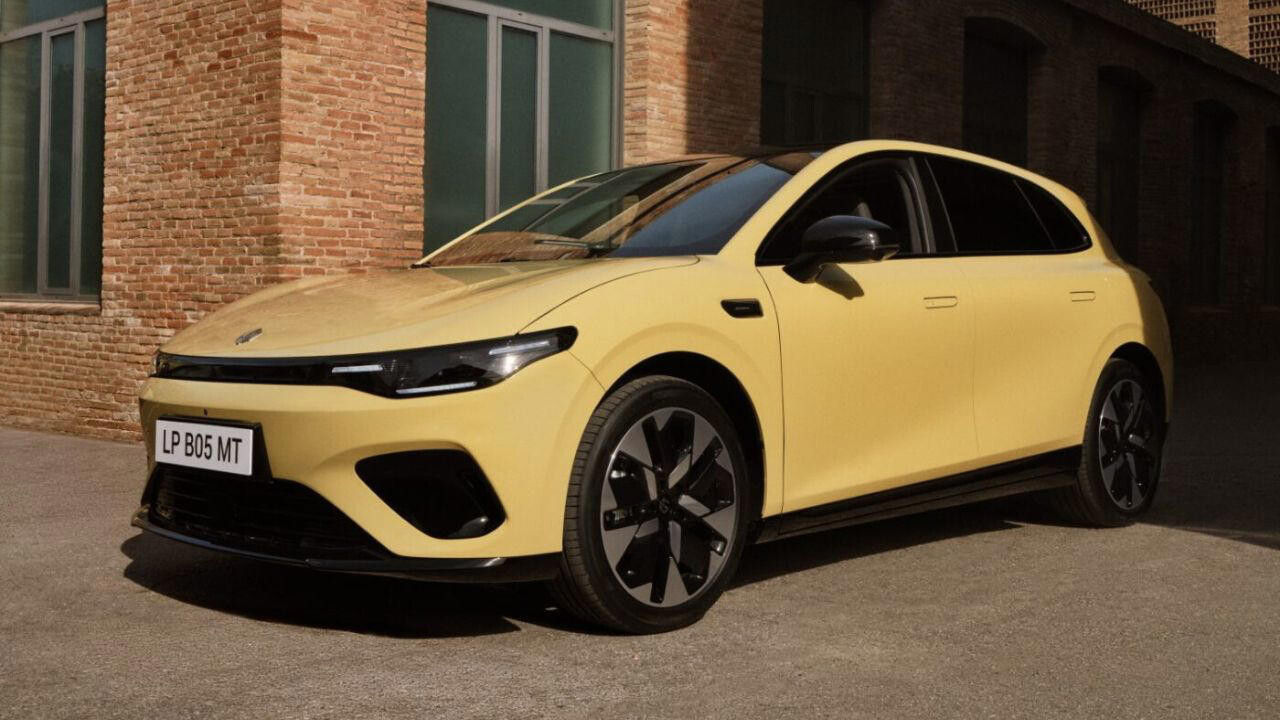
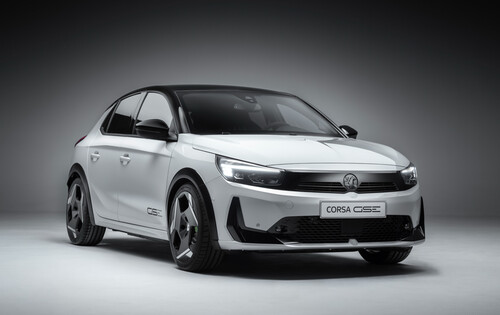
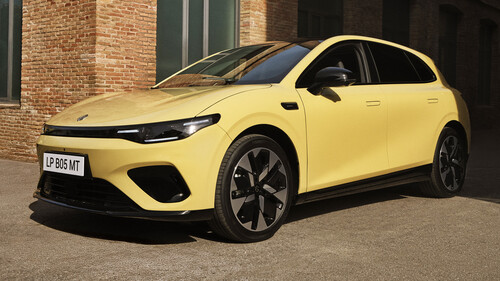
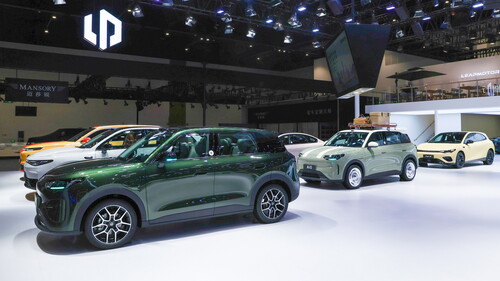
Stellantis launches a cheaper EV that undercuts its own lineupStellantis has introduced a new budget-friendly electric car that radically resets its own price ladder in Europe. By partnering with a Chinese automaker and importing a compact EV at a lower price than its existing models, the company is testing how far it can push affordability without blowing up its brands or margins. The move underscores how quickly the European EV market is shifting toward cheaper, smaller cars engineered with aggressive cost targets from day one. What happened Stellantis has begun European sales of the Leapmotor B05, a compact electric hatchback developed by Chinese manufacturer Leapmotor and imported under a joint venture. Positioned as an entry-level EV for urban and suburban buyers, the car is priced below several small electric models already sold by Stellantis brands. The B05 is built in China and shipped to Europe through the Stellantis Leapmotor International partnership, which gives Stellantis exclusive rights to distribute Leapmotor vehicles in key markets outside China. According to product information for the Leapmotor B05, the car uses a compact battery pack, a front-wheel-drive layout, and a simple interior that prioritizes cost control over luxury features. Its footprint places it in the same general segment as European B-segment hatchbacks, a category that includes models like the Peugeot e-208 and Opel Corsa Electric. Stellantis is marketing the B05 with a base price that undercuts those internal competitors. It is leaning on Leapmotor’s lower production costs in China, along with a streamlined specification strategy, to deliver a sticker price that would be difficult to match with a car engineered and built entirely in Europe. The B05’s launch portfolio centers on a limited number of trims, a single battery size, and a short options list to keep manufacturing and logistics simple. The car is being rolled out first in select European markets where small EVs already have meaningful demand and where Stellantis has strong dealer networks. Retailers that previously focused on Peugeot, Citroën, Opel, Vauxhall, or Fiat are now adding Leapmotor-branded vehicles to their showrooms, effectively selling a rival to some of their own electric hatchbacks. Stellantis is treating Leapmotor as an additional brand in its stable, but one that sits at a lower price tier than most of its European nameplates. On the technical front, the B05’s battery capacity and range are tuned for daily commuting rather than long-distance travel. Its WLTP-rated range is designed to cover typical weekly driving for urban owners, with fast-charging capability that allows top-ups on longer trips. Interior equipment revolves around a large central touchscreen, basic driver-assistance systems, and connected services that tie into Stellantis’s existing digital infrastructure. The company is betting that many buyers will accept modest performance and range in exchange for a significantly lower purchase price. Why it matters By bringing in the Leapmotor B05 at a lower price than its own small EVs, Stellantis is taking a calculated risk that cheaper electric cars will grow the market faster than they cannibalize existing models. The group has struggled, like other European manufacturers, to convince cost-conscious buyers to pay a premium for compact EVs that often cost far more than equivalent petrol cars. A budget-focused model sourced from a Chinese partner gives Stellantis a way to reach those buyers without reengineering its European platforms from scratch. The strategy also reflects a broader shift in the competitive dynamics between European and Chinese automakers. Chinese brands have used cost advantages and rapid product cycles to push aggressively into Europe, especially in the small and mid-size EV segments. Rather than fighting that trend purely with homegrown products, Stellantis is effectively embracing it by becoming the importer and distributor of a Chinese-designed car. The B05 allows Stellantis to capture margin on a low-cost EV that might otherwise arrive through an independent Chinese brand. Inside the company, the launch raises uncomfortable questions about brand positioning. Stellantis has spent heavily to electrify models like the Peugeot e-208, Opel Corsa Electric, and Fiat 600e, which rely on European manufacturing and local engineering teams. When a cheaper imported EV appears in the same showroom, some buyers who might have stretched for a European-built model may instead choose the lower-priced alternative. That risk is particularly acute in markets where government incentives are shrinking and buyers are more sensitive to up-front cost than to brand heritage. At the same time, the B05 could help Stellantis hit fleet emissions targets and EV sales quotas at lower cost. Every electric car sold contributes to lowering average CO2 figures across the group, reducing the risk of regulatory penalties. A high-volume, low-price EV can therefore serve as a compliance tool as well as a commercial product. If the B05 gains traction with ride-hailing drivers, delivery fleets, and urban households, it could deliver a significant boost to Stellantis’s electric share without requiring deep discounts on its European models. There are also implications for industrial policy in Europe. Policymakers have warned about rising imports of Chinese-made EVs and the potential impact on local manufacturing jobs. Stellantis’s decision to import the B05, even under its own distribution umbrella, highlights the tension between short-term affordability goals and long-term industrial strategy. The car gives European consumers a cheaper route into EV ownership, but it also channels production and associated jobs toward Chinese factories rather than European plants. From a consumer perspective, the B05’s arrival signals that the era of four-figure EVs in Europe is beginning to scale beyond niche city cars. Buyers who previously saw electric options as out of reach now have a mainstream, dealer-supported product with a full warranty and service network. That could accelerate the shift away from older petrol and diesel vehicles in dense urban areas, where low-emission zones and parking regulations increasingly favor zero-emission cars. What to watch next The first key test will be how dealers and buyers respond to a Chinese-built EV sold through Stellantis channels. Sales performance in the initial launch markets will reveal whether price-sensitive customers are willing to trade brand familiarity and perceived European quality for a lower monthly payment. If the B05 moves quickly off lots, Stellantis will have strong evidence that its pricing gamble is working and may expand Leapmotor offerings to other segments. Another area to watch is how Stellantis manages potential overlap between the B05 and its existing small EVs. The company will need to differentiate the European-built models through design, driving feel, equipment, or financing offers so they do not simply appear as overpriced alternatives. That could mean pushing the Peugeot and Opel hatchbacks further upmarket, emphasizing performance variants, or bundling them with attractive service packages that the Leapmotor car does not match. Regulatory scrutiny will also play a role. European authorities have already examined the pricing and subsidy structures of imported Chinese EVs, and any new tariffs or trade measures could affect the economics of the B05. If import costs rise, Stellantis may face a choice between raising prices, absorbing lower margins, or shifting some production closer to its core markets. The company’s long-term strategy for Leapmotor-branded vehicles will depend heavily on how trade policy evolves. Quality and reliability perceptions will be another critical factor. Early owner feedback on build quality, software stability, and real-world range will shape the B05’s reputation. Stellantis will be responsible for aftersales support, which means any issues will reflect on its broader brand family as well as on Leapmotor. Strong reliability could make the car a sleeper hit among pragmatic buyers, while persistent problems could reinforce skepticism about imported budget EVs and push shoppers back toward established European nameplates. Finally, competitors are unlikely to stand still. If the B05 gains traction, rival groups that have so far resisted deep partnerships with Chinese EV makers may reconsider their positions. Joint ventures that mirror the Stellantis Leapmotor arrangement could proliferate, bringing a wave of similarly priced compact EVs to Europe. That would intensify price pressure across the segment and accelerate consolidation among weaker brands that cannot keep up with the new cost benchmarks. More From Fast Lane Only: Unboxing the WWII Jeep in a Crate 15 rare Chevys collectors are quietly buying 10 underrated V8s still worth hunting down Police notice this before you even roll window down