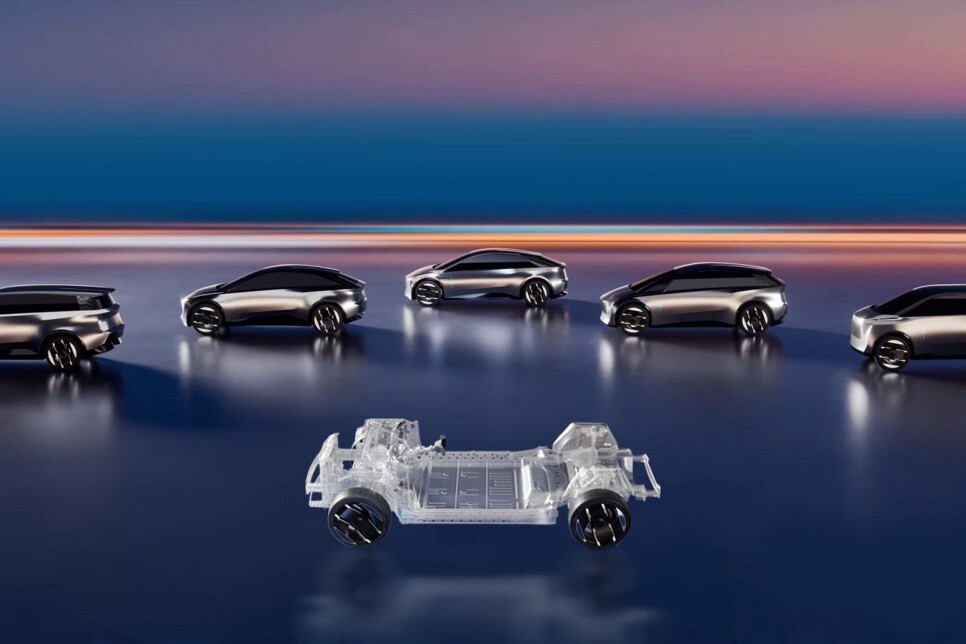
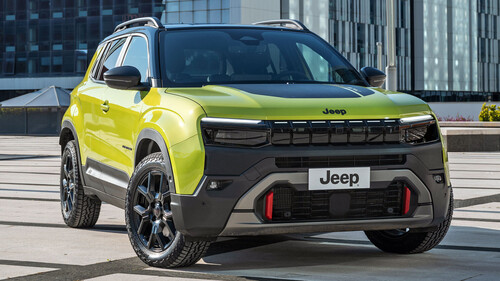
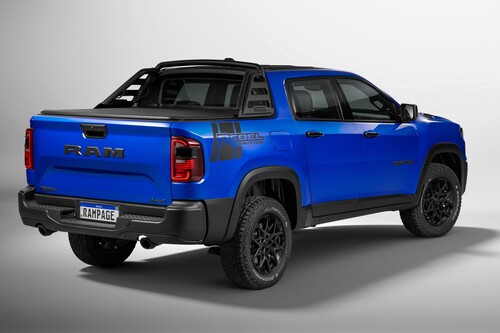
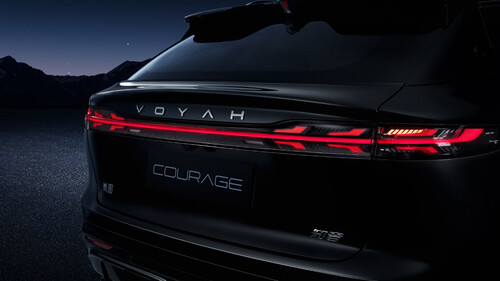
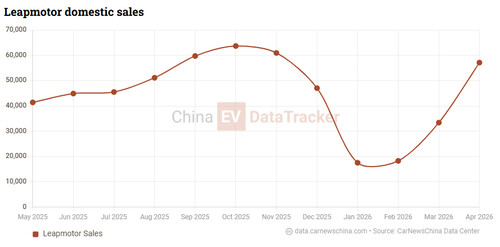
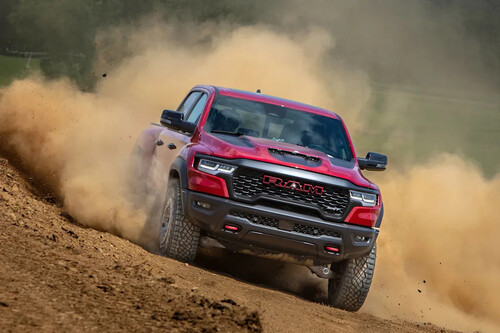
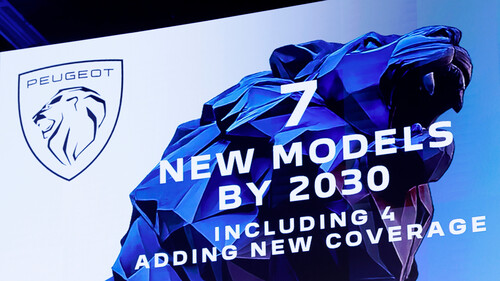
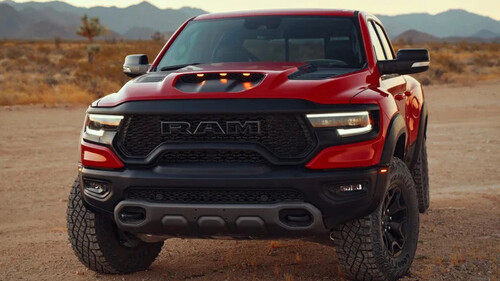
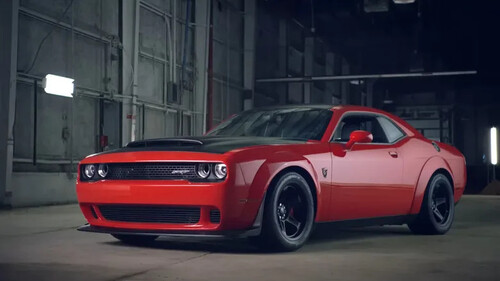
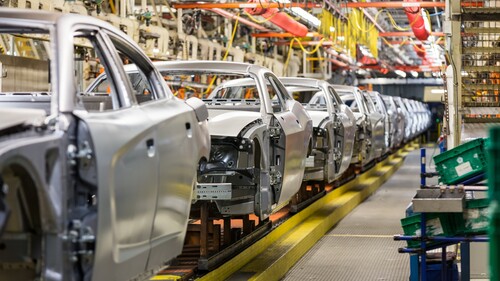
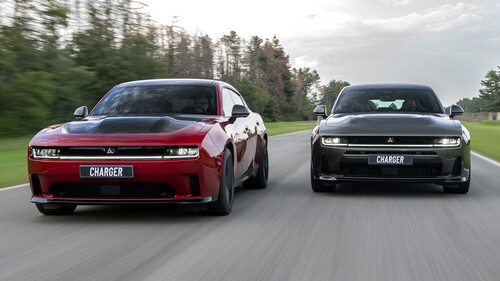
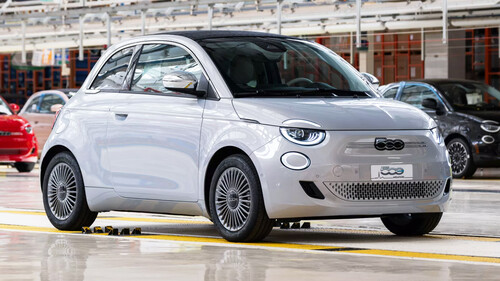
Stellantis CEO Antonio FilosaImage: StellantisRumours about the focus on the four global core brands had circulated since the end of April. However, the announcement of the STLA One platform as an entirely new global platform that combines five existing architectures into a single system came as a surprise.Here’s a step-by-step breakdown: At the start of its Investor Day at the company’s North American headquarters in Auburn Hills, Michigan, the 15-member Stellantis Leadership Team, led by CEO Antonio Filosa, unveiled the ‘FaSTLAne 2030’ programme. The STLA in the middle refers both to Stellantis’ ticker symbol on the US stock exchange and to the abbreviation used for the group’s vehicle platforms.The new strategy is designed to reflect Stellantis’ ‘unique combination of strengths – iconic brands, global scale and local roots,’ the company explained.CEO Antonio Filosa stated: “FaSTLAne 2030 is the result of months of disciplined work across the Company and is designed to drive long-term profitable growth. With the customer at the centre of everything we do, the plan will deliver our purpose – ‘to move people with brands and products they love and trust’ – powered by our unique combination of strengths.”The strategic programme is structured into six pillars:1) More efficient management of an unparalleled brand portfolio: Stellantis aims to maximise capital efficiency, avoid duplicate spending and increase profitability. The company is reorganising its brand portfolio accordingly: the US brands Jeep and Ram, together with the European brands Fiat and Peugeot, will serve as the global powerhouses. Management sees them as the brands with the highest profitability potential and plans to position them worldwide. Stellantis will direct 70 per cent of brand and product investments to these brands and to Pro One, the group’s commercial vehicle business unit.Chrysler, Dodge, Citroën, Opel, and Alfa Romeo will be managed as regional brands, benefiting from global assets while further strengthening their brand identities to inspire their customers. DS Automobiles and Lancia, however, will be positioned as more local brands, popular primarily in France and Italy, respectively. They will continue to be developed as specialist brands by Citroën and Fiat.Stellantis plans to strengthen the Italian luxury brand Maserati, which has repeatedly been the subject of sale rumours, with two new battery-electric vehicles. The company will present a detailed roadmap in Modena in December 2026.As part of the reorganised brand portfolio, Stellantis plans to launch more than 60 new models and introduce 50 major model updates across all brands and drive types by 2030. The programme includes 29 battery-electric models, 15 plug-in hybrid or range-extended models, 24 hybrid vehicles, and 39 vehicles with internal combustion or mild-hybrid powertrains.2) Investment in global platforms, powertrains, and technologies: Stellantis plans to invest €24 billion (40% of its total R&D and capital expenditure over this period) in global platforms, powertrains, and new technologies over the next five years. At the heart of this is the new modular vehicle architecture STLA One, which will replace five existing platforms. This new platform will cover segments B, C, and D and is designed to support all drive types. It will serve as the foundation for 30 models across different brands by 2035, reaching a volume of 2 million units by then. Key technical highlights of the new platform include:STLA Brain, Stellantis’ scalable central computing and software architecture.STLA SmartCockpit, which will enable a new type of interaction between customers and their vehicles.STLA AutoDrive, the company’s scalable system for autonomous driving.Integration of Steer-by-Wire, which eliminates the mechanical connection between the steering wheel and the wheels.All these technologies are expected to launch in 2027. By 2030, 35% of the global annual volume is projected to be equipped with at least one of these technologies, rising to over 70% by 2035. Rendering of the STLA OneImage: StellantisFrom an electric mobility perspective, several aspects stand out in particular: STLA One will use an 800-volt architecture to enable ultra-fast charging for battery-electric vehicles. The platform will also incorporate the Cell-to-Body concept, which integrates the battery into the vehicle structure to reduce costs, weight and complexity while improving energy efficiency. In addition, Stellantis plans to expand its use of LFP batteries to improve affordability and reduce dependence on critical raw materials.3) Partnerships that complement Stellantis’ core strengths: Stellantis aims to accelerate growth through ‘win-win partnerships’ by expanding existing collaborations and establishing new ones. The company expects these partnerships to open access to additional markets, broaden technological options, increase production capacity utilisation and strengthen procurement competitiveness. Examples include:Stellantis plans to further strengthen its partnership with Leapmotor. The companies will focus on consolidating procurement, using a shared supplier base and improving cost competitiveness. In addition to the existing production partnership for Leapmotor vehicles at the Zaragoza plant, the Stellantis plant in Madrid will soon start building electric vehicles for Leapmotor to meet the EU’s upcoming Made-in-Europe requirements. Stellantis recently announced a similar alliance with Dongfeng to support the European expansion of the Voyah brand.With Jaguar Land Rover (JLR), the company plans to explore synergies through collaboration on product and technology development in the United States.In the fields of computer architecture, software, advanced driver-assistance systems (ADAS), artificial intelligence, and battery technology, Stellantis is developing strategic partnerships to complement its internal competencies and accelerate vehicle development. Partners include Applied Intuition, Qualcomm, Wayve, NVIDIA, Uber, Mistral AI, and CATL.4) Optimisation of production sites: In Europe, production capacity will be reduced by more than 800,000 units by repurposing plants (such as the one in Poissy, France) and leveraging partnerships (such as those in Madrid and Zaragoza, Spain, and Rennes, France) to preserve manufacturing jobs. This is expected to significantly increase factory utilisation rates in the US and EMEA regions as well.5) Excellence in execution: In product development, the company aims to shorten vehicle development cycles significantly – targeting 24 months compared to up to 40 months today. Quality is also set to improve, along with cost competitiveness. As part of the recently launched value creation programme, annual cost savings of €6 billion are expected by 2028. Additionally, artificial intelligence will play a key role in transforming operational capabilities, with over 120 AI applications already in use.6) Strengthening regions and local teams: Finally, Stellantis stresses in its strategic plan that the automotive industry remains primarily a regional business because customers are located in the regions. The group has already shifted decision-making authority from headquarters to the regions in many areas. Stellantis says this approach will strengthen long-standing and constructive relationships with trade unions, dealers, suppliers, business partners and communities. Through this regionalisation strategy, the company aims to align more closely with customer preferences and improve profitability.Breaking it down for the Enlarged Europe region, the brand portfolio will be realigned: brands will be more sharply differentiated, market coverage will increase through an offensive in the C-segment, and the E-Car project will introduce a new generation of stylish and affordable urban electric vehicles from 2028.stellantis.com (Strategy), stellantis.com (STLA One)