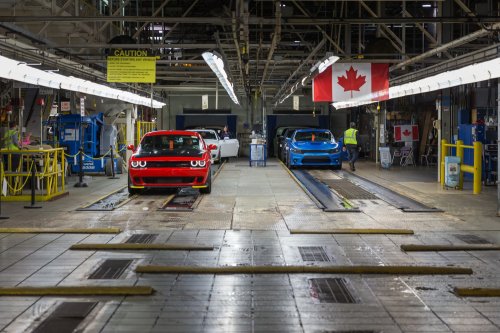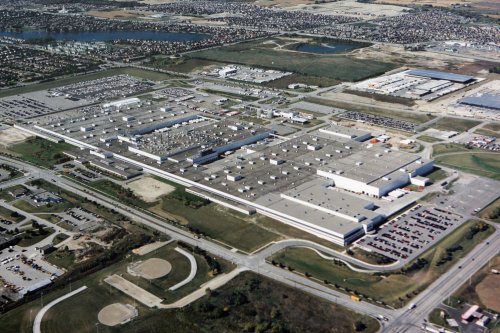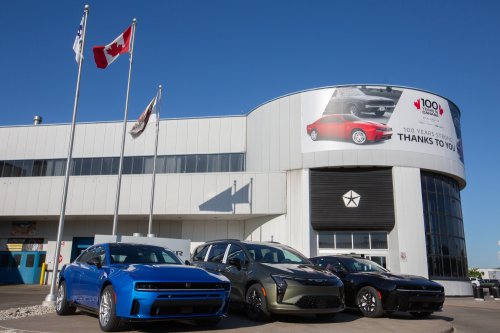



















Image: StellantisThis week, President Macron hosted representatives from industry and politics at the ‘Réunion de l’équipe de France de l’électrification’ (Summit of France’s Electrification Team) at the Élysée Palace. In a speech lasting around 30 minutes, he presented France’s roadmap to become a ‘major electricity power.’One of the central targets is to cut the share of fossil fuels in the country’s energy mix from the current 60 per cent to 30 per cent by 2035. France plans to achieve this through three pillars: higher energy efficiency, expanded renewable energy capacity and the construction of new nuclear power plants. A key objective is to strengthen domestic electricity production and reduce dependence on geopolitical disruptions.Electric mobility is set to play a central role on the demand side. “Electrifying our usage – that is the core of the plan,” Macron said. Alongside the transformation of the energy system, the strategy also focuses on reindustrialisation. France is among the most ambitious countries in Europe when it comes to establishing battery and electric vehicle supply chains domestically.During the summit, Macron also announced that Stellantis plans to invest more than one billion euros in the production of a new generation of electric vehicles at its Mulhouse plant from 2029. He described the project as an “additional investment” but did not provide further details.Stellantis has not yet confirmed the announcement, as reported by the newspaper Le Monde. The company stated that it is currently ‘working on the future of our plants’ – including the Mulhouse site – and will share further details ‘once official announcements are made.’However, the multi-brand group recently announced plans to produce new small electric vehicles from 2028, though these will be manufactured in Italy. But that does not have to mean anything. Stellantis’ recently presented strategic plan, FaSTLAne 2030, includes more than 60 new launches and 50 significant model updates across all brands and powertrains by 2030, including 29 battery-electric models.The announcement that Mulhouse is also set to become a hub for producing a new generation of electric vehicles is new. The plant, opened in 1962, currently produces the DS 7 Crossback and the Peugeot models 508, 308, and 408 in various powertrain variants – including fully electric versions. How the production of the new electric vehicles will be integrated into the factory remains unclear. However, the potential investments represent a significant boost for the plant’s approximately 4,000 employees.Current production at the Mulhouse plant stands at around 135,000 vehicles per year and ‘has never returned to the pre-Covid level of 200,000 vehicles annually,’ Laurent Gautherat, a trade union representative at the site, told the French newspaper L’Alsace in April. The plant’s assembly line is currently operating at half capacity. Last year, Stellantis also had to halt production on several days due to declining sales.In his speech, the French President called for a joint acceleration of the electrification of transport – particularly in light of the national goal to phase out the use of oil, gas, and coal by 2050. Macron frequently used the words ‘mobilisation’ and ‘acceleration’ in his address. He argued that electrification is a means of reindustrialisation, not deindustrialisation, as some critics claim.France is indeed stepping up its efforts in terms of electric mobility. At the end of April, the government presented a masterplan aiming for two out of three new cars to be electric by 2030. French manufacturers are expected to produce 400,000 electric vehicles by 2027 and one million units by 2030. In parallel, around 30,000 fast-charging points for medium- and long-distance travel are to be installed by 2035, including 8,000 for lorries.“We are making significant efforts to align supply and demand. This also applies at the European level with a coherent policy,” Macron said. He explicitly stated that supporting non-European offerings does not align with France’s goals. For France, he pointed to the upcoming third wave of social leasing incentives, as well as subsidies for commercial vehicles.lemonde.fr, elysee.fr (in French)