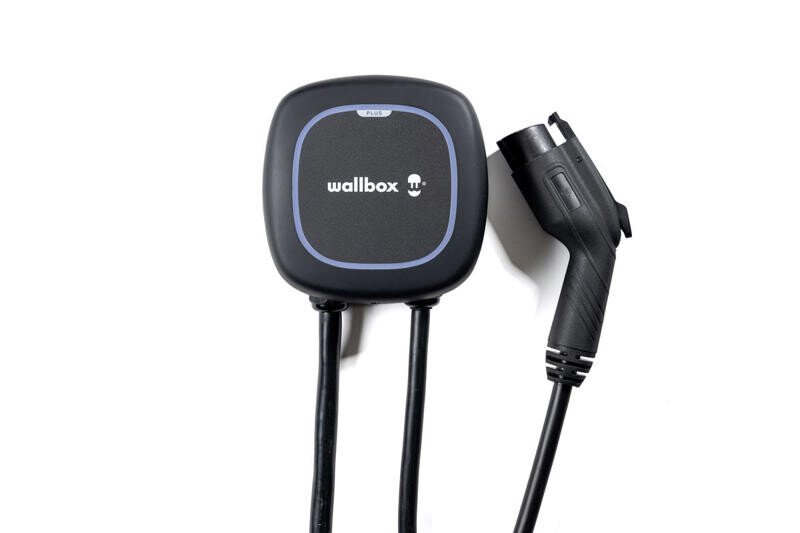
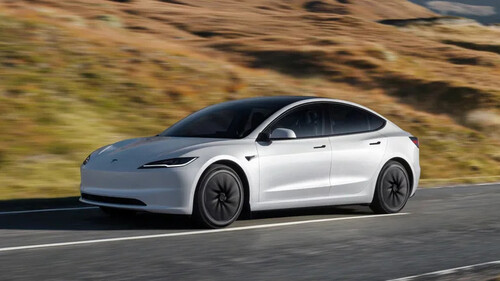
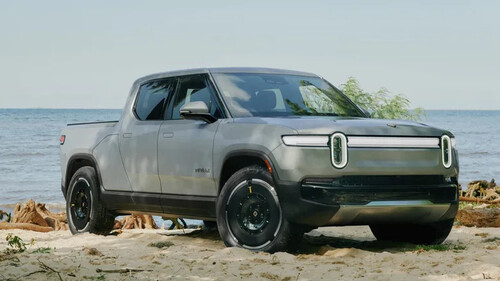
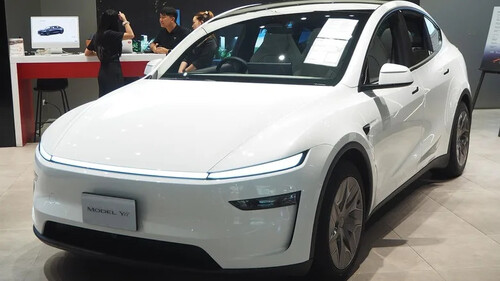
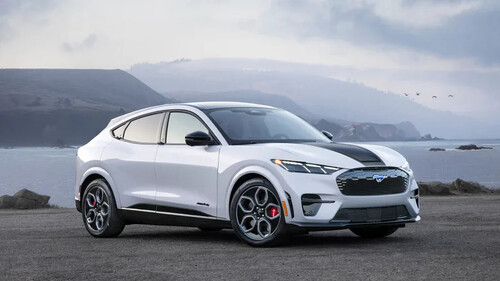
This article was updated in April 2026 with new products and information. We plan to update this article regularly as we test additional units.Okay, so you bought an electric vehicle. Now what? There are a number of ways in which EV ownership will be different from having a vehicle with an internal-combustion engine, but a big one you need to figure out immediately is charging. What's the best EV charger for your home?Best Home EV ChargersBest Overall: Emporia Pro / Emporia ClassicBest Budget: Lectron Portable Level 2Least Expensive for Two EVs: Grizzl-E Duo Trust us, you'll want to be charging at home as much as possible. This has two significant benefits: Charging can be accomplished when the vehicle is otherwise parked, and home charging is substantially cheaper (roughly one-third the cost) of DC fast-charging. On average, EV charging equipment will have an up-front cost of between $400 and $700. But, depending what equipment came with your EV, you might not need to buy a home unit at all, and could instead make do with the included portable-charging setup.More Gear Tests: Best Dash Cams | Best Radar Detectors | Best OBD-II Scanners For this test, I installed a dedicated 240-volt outlet in my garage—just as a new EV owner would need to. I then tested these chargers with Car and Driver's long-term Tesla Model 3, Rivian R1T, BMW i4, Hyundai Ioniq 5, Kia EV9, and Lucid Air Pure—among various other test vehicles—taking notes on each charger's performance in typical daily use. Testing each unit takes months, thanks to the multitude of hours required to charge cars and gather data. We plan on updating this article with new products and testing data twice a year. The Best Home EV Chargers for 2026, TestedYou may have heard grumbling from EV owners who have had to make an expensive upgrade to their electrical service in order to charge their vehicles. That's what's so great about the Emporia Pro: It comes with the company's Vue 3 energy monitor that installs into your house's electrical panel, allowing the system to adjust the EV-charging output in real time to make sure it doesn't exceed what your house can handle. No panel-upgrade needed, but that does make the install more complicated than other chargers that don't have this functionality. This new Emporia Pro is also much slimmer with a far thinner cable that's easier to wrangle than the company's previous Level 2 home charger, which is now called the Classic and is sold alongside the Pro. The Emporia Pro adjusting its output to keep my total household electrical draw below a set threshold.In fact, if you're trying to pinch pennies, you can buy the Vue 3 home energy monitor ($100 at Amazon) and older Classic Level 2 charger separately ($529 combined) and get the same load-balancing capability. We also found this latest setup from Emporia to react to charging electrical loads much quicker than before. Either Emporia unit pairs with the same powerful app that also houses info about the plethora of other energy-monitoring devices and smart plugs the company sells (for example, you can monitor each individual circuit breaker in your entire home). It's a powerful and capable app, but if you're only using it for EV charging it can seem unnecessarily complex. Emporia offers J1772 or NACS plug types, in hardwire or plug configuration, all for the same price. If you don't need the load-balancing feature, go with the less expensive Emporia Classic.Emporia offers a vast library of electricity-monitoring devices, from typical smart outlets to a system that tracks every circuit in your home's fuse panel. This entire electricity-tracking universe is integrated into Emporia's app, including the ability to link your EV to the app through the Smartcar API. But if you're just using the EV-charging equipment, navigating around all of these unused areas makes the app seem overly complex.Otherwise, this is an impressive Wi-Fi–connected entry at a price hundreds of dollars less than other top chargers. The 11.5-kW-output capability is at the high end of this roundup. And short of a couple of features, such as using a specific vehicle to estimate the miles or battery percentage gained, the Emporia has just about everything, including detailed electricity pricing using your actual utility plan like the ChargePoint. The Emporia is now available with either a J1772 plug or a NACS/J3400 connector, and comes in either plug-in or hardwire configuration, all for the same price. While the load-balancing functionality is included with the Emporia Pro above, it can also be purchased separately and paired with the Classic version.This new entry from Michigan-based automotive supplier Danlaw, Inc. is appropriately named, as it's significantly more intelligent than the typical Wi-Fi–connected smart charger. The additional functionality includes tracking energy consumption of your vehicle on each drive, which it uses to arrive at real-world range estimates, and sends notifications when you should plug in based on your driving behavior and how many miles it predicts you'll drive the next day. The additional smarts are enabled by a dongle that plugs into your vehicle's OBD-II port under the dash, which is also used to communicate with your charging unit to initiate charging while preventing anyone without a registered dongle from doing so. (Note: The driving data is synched when the vehicle is close to the charging unit; it isn't broadcasting the vehicle's drive cycles or location in real time.) For many EVs or PHEVs, its self-reported battery health rating (out of 100 percent) is also displayed in the app. The CleverCharge also comes with other data that's often part of having a dongle plugged in; one time I got an alert with the three error codes that caused a vehicle's check-engine light to illuminate. It also sent me a push notification during a storm that my household voltage was low before a subsequent power outage. The CleverCharge excels at having multiple charging units and vehicles linked to a single account. We also found it easy to use, and the 25-foot cord is thinner than most, allowing it to easily snake under a closed garage door to charge a vehicle in the driveway. Really the only major issue is that vehicles lacking an OBD-II port or communication protocol, such as Tesla, Rivian, and Lucid vehicles, none of the additional features will work. Despite all the extra smarts, the CleverCharge is priced way down at the low end of the market and, like most of the others, comes in either plug-in or hardwired formats with J1772 or NACS connector.Eviqo is regularly a top seller among EV charging equipment on Amazon, so we figured it was time to check it out. It checks all the usual boxes: 25-foot cord, programmable charge times, and energy tracking. The one exceptional characteristic is that the NEMA 14-50 plug is on a long cable, leaving lots of flexibility with where the unit can be mounted and still reach the outlet. It's also priced at the low end of the market, which no doubt helps its popularity. But the app isn't nearly as easy to use as the best, for example it's not simple to set up overnight charging to take advantage of lower electricity rates. You have to program two rules: from, say, 7 pm to 11:59 pm, and then a second one to start at 12:00 am. Also, a slider bar to adjust the current output lives prominently on the main screen where you can accidentally bump it, and that's a setting that's rarely used. And you can't go back and look at individual charges, only one-week, one-month, or three-month totals.Our unit arrived missing the mounting bracket for the wall-mount hook for the charging handle and cable. This seemed like a simple enough oversight, but it took a lot of back-and-forth emails with the customer service team, who would sometimes go five days between responses, to get it resolved. After they agreed to send a replacement, it took another two weeks to get a tracking number. It finally arrived just over six weeks after my initial email to customer service.Lectron's long been on our radar as an affordable maker of EV charging equipment and adapters. In fact, it's one of the go-to suppliers of NACS to SAE adapters for automakers. For this test, we tried out the company's entry-level charging equipment, which looks like a portable unit that might come with the purchase of an EV. But, importantly, the Lectron unit has Wi-Fi connectivity with the capability to control charge times and settings, plus monitor energy use via an app. (There's also a slightly cheaper version of this unit that does without the connectivity.) It comes with a wall mount to make the installation more permanent, but you'll need to hang your own hook as a place to hang the cord. The app isn't as sophisticated as some from the more expensive chargers, and we don't like that you can't look back at specific charges that are more than a month old (although you can see the overall usage for past months). But there's no need to spend more than this to get a perfectly capable home-charging setup.ChargePoint is one of the largest providers of public charging, with tens of thousands of units nationwide. Its Home Flex unit tested here integrates into the same app used to connect to the company's public units. You can add your vehicle in the app, which tailors the percentage of the battery replenished and number of EPA miles added to your specific vehicle. We found the app to be very user-friendly, with the best displays for charge-rate graphs, and it also shows the total charge time and total energy output during each charge. Furthermore, it offers the ability to schedule charging times to take advantage of variable-cost electricity during off-peak hours (most EVs also allow this to be configured in their settings menu). The ChargePoint app has the most nuanced cost tracking, allowing us to select from among dozens of possible rate plans from our local utility to pinpoint the actual cost of charging down to the penny, even when on a variable rate. We also appreciate the simplicity of the built-in notch for wrapping the cord around at the top of the unit and that the plug latches onto its dock in the center; many other units require mounting a second cord-management device. The Universal Wall Connector is Tesla's latest home-charging offering, which has a built-in adapter to switch seamlessly between J1772 and NACS plug types. The unit itself is significantly thicker than the standard Wall Connector with the Tesla plug, but there's a reason for that: the adapter. At first, it appears to be a simple contraption that slides onto the end of a typical Tesla connector, but it's actually electronically locked into place so the adapter can't go missing. Nifty.Power output remains the same from the standard Wall Connector, which peaks at 11.5 kilowatts, is available only in a hardwire configuration, and has the ability to power share with other Wall Connectors. In other big news, the unit integrates into the Tesla mobile app to allow monitoring of energy use, which is mandatory if you want to track efficiency like we do with all of our test cars. Once the charging unit is installed, it must be commissioned via a separate Tesla One app, but thankfully, any DIYer can create an account to set up the maximum output for the circuit the unit is connected to, and users can also specify certain Teslas to allow to charge at the unit while blocking others. Unfortunately, that functionality doesn't carry over to non-Tesla vehicles. The slimness of the Wall Connector's 24-foot-long cable continues to impress us as it matches the output capacity of units with thicker cables. This makes the cord easier to maneuver and leaves a smaller gap when the garage door is closed on it when charging a vehicle in the driveway.Pricewise, the Universal is at the higher end, but for a mixed-EV household or to future-proof your home-charging setup, this is a great solution. Going from a single EV in the household to two or more requires a rethink on your charging setup. Grizzl-E offers this Duo unit as an easy solution. It plugs into a single outlet—there are variants for NEMA 6-50 or 14-50 plug types—and has two 24-foot cables with two J1772 connectors to charge two vehicles simultaneously. With one EV plugged in, that side gets all the available juice, up to the unit's or the car's maximum. If you then plug in a second EV, the output immediately splits to half for each cable.This is totally fine. EVs are designed to be able to charge safely in rain, snow, or ice.As with other single-plug Grizzl-E home chargers, the enclosure is made of beefy aluminum, and its thick cables resist winding around the included wall mounts more than most. However, this is the least expensive dual-plug charging unit we could find. Other two-vehicle options involve buying two separate charging units wired to two dedicated circuits—which would be far more expensive—or setting up some kind of power-sharing arrangement, where the two units share the output of a single circuit (both the Tesla and Emporia units support this). Another way to do this is to use the Lectron Socket Splitter (see review below).What the Grizzl-E Duo doesn't offer is a Wi-Fi–connected version to allow users to track their electrical use and cost in a detailed manner or schedule charging via an app. But for a seamless way to charge two EVs simultaneously, the Duo gets the job done.While technically not EV-charging equipment like the others, this Lectron Socket Splitter is another option for charging two EVs from a single circuit. Think of it sort of like a power strip for 240-volt outlets, where it plugs into your high-voltage outlet and then two individual EV chargers (or household appliances or other equipment) plug into it. The unit prioritizes the left outlet, but once that side stops charging, the unit will start charging the vehicle connected to the other side. It doesn't ever split the power 50-50 like the Grizzl-E Duo unit does. It works well enough, as long as you make sure there's sufficient time to charge both vehicles—because if the left side never stops charging, the unit will never switch over to the other side. Also, after only a handful of uses, our left outlet started wobbling in place after a trim piece broke inside the unit, although it was still fully functional.How We Tested EV ChargersWhen putting together this story, I went down the same path a new EV owner would, starting with installing a dedicated 240-volt outlet in my garage. We have charging at the Car and Driver office, but I needed a proper setup at home to support all of the EVs we review.I was able to add a 40-amp circuit to the existing electric service in my house without a pricy upgrade to run additional capacity, so that's why I landed on a 40-amp outlet versus a 50-amp setup. To be able to switch easily among the units, I ordered the NEMA 14-50 plug-in variant of each charging device. (Note: Tesla doesn't sell a version of its Wall Connector with a plug, so to keep our test comparable, I wired one in myself to connect to my NEMA 14-50 outlet.) In the first round of testing, I used each unit to charge our long-term Tesla Model 3 numerous times over a period of months. I then compared the electricity output from the wall to what the Model 3 reported made it into its battery pack using the third-party (and very cool) TeslaFi software. We built this inline meter to verify how much energy is delivered to the vehicle.Since then, I've tested many other units along with the favorites from before using our long-term Rivian R1T, BMW i4, Hyundai Ioniq 5, Kia EV9, and Lucid Air Pure, plus many other EVs and PHEVs we're reviewing. Despite varying cord lengths and thicknesses, there was no measurable difference in performance or efficiency (which averaged roughly 5 to 8 percent charging losses). testing ev chargers with a lucid air EV Charging at HomeIf you're an electric-vehicle owner who wants to start charging at home, here's what you need to know.EV Charging Levels:Level 1: Uses 120-volt AC electricity to charge (i.e., a standard household outlet) with an output of roughly 1 kilowatt. Takes days to charge.Level 2: Uses 240-volt AC electricity to charge, with outputs generally between 6 and 19 kilowatts. Can charge an EV with a modest-size battery overnight.Level 3/DC Fast-Charger: Uses 400- or 800-volt DC electricity to charge, with output ranging from 50 to 400-plus kilowatts. Can charge an EV's battery from 10 to 90 percent in as little as a half-hour. You'll find these in public areas, but they're illogical for home use due to their high cost.Output:This is how much charging power is being sent to your EV, which is measured in kilowatts. (The voltage of the electrical circuit times the amps of current flowing equals the power in watts; 1000 watts equals a kilowatt. For example, a 240-volt outlet drawing 32 amps of current is outputting 7.7 kilowatts of power.)Connector Types:A connector is what you need to connect your charging equipment to your EV. For at-home chargers like the products on this list, there are two main types to keep an eye out for: J1772 and Tesla's North American Charging Standard (NACS or J3400). Thankfully, adapters to switch between connector types are widely available, so limiting your purchase to whatever connection your vehicle features isn't necessary.Cost to Install:Cost really depends on if you have enough spare electrical capacity. If so, you might be able to run a new line for a few hundred dollars. If not, adding capacity to your home's electrical system can cost a few thousand. More on that below.Tax Breaks for EV Charging:The sweeping Inflation Reduction Act reinstated a federal tax credit of 30 percent of your total costs (capped at $1000). Electrical upgrades, wiring, and the charger itself all qualify for this credit, but you'll want to act fast, as it's set to expire on June 30, 2026.testing ev chargersThings to Consider Before Buying a Home EV ChargerHousehold Circuit OutputYour home's electrical circuit is rated for a certain amount of maximum amperage. Since EV charging can demand anywhere from 24 to 80 amps, it's important to see what additional capacity your home has above your current electrical needs, including furnace, air conditioning, oven, clothes dryer, etc. Check the main fuse in your breaker box to see the amperage rating—that's the maximum your home can handle before blowing that main breaker. If you have 150- or 200-amp service or higher, you may have enough wiggle room to add charging without an upgrade. But you'll need to measure your house's peak electrical use and consult an electrician. We recommend using a modest 40- or 50-amp circuit due to its ability to charge most EVs overnight while keeping down install costs. Plus, when not charging a vehicle, you could use that 240-volt outlet for other items, such as an electric heater or welder. You will need a certified electrician to verify your home's circuit capacity and install any equipment or upgrades necessary. Some EV-charging equipment, such as this Emporia unit, provides load management, which means it constantly monitors your house's overall output and will automatically lower the charging draw if necessary to prevent exceeding your house's capacity.Charge RateThe charge rate is expressed in kilowatts of power—volts times amps equals watts, 1000 watts equals a kilowatt—which can be used to estimate charge time. If you're charging at 6 kilowatts and your EV has a 60.0-kWh battery, the charge time from empty to full will be roughly 10 hours. (It will actually be slightly longer due to losses during charging and the slowing of the charge rate as the battery nears 100 percent.) The charge rate is affected by three factors and will be limited to the lowest of these: the output of the household circuit, the charging equipment, and the vehicle's onboard charger.Wi-Fi ConnectivityIf you wish to keep track of your EV's electrical use and cost, you'll want a home-charging unit with Wi-Fi connectivity. This allows you to monitor charging, receive alerts, and control the unit via an app.VariantsMost of these EV chargers offer different variants to suit your needs. These variants (hard-wired or plug, different output capabilities, different connector types, and varying cord lengths) are typically offered at slightly different prices. Make sure you look at all the various options from any manufacturer.Outdoor RatingIf you'd like your EV charger to be mounted outside, it's perfectly doable. Each charging unit we tested has an outdoor-grade rating according to the National Electrical Manufacturers Association (NEMA) or Ingress Protection (IP) standards. There's additional information on deciphering these ratings in our FAQs section below.FAQsWhat are the different types of EV chargers?Charging capability is categorized into three tiers. Level 1 and Level 2 use 120-volt and 240-volt AC electricity, respectively, which is what your house is wired for. Level 3, also called DC fast-charging, is high-voltage (400 to 800 volts) DC charging that takes place at a dedicated public EV charger and charges far faster. DC fast-chargers can cost hundreds of thousands of dollars to install, so it's not something you'd put in at home.Are all home EV chargers the same?Home-charging equipment is analogous to a USB cable to charge your phone. It connects the electricity in your house to your car, and in that way they're all similar. The main differences are their output capability—typically expressed in either amps (e.g., 32, 40, 48 amps) or power (e.g., 7.7, 9.6, 11.5 kW), which equates to charging speed—and whether they are Wi-Fi connected, which typically allows charging to be monitored and controlled remotely via a phone app.The other main difference is whether the unit plugs in to an outlet or is hardwired into the circuit. Many providers sell units that come in either configuration, as well as with different plug types, while others, such as Tesla, are only offered in a hardwired configuration. What's the difference between Level 1, Level 2, and Level 3 charging?The charging "Levels" generally refer to charging speed. Level 1 is extremely slow (think multiple days for a full charge), Level 2 is adequate for at-home use (an EV can charge overnight), and Level 3 is the fastest (a half-hour top-up might add 80 percent charge). Technically, the difference is the voltage at which energy is input into an EV.Level 1 means 120 volts, like a typical household outlet, with a typical charging rate of about 1 kilowatt. Level 2 is 240 volts (like an electric dryer) and, depending on the amperage of the circuit, can range between about 6 and 19 kW. Level 3, DC fast-charging, typically operates at 400 or 800 volts, and the rates can be as high as 350 kW. Do I need to buy EV charging equipment?Not necessarily. While you do need a device to connect the electricity from your house to your vehicle, you may be able to get by with the portable charging equipment that came with your vehicle. In some cases, the car either comes with or the automaker sells accessory adapters that allow the portable unit to plug into a 240-volt circuit and provide perfectly acceptable charging speeds, as long as you don't mind leaving it behind in your garage (or regularly loading it in and out of your car).Which plug type should I choose for my charging equipment?Although several automakers have announced a switch from a J1772 connector to Tesla's North America Charging Standard (NACS) design in the 2025–2026 time frame, whether you buy a J1772 or NACS unit today doesn't limit its future compatibility. There are adapters to go from NACS to J1772 or vice versa, and with the mixed ports both on the vehicles and the public-charging infrastructure, EV owners will need to get used to keeping adapters in their vehicles to be prepared for whichever plug type they encounter.Can charging equipment be mounted outside?Generally, yes. Each charging unit we tested has an outdoor-grade rating according to either the National Electrical Manufacturers Association (NEMA) or Ingress Protection (IP) standards. A NEMA 3R rating, like the ChargePoint and Tesla Wall Connector have, is intended for outdoor use, but does not mean watertight; under certain circumstances, moisture could potentially enter the enclosure.The NEMA 4X rating of the Grizzl-E is superior. The IP ratings are two digits, the first representing the unit's resistance to solids (in this case dust) and the second number representing water protection. An IP66 rating means the unit is intended for outdoor use, with complete protection from dust or high-pressure water. But an IP67 goes one step further and can be immersed in water up to three feet deep.Another thing to keep in mind with charging equipment mounted outside is that the electrical feed line to that location must also be in an outdoor-rated enclosure and, if you’re using a plug-type unit like we tested, that the outlet's enclosure must also be rated for outdoor use.How do I wire my house to charge an EV and how much does it cost?A good middle ground is a 40- or 50-amp circuit, which will be able to charge most EVs overnight. EV charging equipment can either connect via a plug or be hardwired into your home's electricity.We suggest going with a NEMA 14-50 outlet; that way the charging equipment simply plugs into an outlet, similar to any other household device. If you move, you can unplug your pricey EV charging equipment and take it with you, or you can easily switch to another unit in the future. Plus, when you're not charging, that outlet could be used for other 240-volt needs, such as an electric heater or a welder.In either case the EV charging hardware can only operate continuously at 80 percent of the capability of the circuit. So, a 50-amp circuit—i.e., the circuit has a 50-amp breaker—can charge at up to 40 amps (or 9.6 kW), or a 40-amp circuit at 32 amps (7.7 kW). The maximum current for a plug-type charging unit is a 50-amp circuit (40 amps continuous), while a hardwired circuit can go as high as 100 amps (80 amps continuous). That equates to a charging rate of 19.2 kW, which is the fastest possible with a Level 2 connection. A dedicated electrical line must be run from your breaker box to the garage or exterior location where you want to install the charging equipment. Qmerit is a company that specializes in these installs and has a nationwide network of electrical contractors to do the work.If your house has enough spare electrical capacity, you may be able to simply run a new line, which might cost a few hundred dollars. If not, more capacity needs to be added to your house, and that might raise the total to a couple of thousand dollars.What's the difference between a vehicle's onboard charger and an EV charger?Although many people refer to the products reviewed here as "chargers," technically they are electric-vehicle supply equipment, or EVSE. The vehicle's onboard charger is a device that converts the AC electricity from your house to DC energy to be stored in the battery, and it determines the fastest Level 2 charging rate your vehicle can handle. No matter how much electrical output you have at your house, you can't exceed the charge rate limited by the vehicle's onboard charger.Previous Models TestedWallbox Pulsar PlusWallbox Pulsar Plus EV chargerThe Wallbox unit itself is lighter and smaller than most—it's roughly an eight-by-eight-inch square—so it doesn't take up much wall real estate. The app has a clean look, is easy to use, and has the usual features, such as the ability to schedule charge times based on variable electricity rates or any other preference. However, the pricing function lacks the ability to track a variable rate like the ChargePoint and Emporia will do. Like Emporia, Wallbox offers a load-sharing function, but it requires buying the company's very pricy $449 power meter. Overall, we found the Wallbox to work well, but it doesn't offer any above-and-beyond features to justify a price that's higher than that of our top-rated models.Battery TenderBattery Tender eCharge 40 amp EV chargerIf you own a classic or other vehicle that spends a lot of time sitting, you're probably familiar with the Battery Tender brand, which sells a lot of trickle chargers for 12-volt batteries. The company more recently started offering a couple Level 2 options for charging EVs. We tested the 40-amp unit (9.6 kW max), which is the lower of the two wall-mounted options, and has one unique feature: The ability to require swiping a RFID card to start charging as a way to prevent unwanted users from accessing it. That could be a handy feature if your charging equipment is mounted outside but, unfortunately, disabling that setting can be done by anyone with access to the unit (no passcode or anything), which completely defeats the purpose.While the Battery Tender is already one of the most expensive in the test, the higher-output 48-amp (11.5 kW) version costs even more. Unlike most of the competition, the Battery Tender doesn't offer Wi-Fi connectivity for control or energy monitoring. Instead, the energy consumed is displayed on a built-in 4.3-inch display while charging and briefly after unplugging. We'd generally prefer the ease of remote connectivity, but if your mounting location is out of range of your Wi-Fi, this is an option. Unfortunately, the readout is very simple, and there are no extra frills, such as scrolling back through past charges. The unit itself is one of the largest and bulkiest in our roundup, too.Why Trust UsI am an automotive engineer turned writer with more than 20 years of experience testing and reviewing cars. With the advent of the modern EV, I've thrown myself into learning everything I can about motors, batteries, and charging. This roundup of home EV-charging units isn't simply a distinct test that happened over days or weeks after which I moved on to something else. It's an ongoing way of life for me as I'm constantly driving and reviewing new EVs and continually evaluating the charging side of the equation while the vehicles are plugged in overnight, and I'm always looking for the best new units to evaluate.Car and Driver has been testing cars since 1956, and we continue to measure the maximum acceleration, braking, and cornering performance of many hundreds of vehicles every year. In addition, we measure everything from cargo capacity to how much a vehicle's pillars block outward visibility to real-world fuel economy at 75 mph. When you read one of our reviews, you're getting the value of decades of hands-on automotive experience and knowledge. The Gear Team helps readers make informed purchasing choices about automotive gear, tools, and accessories through hands-on product evaluations and comprehensive testing. Car and Driver's renowned testing standards mandate that we use all products we feature and that our findings and recommendations are based on personal experience and knowledge—not hype. We won't claim to have tested something we haven't, and we'll never recommend a product we wouldn't buy ourselves.The Gear Team's product selection and gear picks are editorially independent; Car and Driver has a strict policy against accepting payment for placement in articles.We've evaluated dozens of product categories, including floor mats, tire inflators, and car covers. Visit our Tested & Trusted collection to see the very best in automotive gear. Read more about our testing process here.ev newsletter graphic