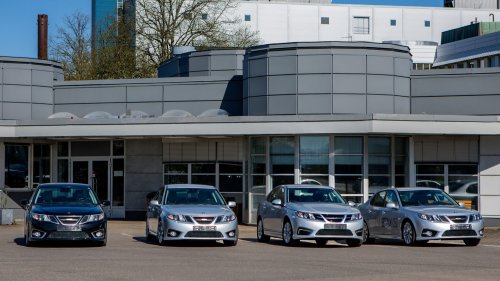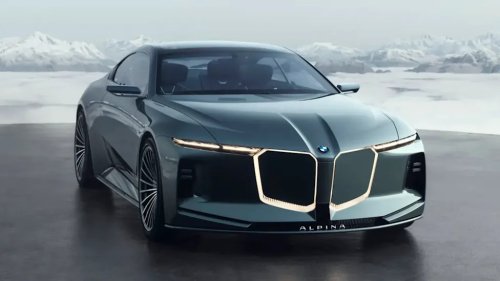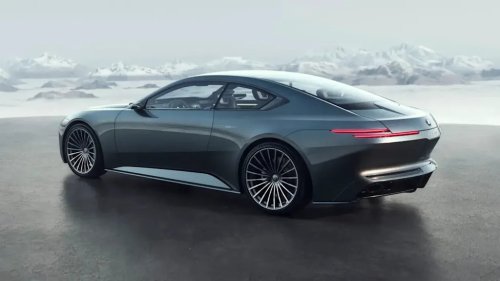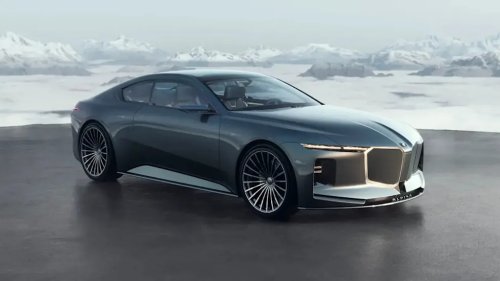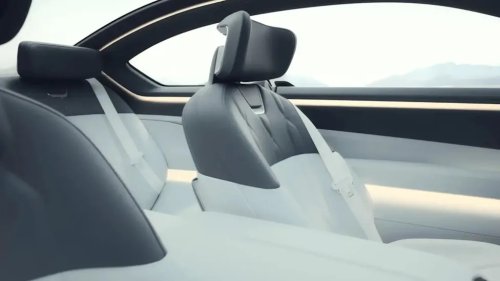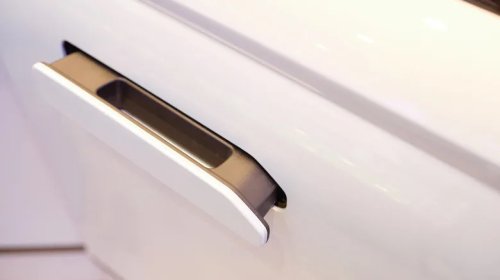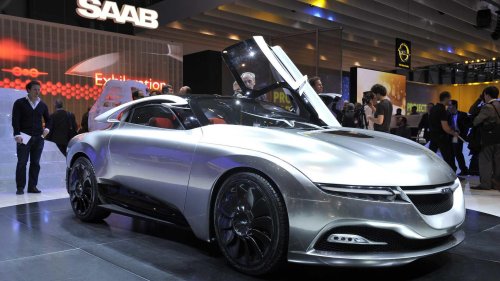

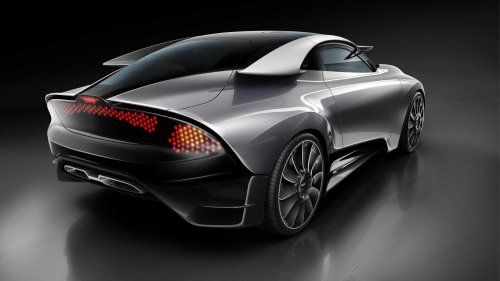
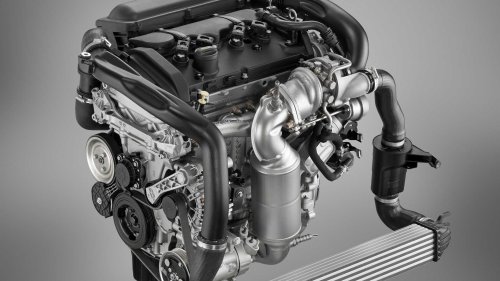
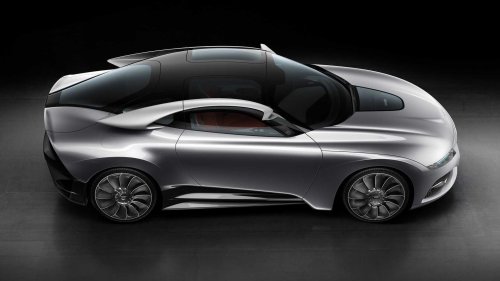
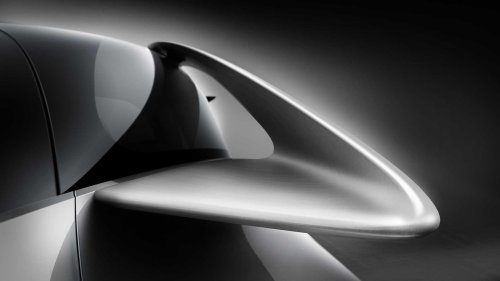
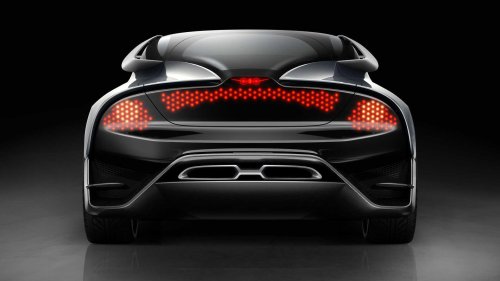
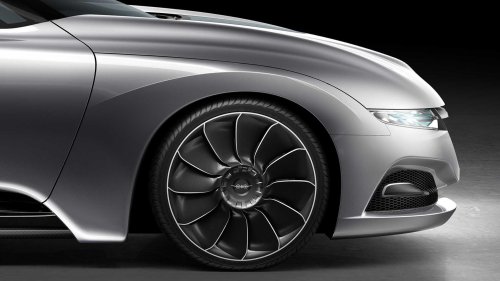
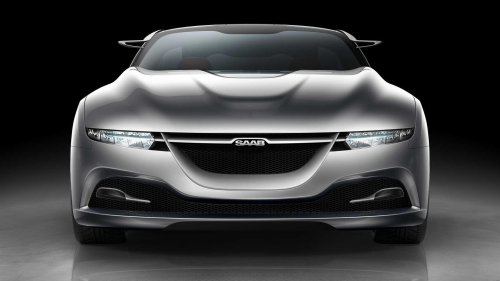


















Cast your mind back to 2009. The world was in the grip of the global financial crisis, and automakers across the industry were struggling. General Motors was among the hardest hit, forced to shed several of its brands as it sought to shore up its finances following a dramatic collapse in sales. One of those brands was Saab, which had been under GM's control since 1990.Saab, however, was not simply retired like Pontiac and Hummer. Instead, GM chose to sell it. After an initial deal with Koenigsegg and, later, another with Beijing Auto, both of which fell through, the Dutch supercar marque Spyker ultimately stepped in and completed the purchase of Saab in early 2010. One of Spyker’s very first acts upon seizing the reins was to chart a bold new future for Saab, heralded by the unveiling of the PhoeniX Concept just one year after the sale. Saab’s Last Great Statement SaabThe PhoeniX Concept debuted at the 2011 Geneva Motor Show, where designer Jason Castriota presented it. The talented American had been hired as Saab’s design chief just one year prior and was tasked with shaping the design language for a future generation of models. While the PhoeniX itself was never destined for production, the styling, particularly around the front, was intended to carry over to a next-generation Saab 9-3. It was supposed to launch in 2012 to sit alongside the existing 9-5 and 9-4X models, both developed by GM and available to Spyker under license.Castriota previously worked for Pininfarina, where he designed cars such as the Ferrari 599 GTB and P4/5, as well as the first-generation Maserati GranTurismo. He later led Bertone’s design studio before the company went bankrupt, during which time he penned the Mantide supercar based on the C6 Chevrolet Corvette ZR1. He was also responsible for the design of SSC’s Tuatara hypercar. Given his repertoire, it was no surprise he chose the form of a sports car to introduce Saab’s new design language.Bertone But the PhoeniX didn’t hide a huge V8 or V12 under its hood, which wouldn’t have been very Saab-like anyway. Instead, the company leaned on its heritage of technical innovation, opting for a novel hybrid setup for the time. It featured a compact turbocharged engine driving the front wheels, and an electric motor spinning the rear pair to provide all-wheel drive. The powertrain would have been well-suited to the European market, where most Saabs were sold, though a larger engine would no doubt have been planned for the US market. That said, Saab had no intention of developing its own engines. Cash limitations and Spyker’s small size meant Saab would need to outsource them, which is exactly what it planned to do. Some Help From BMW Saab Saab inked a deal with BMW for the supply of powertrains in the fall of 2010, starting with a four-cylinder engine slated for the new 9-3. While the terms of the agreement were never made public, BMW at the time described it as a major order. Saab also said it needed to sell around 80,000 to 85,000 vehicles annually to break even, and was targeting 120,000 units per year in the longer term.Details of the engine also weren't revealed, but the specifications likely matched those of the engine used in the PhoeniX. The concept's engine was a turbocharged 1.6-liter inline-4 from the award-winning “Prince” family of DOHC engines, which also came in 1.4-liter form and was originally developed as a collaboration between BMW and France’s PSA Peugeot Citroën (now part of Stellantis). The engines benefited from BMW’s Valvetronic variable lift system and VANOS variable cam timing, along with the automaker’s experience with twin-scroll turbochargers to help reduce lag. BMW primarily used the engines in its Mini lineup.BMW The PhoeniX had one of the most powerful versions of the Prince engines. It produced 200 horsepower on its own, while the concept’s rear-mounted electric motor added another 34 hp. While such a setup wasn’t going to win any drag races, it would have ranked among the most fuel-efficient hybrid powertrains available at the time. In its pursuit of efficiency, Saab even added a stainless-steel fuel tank, which the automaker said was both lighter and less expensive than a conventional plastic design. Saab Leans On Aerodynamic Legacy Saab The design of the PhoeniX concept draws heavily on Saab’s roots as an aircraft manufacturer, a heritage that remains alive today through the separate Saab defense division. Inspiration also came from Saab’s early automotive models, particularly the original Ursaab prototype that led to the first production Saab 92 in 1949. The PhoeniX’s flowing shoulder line echoes the Ursaab’s almost continuous curve, itself inspired by the airfoil shape, while the Kamm tail at the rear nods to the second-generation Sonett sports coupe of the 1960s. Even the concept’s top-down view emphasizes Saab’s aeronautical lineage, with a teardrop-shaped greenhouse reminiscent of a fighter-jet-like wraparound canopy, ending in an aircraft-inspired third brake light at the rear.This focus on aerodynamics wasn’t purely aesthetic. The PhoeniX achieved an impressively low drag coefficient of just 0.25 Cd, a figure that remains exceptional even by modern standards. Those unusual wing-like buttresses at the rear aren’t just styling cues. They channel air from the sides down over the integrated spoiler, generating downforce without adding drag, perfectly blending Saab’s aviation heritage with advanced automotive engineering. The body was also devoid of visible door handles, and Saab planned for an early version of a camera system to replace traditional side mirrors.Saab Access to the cabin was via supercar-like butterfly doors, where drivers were greeted by a minimalist dash and Saab’s traditional driver-focused instruments, including a jet-engine-inspired circular pod and a head-up display. Here, too, Saab continued to innovate. The concept introduced an advanced infotainment system called IQon, featuring an 8.0-inch touchscreen and an operating system powered by Google’s Android. The system was Internet-connected and even open to third-party apps, which were to be available via a planned Saab IQon app store. Remember, this was early 2011.Perhaps the most important feature isn’t immediately visible. It's the PhoeniX's platform, which shares the concept’s name. This was a new design intended to replace the GM underpinnings Saab had been using, offering enough flexibility to support everything from compacts to large cars, including sedans, SUVs, and even sports car body styles. Compared to the GM platforms it replaced, the PhoeniX allowed for a much shorter front overhang, which was a design opportunity that Castriota and his team fully exploited in the concept. Where It All Went Wrong Saab As you may have already surmised, we never saw any new Saabs beyond the PhoeniX Concept. In addition to the planned next-generation 9-3, there was also a proposal for a smaller model to be called the 9-2, which, thankfully, wasn't a repeat of the Subaru Impreza-based 9-2X briefly sold in the 2000s. However, Spyker already had its hands full dealing with the realities of running a global automaker. Previously, Spyker produced only a handful of vehicles per year and employed fewer than 200 staff. After acquiring Saab, it suddenly found itself managing 3,700 employees, large factories, and a nervous dealer network, all while the world was still recovering from the global financial crisis.Predictably, things quickly went bad. Saab needed cash that Spyker simply didn’t have. Suppliers went unpaid, and the company stopped production just weeks after the PhoeniX Concept premiered. Although production briefly restarted in mid-2011, and Spyker began courting Chinese investment, Saab continued to post heavy losses as unpaid bills mounted, ultimately forcing the company into bankruptcy protection.Saab Spyker attempted a last-ditch rescue by finding a Chinese buyer, specifically a company called Youngman. However, GM still had a significant influence due to the preferential shares acquired during the original sale and ownership of key intellectual property tied to Saab’s existing lineup. It blocked the deal over concerns that its technology could end up in competitors' hands in the Chinese market. With no viable suitor remaining, Spyker was forced to abandon the Saab turnaround. A bankruptcy application was filed at the end of 2011, and Saab’s assets were put up for sale.A Chinese-backed company based in Sweden, NEVS, acquired most of Saab's assets the following year, and the company aimed to reinvent Saab as an electric-vehicle brand. Like Spyker before it, NEVS managed to restart Saab production in 2013, only to halt it a year later due to cash shortages. NEVS entered bankruptcy protection, and when it emerged in 2015, it no longer held the rights to the Saab name, which was owned by a consortium that included the Saab defense company, effectively ending any attempt to revive the storied brand. The Phoenix That Failed To Rise Saab The PhoeniX Concept arrived brimming with promise, a bold statement of intent that hinted at a credible and compelling future for Saab. Yet even before it debuted, the odds were firmly stacked against it. Crippling financial constraints, dependence on external technology partners, and the sheer scale of reviving a global automaker left little room for error.While the PhoeniX showcased what Saab could have become, it also underscored how fragile the effort truly was. Ultimately, the ambitious endeavor placed immense financial strain on Spyker. This company has since endured repeated restructurings, serving as a lasting reminder that vision alone is rarely enough to overcome harsh economic realities.Sources: BMW, Saab, Spyker