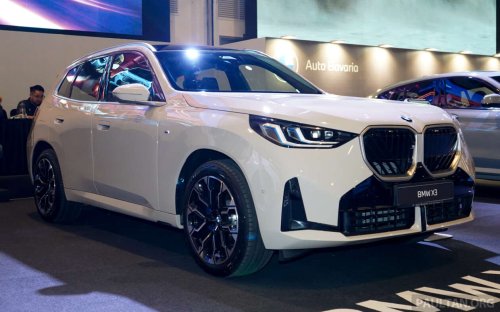
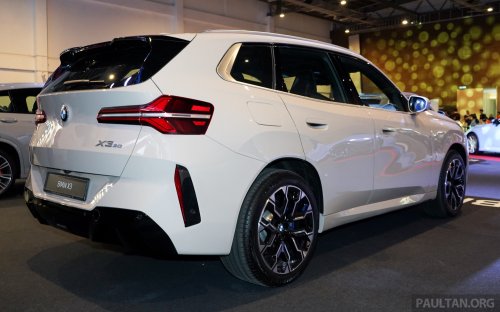
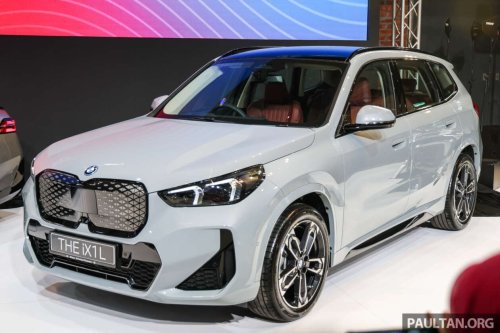
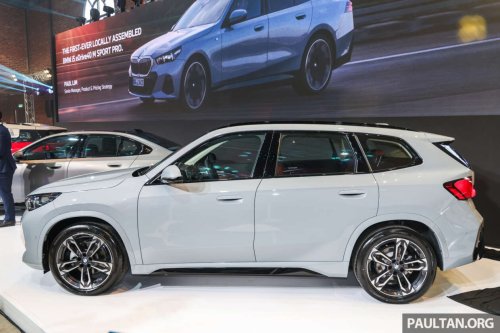
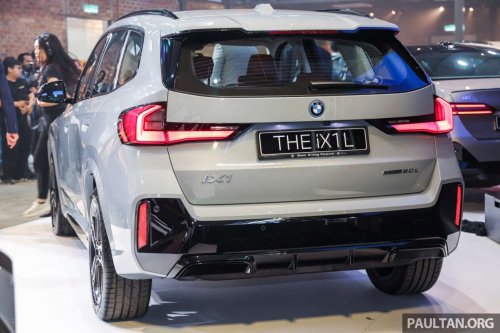
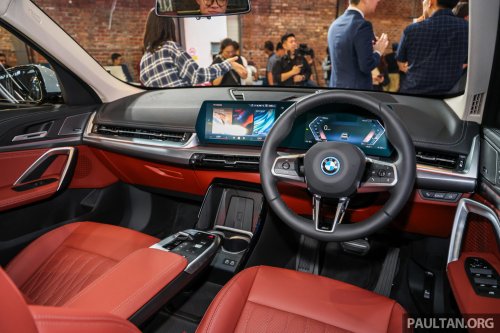
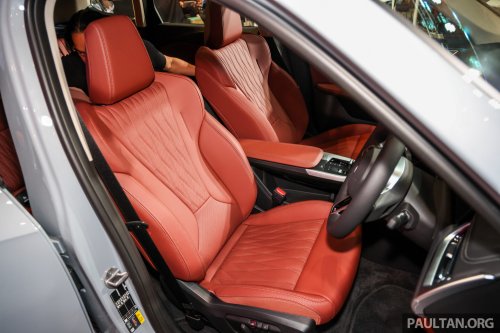
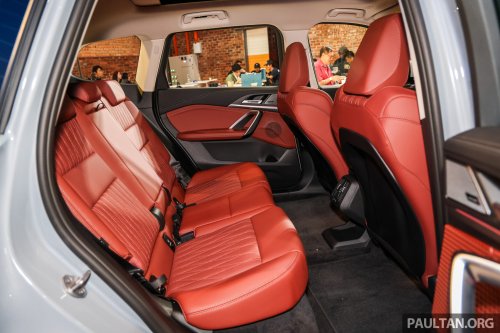
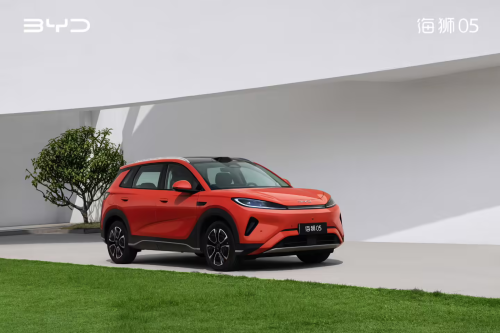
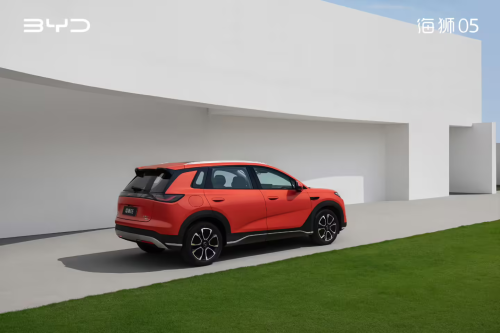
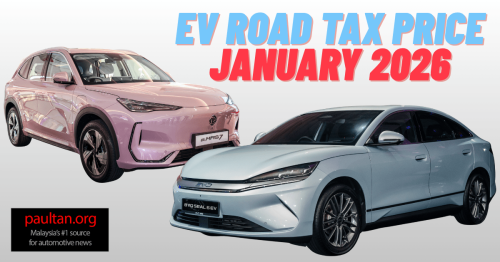
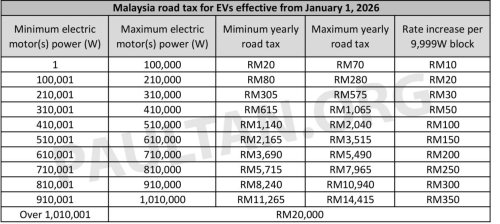
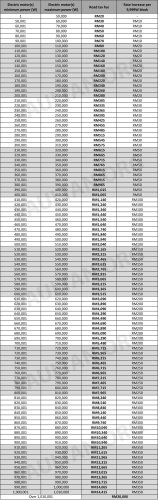
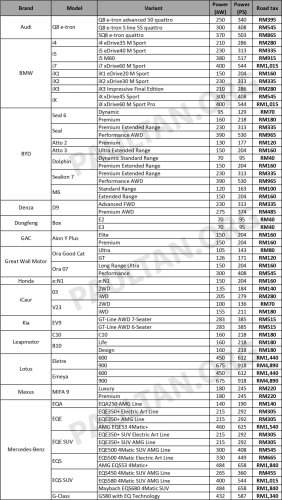
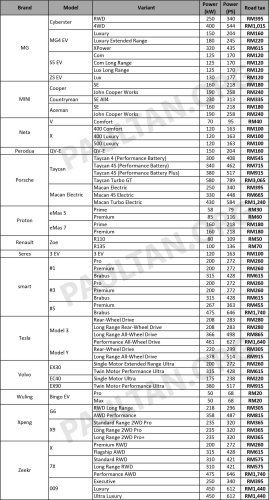
Back in June 2024, the ministry of transport revealed a new road tax structure for electric vehicles (EVs) that came into effect on January 1, 2026. As with the previous structure that was first determined in 2019, the new one takes into the account the total power output of an electric vehicle’s (EV) electric motor(s) in kilowatts (kW) in determining how much the road tax will be. The previous structure mimicked how road tax is calculated for cars with an internal combustion engine (ICE), where a base rate is charged for specific power bands (engine capacity in the case of ICE cars) below 80,000 watts (80 kW). At higher power bands over 80,000 watts (80 kW), a progressive rate is added to a predetermined base rate for the final amount. The older structure’s progressive rate is added for every increase of 50 watts (0.05 kW) from a specific power output, with the amount charged per block increasing as you go up the power bands. The new structure is similar to the old one, although the number of power bands has been increased, with each one having its own starting rate. Within each power band, a set amount is added for every increase of 9,999 watts (9.999 kW) from the starting power output of the band, and this amount increases as you go up the bands. The starting power band of the new structure is from one to 50,000 watts (0.001 to 50 kW), which sees a flat rate of RM20. Beyond this point, every 9,999-watt increase sees an additional RM10 added until the 100,000-watt (100-kW) mark. Above 100,000 watts (100 kW), the rate of increase per 9,999-watt block becomes RM20, rising further to RM30 from 210,001 to 310,000 watts. As the attached table shows, the rate of increase per block ramps up to RM50, RM100, RM150, going all the way up to RM350 per block. There is a limit though, which is a flat rate of RM20,000 that applies to EVs with a power output of 1,010,001 watts (10,100.01 kW) or more, by which point you would technically own the most powerful, road-going EV known to man. For context, BYD’s record-breaking EV supercar, the Yangwang U9 Xtreme, with its four electric motors has a total system output of 2,220 kW (3,018 PS). Using the new structure makes calculating an EV’s road tax is a lot simpler because you only need to match an EV’s power output to a specific range to find the road tax payable. Additionally, the new structure also results in relatively cheaper road tax rates. As an example, the BYD Seal 6 Premium comes with an electric motor rated at 160 kW, which entails a road tax of RM180 following the new structure. With the older structure, the Seal 6 Premium would fall into the ‘over 150,000 watts’ band, which has a base rate of RM1,024. To calculate for the remaining 10 kW, the progressive rate for this band is RM1.35 for every 50 W (0.05 kW) increase from 150 kW (150,000 W). Dividing 10,000 W (10 kW) with 50 W (0.05 kW) and multiplying the result with RM1.35, we arrive at RM270. Adding that to the base rate of RM1,024, a Seal 6 Premium’s road tax would be RM1,294 with the old structure, or RM1,114 more compared to the new structure. As such, we loaded up the official websites of car brands that currently sell EVs in Malaysia to obtain the power outputs of models in order to determine how much road tax you’ll be paying for the vast majority of EVs on sale – we’ve done this before. At the cheapest end of the scale, the road tax for the recently-launched Wuling Bingo EV with a 50-kW electric motor is just RM20, the same you would pay for an ICE car with a displacement below 1,000 cc. Meanwhile, Perodua’s first EV, the QV-E, has an output of 150 kW for a road tax of RM240. The BMW i4 eDrive35 M Sport with a more powerful 210-kW motor is charged RM280 annually. Looking at performance-heavy EVs, the ‘900’ versions of the Lotus Eletre and Emeya have a road tax of RM4,890 due to their power output of 675 kW. Just for fun, the Yangwang U9 Xtreme with its output of 2,220 kW (2,220,000 watts) we mentioned earlier would be one of a few EVs to have a road tax of RM20,000 if it was sold here. That power output is nearly three times that of the Lamborghini Revuelto (747 kW), which has a road tax of RM17,873.25 thanks to its 6.5 litre naturally-aspirated V12 augmented with plug-in hybrid tech. Prior to January 1, 2026, all EVs registered in Malaysia do not pay road tax as part of the government’s efforts to promote EV adoption. The road tax-free holiday was outlined in Budget 2022 and was in effect from January 1, 2022 to December 31, 2025. If you’re buying an EV in 2026, you’ll need to pay for road tax, so this might be helpful if you’re looking to make the switch. Compare prices between different insurer providers to save the most on your car insurance renewal compared to other competing services. Many payment method supported and you can pay with instalment using Atome, Grab PayLater or Shopee SPayLater.


















 +22 others