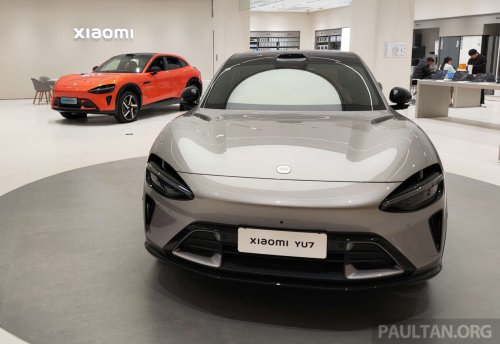
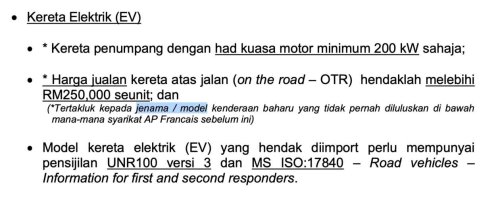
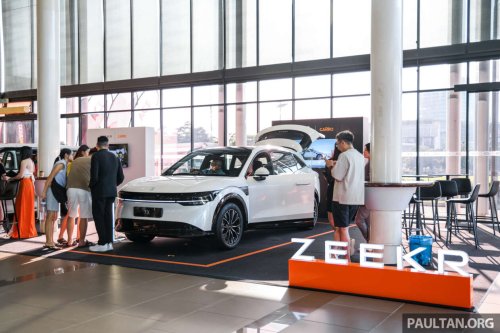
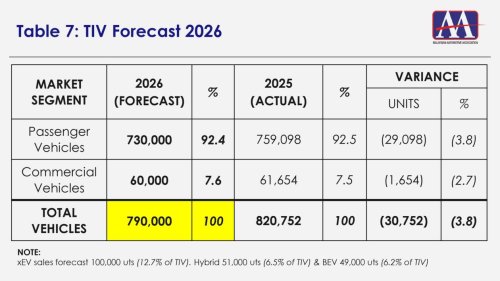
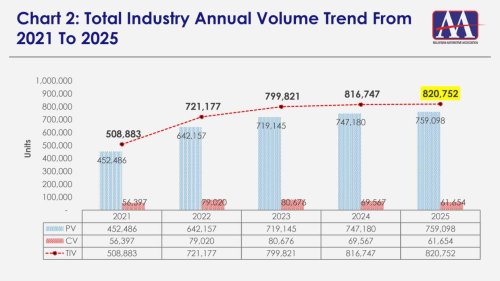
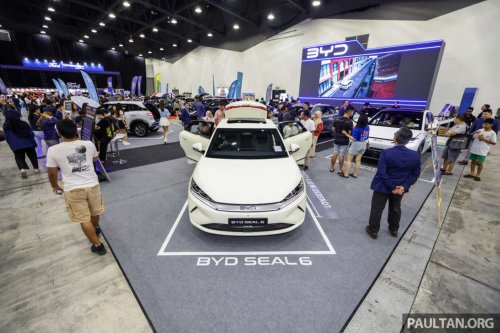
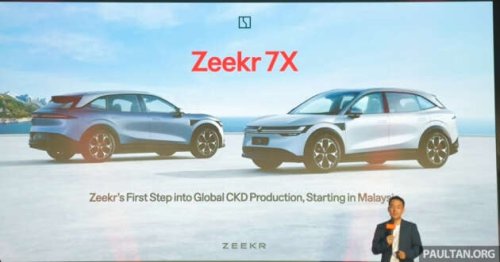
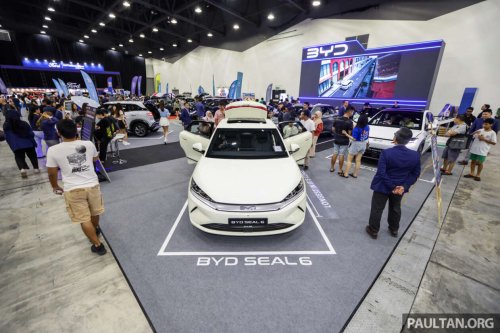
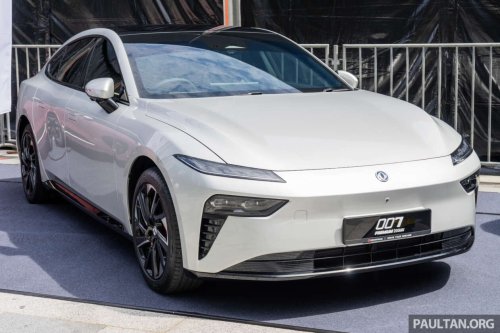
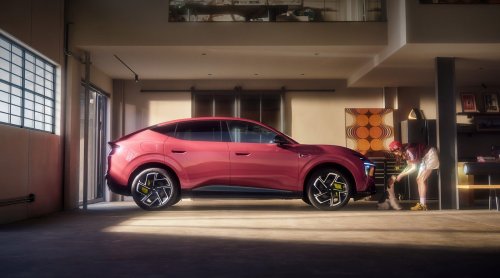
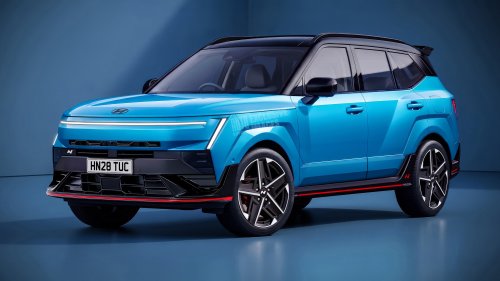
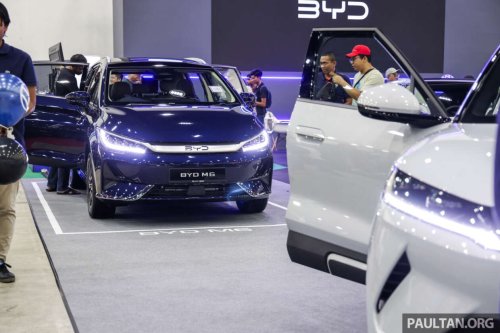
Three weeks ago, a document snapshot, purportedly from Malaysia’s investment, trade and industry ministry (MITI), revealed that from January 1, 2026, all new CBU imported EVs from new brands yet to enter the Malaysian market must be priced from RM250k up, and their combined power must be at least 200 kW (272 PS). That document states that this new minimum price (and power) hurdle does not affect brands and CBU EV models that are already in Malaysia, which means that those who are already here can fall back on the previous RM100k floor price. However, we recently heard from industry sources that the new ruling has since been amended by MITI, and it now includes all new CBU EVs, regardless of whether the brand is already in Malaysia or not. A check with MITI’s portal under the franchise AP section showed the change in wording from the previous ‘jenama’ (brand) to the current ‘jenama/model’. The RM250k minimum price fine print currently reads “tertakluk kepada jenama/model kenderaan baharu yang tidak pernah diluluskan di bawah mana-mana syarikat AP Francais sebelum ini“. Malaysian Automotive Association (MAA) president Mohd Shamsor Mohd Zain confirmed the new government directive, and the subsequent change to widen the net. “The change was so abrupt, so we need a bit more clarification. We have not got any engagement yet,” he told the media at MAA’s 2025 review and 2026 outlook briefing yesterday. “This is something new and we are also trying to clarify the situation. We need to have engagement with MITI to have a bit more in-depth understanding,” he added. To give you some context, had this rule been implemented last year, popular CBU EVs like the BYD Atto 2 and Seal 6 would not have been allowed to go on sale because they don’t meet the 200 kW minimum power output. Meanwhile, models that are powerful enough – such as the Zeekr 7X, currently priced from RM180k – would have a sticker price of at least RM250k. The auto industry was caught by surprise with this new ruling, which in revised form now impacts them in terms of EV model introduction. Businesses don’t like ad-hoc rule changes because introducing new models require forward planning, and the moving of goalposts, sometimes very late in the game, complicates matters. “A lot of carmakers have already planned their production, their logistics and so on. Bringing in models for this year, some companies have to plan at least 12 to 24 months ahead, with homologation and other things – preparation would have been done a long time before this,” Mohd Shamsor pointed out. “Hopefully we’ll get some response when we do our engagement with the government,” he added. So, as things stand, the minimum price for CBU imported EVs is RM250k, regardless of whether the brand is an existing player in Malaysia. The models also must have at least 200 kW (272 PS) of motor(s) power. Only CBU EVs that have been approved before December 31, 2025 can fall back on the previous RM100k floor price. The way around this is to CKD, which is of course what MITI is trying to push with these CBU hurdles. Sounds simple, but mind you, the current policy only gives full tax-free status to CKD EVs until end-2027. Whether that’s a big enough window for car brands to decide if it’s worth investing in local assembly remains to be seen. Furthermore, for players already in Malaysia, the new-for-2026 5% import duty (for EVs imported from China, lower than the default 30%) and 10% excise duty for CBU EVs might be small enough for them to absorb while maintaining RRPs. If MAA fails in its bid to convince MITI to relax its rules on CBU EVs, the ‘free for all’ EV era that we enjoyed over the past few years is officially over. Moving forward, we will not have so much variety, and could the steep growth trajectory in EV adoption (+109% in 2025 year-on-year) taper? Still, there are no shortage of EV options – aside from Proton and Perodua, Volvo, Chery, Mercedes-Benz, BMW and TQ Wuling have local EV production. BYD is building a plant in Tg Malim and Stellantis will CKD Leapmotor EVs at Gurun. Then there’s EPMB contract manufacturing for Xpeng and MG, with room for more in Melaka. What do you think? Compare prices between different insurer providers to save the most on your car insurance renewal compared to other competing services. Many payment method supported and you can pay with instalment using Atome, Grab PayLater or Shopee SPayLater.