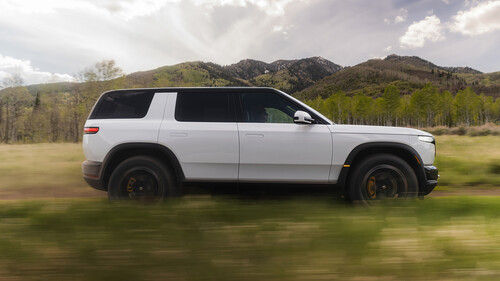
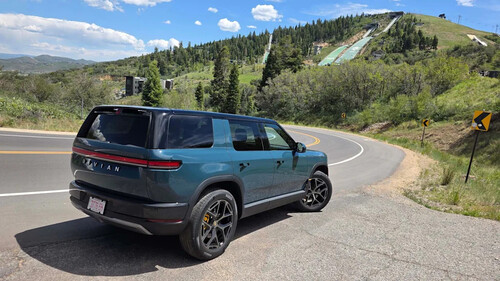
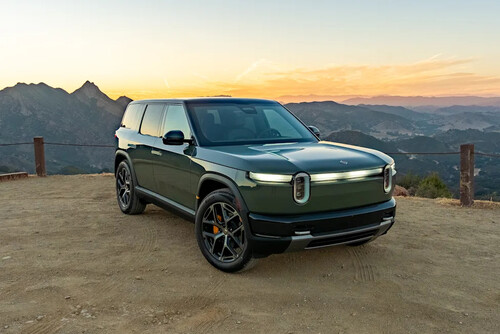
Rivian Owners Say They Were Promised Self-Driving Trucks That Were Never Coming, Now There's a LawsuitRivian is heading to court over a promise that some of its earliest customers say was never going to be kept. A class-action lawsuit accuses the EV maker of telling buyers their flagship R1T trucks and R1S SUVs would eventually drive themselves hands-free, when the company allegedly knew the hardware in those vehicles could never pull it off. For owners who spent big money expecting a feature that isn't coming, that is a serious accusation. It is not the only Rivian story raising eyebrows lately, either, as the company's CEO pay package recently became one of the largest in auto industry history.The complaint landed Wednesday in the U.S. District Court for the Central District of California, and it puts a spotlight squarely on the first-generation R1T and R1S.What the owners are actually claimingAdvertisementAdvertisementAt the heart of the case is the claim that Rivian sold these vehicles on the idea of hands-free, eyes-off driving. In industry terms that is Level 3 autonomy, a designation from the Society of Automotive Engineers. A Level 3 system can handle steering, acceleration, and braking on its own in certain situations, like highways or low-speed conditions, without the driver's hands on the wheel or eyes on the road.That does not mean the car becomes a robot you can nap in. The human is still expected to stay alert and take back control when the system asks. But it is a major leap beyond basic cruise control, and it is exactly the kind of capability that moves people to open their wallets.The plaintiffs argue Rivian dangled that capability for years and never delivered it on Gen 1 cars.A five-year promise, according to the suitAdvertisementAdvertisementThis is where the story gets pointed. The lawsuit alleges that over a five-year stretch, Rivian ran a coordinated nationwide marketing campaign claiming its hands-free driver-assistance system, called Driver+, would be standard in every vehicle it built. The complaint specifically points to CEO RJ Scaringe's appearance at TechCrunch Disrupt 2022, where he reportedly spoke about the company's autonomous driving ambitions.The filing pulls no punches. It states that no software update, no matter how advanced, will ever make the Gen 1 vehicles perform the way they were advertised. It goes further, claiming Rivian knew full well those vehicles would never achieve Level 3 autonomy or true hands-free driving, yet kept promoting the supposed capability to push consumers into buying.Rivian declined to comment, pointing to the pending litigation.The legal stakesAdvertisementAdvertisementThere are three named plaintiffs, and the complaint hits Rivian with claims of fraud, negligent misrepresentation, and unjust enrichment. The law firms behind the case, Coleman Law and Tycko & Zavareei, have asked for a jury trial. Those are not minor allegations. Fraud claims in particular carry weight, and a jury trial means the company could end up explaining its marketing decisions in front of ordinary people rather than settling quietly behind closed doors.And here's the part that matters for Rivian's track record. This is not the company's first trip through the legal wringer. Last year it agreed to pay $250 million to settle a class-action shareholder lawsuit that followed its sudden 2022 price hike on the R1 truck and SUV. A pattern of legal trouble tied to how the company communicates with customers and investors is not a good look.The hardware gap nobody can patch overThat detail about software is the crux of everything. Rivian's first-generation R1T and R1S simply do not offer hands-free driving. The second-generation versions, overhauled in 2024, do. From the outside the two look nearly identical, but Rivian rebuilt the internals, including the battery pack, suspension, electrical architecture, interior seats, and the sensor stack.AdvertisementAdvertisementThe revamp brought the Rivian Autonomy Platform as standard equipment, with 11 cameras, five radar sensors, and a computer the company said was ten times more powerful than the old setup. Early on, the second-gen system offered adaptive cruise control and a highway assist feature that could steer, brake, and accelerate on select highways.Then last year Rivian rolled out Universal Hands-Free driving through a software update for second-gen R1 vehicles. That feature lets drivers take their hands off the wheel across more than 3.5 million miles of roads in the U.S. and Canada, covering both highways and surface streets, as long as the lane lines are visible. The newer cars got the dream. The first-gen owners, according to the suit, got left behind because their hardware was never up to the task.A problem bigger than one automakerRivian is far from alone in catching legal heat over self-driving promises. Tesla and Elon Musk have spent a decade insisting their cars would become fully autonomous through Full Self-Driving software, and some owners have sued over the failure to deliver unsupervised FSD.AdvertisementAdvertisementTesla has also drawn regulatory fire. The California DMV accused the company of deceptively marketing both Autopilot and Full Self-Driving, and a judge sided with the agency. The DMV ultimately decided in February not to impose a 30-day suspension on Tesla's sales and manufacturing licenses, backing off because Tesla stopped using the term Autopilot in its California marketing.That broader context is what should worry the entire industry. Automakers have spent years selling the future of driving before the technology was ready to back it up, and customers are increasingly willing to fight back in court. The question now is whether Rivian's first-gen buyers can prove the company knew the truth all along, and whether a win here makes every automaker think twice before promising a self-driving tomorrow they can't yet build.Source