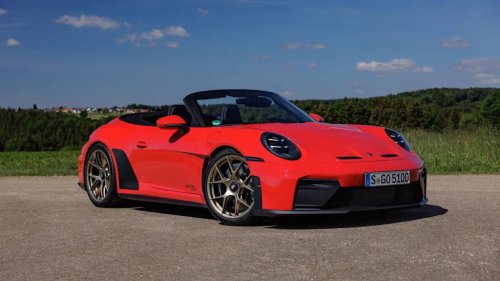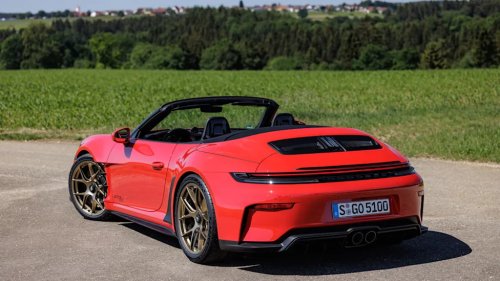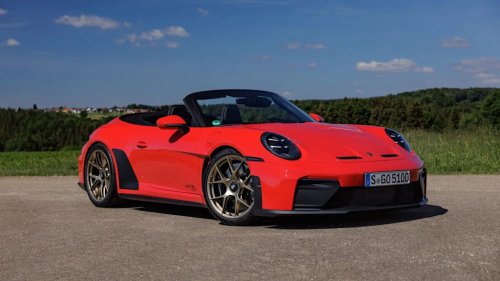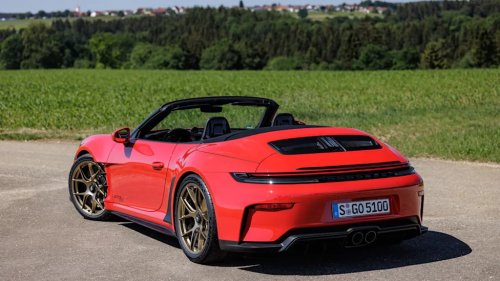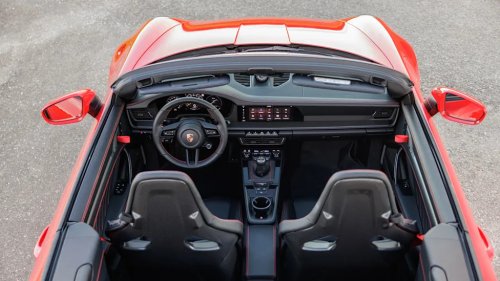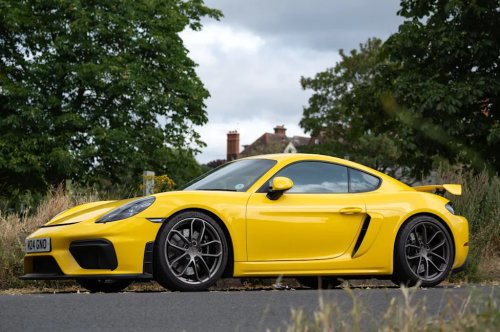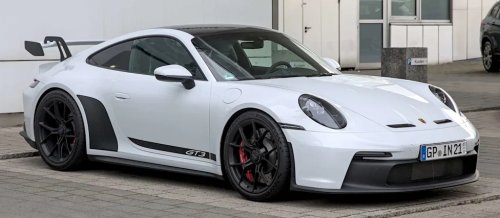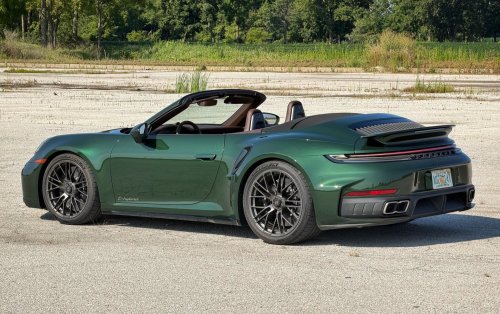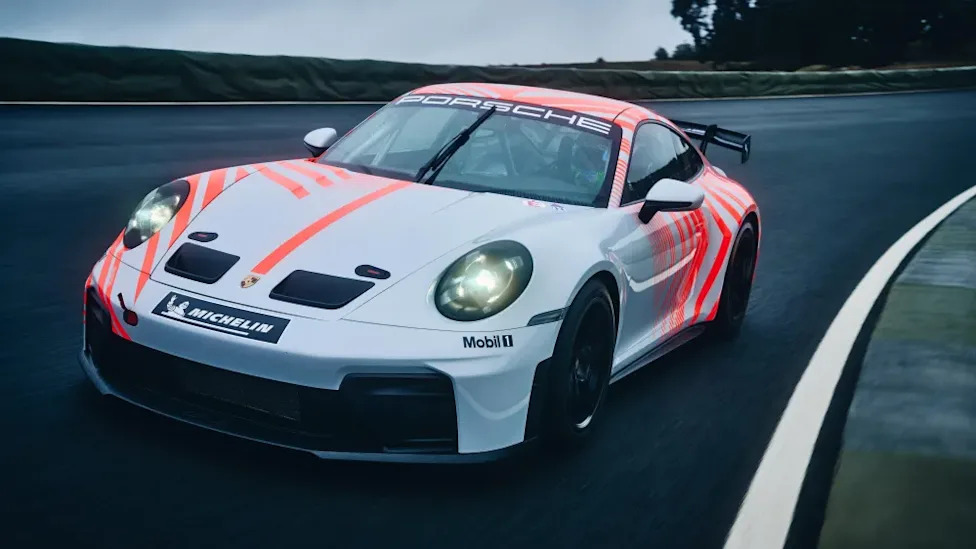



















Porsche's New 911 Challenge Completes an All-911 Racing Ladder — And That's the Real StoryPorsche has spent the last two years rebuilding its entire customer-racing lineup from the ground up, and the final piece arrived on August 26, 2026, without much fanfare beyond a press release and a price tag. The new 911 Challenge is being pitched as Porsche's most accessible factory race car, priced at $275,000 including delivery to the United States. That number will generate headlines. It shouldn't be the story.The real news is structural. For the first time in Porsche's history, every current customer race car it builds — the entry-level 911 Challenge, the 911 Cup, the 911 GT4 R, and the flagship 911 GT3 R — is based on the 911. The Cayman, which has quietly served as Porsche's affordable gateway into factory racing since the original Cayman GT4 Clubsport arrived in 2016, no longer has a role in that hierarchy. Its final iteration, the 718 Cayman GT4 RS Clubsport, has been retired, and nothing built on the mid-engine platform replaces it.That's worth sitting with. Porsche didn't need to fold its entry-level racer into the 911 lineup. It could have built a new Cayman-based Clubsport, as it has for a decade. Instead, it chose to make the 911 nameplate synonymous with the entirety of its customer-motorsport ladder, top to bottom. For a company that has spent seventy years building its identity around that model — a history the brand itself leaned into with its Raceborn exhibition marking 75 years of factory motorsport — that's a statement about where value and identity are now concentrated.A Race Car Built to Feel FamiliarUnlike the 911 Cup or GT3 R, which are purpose-built competition tools with little carryover from anything you could license for the road, the 911 Challenge borrows heavily from the production 992.2-generation GT3. The 4.0-liter flat-six is largely the road car's engine, tuned to 508 hp at 8,500 rpm with the same 9,000-rpm ceiling, and it drives through the same seven-speed PDK gearbox used in the street car, complete with paddle-shift control. Porsche kept the GT3 RS steering wheel, retained the air conditioning system, and left adjustable ABS, traction control, electronic stability control, and Porsche Torque Vectoring Plus in place — all systems designed to ease a road-car driver into racing rather than confront them with an unfamiliar machine.AdvertisementAdvertisementThe chassis and safety equipment tell a different story. Porsche stripped the cabin of sound deadening, carpet, and trim, and welded in a roll cage. An FIA-certified fuel cell holds 29 gallons, a six-point harness secures the driver, and an integrated three-jack air-jack system speeds pit stops. The brakes, suspension architecture, and 18-inch, five-bolt wheel pattern are shared with the 911 GT4 R and 911 Cup, a deliberate decision Porsche says lowers long-term parts and running costs for the category. This is not a street car with a cage bolted in. It is a competition car engineered to feel less foreign to someone stepping out of a road GT3 for the first time.Why the Cayman's Exit Matters More Than the PriceCollectors who track Porsche's customer-racing cars have watched this pattern before: a model serves its purpose in period, gets discontinued, and only later reveals its actual significance in the secondary market. The clearest recent proof sits in Porsche's own flagship category — earlier this year, a 911 GT3 R Rennsport crossed the auction block carrying a $2 million estimate, barely a year removed from its debut. That result didn't happen because the car was old or rare in the traditional sense. It happened because the market has started pricing factory-backed competition pedigree the way it once priced vintage racing history — as a story, not just a spec sheet.The 911 Challenge won't command GT3 R money, and it shouldn't be compared to it. But its arrival does something the market will eventually notice: it retires the Cayman-based Clubsport as an entry point into Porsche racing, closing off any future production of that lineage. Limited-run, factory-discontinued racers with real competition histories are exactly the kind of cars that later attract collectors who missed them the first time. The 718 Cayman GT4 RS Clubsport just became one of those cars.What Serious Buyers Should Actually WatchThe $275,000 price is not the number that matters most to someone evaluating the 911 Challenge as a long-term proposition. Allocation is. Porsche Motorsport North America is offering the car first to full-season entrants in its 2027 one-make series — the Porsche Sprint and Endurance Challenge North America by Yokohama, the Porsche Sprint Trophy Porsche Club of America by Yokohama, and the newly created Porsche Sprint Trophy Porsche Owners Club — before it becomes available to enthusiasts seeking a track-day or driver-development tool. Volker Holzmeyer, CEO of Porsche Motorsport North America, called it "an outstanding new entry point into Porsche customer racing," and the allocation structure backs that framing: this is a car built to funnel committed racers into Porsche's ladder, not simply to sell units.AdvertisementAdvertisementFor buyers thinking about this car the way they'd think about a paint-to-sample 911 GT3 Touring or a numbers-matching 911 GT3 RS 4.0 — as a documented, allocation-limited object with a paper trail — the 911 Challenge's early competition record, its series eligibility, and its position as the final rung Porsche builds before its next GT3 generation will matter more than its purchase price ever will. The same logic applies to any factory racer, whether it's a Carrera GT crossing the block at a Monterey sale or a 911 Cup car aging into vintage one-make grids: documentation and history compound long after the invoice is forgotten.Porsche has not created a new collector car this week. It has finalized a racing hierarchy built entirely around a single, storied nameplate — and history suggests that whatever Porsche builds under the 911 name, on road or track, eventually gets collected. The real question for buyers isn't whether this car is worth $275,000 today. It's what a well-documented example with a genuine one-make racing history will be worth once Porsche moves on to whatever comes next.Join our Newsletter, follow our Instagram page, and follow us on Facebook.