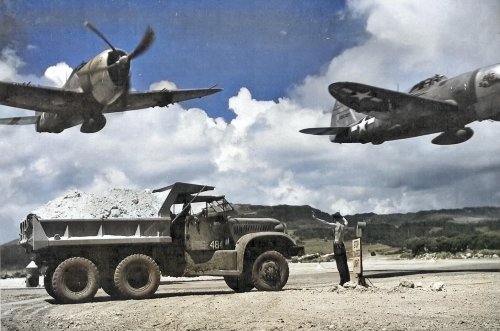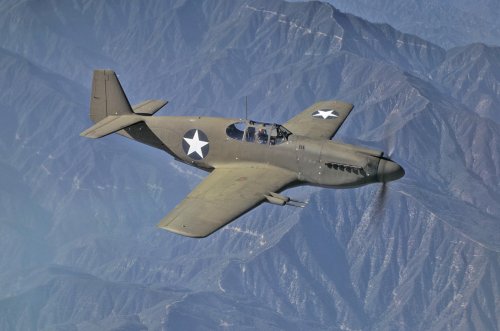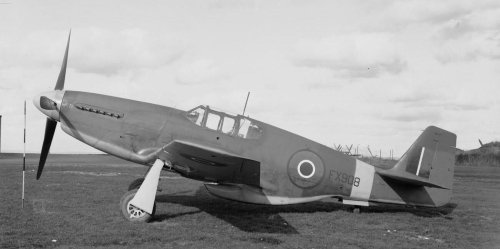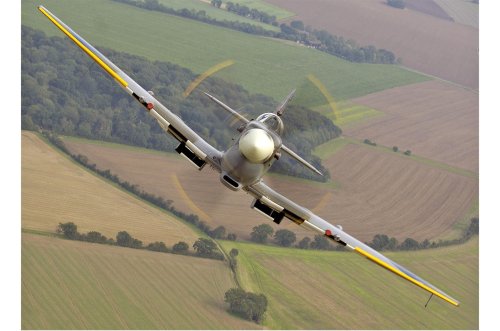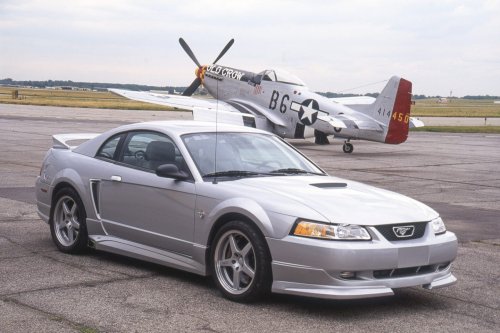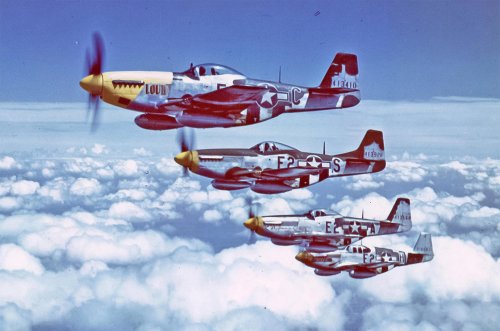



















The P-51 Mustang didn’t just show up to the war — it changed the rules. Built in a rush, redefined with a British engine, and refined into a long-range, high-speed killer, it quickly became one of the most effective fighter planes of World War II. This wasn’t just another tool in the Allied arsenal — it was a turning point. With a top speed over 440 mph, six .50 caliber machine guns, and enough range to fly to Berlin and back, the Mustang did what other fighters couldn’t: escort bombers deep into enemy territory and still hold its own in a dogfight. Here’s why the P-51 earned its reputation as WWII’s finest fighter.It Was Designed to Be a Quick FixThe P-51 Mustang wasn’t born from a years-long military contract. In 1940, the British needed fighters now and tapped North American Aviation to build Curtiss P-40s under license. Instead, NAA pitched an all-new design—and delivered the first prototype in just 102 days. That speed wasn’t just impressive, it was borderline reckless. What came out of that crash program was a clean, low-drag airframe paired with a new laminar-flow wing. It didn’t matter that the original Allison engine struggled above 15,000 feet—the Mustang had potential. British and American engineers knew it. They just needed to unlock it.The Merlin Engine Changed EverythingEarly Mustangs were fast down low but choked above 15,000 feet. Enter the Packard-built Rolls-Royce Merlin V-1650. This liquid-cooled, supercharged V12 turned the Mustang into a different animal—one that could tangle with German fighters at 30,000 feet without breaking a sweat. With the Merlin engine, the P-51B/C and later P-51D models could cruise long distances at altitude, dive at blistering speeds, and maintain incredible energy in combat. That combination—range, speed, and agility—was something no other Allied fighter could fully match at the time.It Had the Range to Escort Bombers Deep Into GermanyBy 1943, U.S. bomber crews were getting chewed up over Germany. The B-17 and B-24 formations lacked proper fighter cover beyond the German border, and it showed in the casualty reports. Then the P-51 Mustang arrived—one of the few fighters with legs long enough to go the distance. Outfitted with drop tanks, the Mustang could escort bombers from England to Berlin and back. That changed the air war. German fighters now had to fight their way through swarms of agile Mustangs just to reach the bombers. Attrition swung in the Allies’ favor—fast.It Was Fast, But ControlledThe Mustang wasn’t the outright fastest aircraft of the war, but it was fast enough where it counted—especially in a dive. The P-51D could hit over 440 mph in level flight and push well beyond that when descending. But speed wasn’t the whole story. It was stable, too. Pilots respected how the P-51 handled at high speed. It didn’t compress or lock up like some contemporaries. The stick forces increased predictably, the control surfaces didn’t flutter, and it didn’t try to kill you in a steep dive. That made a huge difference in real combat.Its Armament Was Balanced and ReliableThe Mustang wasn’t over-armed, but it wasn’t under-gunned either. The P-51D came standard with six .50 caliber M2 Browning machine guns—three in each wing—with nearly 1,900 rounds total. It wasn’t just firepower—it was firepower with reach, rate, and reliability. These .50 cals could rip through lightly armored aircraft, puncture fuel tanks, and light up engine bays. Combined with the Mustang’s speed and agility, this setup made it deadly in boom-and-zoom engagements. Unlike some late-war German designs, the guns didn’t jam, and they didn’t need complicated sights to hit their mark.The Cockpit Gave Pilots What They NeededThe P-51D introduced a bubble canopy that gave pilots outstanding all-around visibility—a major upgrade from earlier framed designs. That mattered in dogfights, especially when trying to spot incoming threats from behind or above. The instrument panel was clean, logically arranged, and packed with everything a pilot needed for long missions: boost gauge, manifold pressure, fuel indicators, and a reliable gyro gunsight. The cockpit heater worked better than most, which was no small thing at 30,000 feet over Germany. Little details like these helped pilots stay focused—and alive.It Was Easy to Fly, Hard to BeatPilots transitioning from P-47s or Spitfires often said the P-51 felt “right.” Its control harmony and stability in turns made it a confidence builder, even in tight scrambles. Veteran aces praised its responsiveness and how it gave back exactly what you asked for—no more, no less. Unlike some heavier fighters, the Mustang didn’t punish you for flying aggressively. It could hang in sustained turns, climb hard when needed, and retain energy through maneuvers. Once the pilot got comfortable, the plane gave them room to think ahead instead of constantly reacting.The Germans Knew It Was TroubleLuftwaffe pilots learned to respect—and fear—the Mustang. The Focke-Wulf Fw 190 was dangerous at low altitude, and the Bf 109 had a wicked climb, but both had trouble shaking off a P-51. Mustang pilots could dictate the fight—climb, extend, or turn as needed. What really rattled German commanders was the Mustang’s presence deep over Reich territory. It meant their bombers weren’t safe, their airfields were exposed, and their fighters had to work twice as hard. That psychological pressure helped erode German air superiority by the end of 1944.It Racked Up Kill Ratios Other Fighters Dreamed OfThe P-51 Mustang ended World War II with one of the highest kill ratios of any Allied fighter. Estimates vary, but it’s widely credited with more than 4,950 enemy aircraft destroyed in air-to-air combat. The kill-to-loss ratio hovered around 11:1—almost unheard of. Part of that came from the Mustang’s combat advantages. But credit also goes to the pilots and squadrons who flew it. When a fast, high-altitude fighter with heavy firepower teams up with disciplined bomber escort doctrine, the kill board fills up fast.