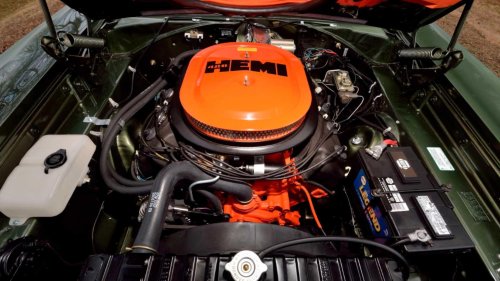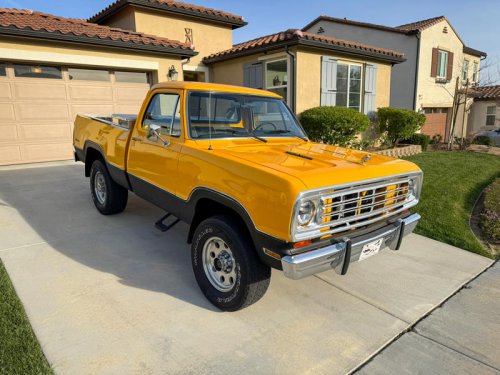
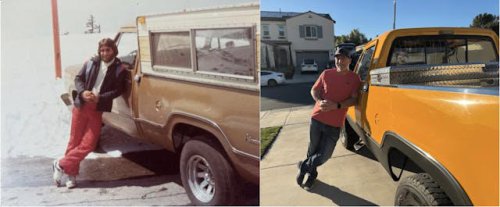
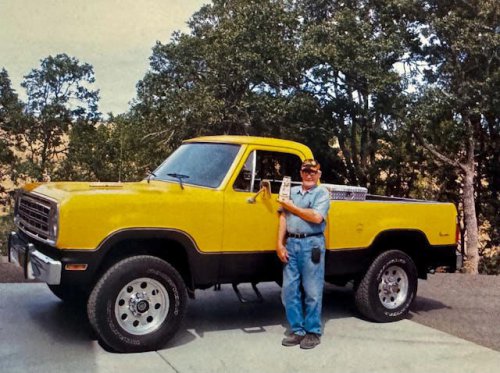
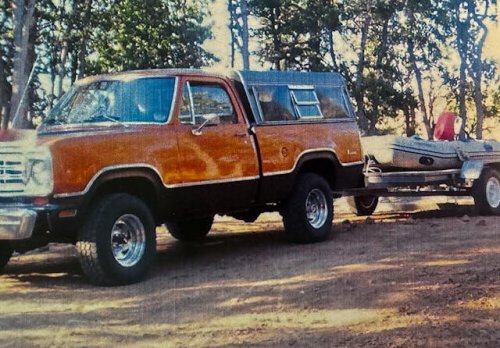
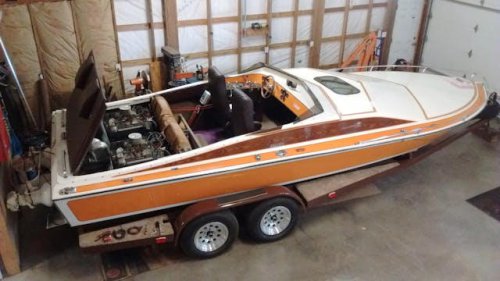
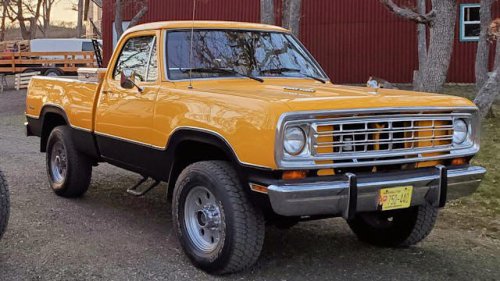
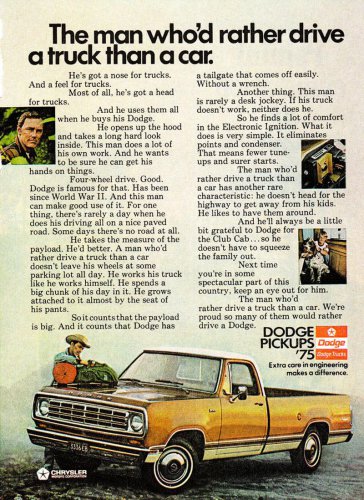
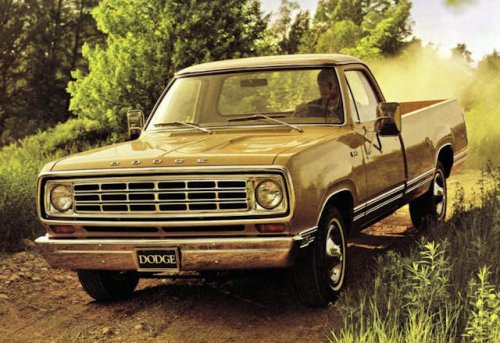
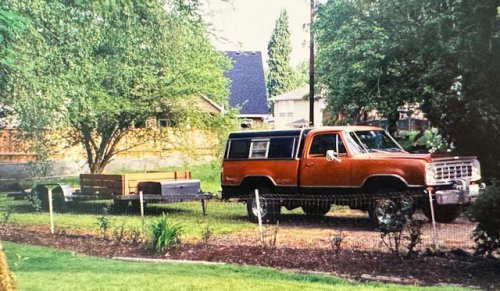
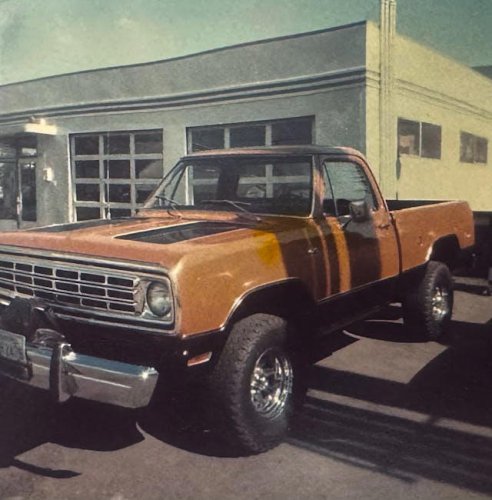
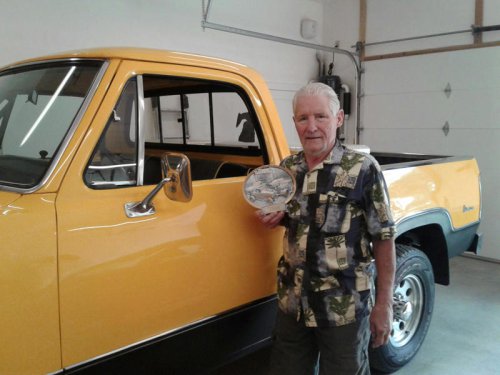
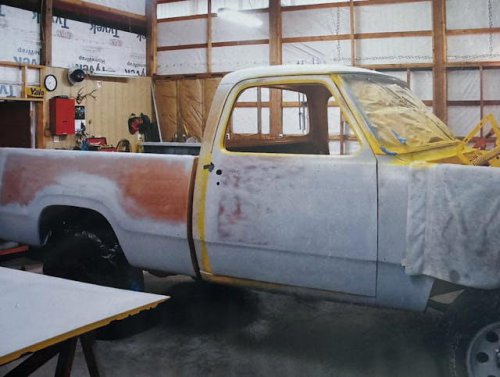
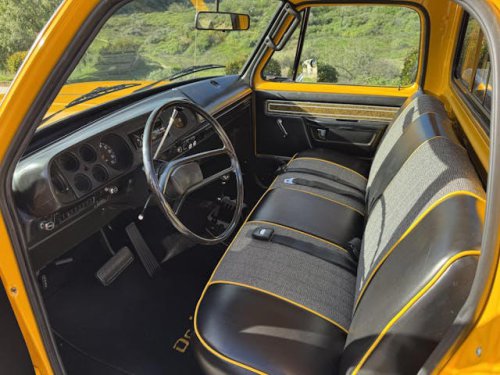
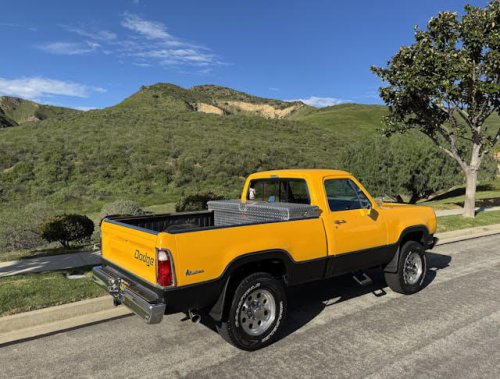
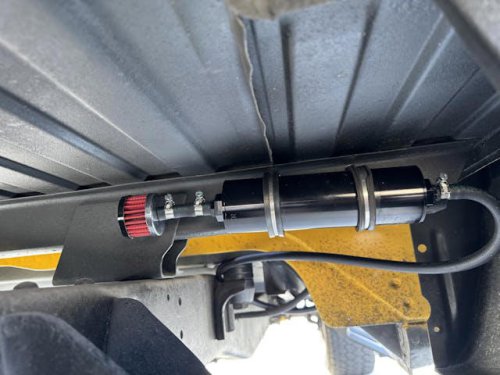
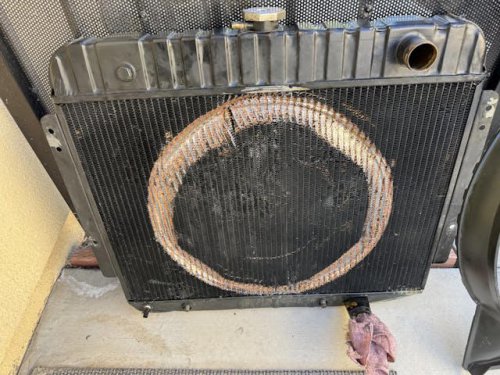
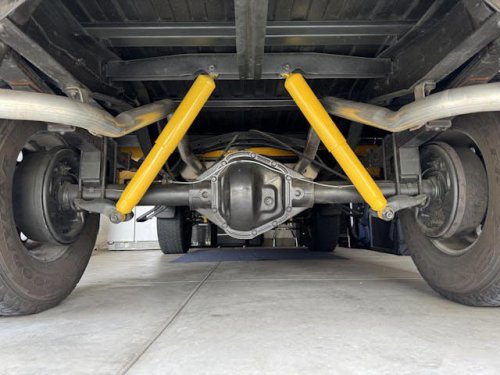
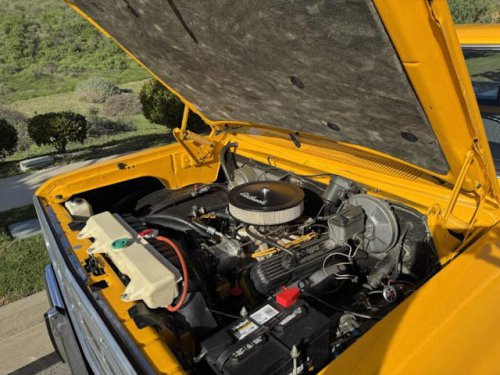
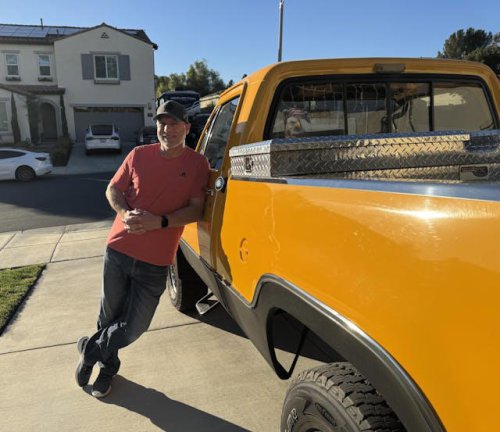


















Original Owner: Big-Block ’75 Dodge 4×4 Packs Two Tons of Golden Memories Mark Cockeram’s Simi Valley, California street has 18 homes and eight Teslas, including his 2018 Model 3. It’s a quiet block, car-wise, or at least it was until a day in January 2025 when a bellowing 440 cubic-inch Mopar big-block broke the tranquility. Neighbors who came outside to investigate saw Mark backing a bright yellow 1975 Dodge W100 4×4 pickup into his driveway and the transporter that delivered it pulling away. The half-century-old Dodge would continue to draw attention in the passing weeks. “Most of the other neighbors on the street have stopped by to look at the truck and ask about it,” he says. Like father, like son. Ward Cockeram (left) in the early 1980s and son Mark in 2025. Courtesy Mark Cockeram The resto-modded truck had belonged to Mark’s dad, Ward, who bought it new and completed a full frame-up restoration in 2014 when he’d retired from his auto service shop. He did the work himself, except for the paint. His restoration upgraded the Dodge’s performance considerably, swapping out the original 360 cu.-in. small-block V-8 for a 440 big-block and converting the driveline from half-ton to three-quarter-ton spec. The truck won show trophies in rural Washington and then Wickenberg, Arizona, where Ward and his second wife, Roberta, had moved and joined a local car club. The restored truck won several show trophies in Washington and Arizona. Ward Cockeram bought his 1975 Dodge pickup new and restored it in 2014. Courtesy Mark Cockeram Ward died in November 2024, about three months before his 80th birthday. Roberta helped arrange shipping the truck to Mark, pleased that he wanted to become its caretaker. He wouldn’t have had it any other way. The truck had entered his life when he was barely five. Ward and Mark’s mom, Kathleen, had divorced when Mark was two, and he and his sister, Julie, lived with her in Vancouver, Washington. Ward’s house, also in Vancouver, was a few miles away and next to his service shop, Ward’s Auto and Air. Memories of his dad swinging by their mom’s house to take him and Julie out for pizza in the pickup remain fresh in Mark’s mind. “I remember the truck always being around,” he says. “I always liked it because it had four-wheel drive, and it was a cool truck.” Ward bought the pickup as a daily driver and work truck, and the Dodge was also his getaway truck. He installed a camper shell and occasionally took the pickup to go skiing at Mt. Hood in neighboring Oregon, as well as camping. He also towed various boats with it, including a speedboat he’d built with dual Ford 460 V-8s. Mark remained around the pickup when he spent his teenage after-school hours and Saturdays working as a helper at his father’s shop in the 1980s. He did general cleaning, oil changes, and other tasks there. “My dad was a real stickler for staying busy,” he says. “I remember one Saturday when I’d finished my normal routine, and he hadn’t yet assigned me anything else. I was leaning back on the wall calendar for just a few seconds, thinking of what I could do next. Right at that moment, he came around the corner, saw me, and said, ‘I don’t pay you to stand around. If you’ve got time to lean, you’ve got time to clean.’” Mark says he was still an infant when his dad had campaigned a ’60s Ford pickup in a Pacific Northwest mud-racing circuit. Growing up, he saw several other vehicles come and go. During the 1970s oil and gas shortages, Ward drove an economical Ford Maverick. Mark also remembers him having a mid-Sixties Thunderbird, a Corvette for a short time, and an early 1980s Econoline van. “The Dodge pickup was the only one he kept and invested the time and money to restore,” Mark says. The Dodge W100 is the first classic vehicle that Mark, an IT systems engineer for CopperPoint Insurance Companies, has cared for. “When I was younger, I had a ’69 Ford Torino GT with a 351 for several years that was kind of a daily driver. I beat on it a bit, so it was not something I really cherished,” he says. The ’75 Dodge pickup became a whole different experience for him. Factory Basics: 1975 Dodge W100 Adventurer Power Wagon Dodge’s fully redesigned D/W series pickup for 1972 was a much-needed upgrade for a dealer body that had seen annual sales of the old pickup fall into the low 30-thousands. That was just 5% of what the Ford F-Series was selling and about 8% of Chevy’s C/K pickup sales. The new Dodge took aim at Chevy with a square-shouldered body that blended in softer, car-influenced lines. A bizarro dealer promo film touted the Dodge’s highlights as double-wall construction in the cab and bed like Chevy, but with a higher standard payload and a more easily removable tailgate. The Dodge grouped heavy-duty features into specific, comprehensive trailering package options, where the Chevy left it to the customer to figure out what to order separately. Like the Chevy, the Dodge half-ton 2WD pickups used a new double-wishbone, coil-spring front suspension. Where Chevy offered standard rear coil springs and optional leaf springs, Dodge stuck with the leaf setup. Both brands used solid front axles for their 4x4s. Dodge offered the D/W in Conventional Cab, extended Club Cab, and four-door Crew Cab models for 1975. The smooth-side Sweptline bed style was the most popular, as were similar beds on rival trucks. Dodge called its step-side models “Utiline.” The D models were two-wheel drive, with the half-ton D100 (the 150 model, with slightly higher payload capacity, would arrive in 1977), three-quarter-ton D200, and one-ton D300. The W100/200/300 models were the 4x4s, which also wore Power Wagon badges. Standard-cab trucks came on either the 115-inch wheelbase with a 6.5-foot bed or the 131-inch wheelbase with an 8-foot bed. The Club Cab rode on a 133-inch or 149-inch wheelbase with those beds, and the four-door Crew Cab used a 149- or 165-inch wheelbase. Crew Cabs were uncommon back then, usually bought by contractors or utility fleets. Three-quarter-ton models were not available on the 115-inch chassis, though Ward would change that with his resto-mod. Most D/W buyers chose the optional 318 or 360 cu.-in V-8s over the standard 225 cu.-in. Slant Six. As with its competitors, manual transmissions were standard in the Dodge trucks. Dodge’s excellent and popular LoadFlite three-speed automatic was a heavy-duty TorqueFlite 727 for trucks and RVs. Dodge also made the 440 cu.-in. big-block optional for 1975, tweaked the suspension to improve the ride, and made front disc brakes standard. The 1975 4x4s got a major driveline upgrade with the New Process NP203 full-time transfer case. The Adventurer was a popular first-level upgrade over the Custom (base) model, adding exterior moldings and chrome trim. Inside, the cabin stepped up to pleated vinyl seats, door armrests, and additional soft trim. Adventurer Sport added more features yet, and the Adventurer SE put fake wood trim and car-like comforts in the cab, an emerging trend among pickups at the time. A Truck Named “Dodger” Ward bought a Sweptline W100 standard cab Adventurer in Medium Gold with a black interior. It came optioned with the 360 V-8, automatic trans, A/C, power brakes, power steering, tachometer, and clock. Mark does not remember exactly when his father bought the Dodge, nor what he paid for it, and the documentation is gone. With the ’75 W100 having started at $3200 for a bare-bones slant-six truck, we’d estimate a retail price of about $4700 for Ward’s pickup. The W100 Sweptline standard-cab was a comparatively rare combination, accounting for just under 3000 of the 141,700 total 1975 D/W models. Ward nicknamed his truck “Dodger.” “My dad didn’t put a whole lot of miles on the truck, because he walked about 100 yards from his house to work,” Mark says. “He’d use it to pick up parts, and we’d go out to lunch in it. He let me move it around the lot before I had my license.” Mark remembers his father replacing the fender after trying to make a right turn and hitting a vehicle attempting to pass on the right. Ward drove it with the fender in primer for a couple of years and then repainted the truck in the early 1990s in a two-tone with orange on top and black below. In 1986, Mark moved with his mom, sister, and stepfather to California. He sold his Torino for $1200 and bought a ’79 Honda Civic. Skills learned at his dad’s auto shop came in handy when the Honda’s block cracked a year later. He sourced a used engine for $300, bought a Haynes manual, and swapped the motors in the family garage using a rented engine hoist. Mark married Laura in 1990, and the couple would occasionally visit Ward and other family and friends in Oregon and Washington. Seeing and riding in the truck again was a highlight. Restoring The Truck After nearly 40 years, Ward’s beloved pickup was showing its age. He was by then retired and remarried to Roberta, and living in Lyle, 75 miles east of Vancouver. They’d built a house with an adjacent workshop, which had plenty of room for Ward to give “Dodger” a full body-off restoration while he wasn’t busy serving as a volunteer fireman. For his 440 build, Ward started with the block from a 1972 Dodge D200 camper special and bought heads from a seller’s parted-out speedboat. He’d bought a salvage 2006 RAM 2500 pickup as a donor vehicle, using its axles and 17-inch, 8-lug aluminum wheels to bring the ’72 truck up to three-quarter-ton spec. The Dana 44 front and Dana 60 rear use 4.10:1 ratios, so the 4800-pound pickup (with loaded bed toolbox) is quite the gas guzzler. As a concession to efficiency and reducing driveline wear, Ward installed a Mile Marker Recover Gear+ transfer case conversion. A popular modification for Chevy, Dodge, and Ford trucks equipped with the NP203 full-time case, and used in conjunction with manual locking front hubs, the Mile Marker kit lets the driver use the truck in rear-wheel drive when 4WD is not needed. A local painter with access to a paint booth applied the custom yellow/gold color. The original bench seat was reupholstered in black vinyl with gray tweed inserts and trimmed in yellow piping. Ward installed a modern stereo and added the later Ram hood ornament. Living with a Classic The Dodge has sometimes driven Mark a bit batty, like when he spent weeks chasing down fuel-line leaks and a persistent gas smell in the truck and garage, and cleaning leaked gas from his driveway. The truck had remained mostly undriven and garaged for about a year and a half when his father’s health declined, and the fuel lines became brittle from Arizona’s hot, dry climate. Mark replaced all of those and the mechanical fuel pump himself and installed a Vapor Trapper to keep the truck’s cabin, his house, and garage from filling with fumes. A local shop resealed the fuel filler neck. On a drive back from some errands, Mark heard an alarming sound from under the hood and saw the temp gauge needle climb. Pulling over, he checked and saw the fan had tried to devour the original heavy-duty four-core radiator, pulverizing its fins. He guessed correctly that the big-block V-8 had torqued on failed mounts. He did not want to install an aftermarket aluminum radiator and instead paid $1100 to have the original re-cored. The motor mount job was another $300. Mark has given the Dodge other updates. Monroe Gas-Magnum shocks in the appropriately yellow color replaced old red shocks. A black Edelbrock air cleaner now caps the Edelbrock aluminum manifold and carburetor his father used in the 440’s build, replacing a chrome air cleaner. Mark swapped out “Batman” floormats his father had installed for carpeted Dodge logo mats, replaced the tailgate’s Dodge decal, and added chrome exhaust tips. New Monroe Gas-Magnum shocks had just the right color (and ride control). Courtesy Mark Cockeram His father’s 440 installation was neat, but tight in places. Changing seeping valve cover gaskets with a more modern composite type required carefully maneuvering a valve cover over the brake booster, possibly while muttering a few profanities. Mark’s favorite maintenance task is no pain at all—driving the truck. “I drive it at least once a week to keep the fluids circulating and prevent the rubber components from drying out and cracking. It seems like every time I drive it, I get a thumbs-up from some guy my age.” Going to Cars & Coffee became a new experience for Mark and Laura. The Ronald Reagan Presidential Library in Simi Valley hosts one on the first Sunday of each month. “They get a good turnout, 70 or 80 vehicles, from hotrods to exotics,” he says. “I’ve seen a couple of Ford and Chevy pickups there, but I had the only Dodge.” In moments like those, Mark’s emotional bond to his father’s truck nullifies any occasional frustration with the old Dodge. “There have been times when I wonder, do I really want to keep it? And the answer is always yes. Every morning when I go to work, I walk out through the garage, give the truck a touch, and say hello. And every time I climb into the cabin and smell that old-car smell, it reminds me of my dad. I’m honored to own it and keep it in the family.” *** Truck: 1975 Dodge W100 Adventurer Power Wagon Owner: Mark Cockeram Home: Simi Valley, California Delivery Date: 1975 Miles on Truck: 71,400 Are you the original owner of a classic car, or do you know someone who is? Send us a photo and a bit of background to tips@hagerty.com with ORIGINAL OWNER in the subject line—you might get featured in our next installment!