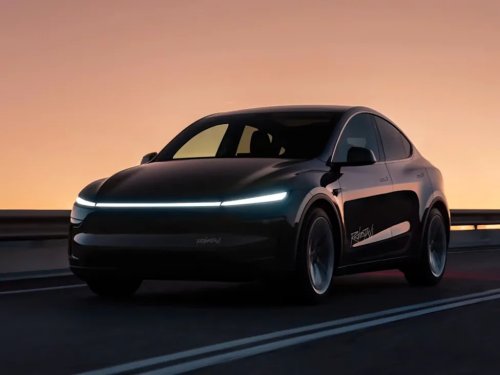
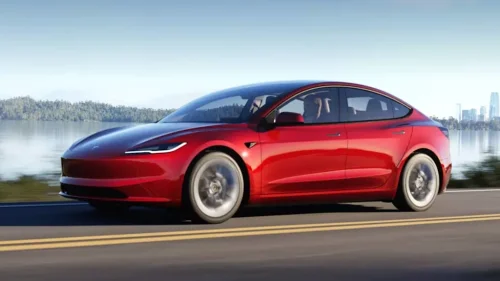
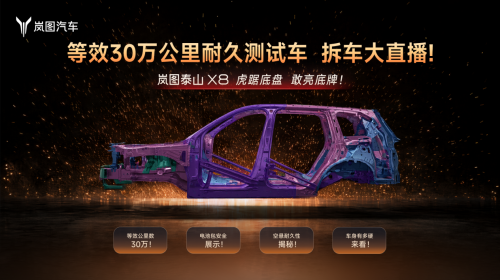
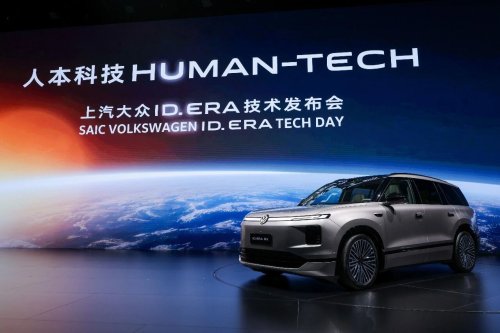
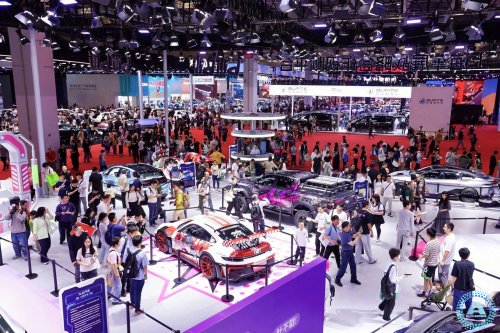
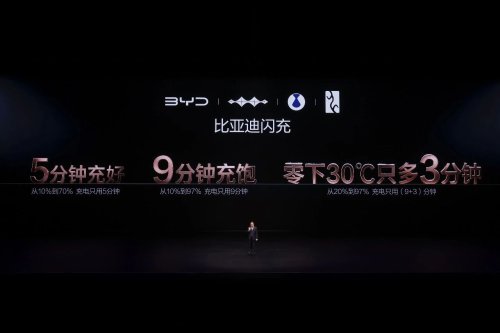
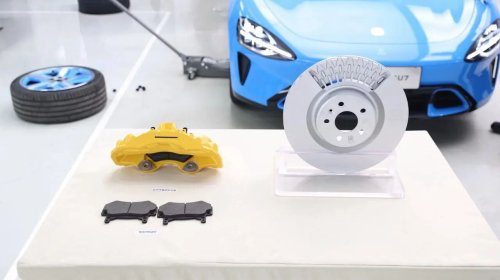
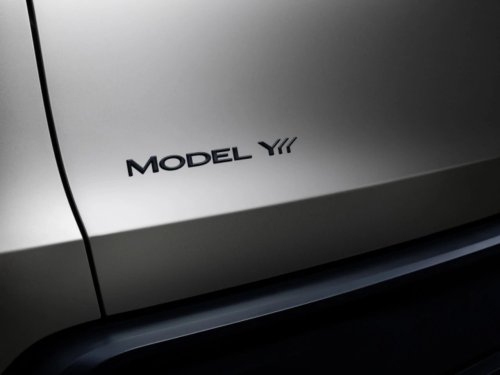
Gasgoo Munich- From technical teasers to final delivery, a new car today often navigates five, six, or even more launch events.The trend hasn't slowed in 2026; it has accelerated. Incomplete statistics show that March 2026 alone saw over 80 domestic events tied to new vehicles, unveiling roughly 60 models—a pace approaching daily updates.Amid this relentless launch cadence, the number of events per model is swelling. Technical breakdowns, pre-sale teasers, official launches, delivery ceremonies, and livestreamed teardowns are piling up. Hosting five or six events for a single car has become industry standard.These figures raise a critical question: Does a new car really need so many launches? Is this merely marketing bloat, or the inevitable outcome of a shifting competitive landscape?From "One-and-Done" to "Serialized Events"Veteran industry observers note that in the internal combustion engine era, the path from reveal to market was relatively simple and short. A typical run involved a debut at an auto show or brand night to announce specs, a launch event to reveal pricing, and a media test drive. Total events per model usually maxed out at two or three.That model has been rewritten.As noted, March saw over 80 events—averaging nearly three per day, weekends included. April is barely half over, yet heavy hitters like the NIO ES9, IM LS8, XPENG MONA M03, Dongfeng Nissan NX8, and ZEEKR 8X have already hit the market. The Beijing Auto Show later this month will only intensify this product battle.Industry estimates project more than 100 new models for the Chinese market in 2026, with some figures reaching as high as 150 to 170. That averages out to a new model roughly every two and a half days.Image Source: SAIC VolkswagenAs launches proliferate, the warm-up cycle is lengthening. The path for mainstream new-energy vehicles has grown increasingly complex. It now typically features: a technology brand day breaking down batteries, autonomous driving, and chassis; a product debut revealing interior and exterior design; a pre-order event to test pricing waters; an official launch announcing final figures; and finally, delivery ceremonies, teardowns, or long-term test livestreams.Automakers need to generate a new talking point almost every month. While some brands compress the pre-sale-to-delivery window to a month, others start teasing a full year in advance. The pacing is becoming increasingly polarized.Image Source: Shanghai ReleaseData from the Shanghai Auto Show in recent years confirms this shift. Official figures show that during the two media days in 2025, automakers and exhibitors held 193 press conferences—a record high. By comparison, the 2021 Shanghai show saw 138, 2023 topped 150, and the 2024 Beijing show reached 163. While the sheer volume of new models drives the total, the increase in events per single model is a significant contributor—a point acknowledged by multiple industry journalists.Veteran media figures note the frequency has hit "several times a week." No sooner does one event end than invitations for the next arrive. Reporting resources are diluted, leaving little room for in-depth coverage. Some insiders even call this a "bizarre form of excessive rivalry" among automakers.The Deep Industry Drivers Behind Launch InflationBlaming this surge solely on "internal competition" within marketing departments is too simplistic. At a deeper level, the phenomenon is rooted in shifting dynamics within the new-energy sector: the market has moved from growth to a zero-sum game. Product iteration speeds, technology refresh rates, and model launch density have all hit unprecedented levels.Data from the China Passenger Car Association (CPCA) shows retail sales of new-energy passenger vehicles reached 1.844 million in the first quarter of 2026. March alone accounted for 784,000 units, with a penetration rate of 47.3%. While this dipped from the historic high of 51.2% in the fourth quarter of 2025, it remains elevated. In the first week of April, the retail penetration rate climbed to 57.7%, marking a new high for the year.As penetration rates rise, the tax-exempt catalog for new-energy vehicles listed 19,977 models from January to March 2026. March alone added 391 new models, an increase over previous years, spanning everything from micro city cars to luxury flagships. The supply side is clearly accelerating. Amid such density, a model must make noise constantly to stay relevant.Furthermore, product replacement cycles are accelerating. The internal combustion engine era's rhythm of a facelift every three years and a generational update every five has been shattered. Today, a facelift every six months and a new generation annually is becoming the norm. Multiple sources indicate development cycles for new models have dropped to 12 to 15 months, with some brands even launching facelifts almost immediately after a debut.In this environment, automakers must continuously generate buzz for both new and existing models. Multiple launch events have become a strategy to maintain visibility.Parallel to product updates is the accelerating pace of technological iteration, particularly in intelligent features. Technologies like City NOA, end-to-end large models, 800V high-voltage platforms, and semi-solid batteries see refreshes every few months.Today, 800V architectures are standard for mainstream models, and BYD has already iterated from 800V to 1,000V platforms. In this context, a technology launch is more than a demo; it is a market statement intended to prove to users and investors that the company has not fallen behind in the tech race.The acceleration of new launches and tech updates underpins the surge in events: when market supply explodes, product cycles shorten, and technology refreshes frequently, automakers must adopt a denser communication rhythm to capture the user's limited attention.Image Source: BYD AutoFrom a competitive standpoint, the battle in new-energy vehicles has escalated from "product competition" to "competition for definition." Regarding technological definition, the first to announce a feature—be it "900V," "5C supercharging," or "flash charging"—can temporarily seize the "leader" label in the consumer's mind. Consequently, some automakers are decoupling tech events from the launch cycle to stake their claim early.Regarding pricing definition, pre-order events serve as market reaction tests. Amid frequent price wars, keeping a window for price adjustment is a rational choice.Regarding trust definition, new brands lacking historical reputation—such as cross-border entrant Xiaomi—rely on transparency through teardowns, livestreams, and extreme testing to build user trust.Chery Automobile Chairman Yin Tongyue once lamented being "held hostage by the industry," noting that a "man in his 60s was forced to become a pitchman." Great Wall Motor Chairman Wei Jianjun also expressed his frustration, directly criticizing the long-standing contradiction in China's auto industry between being a "tech mute" and engaging in "hyperbolic marketing."It is clear that in this new marketing era, traditional automakers face widespread anxiety: they are not weak players, yet feel compelled to awkwardly mimic traffic-chasing tactics; they hold decades of technical accumulation, yet openly admit to being "hostage" to online traffic.Two Sides of the Coin: Merits and Failings Amid the NoiseThe proliferation of launch events, while controversial, is not without value. Objectively, this model has had some positive effects on users, the industry, and the content ecosystem.For users, tech launches and teardown livestreams reduce information asymmetry.Image Source: Xiaomi EVIn 2026, Xiaomi hosted two high-profile teardown livestreams. On January 3, Lei Jun disassembled the Xiaomi YU7 in a four-hour stream that generated over 300 million discussions, visually showcasing materials and technical details. On April 2, Lei Jun returned for a five-hour session to fully break down the new SU7, revealing locked orders had already exceeded 40,000 units. Such transparency objectively pressures automakers to improve quality control while allowing consumers to understand the underlying technology.For the industry, frequent tech events force automakers to accelerate R&D. Iteration is now faster than in the internal combustion era. The 800V high-voltage platform, for instance, went from an ultra-luxury exclusive to a mainstream standard in just a few years—a testament to competitive pressure.But the other side of the coin cannot be ignored.For users, information overload leads to "launch fatigue." Some owners find the tactic of splitting a car's reveal into tech, pre-sale, and launch events exhausting, feeling strung along. Furthermore, high-frequency iterations often disadvantage existing owners.For media, the flood of invitations dilutes manpower and material resources, squeezing the space for in-depth content.For the industry, marketing costs are soaring. Industry data shows a standard new car launch budget runs between 2 million and 10 million yuan. From 2023 to 2025, average marketing expenses for automakers rose 18% annually, yet lead conversion rates fell from 8.2% to 4.7%, driving the cost per lead up from 200 yuan to 580 yuan.The soaring marketing expenses of automakers confirm this trend. From 2020 to the third quarter of 2025, Seres accumulated 47.468 billion yuan in selling expenses. In the first half of 2025 alone, selling expenses reached 8.9 billion yuan, with "advertising, flagship store construction, and service fees" accounting for 8.4 billion yuan—or 94% of the total.Great Wall Motor's 2025 financial report shows annual selling expenses reached 11.273 billion yuan, a year-on-year surge of 43.93%. The report explicitly states these funds were primarily used to "accelerate the construction of new direct-to-user channels" and "intensify the launch promotion of new models and technologies."Similarly, Xiaomi EV's sales and promotion expenses jumped to 33.2 billion yuan in 2025 from 25.4 billion yuan in 2024, with management expecting further increases. As a new entrant, the intensity of its marketing spend during the brand-building phase is understandable.Amid white-hot competition and a barrage of new product launches, automakers are forced to double down on marketing. The rising frequency of launch events is a direct reflection of this inflation in marketing spend.A veteran industry media figure offered a deeper analysis of the phenomenon in an interview. He recalled, "There used to be no teardowns. Brands relied on consumer trust; they didn't need to show you the insides." In his view, the underlying logic for this trend boils down to one concept: "excessive rivalry"—and much of it is meaningless.He noted that international brands used to have their own culture and approach, handling launches and test drives on their own terms. Now, they try every trick in the book. He quipped, "It feels like if you don't do it, the boss gets fired tomorrow." He also believes international brands remain relatively restrained in their launch rhythm compared to domestic firms, citing Tesla specifically: "Tesla launches new cars without holding events. That's Musk's style—minimalist, utilitarian."Against the backdrop of proliferating events, some divergent approaches are worth noting.Image Source: TeslaTesla is a prime example. While most automakers packed offline venues, the Tesla Model Y L in China was updated with new specs and pricing directly on the official website. No traditional offline or online event was held. This "surprise drop" approach sparked widespread discussion at the time, catching even some sales staff off guard.Prior to the update, Tesla had only released a few short teaser videos on social media before going live with the product.Tesla Vice President of External Affairs Tao Lin once stated, "Tesla has no PR." This minimalist model is built on strong brand equity. For most new brands still establishing awareness, it is difficult to replicate in the short term.For most mainstream automakers, especially "new force" EV makers, finding a balance between efficiency and visibility is a pressing reality.More than one media practitioner has suggested automakers consolidate events, recommending, for instance, "combining tech deep-dives with pre-orders, or merging static and dynamic showcases."ConclusionThe multiplication of launch events for a single model is not an active choice by marketing departments, but a byproduct of the new-energy sector's entry into high-intensity competition. It is both a survival strategy and a "prisoner's dilemma."As launches become routine, their scarcity and sense of occasion are fading. Users are developing a "launch noise filter," actively tuning out excess information to focus only on final prices and real experiences. This trend may force automakers to return to efficiency.Wei Jianjun has argued that the auto industry should not fall into meaningless excessive rivalry, particularly the hyperbole in marketing, which misleads consumers and damages brand credibility. His point underscores a basic truth: marketing cannot replace the product itself.After the extreme competition over launch quantity and density, the deciding factor in the next phase may not be who can tell the longer story, but who can build trust and visibility more efficiently.



















 +24 others