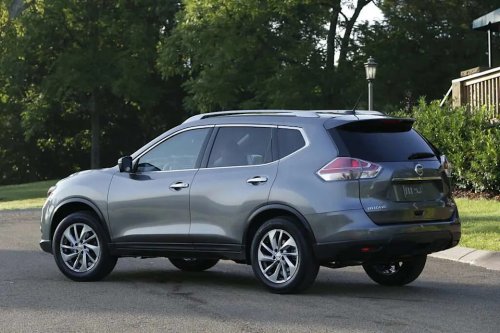
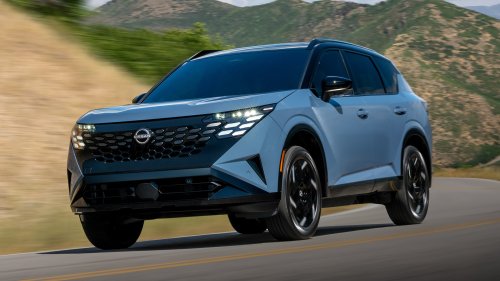
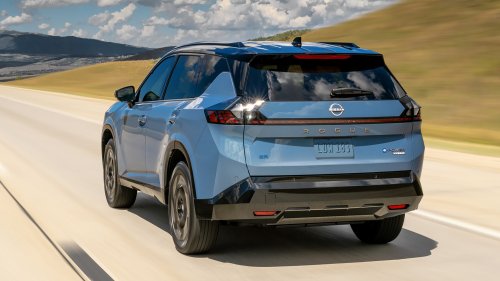
The Nissan Xterra has been missing from the American car market since 2014. Since then, there has been a boom in the off-road SUV market, resulting in some long-dead models like the Ford Bronco and Land Rover Defender returning and thriving. Naturally, we and many others were left wondering what was keeping Nissan from reviving the Xterra to compete with them. According to Nissan's CEO, Ivan Espinosa, fuel economy regulations were a significant factor.Nissan Nissan Was Eager For SUVs, It Just Needed The Right Rules Espinosa revealed this information during the recent Nissan Vision event in Japan. He said that revised American fuel economy requirements opened the door not just for Xterra, but for multiple new body-on-frame SUV projects."The problem was the compliance and the rules of CAFE that were making this kind of product very difficult to execute, because we could technically do it, but that will mean you will have to sell an additional 200,000 EVs in order to comply with the regulation. So this was naturally starting to kill this kind of product. Yet there's a need. So we knew there was a need, but we were, you know, figuring out how to do it with the compliance rules that existed in the market. The moment the compliance rules were adjusted, well, we saw the opportunity was there, and we just jumped on it."-Nissan CEO Ivan EspinosaWe believe the first of those fuel economy changes Espinosa refers to came in 2024 near the end of the Biden administration, since Nissan started hinting at a new Xterra that same year. The National Highway Traffic Safety Administration (NHTSA) presented the final CAFE rules that still would require automakers to keep improving fuel efficiency, but weren't quite as high as initially proposed. More specifically, it would require a 2% increase to an automaker's fleet-wide fuel economy each year through 2031. It was a move that likely benefited a few automakers with large truck lines, not just Nissan.Of course, even more changes to fuel economy and emissions regulations have been happening with the Trump administration. The administration stopped collecting fines for automakers that weren't meeting requirements last year. This year, all automotive emissions laws put in place after 2012 were repealed. So, if anything, it's only becoming easier for Nissan to offer more truck-like products. Nissan Is Still Committed To EVs And Fuel Economy Improvements Despite Nissan planning a number of new body-on-frame offerings, Espinosa made it clear that the company is still working on EVs and making its vehicles more efficient. He had this to say in response to a question about future government regulations becoming stricter."It's not that we are not preparing EVs, we're just not showing you what we're preparing, but we are. We're looking at it because, as you rightly said, the policies might swing again. And we learned the hard way. I think the industry learned the hard way not to bet everything, but you need to keep a bit of a balance and head shape with your bets, and this is what we are doing."—Nissan CEO Ivan EspinosaEspinosa also indicated that Nissan has other EVs in development, but the company just isn't ready to show them. He also pointed to the recent introduction of the Leaf as proof of Nissan's EVs plans, noting that it's part of a plan to gradually ramp up to volume sales.It's worth pointing out that Espinosa said all this at an event where Nissan revealed both the new generation of Rogue, which will now be a hybrid, and a new generation of Juke for Europe, which will be fully electric. Additionally, Nissan has said that the new Xterra will be a hybrid, and Espinosa said that its new body-on-frame vehicles aren't going to be "full-size," so presumably no bigger than the current Nissan Armada/Patrol. So, it seems Nissan really may be trying to meet customer demands and those of the environment and government.