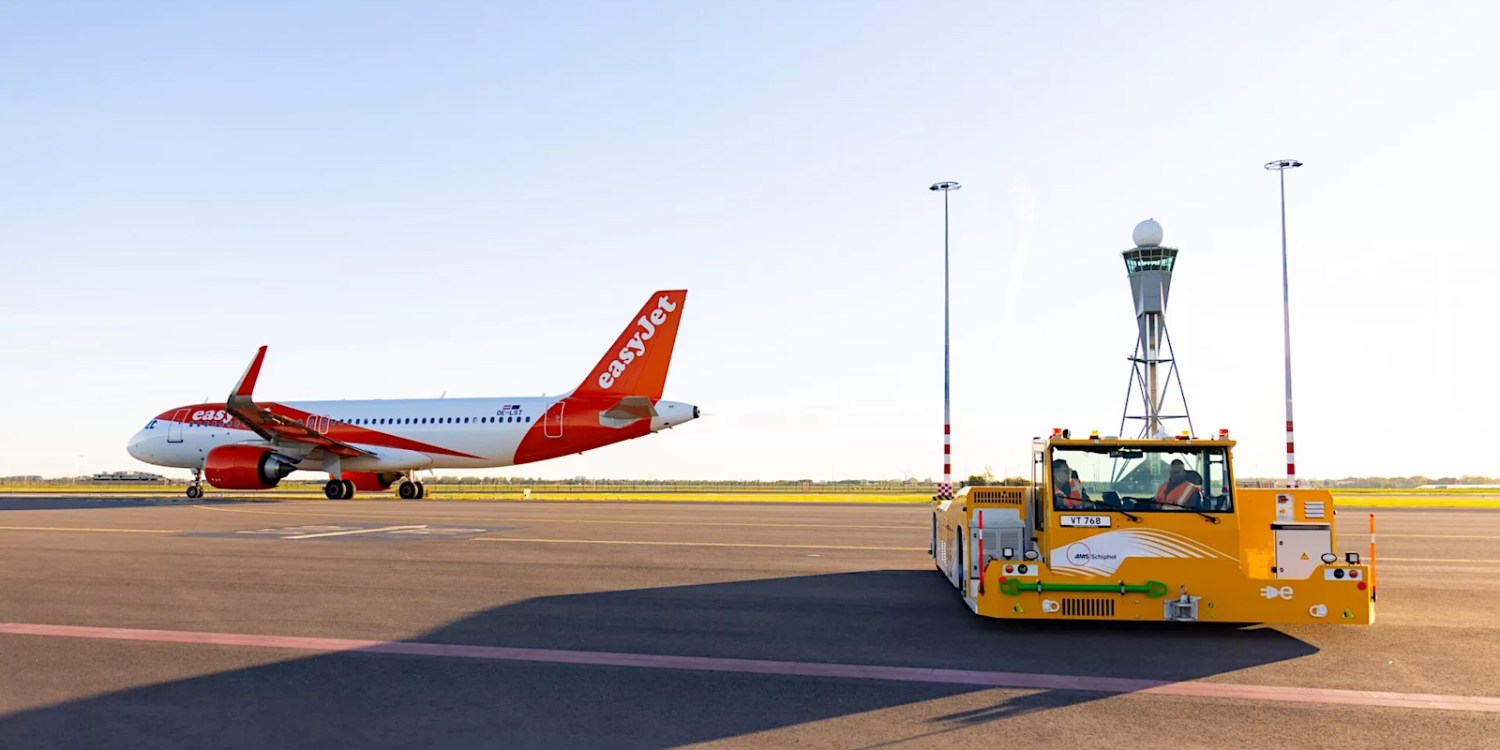
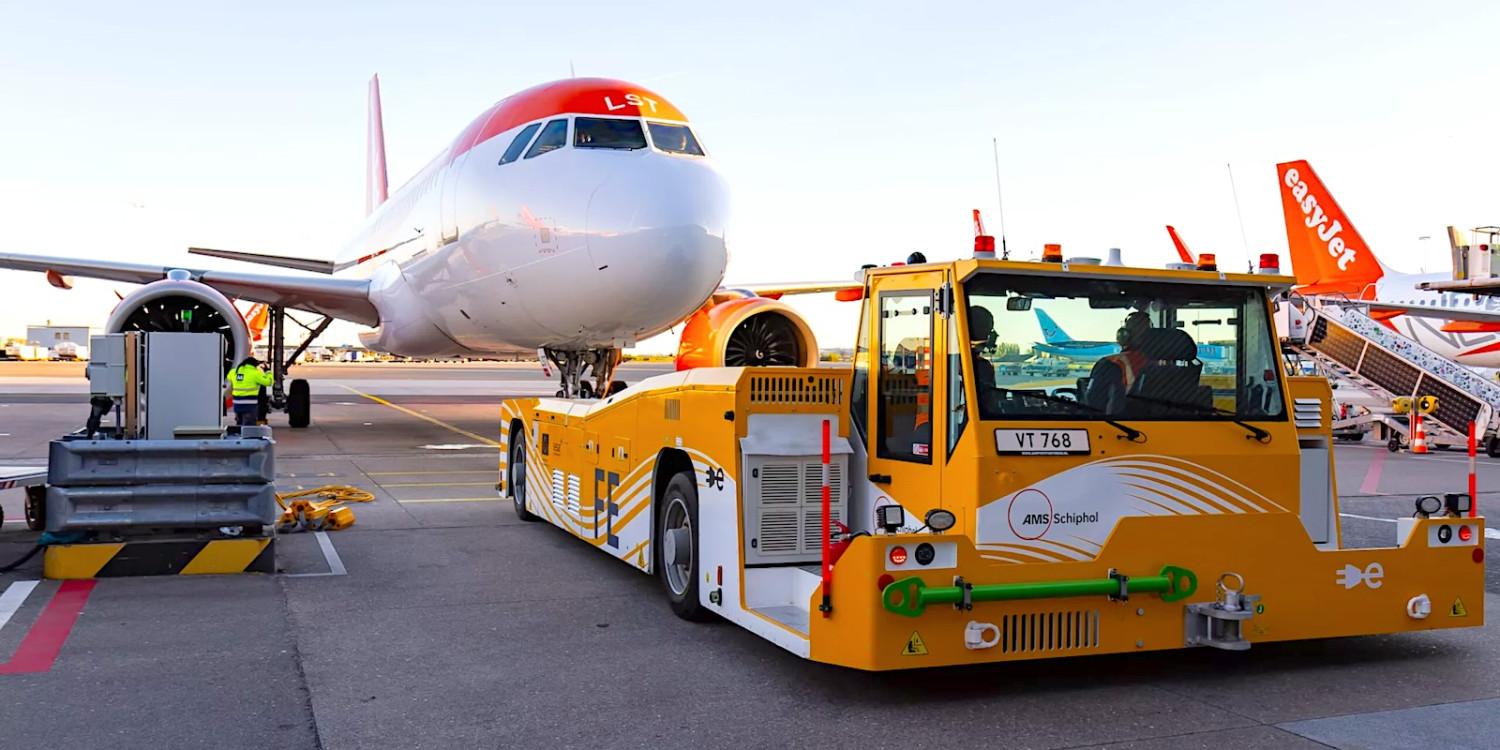




















Amsterdam’s Schiphol Airport is testing an electric aircraft tug that can both move the plane around the tarmac and power its auxiliary systems – and that second bit could slash ground-level airport emissions by more than 80%, saving gobs of money on fuel in the process. Conventional airport operations occasionally use diesel-powered tugs that can connect to the front landing gear and pull the aircraft around the airport. The whole time that’s happening, however, an auxiliary power unit (APU) in the plane’s tail is fired up, generating electrical power for the aircraft and providing enough compressed air to light the main engines. The alternative is to use the main engines at a low idle to taxi the plane. In either case, that’s a lot of fuel burned, emissions spewed, and noise made for the people living and working near the aircraft to deal with – and precisely what the TaxiBot was developed to address. “By deploying the TaxiBot, we’re taking another practical step towards reduced emissions and noise on the apron,” explains Esmé Valk, Chief of People & Transformation at Royal Schiphol Group. “This is how we’re creating a healthier and cleaner workplace, and an ever more sustainable and modern airport that is ready for the future.” Co-developed by Smart Airport Systems (SAS) in cooperation with TLD and Israel Aerospace Industries (IAI), the TaxiBot is an all-electric, pilot-controlled aircraft tug designed to allow pilots to taxi to the runway without running the APU or main engines, powering the aircraft instead with the tug’s onboard traction battery. Advertisement - scroll for more content The end result is a positive experience for the pilots, who get to maintain control of the aircraft on the ground as they jockey for position on the tarmac, a positive experience for any passenger who’s ever had to listen to that APU whine on for minutes (or, if you’re terribly unlucky, hours) on end, and a positive experience for the ground crew who don’t have to breathe in harmful exhaust gasses. A rare win-win-win-and, with the added benefits of reduced fuel costs, maintenance needs, and the energy flexibility associated with a large mobile batter, win. The good kind of #winning TaxiBot, via AMS Schiphol. “This immediately leads to lower fuel consumption, emissions, and ground noise,” says William Vet, Local Director accountable for Netherlands and Scandinavia at EasyJet. “This is only possible thanks to the commitment of our partners, and in particular the Menzies Aviation team, who play a crucial role in our ground operations.” The lone TaxiBot in operation is currently certified to service Airbus A320neo model aircraft. Schiphol is working on the certification for Boeing 737 and others with Embraer, KLM Cityhopper, Transavia, and other global partners. Another three electric TaxiBots are expected to be deployed before the end of this year. You can see the TaxiBot in action and learn a bit more about how electrified ground handling equipment (GHE) is working to decarbonize airport operations in this video, below, then let us know what you think of the electric tug in the comments. Electric TaxiBot at Schipol Airport SOURCE | IMAGES: AMS Schipol, via New Atlas. If you’re considering going solar, it’s always a good idea to get quotes from a few installers. To make sure you find a trusted, reliable solar installer near you that offers competitive pricing, check out EnergySage, a free service that makes it easy for you to go solar. It has hundreds of pre-vetted solar installers competing for your business, ensuring you get high-quality solutions and save 20-30% compared to going it alone. Plus, it’s free to use, and you won’t get sales calls until you select an installer and share your phone number with them. Your personalized solar quotes are easy to compare online and you’ll get access to unbiased Energy Advisors to help you every step of the way. Get started here. Stay up to date with the latest content by subscribing to Electrek on Google News. You’re reading Electrek— experts who break news about Tesla, electric vehicles, and green energy, day after day. Be sure to check out our homepage for all the latest news, and follow Electrek on Twitter, Facebook, and LinkedIn to stay in the loop. Don’t know where to start? Check out our YouTube channel for the latest reviews.