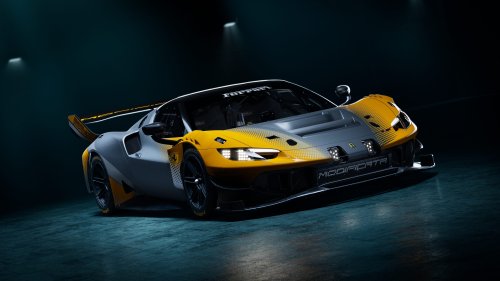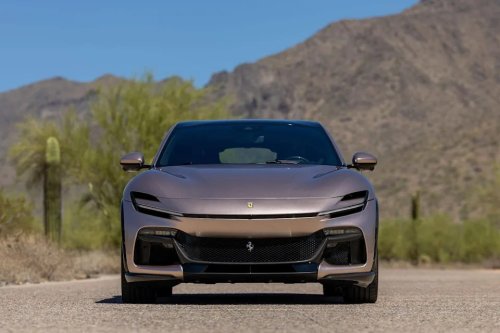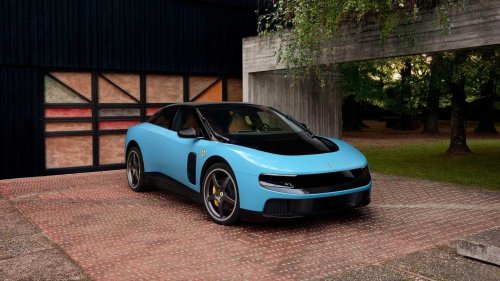
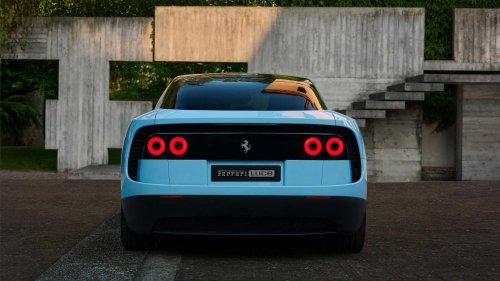
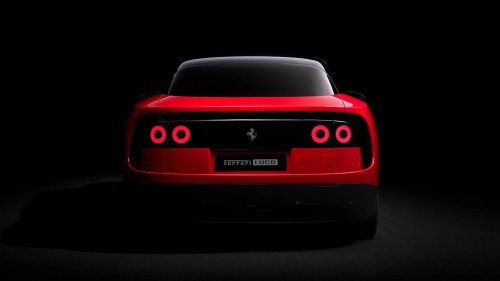
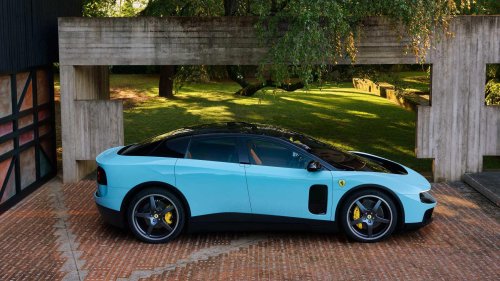
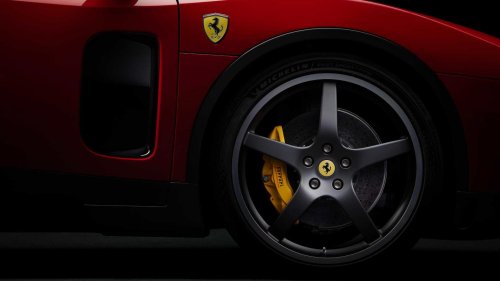
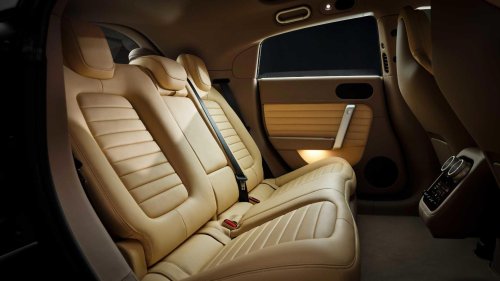
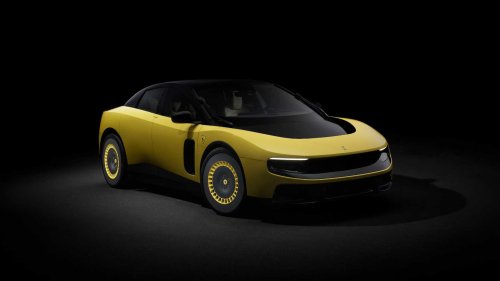
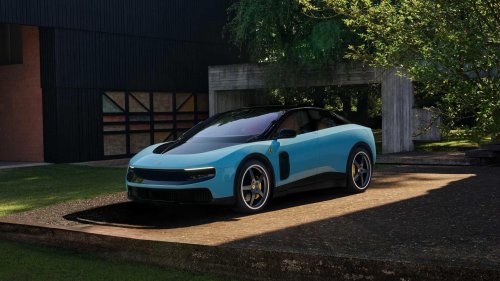


















Ferrari is putting to the test the theory that car aficionados will sell body parts for anything with a prancing horse badge. That's because the automaker has just unveiled the first-ever electric Ferrari. Meet the Ferrari Luce. Dubbed one of the most important Ferrari's ever made, the Luce is a controversial model from a brand that cut its teeth in motorsport and on the road with screaming V12s and howling V8s.But instead of those cylinders pumping, fueled by thousands of contained explosions, the Luce leverages electrons to propel it. Can an electric Ferrari really have a soul? It's time to find out. Four Motors, And Four-Figure Horsepower FerrariUnlike most EVs, this one doesn't take the title of being the most powerful road-going Ferrari yet. That still remains with the F80 and its 1,184 horsepower. But this comes close. With four electric motors - one driving each wheel - the Luce claims a total output of 1,035 hp, paired with 730 lb-ft of torque. The bulk of that comes from the rear motors, which each output 416 hp vs the front ones' 141. Those front motors are, incidentally, the same as the ones on the front axle of the F80.This quartet of motors is fed by a battery mounted low in the Luce's chassis, with which it forms a structural element. Think of the battery as the equivalent of a stressed engine/transmission in a high-power combustion hypercar. The battery has a capacity of 122 kWh, delivering approximately 330 miles of range in a vehicle roughly the same size as a Purosangue and weighing a claimed 4,982 lbs. Oof.Ferrari Performance Claims Despite this, Ferrari promises a 2.5-second zero-to-62 mph sprint and a top speed of 192 mph. The former figure is achieved via launch control, which is theatrically activated via overhead switchgear in the ceiling of the Luce - a distinctly analog interaction that sets the tone for the rest of the interior. From a standstill to 124 mph takes only 6.8 seconds, making this one rapid prancing pony.The wheels are the largest ever equipped on a roadgoing Ferrari, measuring 23 inches front and 24 inches rear. These house brake discs measuring 15.3 and 14.6 inches respectively, while the wheels, designed in a tribute five-spoke fashion, are shod in 265/35 rubber up front and 315/30 rubber at the rear.Handling is aided by adaptive suspension, electronic torque vectoring (thanks, quad motors), and rear wheel steering. All of this, plus the deployment of power, operates at a frequency of 200 times a second, providing levels of control never before seen in a Ferrari.Ferrari No Fake Sounds, Just Real Vibrations, Amplified For The Driver Unlike other EVs which pipe a fake noise into the cabin and atmosphere via speakers, Ferrari claims the Luce's soundtrack is authentically based on the vibrations of the drive axles - something we predicted would happen based on patent filings uncovered by the CarBuzz team. An accelerometer captures the frequency, which is then filtered, equalized, and amplified before being piped into the cabin or out into the world at a volume level dependent on the drive mode. Ferrari likens this to how an electric guitar generates sound.And to reduce noise in the cabin, the Luce relies on Ferrari's first-ever elastically-mounted subframe, reducing NVH through the chassis. A Ferrari Designed Like A Smartphone FerrariThat interior is designed by none other than Sir Jony Ive of Apple iPhone fame and his business partner Marc Newsom, and it has his signature minimalistic look. But what has surprised us is the exterior design, also penned by Ive. It's hardly a traditional Ferrari and looks akin to something a tech startup like Faraday Future might release. Sure, the quartet of stoveplate-style taillights is pure Ferrari, but the rest looks oddly digital. This is not your grandfather's Ferrari, that's for sure.The design is characterized by wide hips, floating front and rear wings, and a glasshouse divided from the lower bodywork by a two-tone design. Prominent vents on the front doors are also very non-traditional.FerrariThe door layout is somewhat familiar, with rear coach doors opening as wide as the front items to allow ingress to the rear seats. The Luce seats five - a first for Ferrari. This layout was previously prohibited as the longitudinal engine and transaxle gearbox in models like the Purosangue and GTC4Lusso/FF prevented there being space for a fifth seat.The interior is arguably better to look at than the exterior, as Ive and co have designed a beautifully tactile cabin, replete with analog gauges and physical controls with a hint of retro done right.FerrariThat doesn't mean it's devoid of technology though, and the specs read like those of a smartphone, with physical switches offset by Samsung Display-developed digital displays using Corning Gorilla Glass, channeling sound via a 21-speaker, 3,000-watt sound system. The CarBuzz Take: A Ferrari In Name, But Many Won't Like It FerrariTechnologically, the Ferrari Luce delivers everything we'd expect from a quad-motor hyper-EV, and the interior is an artful blend of digital and analog. But, this doesn't look like a Ferrari to me, and I don't think many others will find Ferrari's bold claims of heritage-influenced styling to hold much water. Take the prancing horse badge off the Luce, and it could be just about anything from an American startup to a Chinese EV.Ferrari claims it won't expect aficionados to buy a Luce to be in line for the next special - likely to be the F80 Targa or 296 Challenge Stradale - but without strong arming fans into buying one, I'm unsure how many it will sell organically. Maybe I'm just the traditional Ferrari fan, though, and maybe this is targeted at an entirely new audience... one that likes Ferrari hot hatches instead of mid-engined supercars.Ferrari Luce exterior (2)