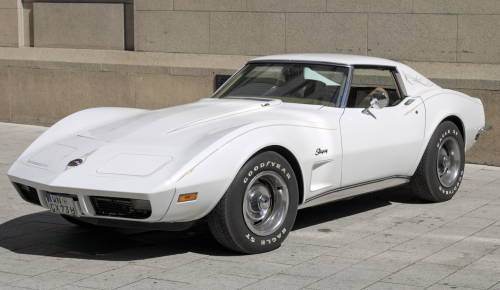
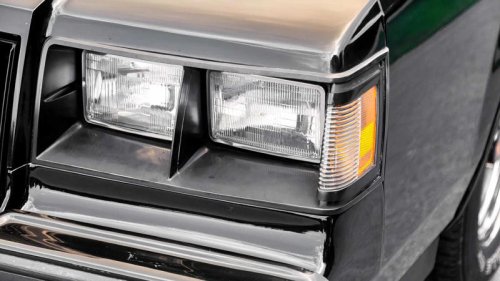
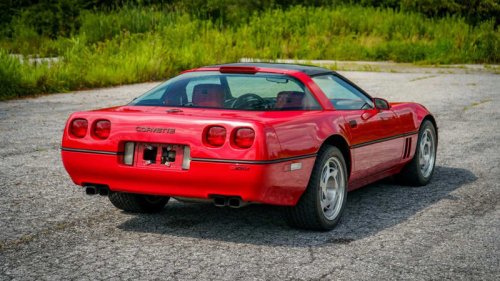
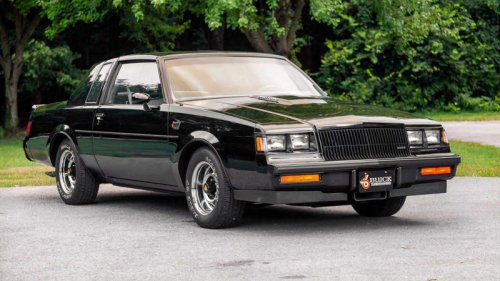
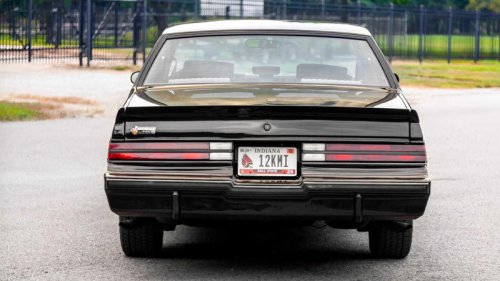
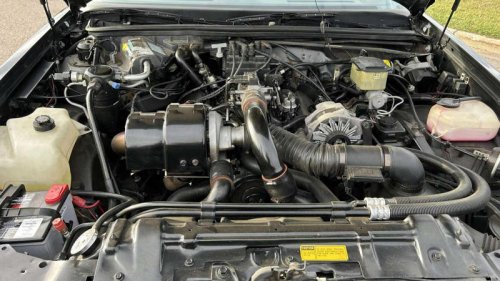
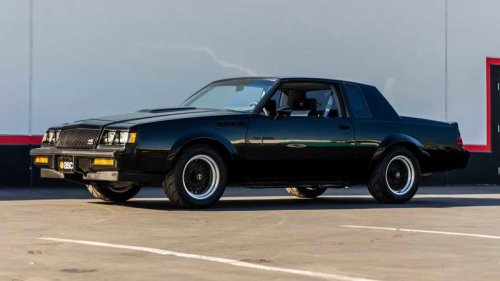
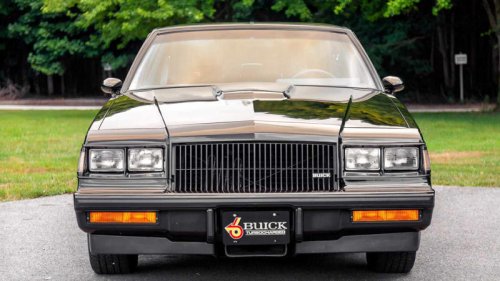
American performance in the 1980s was supposed to be dead. Emissions regulations had gutted the big-block V8s that defined the muscle car era, and what remained under the hoods of Camaros, Mustangs, and Corvettes was a shadow of what those nameplates had once promised. Into this landscape of diminished expectations.Buick, a brand synonymous with country club parking lots and retirement-age buyers, did something that nobody in Detroit saw coming. The American automaker took a turbocharged V6 and spent nearly a decade refining it until the engine could humiliate every V8 on the road. By the time the final version rolled off the line, it was the quickest American production car of its era, and it wore a badge that most performance enthusiasts would have laughed at five years earlier. The Decade That Nearly Killed American Performance Bring A Trailer The 1980s opened with American muscle in a state of crisis. The horsepower wars of the late 1960s and early 1970s were a distant memory, strangled by catalytic converters, unleaded fuel requirements, and corporate timidity in the face of ever-tightening federal regulations.The Corvette, which had once been a legitimate rival to European sports cars, spent most of the early 1980s producing numbers that would have embarrassed a family sedan from the previous decade. By 1987, the C4 Corvette's 5.7-liter V8 managed 240 horsepower, respectable for the era but hardly inspiring for a car carrying the weight of America's flagship sports car reputation.Bring a Trailer The Mustang GT was making 225 hp from its 5.0-liter V8. The Camaro IROC-Z, with the same displacement, sat in a similar range. These were the best V8 performance cars America had to offer, and none of them could crack the six-second barrier to 60 mph without serious effort. The conventional wisdom said that if Detroit wanted to get fast again, it needed to find a way to make its V8s breathe.Nobody was looking at the V6 as the answer. Six cylinders meant compromise. It meant the engine you settled for when you could not afford the eight-cylinder option. One division at General Motors had been quietly proving that assumption wrong for the better part of a decade, and by 1987, the proof was impossible to ignore. The 1987 Buick Grand National Ran Faster Than Every V8 on the Road Bring A TrailerThe 1987 Buick Grand National arrived with a 3.8-liter turbocharged V6 producing 245 hp and 355 lb-ft of torque, fed through a four-speed automatic transmission to the rear wheels. Period instrumented testing recorded it at 4.9 seconds to 60 mph and 13.9 seconds through the quarter mile at 98 mph.Those numbers made it quicker than the Corvette, quicker than the Mustang GT, quicker than the Camaro IROC-Z, and quicker than anything else wearing an American badge. A V6 Buick, dressed in nothing but black paint and a sinister lack of chrome, was the fastest production car General Motors sold in 1987. The Corvette division was not pleased.The secret was torque, and specifically where it arrived. The turbocharged 3.8-liter produced peak twist at just 2,800 rpm, which meant the car hit hard the instant the turbo came on boost and never stopped pulling. The naturally aspirated V8s in the Corvette and Camaro built their power through the mid-range, which made them flexible but not explosive. The Grand National was. It launched like a car with twice its rated horsepower, and the four-speed automatic, tuned with a firm shift calibration, kept the engine in its powerband without the driver needing to do anything except hold on. A Decade of Boost From Indianapolis to the Assembly Line Bring A Trailer The Grand National did not appear out of nowhere. The turbocharged 3.8-liter V6 that powered it had been evolving inside the division for nearly a decade, through a development arc that started at the Indianapolis Motor Speedway and ended with one of the most celebrated American performance cars of the 20th century. Understanding that arc is essential to understanding why the engine was so far ahead of its V8 competition by 1987.The first production turbocharged Regals arrived for the 1978 model year, making a modest 165 hp with a four-barrel carburetor and a draw-through turbo setup. They were not fast by any standard, but they proved the concept: a V6 with forced induction could match or exceed a V8 in real-world performance while using less fuel.Over the following years, the engine received incremental improvements. The switch from carburetion to sequential fuel injection in 1984 was the first major leap, bringing power to 200 hp and making the boost delivery smoother and more predictable. In 1986, the addition of an air-to-air intercooler pushed output to 235 hp and 330 lb-ft of torque. That year, period road testing recorded the Grand National at 4.9 seconds to 60 mph, faster than every V8 muscle car in America. The Indy 500 Pace Car That Started the Turbo Revolution at Buick Bring A Trailer The turbocharged 3.8-liter V6 traces its origins to 1976, when the division was offered the opportunity to pace the Indianapolis 500. The engineering team, looking for a way to extract credible performance from its V6 in an era when the company's V8s were struggling to break 200 hp, turned to turbocharging. A modified Century was fitted with a turbocharged 3.8-liter producing roughly 300 hp, enough to fulfill pace car duties convincingly.The concept had actually emerged from a 1974 engineering project that the division had sponsored, and the Indy assignment gave it the platform to prove that forced induction could work on the production engines that would follow. The pace car replicas sold to the public were not turbocharged, but the seed was planted. Within two years, the first turbocharged production Regals were in dealer showrooms. How the GNX Took the 3.8-Liter V6 to Its Absolute Limit Mecum For the final year of the rear-wheel-drive Regal in 1987, the division partnered with ASC/McLaren to build 547 cars that would serve as the definitive send-off. The Buick GNX received a revised Garrett T3 turbocharger with a ceramic impeller for faster spool, a larger intercooler, a reprogrammed engine management system, and a free-flowing exhaust. The transmission received a revised torque converter and dedicated cooler, while a torque-arm rear suspension replaced the standard setup to improve traction under hard launches.The official rating was 276 hp and 360 lb-ft of torque. Independent dyno testing consistently showed output closer to 300 hp and over 400 lb-ft. Period instrumented testing recorded 4.7 seconds to 60 mph and 13.5 seconds through the quarter mile at 102 mph. The only domestic car that could match those numbers was the twin-turbocharged Callaway Corvette, which cost nearly twice as much. Beyond that, the conversation moved to European exotics like the Porsche 911 Turbo and the Ferrari Testarossa, neither of which could pull away from the GNX in a quarter-mile sprint. What the 1987 Buick Grand National Costs Today Bring A TrailerThe turbocharged V6 that nobody believed in now commands more money than the V8s it embarrassed. Market data shows the GNX in excellent condition averaging $176,000, with exceptional low-mileage examples trading around $250,000. The standard Grand National, which is far more attainable, sits at roughly $65,000 for an excellent car and under $40,000 for a solid driver. For context, a 1987 Corvette in comparable condition trades for less than half that. The V8 that was supposed to be the faster car is now worth a fraction of the V6 that actually was.The Grand National offers the more accessible entry point for enthusiasts who want the turbocharged 3.8-liter experience. With over 20,000 built in 1987 alone, supply is significantly deeper than the 547-unit GNX, and the driving experience is not dramatically different. The GNX is quicker, better suspended, and carries the exclusivity that collectors prize, but the standard Grand National was already faster than any other American production car when it launched. Both cars have seen sustained interest from younger buyers who grew up seeing them in film and music, and the engine that once seemed like a compromise has become the very thing that makes them irreplaceable.Sources: Hagerty, Classic.com, Bring a Trailer, Buick, Mecum.


















 +72 others