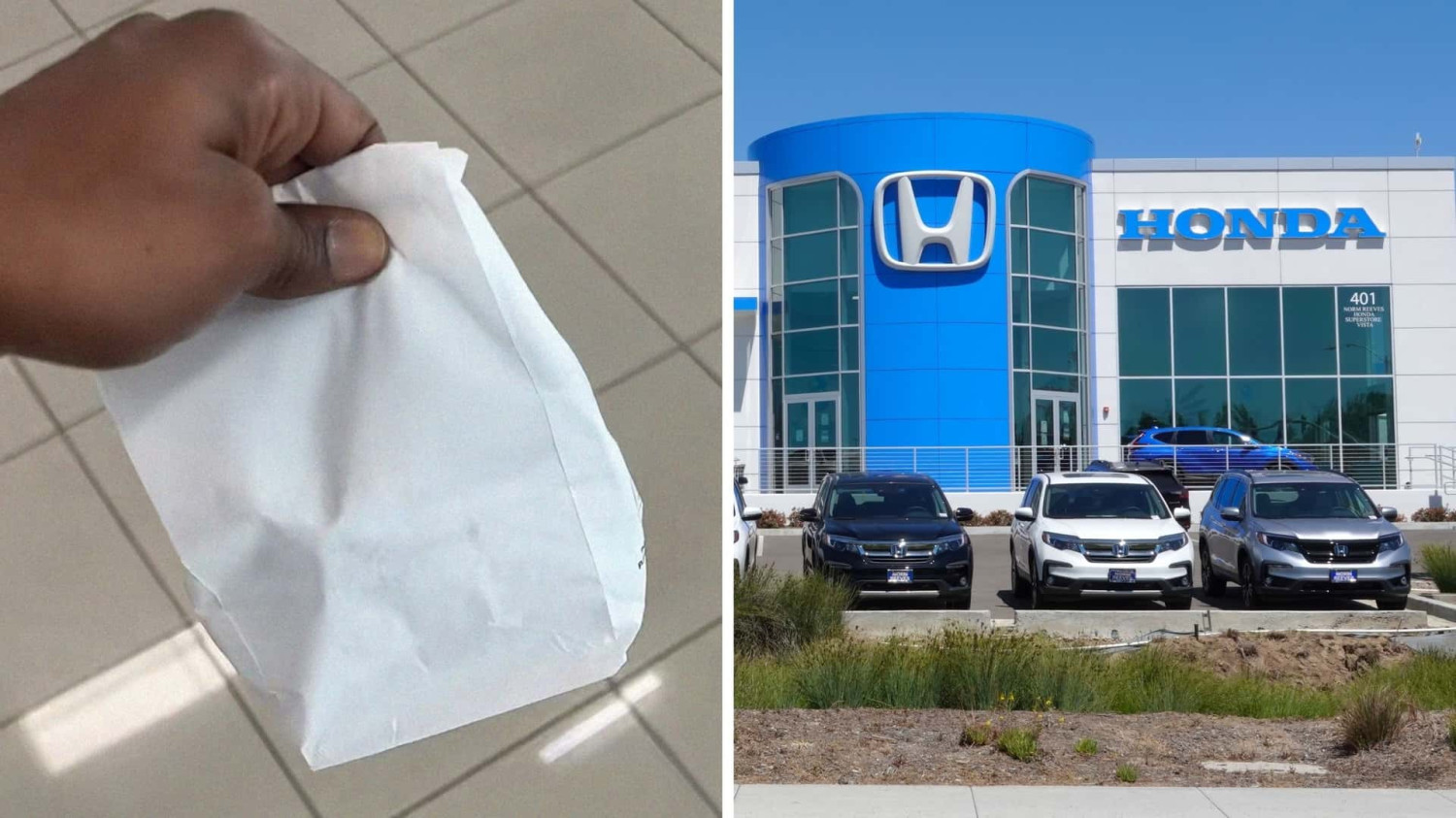
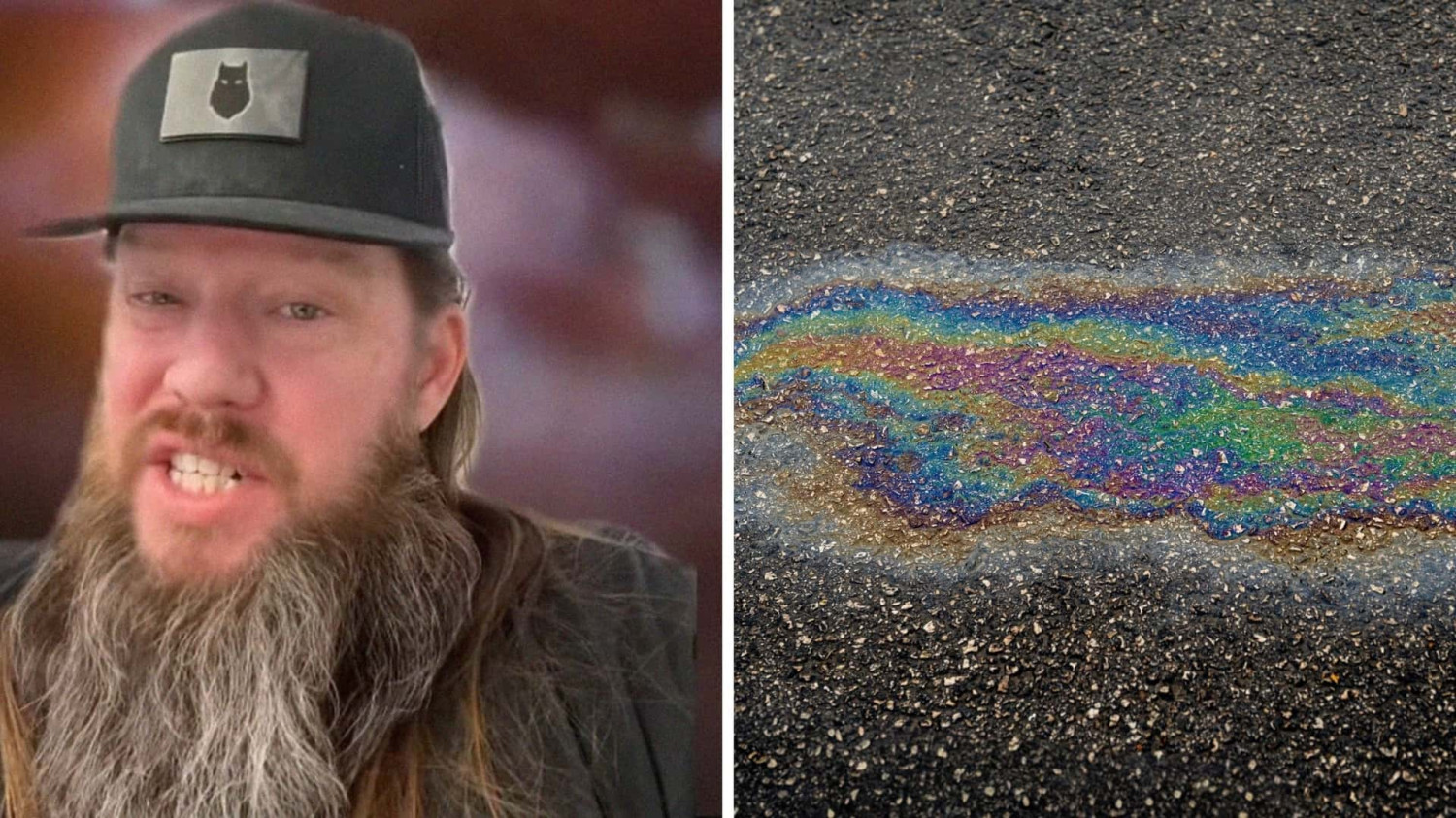
Rather than a mythical pot of gold at the end of a celestial rainbow, spotting one on the wet pavement in the parking lot of an auto parts store or repair shop usually means there’s going to be some money coming out of your pocket. That’s the unfortunate reality brought to mind by a viral Facebook Reel that gives us an up-close look at the iridescent fluid rings that signal a troubling leak that needs attention soon. The post from Apex Predator Outfitters shows a picturesque trail of the "rainbow rings" in an unidentified parking lot, though the narrator gives them the canny name of the "AutoZone Aurora Borealis." "It happens to be in peak season right now, thanks to a light rain and a rear main seal that finally tapped out," he says in a clip that’s been viewed more than 620,000 times. The effect is familiar to anyone who spent time around aging cars and wet pavement. A thin film of automotive fluid spreads across a puddle, light hits it at just the right angle, and suddenly the ground looks like it's been airbrushed with neon blues, purples, and golds. It's the same physics behind soap bubbles and oil slicks on water, with thin layers of fluid that bend and reflect light, producing shifting colors. Only in this case is the source far less poetic, as a nearby vehicle is leaking something it shouldn't be. The narrator pins the blame on a failed rear main seal, which is a phrase that makes experienced car owners wince reflexively. Commenters, however, quickly turned the post into a kind of crowd-source diagnostic session, mixed with light touches of a comedic roast. "That’s a typical Dodge Cummins owner’s driveway," one of them joked. Several suggested it was just the "Southern Lights." Others offered alternative names like "the O'Reilly Aurora," and "Aurora oil-ialis," while others recounted war stories of high-mileage vehicles that marked their territory wherever they went. There was also some debate over the most likely source of the fluid, with oil a leading candidate, but others pointed out that brake fluid, transmission fluid, diesel fuel, and power steering fluid can all produce similar rainbow effects when they mix with water on pavement. What Causes The Rainbow Effect? The key to making the iridescent effect happen is having a very thin layer of fluid spreading across water, because when the layer is thin enough, light waves reflect off both the top and bottom surfaces of the film to produce shifting bands of color. Thicker puddles, by contrast, usually just look dark and greasy. That's also why these oil rainbows tend to show up after light rain rather than a heavy downpour. A small amount of water helps spread the fluid into a thin, uniform sheet, whereas too much rain simply washes away or disperses the leak before the colors can form. From this, we can infer that the narrator's joke about it being "peak season" for this kind of phenomenon suggests that they're in an area with mild and drizzly weather that presents the conditions for making small leaks highly visible. Detecting these leaks then necessitates some detective work to trace the source and figure out what kind of bad news is waiting under the hood. A little seep from a valve cover or power steering line might be more of a nuisance than an emergency. But a rear main seal, as speculated in the video, sits between the engine and transmission and replacing it usually means separating the two. That means an expensive, labor-intensive repair, which can cost more than $1,000. Finding The Leak As bothersome and unpleasant as the news behind a leak may be, it's important to check into it as soon as possible to avoid further mechanical damage and prevent more leaking fluid from washing into storm drains or nearby sediment. The first step to tracking down the problem is checking fluid levels for engine oil, transmission fluid, brake fluid, power steering, and coolant. A noticeable drop in any of those is an important clue, and leaving a piece of cardboard under the car overnight can help you pinpoint where the leak is coming from and how fast it's happening. Color and smell are some clues as well, since fresh engine oil is amber colored, transmission fluid is often red or pink, and gear oil has a very distinctive, overpowering odor. When it comes to assessing what kind of action to take, anything involving brakes or rapid oil loss should move to the front of the to-do list. It's important to note that none of these leaks should be ignored, as they can quickly lead to further damage. It’s important to treat these kinds of rainbows as a reminder that early action is a best practice to keep your car running properly. Motor1 reached out to the creator via direct message and comment on the clip. We’ll update this if they respond. We want your opinion! What would you like to see on Motor1.com? Take our 3 minute survey. - The Motor1.com Team



















 +4 others