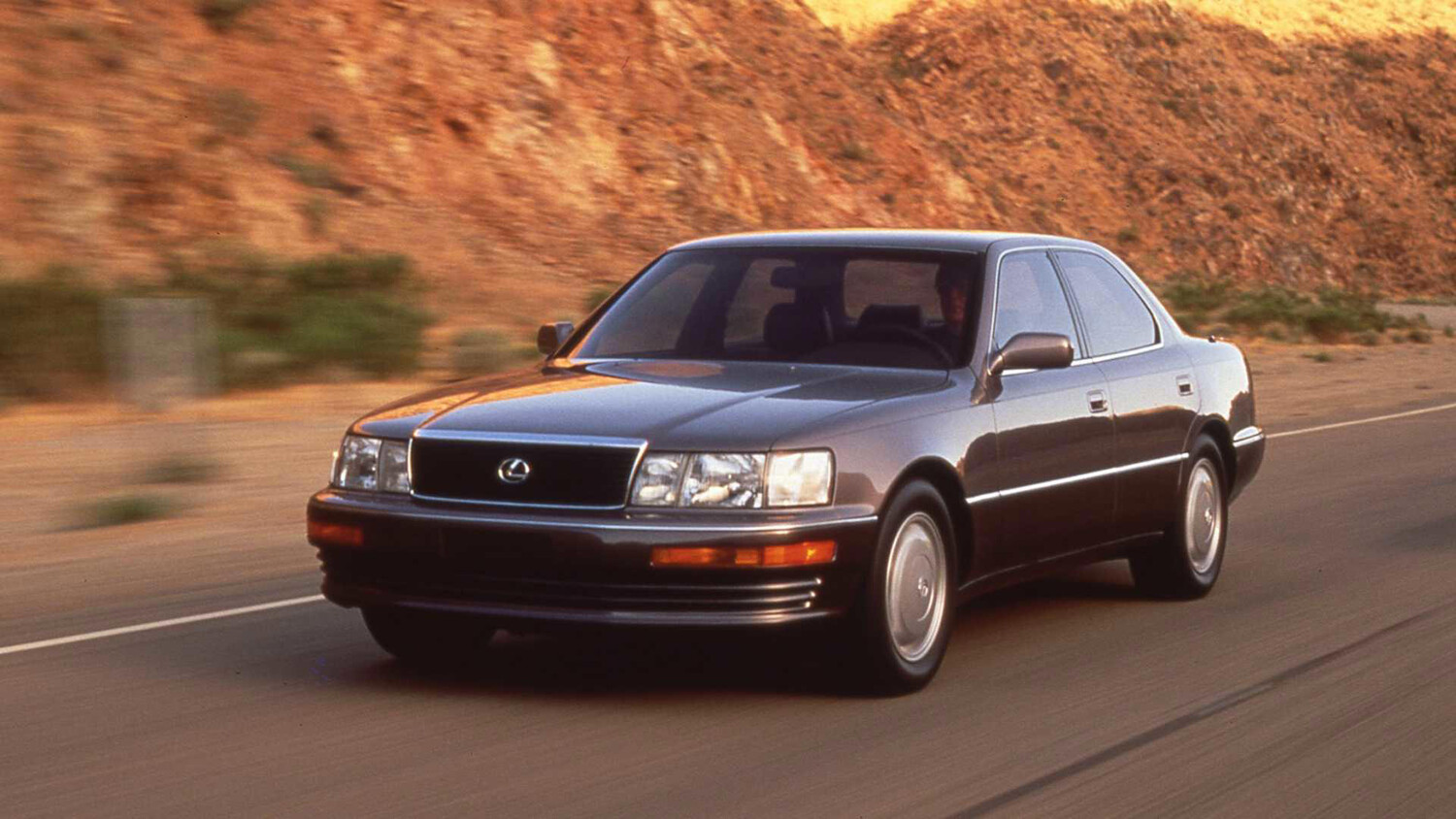
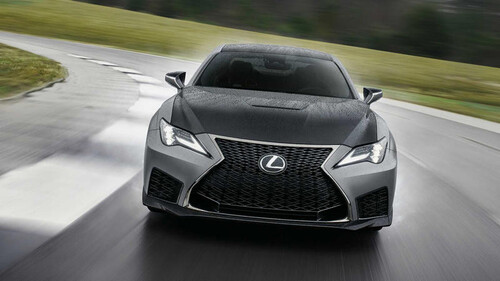
Traditionally, sports cars were the kind of fast cars you would generally see broken down on the side of the road. Iffy reliability seemed to be part of the package with a lot of exotic machines, with the local mechanic going from first-name basis to top of the Christmas list. True, there are a lot of proper classic US muscle cars that are easy to fix and reliable, but generally, performance and real world reliability weren't something you could expect to get in the same car. However, one V8 machine set out to help change all that, offering a rip-snorting old-school driving experience, with the kind of boring reliability that you would expect from that worthy Japanese hatchback you had as a first car that just refused to die. No longer would we need any excuse to buy a face-melting V8 sports car. Lexus Went From Chasing Mercedes To Gunning For Muscle Cars LexusIn August 1983, a secret meeting took place in Japan, where Toyota’s Chairman Dr Eiji Toyoda threw the gauntlet to a gathering of the company's strategists, engineers and designers. The challenge was simple: could Toyota, a company that had nailed the idea of a reliable, affordable hatchback and sedan, actually make a car to take on Mercedes? Toyota in the 1980s was brimming with confidence, so the task was not taken lightly, with more than 1,400 engineers and 2,300 technicians brought in to complete Toyoda-san’s challenge.After more than 400 prototype vehicles were built, 100 crash tests were conducted, and more than 4.3 million test kilometers were driven in Japan, the U.S., and Europe, Lexus execs signed off on the final LS design. The Lexus LS 400 was launched in America in 1989 with a 4.0-liter V8 engine, dominating JD Power customer satisfaction surveys in the USA a couple of years later, and becoming the USA’s number one luxury import brand in 1991, outselling BMW and Mercedes-Benz. With the luxury car market sewn up, Lexus went hunting for muscle cars. Lexus Gets Muscular In The 2000s Lexus Lexus started to branch away from luxury sedans with cars like the SC400 and the BMW 3-Series-alike IS 200, but it could be argued that these cars had JDM cool but didn't quite capture the style of true European sports coupes and four-door sedans. The IS-F debuted at the North American International Auto Show on January 8, 2007, with pumped-out bodywork, 5.0-liter V8, and, of course, the de rigueur endless laps of Nürburgring testing. The F brand was a clear attempt to create a Japanese version of BMW's M Division, and as usual, Lexus did a thorough job. But this being the late 2000s, before supercar SUVs really took off, V8 coupes were still big business, and notably the excellent E9X M3. Lexus's answer was the RC F, a performance coupe fitted with the most powerful V8 engine Lexus had ever produced. The Lexus RCF Is A Japanese Muscle Car LexusPerhaps ironically, the E9X M3 that Lexus was likely gunning for with the RC F went out of production in 2013, only to be replaced in 2014 by the F80 M4, which is powered by a twin-turbo S55 3.0-liter inline-six. This made the RC F stand out from the crowd, positioning it as a high-tech Japanese muscle car. So what was it all about?The all-new 2015 RC F performance coupe was unveiled at the North American International Auto Show in Detroit. Based on the RC coupe, it packed an all-new 5.0-liter 32-valve V8 engine, good for 467 horsepower and more than 389 lb-ft of torque. To ensure the power reaches the asphalt effectively, the RC F was available with a Torque Vectoring Differential (TVD), similar to the Porsche Torque Vectoring system. The engine connected to a newly calibrated eight-speed Sport Direct Shift (SPDS) transmission with paddle shifters. The RC F was designed to be a meaty V8 coupe that could be used daily (just like a Porsche 911), said chief engineer Yukihiko Yaguchi, “I've built RC F to be enjoyed by all enthusiasts — no matter what their level of expertise.” The RC F Is A Legit Sports Car Lexus The RC F is no featherweight, weighing in at more than 4,000 pounds, but that doesn't mean it hasn't been tuned like a race car. Just like Porsche's models, the engineers developed the RC F on the track through both racing and extensive Nürburgring testing. The “F” in the name actually stands for Fuji Speedway, where Lexus carried out a lot of its high-speed development. The RC F also spent many days lapping the Nürburgring Nordschleife, all to ensure that it would be just at home on a track day as it would trundling to the coffee shop on the way to a Powerpoint presentation.Lexus said at launch: “Body rigidity, suspension, brakes, tires, and all other systems were developed with the expectation that RC F owners would be taking their cars to track day events.” Similar to Porsche's GT3 and RS models, Lexus also introduced the Track Edition RC F, which honed the car for enthusiasts. A Porsche-like obsession with weight saving is included, with even a redesigned bumper reinforcement and a smaller AC compressor to reduce a few grams in weight. The RC F Went Racing To Help Development LexusPorsche has a long history of going racing to help development of its performance models, and the RC F followed suit. Lexus took the car to the track with great success, winning the SP-Pro Class at 24 Hours of Nürburgring 2016. The standard RC F can hit 60 mph in 4.4 seconds, 100 mph in 9.9 seconds, cover a quarter mile in 12.8 seconds, and top out at 171 mph. The Lexus Vehicle Integrated Dynamics Management (VDIM) has an inbuilt EXPERT mode which turns off the traction control, but still uses Vehicle Stability Control to control the engine and Brembo brakes to assist the driver. Independent reviews praised the RC F's fluidity and balance, while noting that it was easy to control on the throttle and not as intimidating as the wild looks suggested. Reliability And Maintenance Costs Bring A TrailerWhen the RC F was launched, Lexus already had a bulletproof reputation for reliability. In 2019, Lexus topped the U.S. J.D. Power Vehicle Dependability Study for the eighth consecutive year. The 2016 Lexus RC earned a J.D. Power rating of 87/100, marking it as the best compact premium car of 2016. The RC F had a $2,493 cost of maintenance/repair in the first five years, which is less than the industry average for luxury Coupe models by $3,050, says CarEdge. There was a 17% chance that this car would need a major repair in its first five years—16% better than similar vehicles in this segment. A Lexus RC F gets an average of 19 mpg, meaning a total of $12,160 for fuel after 5 years, or around $2,432 annually. Why The RC F Is An Excellent Used Buy Lexus The Lexus RC F is not only a dependable, reliable sports coupe; it is also one of the last of a dying breed of brawny V8 coupes, given the slow march of EVs and hybridization. Ironically, despite Toyota being a champion of hybrids, the RC F carried on until 2024 as a V8-only sports car and retained all the naturally aspirated character associated with an old-school ICE powertrain. You can pick up a 2016 model for $32,000, which might sound like a lot for a 10-year-old car, but choose right, and you should have years of relatively trouble-free V8 motoring.The RC F is rare compared to the competition, with just 179 units of the Lexus RC F Final Edition sold in the US, making it a quirky alternative to the usual German fare. Even the 2020 RC F Track Edition, which offered exclusive upgrades designed for hardcore enthusiasts, can be found for less than $60,000 on used car websites with very low miles. If you are the kind of driver who likes your car to be both wild and untamed, and uncannily sensible, the RC F could be the perfect choice.Sources: Hagerty.com; Classic.com