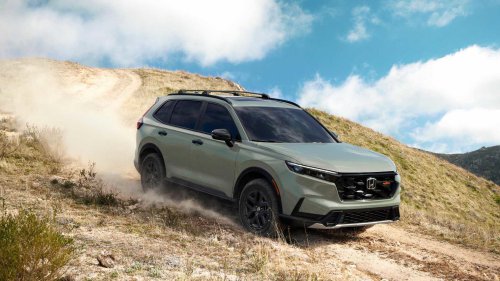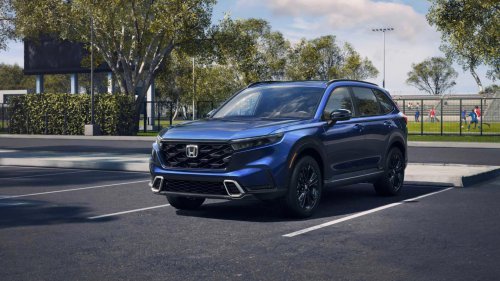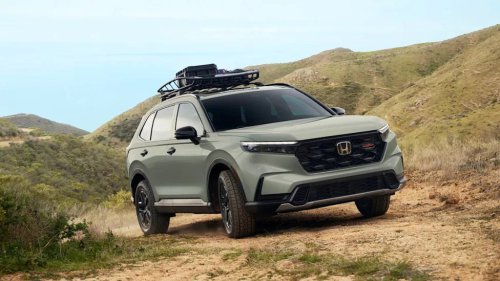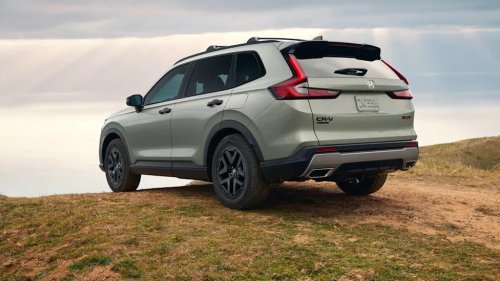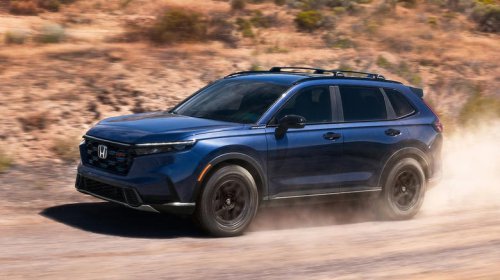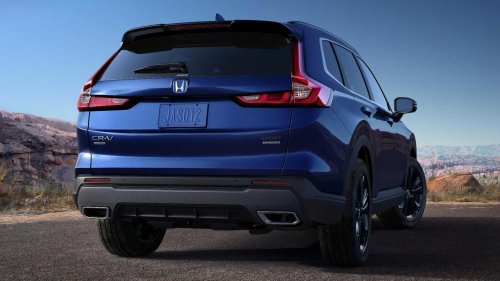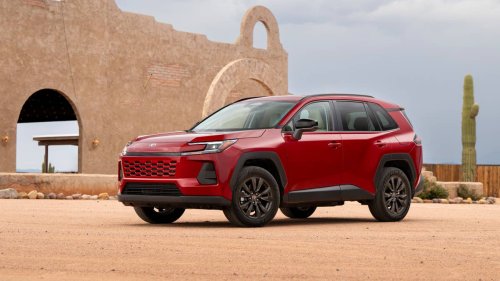


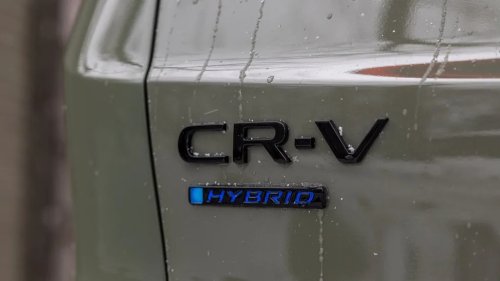




























Honda CR-V Hybrid vs. Gas: MPG, Price, and MoreDarren Martin - MotorTrendThe Honda CR-V is one of our favorite compact SUVs going and is an easy model to recommend, but when it comes to choosing which one to get, things aren't that simple. Honda's bestseller comes with either a standard gas engine or an available hybrid powertrain, and the differences go beyond just fuel economy. If you're trying to decide between the Honda CR-V and CR-V Hybrid, factors like price, driving experience, and features matter, too. Below are several key areas we think you should consider before choosing between the CR-V and CR-V Hybrid—and which one we'd pick over the other.1) Honda CR-V Hybrid vs. Gas: PricePhoto credit: MotorTrend - MotorTrendNo debate here: The non-hybrid CR-V is less expensive than the CR-V Hybrid. Pricing for the standard SUV starts at just above $32,000, while the Hybrid model begins at more than $37,000. The CR-V Hybrid justifies its premium with more features and better fuel economy, but for shoppers looking for the cheapest new CR-V, the regular version is it.2) Honda CR-V Hybrid vs. Gas: Trim LevelsPhoto credit: Andi Hedrick - MotorTrendHonda's trim structure for the CR-V positions the standard SUV as straightforward, while hybrid variants are more enthusiastic and potentially better-equipped.AdvertisementAdvertisementThe standard, gas-powered CR-V is available in LX, EX, and EX-L trim levels. In basic LX trim, the CR-V rolls on steel wheels and has cloth upholstery, a 9.0-inch touchscreen, and push-button start among its basic amenities. EX adds alloy wheels, keyless entry, heated front seats, a moonroof, interior ambient lighting, and dual-zone climate control. The EX-L model gains leather upholstery, plus driver's seat memory, power-adjustable front seats, an auto-dimming rearview mirror, and a power-operated tailgate.The CR-V Hybrid starts at the Sport Hybrid trim, which comes with black-painted wheels, roof rails, keyless entry, dual-zone climate control, a moonroof, leather-wrapped steering wheel and shift knob, and heated front seats with power adjustment for the driver. The Sport-L Hybrid adds leather, along with one-touch up/down windows all around, a power tailgate, front and rear parking sensors, and an auto-dimming rearview mirror. The high-end Sport Touring Hybrid gains 12-speaker Bose premium audio, HD radio, Google apps, and rain-sensing wipers. There's also the CR-V TrailSport Hybrid, which has features similar to the Sport Hybrid but adds all-terrain tires and rugged design cues.3) Honda CR-V Hybrid vs. Gas: TechnologyPhoto credit: MotorTrend - MotorTrendAll CR-V models are fitted with a 9.0-inch infotainment touchscreen and wireless Apple CarPlay and Android Auto connectivity. A wireless charging pad is also standard. The LX, EX, and Sport Hybrid models have a 7.0-inch gauge display, while the EX-L, TrailSport Hybrid, Sport-L Hybrid, and Sport Touring Hybrid get a 10.3-inch all-digital gauge cluster.All models have a front-row USB port, with second-row USB ports added above the LX trim. The base LX trim has four-speaker audio, the EX and Sport Hybrid trims have a six-speaker setup, the EX-L, TrailSport Hybrid, and Sport-L Hybrid get an eight-speaker system, and the Sport Touring Hybrid has an exclusive 12-speaker Bose premium arrangement.AdvertisementAdvertisementBuilt-in Google apps and HD radio are exclusive to the CR-V Sport Touring Hybrid.4) Honda CR-V Hybrid vs. Gas: Safety and Driver-Assist FeaturesPhoto credit: MotorTrend - MotorTrendThere's no difference in safety ratings between the CR-V and CR-V Hybrid. Both get a five-star overall safety score, the highest possible, from NHTSA.Every CR-V is equipped with driver assists and active safety features as part of the Honda Sensing suite. On all models, those include front automatic emergency braking, lane departure warning, lane keep assist, adaptive cruise control, road sign recognition, and automatic high-beams. Blind-spot monitoring and rear cross-traffic alert are added above the LX trim.5) Honda CR-V Hybrid vs. Gas: Engine and PerformancePhoto credit: MotorTrend - MotorTrendThe gas-powered CR-V uses a 1.5-liter turbocharged I-4 engine that produces 190 hp and 179 lb-ft of torque. That engine is paired with a continuously variable transmission, or CVT, with FWD standard and AWD available. In MotorTrend testing, a CR-V with AWD accelerated from 0 to 60 mph in 8.7 seconds.AdvertisementAdvertisementIn the CR-V Hybrid, a 2.0-liter I-4 engine is paired with two electric motors to make 204 system hp. FWD is standard, except for on the TrailSport Hybrid and Sport Touring Hybrid trims, which have AWD standard. MotorTrend testing of CR-V Hybrid models has measured 0–60 times of about 7.5 seconds.6) Honda CR-V Hybrid vs. Gas: Fuel Economy and RangePhoto credit: MotorTrend - MotorTrendThis is what it's all about—the main reason to choose between the CR-V and CR-V Hybrid.Fuel economy for the standard CR-V measures at 28/33 mpg city/highway with FWD and 27/31 mpg with AWD. Driving range on a full tank of gas is rated at 420 and 406 miles, respectively.Enhanced fuel efficiency is the primary appeal behind the CR-V Hybrid. It gets 43/36 mpg with FWD or 40/34 mpg with AWD; the TrailSport Hybrid gets 38/33 mpg. Maximum driving range from a full fuel tank extends to 560 miles with FWD and 518 miles with AWD; the TrailSport Hybrid can go 490 miles between fill-ups.7) Honda CR-V Hybrid vs. Gas: Cargo Space and Interior RoomPhoto credit: MotorTrend - MotorTrendDue to electrical components taking up some space inside, the CR-V Hybrid has slightly less cargo capacity than the standard CR-V. In the CR-V, there are 39.3 cubic feet behind the second row, while the Hybrid has 36.3 cubic feet. When the second row is folded, the CR-V provides 76.5 cubic feet, and the Hybrid model has 71.8 cubic feet.AdvertisementAdvertisementAll versions of the CR-V have 41.3 inches of front legroom and 41.0 inches of rear legroom.8) Honda CR-V Hybrid vs. Gas: TowingPhoto credit: MotorTrend - MotorTrendNo CR-V has much of a towing capacity to shout about. The standard SUV can pull up to 1,500 pounds, while the Hybrid model is rated at 1,000 pounds maximum.9) Honda CR-V Hybrid vs. Gas: Driving ExperiencePhoto credit: MotorTrend - MotorTrendHonda vehicles often drive with a direct, connected feel, and the CR-V is no different. It's not exactly sporty, but for a mainstream SUV, the CR-V is enjoyable enough. Thanks to the increased responsiveness of its electric motor and higher overall power, the CR-V Hybrid drives with more pep than the standard SUV, making it more fuel efficient and fun than the gas-powered model.10) Honda CR-V Hybrid vs. Gas: Which Is Better?Photo credit: MotorTrend - MotorTrendWith millions of units sold over multiple generations, the CR-V is well established as a strong choice among small crossovers. For today's CR-V, however, the Hybrid is the way to go—it's worth the added expense. The new CR-V Hybrid makes up for that extra cost with a better driving experience and feature set. Not to mention, its improved efficiency allows less spending on fuel, which adds up over time. There are many good compact hybrid SUVs on sale today, and the CR-V Hybrid is among the best.11) Honda CR-V Hybrid vs. Gas: Pros and ConsPhoto credit: MotorTrendAdvertisementAdvertisementHonda CR-V: ProsLower starting priceGood safety scoresNice to driveHonda CR-V: ConsLess powerfulMiddling fuel economyFewer standard featuresHonda CR-V Hybrid: ProsGreat fuel economy and rangeQuicker accelerationBetter tech features availableHonda CR-V Hybrid: ConsMore expensiveLess cargo spaceReduced TrailSport capability