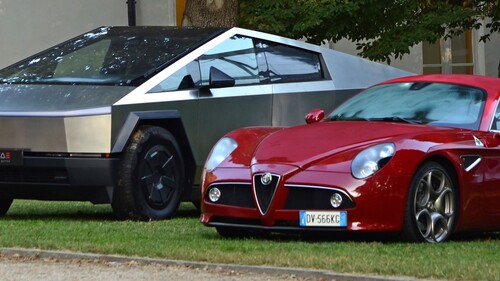
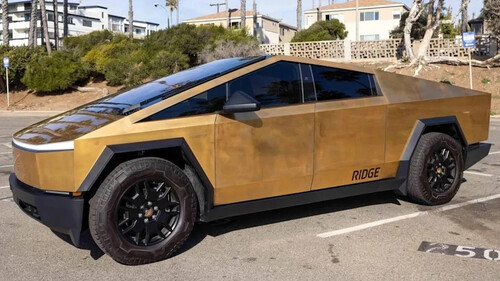
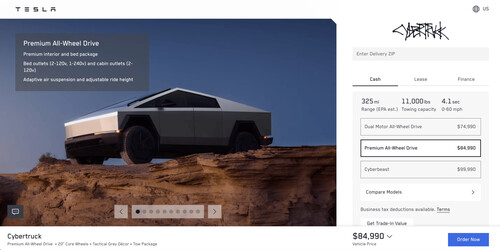
You would hope that spending six figures on a stainless steel truck would come with assurances that its body wouldn't start developing orange stains before the new-car smell fades. But that's exactly what some Cybertruck owners say is happening, and in some cases, simple magnets might be part of the problem. Auto-enthusiast creator Molesrcool uses a viral Facebook Reel to examine the pervasive, problematic rust spots and discoloration plaguing a growing number of Cybertrucks. It’s a feature of the already eye-catching vehicle that owners hadn’t bargained on. "A lot of these rust stains are being caused by people putting magnets on their car, and they're very difficult to get out, if you can get them out at all," he said in the clip that’s been viewed more than 16,000 times. "This is not what you want your car to look like, less than a year into owning it. I can't imagine what's gonna happen to ones in cold climates with lots of salt on the road." The thumbnail explanation of what's occurring in the video is that Tesla's stainless steel body panels are rust-resistant but not rust-proof, and under the right conditions, they can still develop surface corrosion or staining. That can result from environmental contamination, road salt, or even iron particles transferred from magnets, leaving persistent orange marks that resemble rust. The comments section on the clip turned into a fairly sprawling debate about whether stainless steel should be magnetic at all, along with a discussion of the alloy grade Tesla is using in the Cybertruck. One commenter insisted, "I thought magnets didn’t stick [to] stainless steel," with others responding that cheaper grades of alloy do exhibit magnetism. Others noted that the different grades of steel vary in their responsiveness to magnets. There was also some frothy discussion about whether traditionally non-magnetic stainless steel can become slightly magnetic after it's been formed and stamped. What Does ‘Rust-Resistant’ Mean? The most important clarifying detail concerns the difference between rust-resistant stainless steel and totally rust-proof stainless steel. Rust-resistant panels get their corrosion resistance from chromium in the alloy, which forms a thin protective oxide layer on the surface. Under the right conditions, factors such as road salt, coastal air, industrial pollution, or simple surface contamination can compromise that layer, allowing discoloration or surface corrosion to form. That's what's happening in many cases for Cybertruck owners, who are seeing surface staining or contamination rather than deep structural rust. Tesla has said that the Cybertruck uses a cold-worked stainless steel alloy similar to that used in SpaceX rockets. These grades are strong and corrosion-resistant, but they're not immune to staining and can become slightly magnetic after being stamped and formed into the body panels. So, while fully austenitic stainless steel is typically non-magnetic, cold working can change its crystal structure enough to make it weakly magnetic. This could go a long way in explaining why a Cybertruck’s panels can still attract magnets even if the base alloy wouldn't do so in its raw form. Do Cybertrucks Rust? As to the assertion that magnets can cause rust, many magnets contain or collect tiny iron particles, are exposed to moisture, or have coatings that break down and cause discoloration. When those magnets are pressed against stainless steel, they can leave behind that contamination that triggers surface corrosion or an orangish staining. Overall, reports of Cybertruck rusting appear scattered rather than widespread, and they are often tied to specific environments or usage. The good news is that, in most cases, the staining can be cleaned or polished out, as we saw in the video. Preventive steps include regular washing, avoiding magnets, and using protective coating wraps or paint protection film to keep contaminants away from the bare metal. Tesla skeptics love to take every opportunity to criticize the company and, in this case, question whether it should have anticipated staining and discoloration. It's likely that trade-offs were made during the vehicles' design and conceptualization, with unpainted stainless steel chosen to eliminate paint shops, reduce manufacturing steps, and give the Cybertruck its distinctive look. The downside is that those choices resulted in body panels without the protective barrier that modern clear coats and paint typically provide. Minor corrosion (on top of being a killer band name) is a facet of auto manufacturing that experienced brands have spent decades hiding and addressing. Usually, this is aided by layers of primer, paint, and clear coat. But since Tesla leaned into using raw metal, it means being more transparent about how environmental impacts affect the material. Common blemishes such as fingerprints, water spots, road salt, and airborne iron particles are much easier to see on stainless steel than on a painted surface. Given all that, Cybertruck owners and prospective buyers need to accept that the truck's body is entirely made of exposed metal rather than a structure protected by traditional car paint. Diligence around regular washing, keeping it free of contaminants, and applying protective coverings can help the exterior hold up and stay free of attention-grabbing eyesores. Motor1 reached out to the creator via direct message and comment on the clip. We’ll update this if they respond. We want your opinion! What would you like to see on Motor1.com? Take our 3 minute survey. - The Motor1.com Team